Kirjojen hintavertailu. Mukana 12 390 323 kirjaa ja 12 kauppaa.

Kirjailija

Nadine Sika

Kirjat ja teokset yhdessä paikassa: 8 kirjaa, julkaisuja vuosilta 2015-2026, suosituimpien joukossa Fuzzy Authoritarian Rule. Vertaile teosten hintoja ja tarkista saatavuus suomalaisista kirjakaupoista.

8 kirjaa

Kirjojen julkaisuhaarukka 2015-2026.

Fuzzy Authoritarian Rule

Fuzzy Authoritarian Rule

Dawn Brancati; Nadine Sika

Cambridge University Press
2026
sidottu
Many authoritarian regimes, including some of the world's most populous autocracies, such as China and Egypt, often do not make it clear what views, attitudes, and behaviors people may express openly without being sanctioned. This Element investigates how the uncertainty that this style of rule instills among people impacts the effectiveness of repression in deterring dissent. The authors develop a novel argument about how it can magnify the effect of repression by affecting how people understand what repression signals about a regime's resolve to sanction dissent. Their analysis, based on two laboratory experiments conducted in Egypt, confirms their argument and, in the process, challenges aspects of prominent behavioral arguments linking negative emotions to uncertainty. The authors' results imply that repression is least effective against acts of dissent regimes are opposed to the most and are very clear about their resolve to repress them as a result.

Fuzzy Authoritarian Rule

Fuzzy Authoritarian Rule

Dawn Brancati; Nadine Sika

Cambridge University Press
2026
pokkari
Many authoritarian regimes, including some of the world's most populous autocracies, such as China and Egypt, often do not make it clear what views, attitudes, and behaviors people may express openly without being sanctioned. This Element investigates how the uncertainty that this style of rule instills among people impacts the effectiveness of repression in deterring dissent. The authors develop a novel argument about how it can magnify the effect of repression by affecting how people understand what repression signals about a regime's resolve to sanction dissent. Their analysis, based on two laboratory experiments conducted in Egypt, confirms their argument and, in the process, challenges aspects of prominent behavioral arguments linking negative emotions to uncertainty. The authors' results imply that repression is least effective against acts of dissent regimes are opposed to the most and are very clear about their resolve to repress them as a result.

Civil Society and Activism in the Middle East

Civil Society and Activism in the Middle East

Nadine Sika

Oxford University Press
2024
sidottu
Civil Society Activism in the Middle East analyzes the impact of repression on civil society activism in the Middle East through analyzing the cases of Egypt and Jordan. Sika argues that authoritarian regimes' repressive strategies toward civil society actors vary depending on recent historical experience with regime breakdown and/or continuity. Authoritarian regimes that go through breakdown and that transition from one autocratic rule to another increase repression against all civil society actors in an effort to pre-empt large-scale mobilization. This instils fear into civil society actors, who as a result either disengage from civic and political activism or turn to different forms of participation, such as social entrepreneurship. On the other hand, long-standing authoritarian regimes that have not faced breakdown utilize targeted repression and co-optation strategies while tolerating civic and political activism, as well as some forms of contentious activities. Civil society actors in these regimes are able to grasp political opportunities to mobilize for demonstrations at certain times and in certain spaces, and to develop coalition partnerships to push the regime to advance some reforms and change.
Youth in Egypt

Youth in Egypt

Nadine Sika

NEW YORK UNIVERSITY PRESS
2023
pokkari
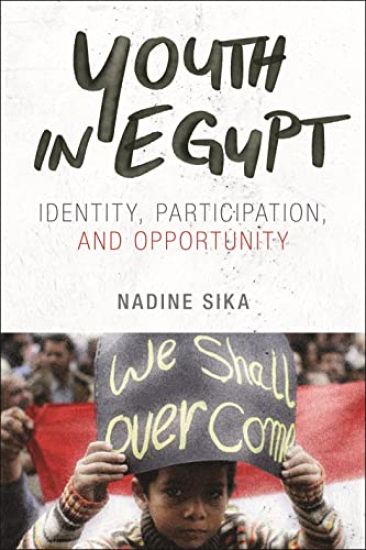
An eye-opening look at youth in contemporary Egypt, from the role they play in advancing political change to their everyday struggles In Youth in Egypt, Nadine Sika explores the political world of young people in Egypt, focusing on their experiences under authoritarianism. From the reigns of Gamal Abdel Nasser and Anwar Sadat to that of Abdel Fattah el-Sisi, she offers an on-the-ground perspective through the eyes of multiple generations of young people who lived through consecutive periods of political upheaval and state militarization. Drawing on surveys, interviews, and focus groups, Sika shines a light on youth who have participated in protest movements, civil society organizations, and political parties. She shows us the different opportunities for economic and political participation that exist for them, explaining why young Egyptians may choose to either mobilize against or—surprisingly—in support of the regime. Sika underscores how youth in Egypt have been regarded as both the "hope of the nation" and a "threat to the nation." Youth in Egypt shines a light on the rising generation of young people that represents Egypt's future and also has significant implications for the broader Middle East and North Africa region.
Youth in Egypt

Youth in Egypt

Nadine Sika

NEW YORK UNIVERSITY PRESS
2023
sidottu
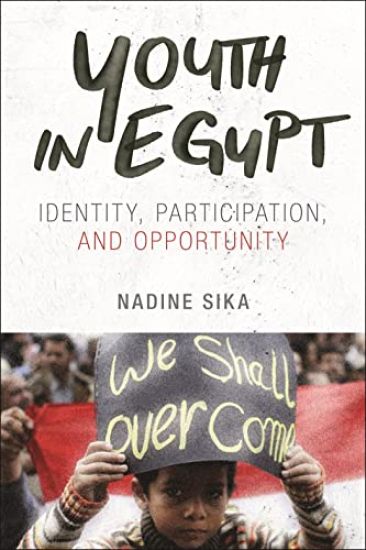
An eye-opening look at youth in contemporary Egypt, from the role they play in advancing political change to their everyday struggles In Youth in Egypt, Nadine Sika explores the political world of young people in Egypt, focusing on their experiences under authoritarianism. From the reigns of Gamal Abdel Nasser and Anwar Sadat to that of Abdel Fattah el-Sisi, she offers an on-the-ground perspective through the eyes of multiple generations of young people who lived through consecutive periods of political upheaval and state militarization. Drawing on surveys, interviews, and focus groups, Sika shines a light on youth who have participated in protest movements, civil society organizations, and political parties. She shows us the different opportunities for economic and political participation that exist for them, explaining why young Egyptians may choose to either mobilize against or—surprisingly—in support of the regime. Sika underscores how youth in Egypt have been regarded as both the "hope of the nation" and a "threat to the nation." Youth in Egypt shines a light on the rising generation of young people that represents Egypt's future and also has significant implications for the broader Middle East and North Africa region.
Youth Activism and Contentious Politics in Egypt

Youth Activism and Contentious Politics in Egypt

Nadine Sika

Cambridge University Press
2020
pokkari
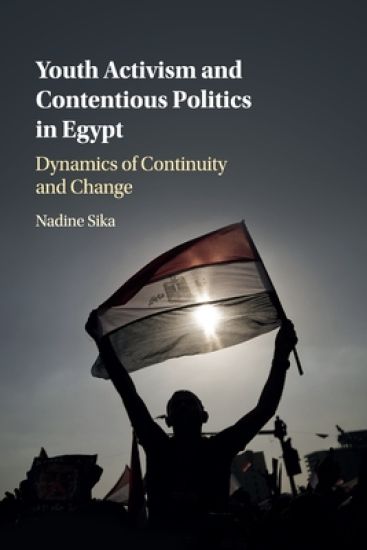
During the Arab uprisings of late 2010 and early 2011, nine regimes throughout North Africa and the Middle East were confronted by major demonstrations and contentious events. When the uprisings began in Egypt, it became evident that youth movements were going to play a large part in the uprisings themselves, as well as the ensuing political and social changes. In this book, Nadine Sika demonstrates how youth movements initiated contestation, and how the regime in Egypt reacted through a display of authoritarian resilience, creating opportunities, threats to and constraints on the ability of youth movements to mobilize and to network. On the other hand, she explores how youth movement's repertoires can cause a regime to adapt, upgrade, or downgrade its authoritarian tools in an attempt to control, co-opt, or disempower the movement, highlighting how a regime's perception of a threat can propel it towards either defensive or offensive strategies.
Youth Activism and Contentious Politics in Egypt

Youth Activism and Contentious Politics in Egypt

Nadine Sika

Cambridge University Press
2017
sidottu
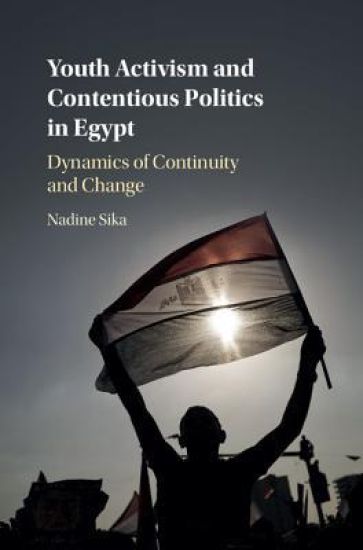
During the Arab uprisings of late 2010 and early 2011, nine regimes throughout North Africa and the Middle East were confronted by major demonstrations and contentious events. When the uprisings began in Egypt, it became evident that youth movements were going to play a large part in the uprisings themselves, as well as the ensuing political and social changes. In this book, Nadine Sika demonstrates how youth movements initiated contestation, and how the regime in Egypt reacted through a display of authoritarian resilience, creating opportunities, threats to and constraints on the ability of youth movements to mobilize and to network. On the other hand, she explores how youth movement's repertoires can cause a regime to adapt, upgrade, or downgrade its authoritarian tools in an attempt to control, co-opt, or disempower the movement, highlighting how a regime's perception of a threat can propel it towards either defensive or offensive strategies.
The Arab Uprisings

The Arab Uprisings

Eberhard Kienle; Nadine Sika

I.B. Tauris
2015
sidottu
The uprisings which spread across the Middle East and North Africa in late 2010 and 2011 irrevocably altered the way in which the region is now perceived. But in spite of the numerous similarities in these protests, from Tunisia and Egypt to Yemen and Bahrain, their broader political effects display important differences. This book analyses these popular uprisings, as well as other forms of protest, and the impact they had on each state. Why were Mubarak and Bin Ali ousted relatively peacefully in Egypt and Tunisia, while Qadafi in Libya and Saleh in Yemen fought violent battles against their opponents? Why do political transformations differ in countries that were able to shed their autocratic presidents? And why have other regimes, including Morocco and Saudi Arabia, experienced only limited protests or managed to repress and circumvent them? Looking at the aftermath and transitional processes across the region, this book is a vital retrospective examination of the uprisings and how they can be understood in the light of state formation and governmental dynamics.