Kirjojen hintavertailu. Mukana 12 595 353 kirjaa ja 12 kauppaa.

Kirjailija

Nagy K. Hanna

Kirjat ja teokset yhdessä paikassa: 14 kirjaa, julkaisuja vuosilta 2009-2025, suosituimpien joukossa Driving Digital Transformation in Developing Nations. Vertaile teosten hintoja ja tarkista saatavuus suomalaisista kirjakaupoista.

14 kirjaa

Kirjojen julkaisuhaarukka 2009-2025.

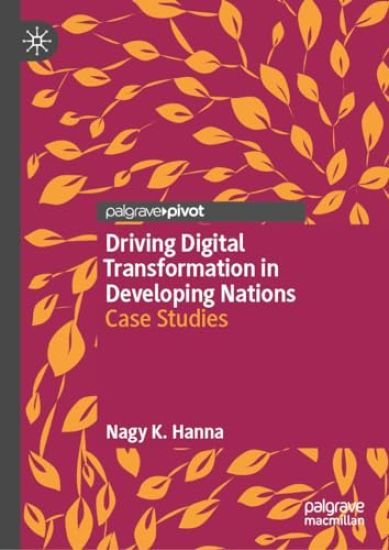
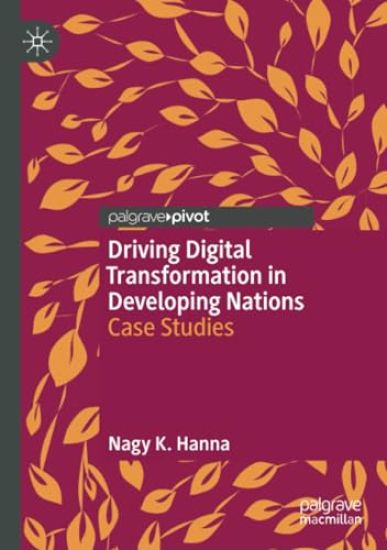
Driving Digital Transformation in Developing Nations

Driving Digital Transformation in Developing Nations

Nagy K. Hanna

Springer International Publishing AG
2025
nidottu
This book provides detailed insight into what governments and institutions can do to drive digital transformation in a nation pursuing economic development. Drawing on real-world case studies and practical advice, the book breaks down digital transformation of public services, healthcare, and the move toward smart cities. Synthesizing publicly available information, the book captures how the World Bank transformed its response to the digital revolution in several nations. Nagy K. Hanna takes readers through the pioneering export strategy of software services in India's and Sri Lanka's first integrated digital transformation program. The resulting book is a guide for policymakers, development economists, and change-makers seeking new ways to harness the power of digital technologies to promote inclusive and sustainable development.
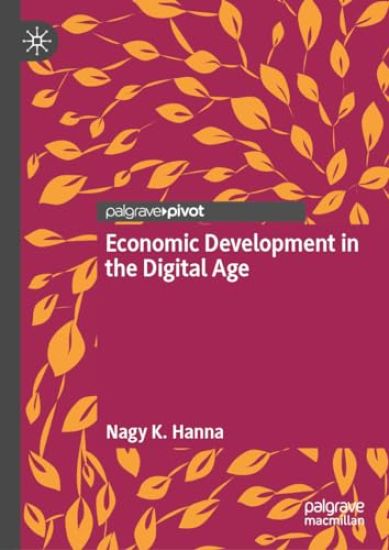
Economic Development in the Digital Age

Economic Development in the Digital Age

Nagy K. Hanna

Springer International Publishing AG
2025
nidottu
In this book, Nagy K. Hanna offers a holistic framework that economists and policymakers can use to examine and drive digital transformation. The book offers detailed analyses into development policies, and organizational processes governing digital transformation learning and practice and highlights the reforms needed in countries and aid agencies to meet the challenges of the 21st century. The author offers insight to help reform major aid agencies within the economic development space. The resulting text reimagines the future of development economics.
Economic Development in the Digital Age + Driving Digital Transformation in Developing Nations
Explore two books written by Nagy K. Hanna. When read together, Economic Development in the Digital Age and Driving Digital Transformation in Developing Nations helps readers understand digital transformation and economic development in developing nations. Economic Development in the Digital Age: This book provides a holistic framework for economists and policymakers to examine and drive digital transformation. It delves into development policies and organizational processes, highlighting necessary reforms in countries and aid agencies to meet 21st-century challenges. Key topics include the digital revolution in developing economies, global challenges of poverty and sustainability, and case studies from India, Sri Lanka, and Kenya. Driving Digital Transformation in Developing Nations: This book offers detailed insights into how governments and institutions can drive digital transformation in nations pursuing economic development. It covers public policy, cultural, socio-political, institutional, and organizational changes, with real-world case studies and practical advice. Key topics include the digital transformation of public services and healthcare, smart cities development, and the World Bank’s response to the digital revolution, with case studies from India and Sri Lanka. The books are essential for anyone interested in understanding and implementing digital transformation strategies in developing economies.
Economic Development in the Digital Age

Economic Development in the Digital Age

Nagy K. Hanna

Springer International Publishing AG
2024
sidottu
In this book, Nagy K. Hanna offers a holistic framework that economists and policymakers can use to examine and drive digital transformation. The book offers detailed analyses into development policies, and organizational processes governing digital transformation learning and practice and highlights the reforms needed in countries and aid agencies to meet the challenges of the 21st century. The author offers insight to help reform major aid agencies within the economic development space. The resulting text reimagines the future of development economics.
Driving Digital Transformation in Developing Nations

Driving Digital Transformation in Developing Nations

Nagy K. Hanna

Springer International Publishing AG
2024
sidottu
This book provides detailed insight into what governments and institutions can do to drive digital transformation in a nation pursuing economic development. Drawing on real-world case studies and practical advice, the book breaks down digital transformation of public services, healthcare, and the move toward smart cities. Synthesizing publicly available information, the book captures how the World Bank transformed its response to the digital revolution in several nations. Nagy K. Hanna takes readers through the pioneering export strategy of software services in India’s and Sri Lanka’s first integrated digital transformation program. The resulting book is a guide for policymakers, development economists, and change-makers seeking new ways to harness the power of digital technologies to promote inclusive and sustainable development.
How Can Digital Technologies Improve Public Services and Governance?
The book considers the opportunities and challenges of harnessing digital technologies for improved public services and governance. It focuses on the challenges of applying digital technologies in developing countries, particularly in Africa, where dramatic results can be realized. If also focuses on ways to improve services beyond supply-side measures such as business-process-engineering and improved management of service providers. Instead, it focuses in strengthening the demand for good governance and improved services via informed citizens, client feedback, and enhanced monitoring of service provider performance.
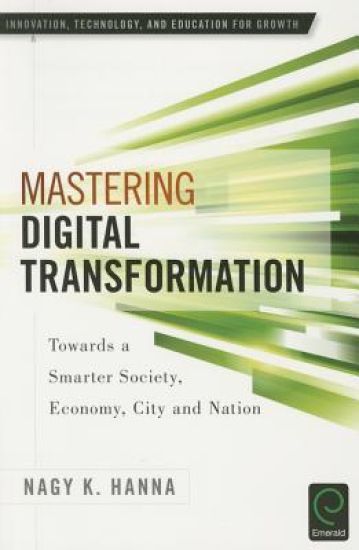
Mastering Digital Transformation

Mastering Digital Transformation

Nagy K. Hanna

Emerald Publishing Limited
2016
nidottu
The information and communication technology revolution offers the promise of transforming economies and societies, and the risks of missing on a powerful techno-economic revolution and wasting scarce resources without much developmental impact. Some countries have mastered the process of digital transformation, and continue to realize substantial economic benefits. Others made substantial investments in the ICT infrastructure, with marginal impact. What makes for these differences among countries? Nagy Hanna presents a systematic approach to integrate ICT into development policies and programs across sectors of economy and society. This book bridges the current disconnect between the ICT specialists and their development counterparts in various sectors so as to harness the ongoing ICT revolution to maximize development impact and minimize downside risks. Posing a holistic and strategic framework that draws on lessons learned across all sectors to guide national leaders and development practitioners interested in moving from vision to action, it is an important work for researchers and students of ICT who aim to pursue innovative, inclusive and sustainable development paradigms.
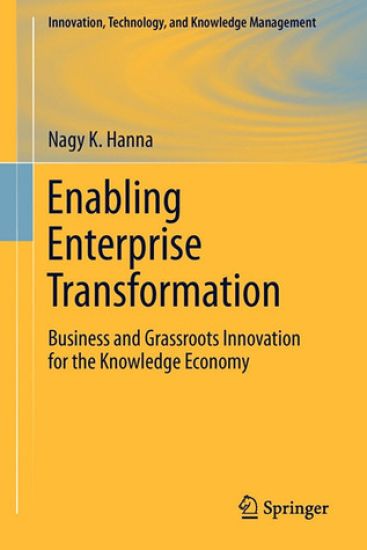
Enabling Enterprise Transformation

Enabling Enterprise Transformation

Nagy K. Hanna

Springer-Verlag New York Inc.
2010
nidottu
Private enterprises in advanced economies have been learning to use information and communication technology (ICT) to innovate and transform their processes, products, services and business models, significantly improving productivity and competitiveness. Moreover, the ICT industry itself has become a major source of job creation and a contributor to economic growth and business transformation. A key question today is whether and how developing countries can learn to benefit from the ICT revolution, and what roles the government and private sector can play. Already, a number of developing countries have been inspired by the example of India and China, and are now seeking to jump on the outsourcing bandwagon. Nevertheless, with few exceptions in the developing world, little attention has been paid by policymakers and practitioners to invest systematically and proactively in ICT-enabled growth, poverty reduction and grassroots innovation. Most communities and small and medium-sized enterprises in developing countries, for example, face multiple constraints to adopting and leveraging this general purpose technology, and lack the capabilities for maximizing its potential. In "Enabling Enterprise Transformation", Nagy Hanna draws on his rich experience of over 35 years at the World Bank and other aid agencies as a development strategist and ICT policy expert, the most current research, and best practices from around the world to provide practical tools for promoting economic and social transformation through ICT. He assesses various initiatives to develop and diffuse ICT, such as innovation funds, incubators, parks, public-private partnerships, and comprehensive promotion programs. He argues for the strategic options now open for developing countries to participate in ICT production, to deploy ICT to transform industries and services, and to leverage ICT as a new national infrastructure for improving the business environment and enhancing the competitiveness of the whole economy. The challenge for leaders in developing countries is to create such social and institutional dynamics for learning about ICT use and adaptation at many levels. Lessons gained so far from programs to build these social learning and innovation capabilities at the institutional and grassroots levels should be shared among developing countries, and a dialogue among business leaders, policymakers, development agencies, educational institutions, and the general citizenry must be advanced.
e-Transformation: Enabling New Development Strategies

e-Transformation: Enabling New Development Strategies

Nagy K. Hanna

Springer-Verlag New York Inc.
2010
nidottu
Could information and communication technology (ICT) become the transformative tool for a new style of global development? Could ICT promote knowledge-based, innovation-driven, and smart, adaptive, participatory development? As countries seek a way out of the present period of economic contraction, they are trying to weave ICT into their development strategies, in the same way organizations have learned to use ICT to transform their business models and strategies. This integration offers a new path to development that is responsive to the challenges of our times. In e-Transformation, Nagy Hanna identifies the key ingredients for the strategic integration of ICT into national development, with examples from around the world. He draws on his rich experience of over 35 years at the World Bank and other aid agencies to outline the strategic options involved in using ICT to maximize developmental impact—transforming public service institutions, networking businesses for innovation and competitiveness, and empowering communities for social inclusion and poverty reduction. He identifies the key interdependencies in e-transformation and offers a holistic framework to tap network effects and synergies across all elements of the process, including leadership, cyber policies, institutions, human resources, technological competencies, information infrastructure, and ICT uses for government, business, and society. Integrating analytical insights and practical applications across the fields of development, political economy, public administration, entrepreneurship, and technology management, the author candidly argues that e-transformation, like all bold ideas, faces implementation challenges. In particular, the aspiration-reality gap needs to be systematically addressed if ICT-enabled innovation and transformation is to become a development practice. E-transformation is first and foremost about thinking strategically and creatively about theoptions made possible by the information technology revolution in the context of globalization. To this end, the author provides tools and best practices designed to nurture innovation, select entry points, prioritize among competing demands, and sequence and scale up. He outlines the roles of all participants—political, managerial, entrepreneurial, social and technical—whose leadership is essential for successful innovation.
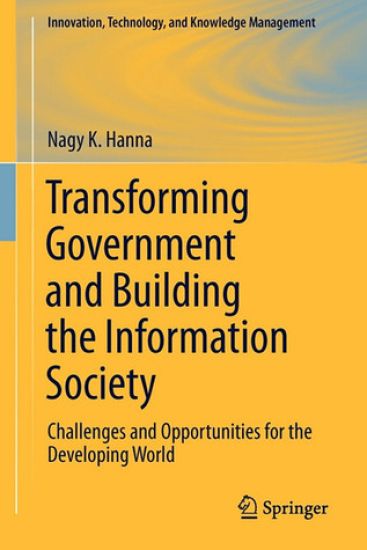
Transforming Government and Building the Information Society

Transforming Government and Building the Information Society

Nagy K. Hanna

Springer-Verlag New York Inc.
2010
nidottu
Information and communication technology (ICT) is central to reforming governance, innovating public services, and building inclusive information societies. Countries are learning to weave ICT into their strategies for transforming government as enterprises have learned to use ICT to innovate and transform their processes and competitive strategies. ICT-enabled transformation offers a new path to digital-era government that is responsive to the challenges of our time. It facilitates innovation, partnering, knowledge sharing, community organizing, local monitoring, accelerated learning, and participatory development. In Transforming Government and Building the Information Society, Nagy Hanna draws on multi-disciplinary research on ICT in the public sector, and on his rich experience of over 35 years at the World Bank and other aid agencies, to identify the key ingredients for the strategic integration of ICT into governance and poverty reduction strategies. The author showcases promising practices from around the world to outline the strategic options involved in using ICT to maximize developmental impact—transforming government institutions and public services, and empowering communities for inclusion and grassroots innovation. Despite the ICT promise, Hanna acknowledges that reforming governance and empowering poor communities are difficult long-term undertakings. Hanna moves beyond the imperatives and visions of e-transformation to strategic design and implementation options, and draws practical lessons for policymakers, reformers, innovators, community leaders, ICT specialists and development experts.
Transforming Government and Building the Information Society

Transforming Government and Building the Information Society

Nagy K. Hanna

Springer-Verlag New York Inc.
2010
sidottu
Information and communication technology (ICT) is central to reforming governance, innovating public services, and building inclusive information societies. Countries are learning to weave ICT into their strategies for transforming government as enterprises have learned to use ICT to innovate and transform their processes and competitive strategies. ICT-enabled transformation offers a new path to digital-era government that is responsive to the challenges of our time. It facilitates innovation, partnering, knowledge sharing, community organizing, local monitoring, accelerated learning, and participatory development. In Transforming Government and Building the Information Society, Nagy Hanna draws on multi-disciplinary research on ICT in the public sector, and on his rich experience of over 35 years at the World Bank and other aid agencies, to identify the key ingredients for the strategic integration of ICT into governance and poverty reduction strategies. The author showcases promising practices from around the world to outline the strategic options involved in using ICT to maximize developmental impact—transforming government institutions and public services, and empowering communities for inclusion and grassroots innovation. Despite the ICT promise, Hanna acknowledges that reforming governance and empowering poor communities are difficult long-term undertakings. Hanna moves beyond the imperatives and visions of e-transformation to strategic design and implementation options, and draws practical lessons for policymakers, reformers, innovators, community leaders, ICT specialists and development experts.
Enabling Enterprise Transformation

Enabling Enterprise Transformation

Nagy K. Hanna

Springer-Verlag New York Inc.
2009
sidottu
Private enterprises in advanced economies have been learning to use information and communication technology (ICT) to innovate and transform their processes, products, services and business models, significantly improving productivity and competitiveness. Moreover, the ICT industry itself has become a major source of job creation and a contributor to economic growth and business transformation. A key question today is whether and how developing countries can learn to benefit from the ICT revolution, and what roles the government and private sector can play. Already, a number of developing countries have been inspired by the example of India and China, and are now seeking to jump on the outsourcing bandwagon. Nevertheless, with few exceptions in the developing world, little attention has been paid by policymakers and practitioners to invest systematically and proactively in ICT-enabled growth, poverty reduction and grassroots innovation. Most communities and small and medium-sized enterprises in developing countries, for example, face multiple constraints to adopting and leveraging this general purpose technology, and lack the capabilities for maximizing its potential. In "Enabling Enterprise Transformation", Nagy Hanna draws on his rich experience of over 35 years at the World Bank and other aid agencies as a development strategist and ICT policy expert, the most current research, and best practices from around the world to provide practical tools for promoting economic and social transformation through ICT. He assesses various initiatives to develop and diffuse ICT, such as innovation funds, incubators, parks, public-private partnerships, and comprehensive promotion programs. He argues for the strategic options now open for developing countries to participate in ICT production, to deploy ICT to transform industries and services, and to leverage ICT as a new national infrastructure for improving the business environment and enhancing the competitiveness of the whole economy. The challenge for leaders in developing countries is to create such social and institutional dynamics for learning about ICT use and adaptation at many levels. Lessons gained so far from programs to build these social learning and innovation capabilities at the institutional and grassroots levels should be shared among developing countries, and a dialogue among business leaders, policymakers, development agencies, educational institutions, and the general citizenry must be advanced.
e-Transformation: Enabling New Development Strategies

e-Transformation: Enabling New Development Strategies

Nagy K. Hanna

Springer-Verlag New York Inc.
2009
sidottu
Could information and communication technology (ICT) become the transformative tool for a new style of global development? Could ICT promote knowledge-based, innovation-driven, and smart, adaptive, participatory development? As countries seek a way out of the present period of economic contraction, they are trying to weave ICT into their development strategies, in the same way organizations have learned to use ICT to transform their business models and strategies. This integration offers a new path to development that is responsive to the challenges of our times. In e-Transformation, Nagy Hanna identifies the key ingredients for the strategic integration of ICT into national development, with examples from around the world. He draws on his rich experience of over 35 years at the World Bank and other aid agencies to outline the strategic options involved in using ICT to maximize developmental impact—transforming public service institutions, networking businesses for innovation and competitiveness, and empowering communities for social inclusion and poverty reduction. He identifies the key interdependencies in e-transformation and offers a holistic framework to tap network effects and synergies across all elements of the process, including leadership, cyber policies, institutions, human resources, technological competencies, information infrastructure, and ICT uses for government, business, and society. Integrating analytical insights and practical applications across the fields of development, political economy, public administration, entrepreneurship, and technology management, the author candidly argues that e-transformation, like all bold ideas, faces implementation challenges. In particular, the aspiration-reality gap needs to be systematically addressed if ICT-enabled innovation and transformation is to become a development practice. E-transformation is first and foremost about thinking strategically and creatively about theoptions made possible by the information technology revolution in the context of globalization. To this end, the author provides tools and best practices designed to nurture innovation, select entry points, prioritize among competing demands, and sequence and scale up. He outlines the roles of all participants—political, managerial, entrepreneurial, social and technical—whose leadership is essential for successful innovation.