Kirjojen hintavertailu. Mukana 12 509 154 kirjaa ja 12 kauppaa.

Kirjailija

Nana Last

Kirjat ja teokset yhdessä paikassa: 4 kirjaa, julkaisuja vuosilta 2008-2021, suosituimpien joukossa Katharina Grosse; Atoms Inside Balloons. Vertaile teosten hintoja ja tarkista saatavuus suomalaisista kirjakaupoista.

4 kirjaa

Kirjojen julkaisuhaarukka 2008-2021.

Katharina Grosse; Atoms Inside Balloons

Katharina Grosse; Atoms Inside Balloons

David Hilbert; Nana Last

Renaissance Society at the University of Chicago
2009
nidottu
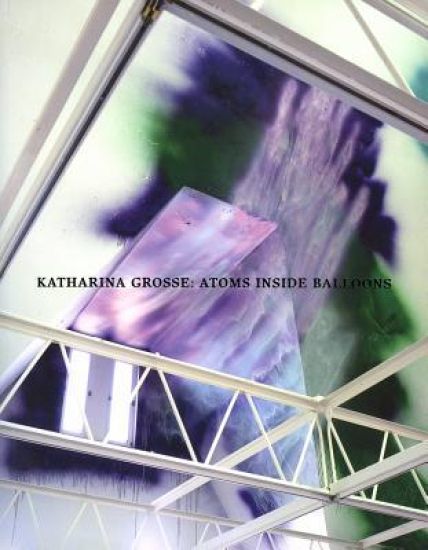
Katharina Grosse's painting practice is a phoenix from the ashes of late Modernism, appending themselves to the Greenbergian cul de sac in an uncanny manner. Since 1998 Grosse has been using a compressed-air spray gun to apply garish swaths and splashes of undulating color directly to gallery walls, floors and ceilings with sublimely spectacular results. Abandoning painting's traditional means of support, however, is simply a step toward getting at the real stakes, which for Grosse is color's liberation from surface. To underscore this point, Grosse began incorporating a range of relief elements into her work - furniture, clothing, solid geometric forms, stones, mounds of earth. Grosse's palette, however, is saturated to the point it threatens one's ability to perceive form and/or space. In her installations, color acts independently of the surfaces to which it is applied. Her work extends painting's modernist logic so that color reified in painting becomes color reified frompainting. Atoms Inside Balloons was Grosse's first foray into spray-painting balloons whose temperamental nature made it a genuine experiment. In addition to the occasional explosion, there was also the slow loss of pressure causing the balloons to sag and even eventually fall to the floor. The more than 100 color photographs in this catalogue document the continually changing balloon installation, and at the same time document the unchanging ability of Grosse's color to override all such qualities as shape and volume. In addition to this wealth of photographs, the book contains essays by Nana Last, Professor of Architecture at Rice University, and David Hilbert, Associate Professor of Philosophy at the University of Illinois at Chicago. Last analyzes the unique relationship of architecture and painting in Grosse's practice. Hilbert situates her work within the tradition of philosophical inquiry into the nature of color.
Archive, Matrix, Assembly

Archive, Matrix, Assembly

Nana Last

Oro Editions
2021
nidottu
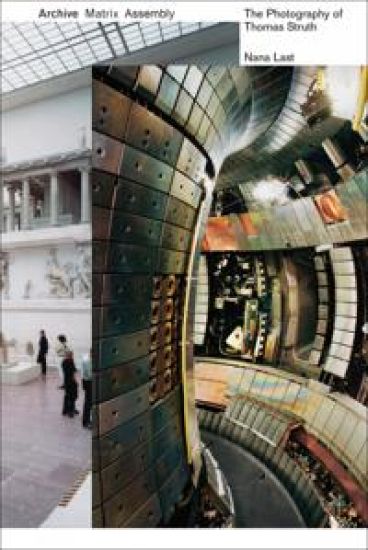
Archive, Matrix, Assembly: The Photographs of Thomas Struth 1978-2018 presents the first comprehensive, systematic theory of contemporary German artist Thomas Struth's main body of photographic work from its beginnings in the late 1970s until his most recent work in 2018. The book presents a unique, evolutionary understanding of the work, proposing that it has established three stages of production: archive, matrix, and assembly. Together the three stages form a developmental system that characterises the individual photographs, their relation to their subject matter, and how they form larger, significant collections of images. In covering all phases of the artist's work, it also develops a comprehensive critical reading of the work, serves as a monograph of the artist, and provides an extensive analysis of the photographs at all stages, including the less discussed, more recent photography, which is placed on par with his earlier work for which Struth first became internationally renowned.
Wittgenstein's House

Wittgenstein's House

Nana Last

Fordham University Press
2012
pokkari
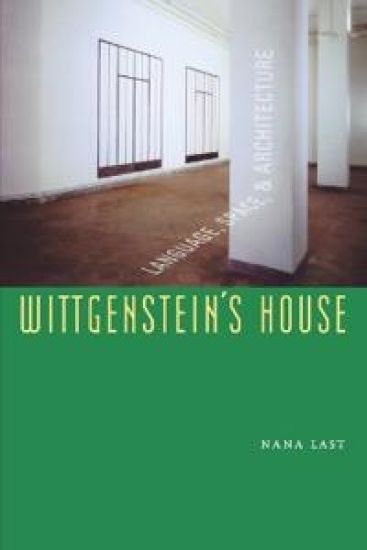
Wittgenstein's House reads Wittgenstein's his two main philosophical texts, Tractatus Logico-Philosophicus and Philosophical Investigations, in relation to an experience that intervened between them: his design and construction of the Stonborough-Wittgenstein house in Vienna. Arguing that the practice of architecture occupies not just a historical position between Wittgenstein's early and late philosophy, but a conceptual position as well, the book demonstrates that Wittgenstein's practice of architecture constitutes a fundamental component in the development of his philosophy of language from its early to late phases. The book advances the radical proposition that the field in which architecture and philosophy operate includes linguistic and spatial practices. It develops innovative forms of interdisciplinary analyses to demonstrate that the philosophical positions put forth by Wittgenstein's two main works are literally unthinkable outside of their respective conceptions of space: the view from above in the early work and the view from within constructed by the late work. To examine the manner in which Wittgenstein's practice of architecture insinuated itself into his philosophy, the author interweaves in-depth analyses of the spatial constructs underpinning the early and late philosophies with conceptual, formal and operative discussions of the design of the Stonborough-Wittgenstein house. Together these discussions reveal how Wittgenstein's practice of architecture engaged philosophical concepts, through which it influenced Wittgenstein's philosophy of language. At the heart of this approach is the finding that the philosophical concepts at the core of Wittgenstein's philosophy are indeed spatial ones, including his concerns with the limits of language, the boundary between showing and saying, the intricate textual numbering systems he devises, the relationship between the interiority of the subject and the publicness of language, and the formative principle of family resemblance.
Wittgenstein's House

Wittgenstein's House

Nana Last

Fordham University Press
2008
sidottu
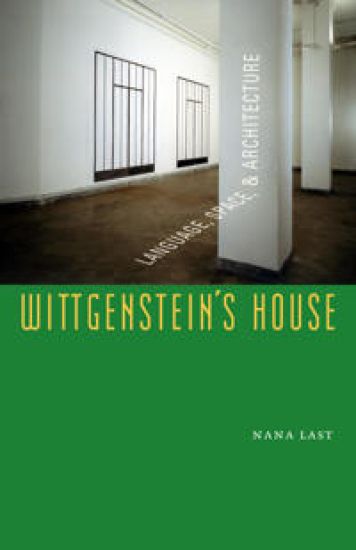
Wittgenstein's House reads Wittgenstein's his two main philosophical texts, Tractatus Logico-Philosophicus and Philosophical Investigations, in relation to an experience that intervened between them: his design and construction of the Stonborough-Wittgenstein house in Vienna. Arguing that the practice of architecture occupies not just a historical position between Wittgenstein's early and late philosophy, but a conceptual position as well, the book demonstrates that Wittgenstein's practice of architecture constitutes a fundamental component in the development of his philosophy of language from its early to late phases. The book advances the radical proposition that the field in which architecture and philosophy operate includes linguistic and spatial practices. It develops innovative forms of interdisciplinary analyses to demonstrate that the philosophical positions put forth by Wittgenstein's two main works are literally unthinkable outside of their respective conceptions of space: the view from above in the early work and the view from within constructed by the late work. To examine the manner in which Wittgenstein's practice of architecture insinuated itself into his philosophy, the author interweaves in-depth analyses of the spatial constructs underpinning the early and late philosophies with conceptual, formal and operative discussions of the design of the Stonborough-Wittgenstein house. Together these discussions reveal how Wittgenstein's practice of architecture engaged philosophical concepts, through which it influenced Wittgenstein's philosophy of language. At the heart of this approach is the finding that the philosophical concepts at the core of Wittgenstein's philosophy are indeed spatial ones, including his concerns with the limits of language, the boundary between showing and saying, the intricate textual numbering systems he devises, the relationship between the interiority of the subject and the publicness of language, and the formative principle of family resemblance.