Kirjojen hintavertailu. Mukana 12 595 353 kirjaa ja 12 kauppaa.

Kirjailija

Nancy D. Campbell

Kirjat ja teokset yhdessä paikassa: 3 kirjaa, julkaisuja vuosilta 2007-2021, suosituimpien joukossa The Narcotic Farm. Vertaile teosten hintoja ja tarkista saatavuus suomalaisista kirjakaupoista.

3 kirjaa

Kirjojen julkaisuhaarukka 2007-2021.

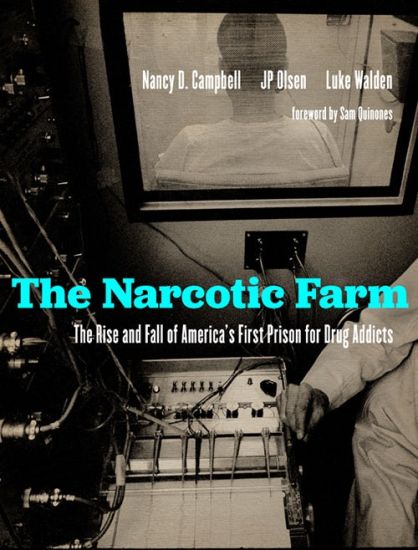
The Narcotic Farm

The Narcotic Farm

Nancy D. Campbell; James P. Olsen; Luke Walden; Sam Quinones

The University Press of Kentucky
2021
sidottu
From 1935 until 1975, just about every junkie busted for dope went to the Narcotic Farm. Equal parts federal prison, treatment center, farm, and research laboratory, the Farm was designed to rehabilitate addicts and help researchers discover a cure for drug addiction. Although it began as a bold and ambitious public works project, and became famous as a rehabilitation center frequented by great jazz musicians among others, the Farm was shut down forty years after it opened amid scandal over its drug-testing program, which involved experiments where inmates were being used as human guinea pigs and rewarded with heroin and cocaine for their efforts.Published to coincide with a documentary to be aired on PBS, The Narcotic Farm includes rare and unpublished photographs, film stills, newspaper and magazine clippings, government documents, as well as interviews, writings, and anecdotes from the prisoners, doctors, and guards that trace the Farm's noble rise and tumultuous fall, revealing the compelling story of what really happened inside the prison walls.
OD

OD

Nancy D. Campbell

MIT Press
2020
sidottu
The history of an unnatural disaster-drug overdose-and the emergence of naloxone as a social and technological solution.For years, drug overdose was unmentionable in polite society. OD was understood to be something that took place in dark alleys-an ugly death awaiting social deviants-neither scientifically nor clinically interesting. But over the last several years, overdose prevention has become the unlikely object of a social movement, powered by the miracle drug naloxone. In OD, Nancy Campbell charts the emergence of naloxone as a technological fix for overdose and describes the remaking of overdose into an experience recognized as common, predictable, patterned-and, above all, preventable. Naloxone, which made resuscitation, rescue, and "reversal" after an overdose possible, became a tool for shifting law, policy, clinical medicine, and science toward harm reduction. Liberated from emergency room protocols and distributed in take-home kits to non-medical professionals, it also became a tool of empowerment.After recounting the prehistory of naloxone-the early treatment of OD as a problem of poisoning, the development of nalorphine (naloxone's predecessor), the idea of "reanimatology"-Campbell describes how naloxone emerged as a tool of harm reduction. She reports on naloxone use in far-flung locations that include post-Thatcherite Britain, rural New Mexico, and cities and towns in Massachusetts. Drawing on interviews with approximately sixty advocates, drug users, former users, friends, families, witnesses, clinicians, and scientists-whom she calls the "protagonists" of her story-Campbell tells a story of saving lives amid the complex, difficult conditions of an unfolding unnatural disaster.
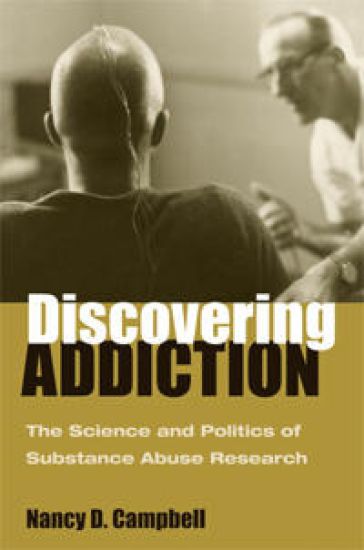
Discovering Addiction

Discovering Addiction

Nancy D. Campbell

The University of Michigan Press
2007
sidottu
Discovering Addiction brings the history of human and animal experimentation in addiction science into the present with a wealth of archival research and dozens of oral-history interviews with addiction researchers. Professor Campbell examines the birth of addiction science---the National Academy of Sciences's project to find a pharmacological fix for narcotics addiction in the late 1930s---and then explores the human and primate experimentation involved in the succeeding studies of the "opium problem," revealing how addiction science became "brain science" by the 1990s. Psychoactive drugs have always had multiple personalities---some cause social problems; others solve them---and the study of these drugs involves similar contradictions. Discovering Addiction enriches discussions of bioethics by exploring controversial topics, including the federal prison research that took place in the 1970s---a still unresolved debate that continues to divide the research community---and the effect of new rules regarding informed consent and the calculus of risk and benefit. This fascinating volume is both an informative history and a thought-provoking guide that asks whether it is possible to differentiate between ethical and unethical research by looking closely at how science is made.Nancy D. Campbell is Associate Professor of Science and Technology Studies at Rensselaer Polytechnic Institute and the author of Using Women: Gender, Drug Policy, and Social Justice."Compelling and original, lively and engaging---Discovering Addiction opens up new ways of thinking about drug policy as well as the historical discourses of addiction."---Carol Stabile, University of Wisconsin--MilwaukeeAlso available:Student Bodies: The Influence of Student Health Services in American Society and Medicine, by Heather Munro PrescottIllness and the Limits of Expression, by Kathlyn ConwayWhite Coat, Clenched Fist: The Political Education of an American Physician, by Fitzhugh Mullan