

Kirjailija
Nancy K. Miller
Kirjat ja teokset yhdessä paikassa: 12 kirjaa, julkaisuja vuosilta 1990-2022, suosituimpien joukossa Bequest and Betrayal. Vertaile teosten hintoja ja tarkista saatavuus suomalaisista kirjakaupoista.
12 kirjaa
Kirjojen julkaisuhaarukka 1990-2022.

My Brilliant Friends is a group biography of three women’s friendships forged in second-wave feminism. Poignant and politically charged, the book is a captivating personal account of the complexities of women’s bonds.Nancy K. Miller describes her friendships with three well-known scholars and literary critics: Carolyn Heilbrun, Diane Middlebrook, and Naomi Schor. Their relationships were simultaneously intimate and professional, emotional and intellectual, animated by the ferment of the women’s movement. Friendships like these sustained the generation of women whose entrance into male-dominated professions is still reshaping American society. The stories of their intertwined lives and books embody feminism’s belief in the political importance of personal experience. Reflecting on aging and loss, ambition and rivalry, competition and collaboration, Miller shows why and how friendship’s ties matter in the worlds of work and love. Inspired in part by the portraits of the intensely enmeshed lives in Elena Ferrante’s Neapolitan novels, My Brilliant Friends provides a passionate and timely vision of friendship between women.

My Brilliant Friends is a group biography of three women’s friendships forged in second-wave feminism. Poignant and politically charged, the book is a captivating personal account of the complexities of women’s bonds.Nancy K. Miller describes her friendships with three well-known scholars and literary critics: Carolyn Heilbrun, Diane Middlebrook, and Naomi Schor. Their relationships were simultaneously intimate and professional, emotional and intellectual, animated by the ferment of the women’s movement. Friendships like these sustained the generation of women whose entrance into male-dominated professions is still reshaping American society. The stories of their intertwined lives and books embody feminism’s belief in the political importance of personal experience. Reflecting on aging and loss, ambition and rivalry, competition and collaboration, Miller shows why and how friendship’s ties matter in the worlds of work and love. Inspired in part by the portraits of the intensely enmeshed lives in Elena Ferrante’s Neapolitan novels, My Brilliant Friends provides a passionate and timely vision of friendship between women.
Winner of the 2012 Jewish Journal Book Prize After her father's death, Nancy K. Miller discovered a minuscule family archive: a handful of photographs, an unexplained land deed, a postcard from Argentina, unidentified locks of hair. These items had been passed down again and again, but what did they mean? Miller follows their traces from one distant relative to another, across the country, and across an ocean. Her story, unlike the many family memoirs focused on the Holocaust, takes us back earlier in history to the world of pogroms and mass emigrations at the turn of the twentieth century. Searching for roots as a middle-aged orphan and an assimilated Jewish New Yorker, Miller finds herself asking unexpected questions: Why do I know so little about my family? How can I understand myself when I don't know my past? The answers lead her to a carpenter in the Ukraine, a stationery peddler on the Lower East Side, and a gangster hanger-on in the Bronx. As a third-generation descendant of Eastern European Jews, Miller learns that the hidden lives of her ancestors reveal as much about the present as they do about the past. In the end, an odyssey to uncover the origins of her lost family becomes a memoir of renewal.
Winner of the 2012 Jewish Journal Book Prize After her father's death, Nancy K. Miller discovered a minuscule family archive: a handful of photographs, an unexplained land deed, a postcard from Argentina, unidentified locks of hair. These items had been passed down again and again, but what did they mean? Miller follows their traces from one distant relative to another, across the country, and across an ocean. Her story, unlike the many family memoirs focused on the Holocaust, takes us back earlier in history to the world of pogroms and mass emigrations at the turn of the twentieth century. Searching for roots as a middle-aged orphan and an assimilated Jewish New Yorker, Miller finds herself asking unexpected questions: Why do I know so little about my family? How can I understand myself when I don't know my past? The answers lead her to a carpenter in the Ukraine, a stationery peddler on the Lower East Side, and a gangster hanger-on in the Bronx. As a third-generation descendant of Eastern European Jews, Miller learns that the hidden lives of her ancestors reveal as much about the present as they do about the past. In the end, an odyssey to uncover the origins of her lost family becomes a memoir of renewal.
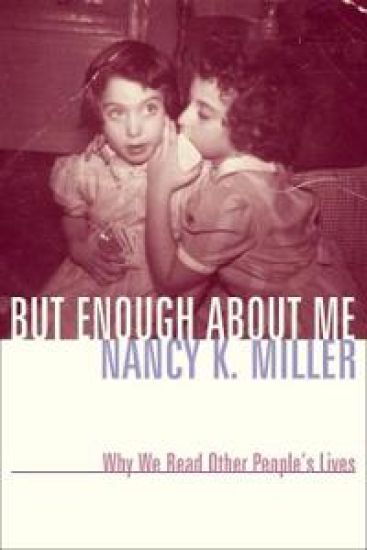
In her latest work of personal criticism, Nancy K. Miller tells the story of how a girl who grew up in the 1950s and got lost in the 1960s became a feminist critic in the 1970s. As in her previous books, Miller interweaves pieces of her autobiography with the memoirs of contemporaries in order to explore the unexpected ways that the stories of other people's lives give meaning to our own. The evolution she chronicles was lived by a generation of literary girls who came of age in the midst of profound social change and, buoyed by the energy of second-wave feminism, became writers, academics, and activists. Miller's recollections form one woman's installment in a collective memoir that is still unfolding, an intimate page of a group portrait in process.
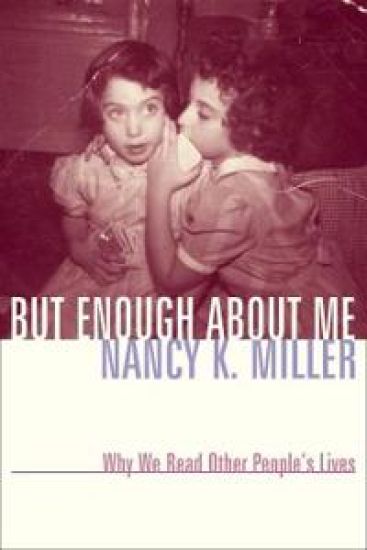
In her latest work of personal criticism, Nancy K. Miller tells the story of how a girl who grew up in the 1950s and got lost in the 1960s became a feminist critic in the 1970s. As in her previous books, Miller interweaves pieces of her autobiography with the memoirs of contemporaries in order to explore the unexpected ways that the stories of other people's lives give meaning to our own. The evolution she chronicles was lived by a generation of literary girls who came of age in the midst of profound social change and, buoyed by the energy of second-wave feminism, became writers, academics, and activists. Miller's recollections form one woman's installment in a collective memoir that is still unfolding, an intimate page of a group portrait in process.
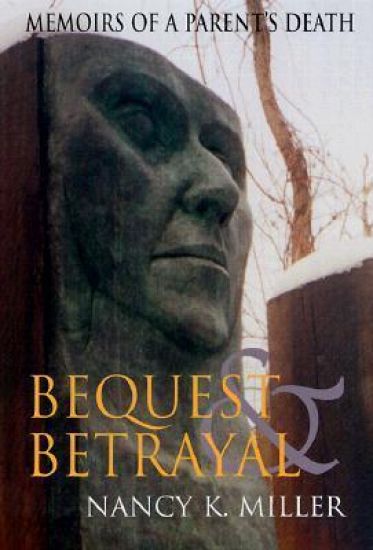
"In a book that will change the ways we think about autobiography and criticism, Nancy K. Miller produces poignant revelations about what it means to live with a dying parent—as a son or daughter, as well as the difference that gender makes in such a painful situation. In Bequest and Betrayal, she develops an original feminist perspective by counterpointing lyrical introspection about her own grief with critical insights into memoirs by Simone de Beauvoir, Philip Roth, Art Spiegelman, Susan Cheever, Carolyn Steedman, and Annie Ernaux." —Sandra M. Gilbert and Susan Gubar, co-authors of The Madwoman in the Attic, No Man's Land, and The Norton Anthology of Literature by Women "Miller's use of the memoir form offers a new model of serious criticism, and a way of imagining community through 'bonds of paper' as well as 'bonds of blood.'" —Elaine Showalter, London Review of Books Melding the details of her own experience with the familial biographies of well-known contemporary writers, Miller recreates a common experience—the loss of a father or a mother—and exposes the often tortuous paths of mourning and attachment that we follow in the wake of loss. In the process, she offers pieces of personal history, revealing the mixed emotions provoked by her mother's sudden death from cancer and her father's painful struggle with Parkinson's disease. Memoirs about the loss of parents show how enmeshed in the family plot we have been and the price of our complicity in its stories. The death of parents forces us to rethink our lives, to reread ourselves. We read for what we need to find. Sometimes, we also find what we didn't know we needed.
French Dressing looks at the ancien régime's scenarios of libertine seduction--unsafe sex and its consequences for women's lives. It places the gender performances of male and female-authored novels in dialogue in order to recover the complexity of a century obsessed, as we are today, with writing and living plots of desire. FrenchDressing exposes the erotic anxieties behind a national culture of sexual self-display--French undressing.
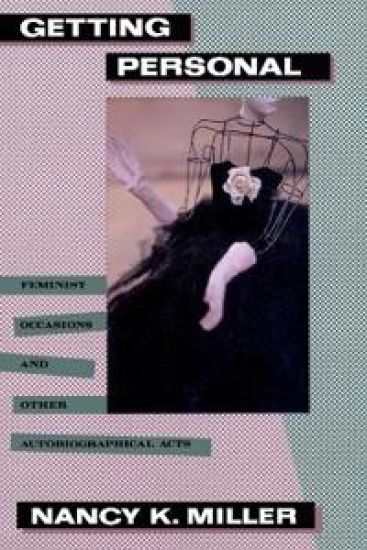
In the era of identity politics, whose is the I of cultural criticism? And what does the invention of an autobiographical persona have to do with contemporary theory? In Getting Personal , Nancy K. Miller reflects upon the ways in which contingencies of identity and location shape the writing of academic argument and the living of an academic life. Getting Personal explores the new territory of feminist cultural studies and its connections to literary interpretation. The book is organized around a number of academic scenes in which Miller analyses the stakes of feminist critical performance. The focus on occasions, from the conference to the seminar to the professional colloquium, produces an autobiographical perspective on the mini-drama of institutional politics - whether faculty struggles over the canon in elite universities, or student strivings for self-authorization in large urban ones. Writing as a feminist critic, Miller describes the dilemmas of a responsible pedogogic practice: the contradictory demands of authority and complicity for a feminist teacher of literature.Getting Personal examines the rhetorical strategies of a feminism traversed by internal debates over its own self-representations. Working through and among quotations of voices that might otherwise not address each other, Miller assesses a crisis and offers a project for moving on.
-- Elaine Marks, University of Wisconsin-Madison