Kirjojen hintavertailu. Mukana 12 233 247 kirjaa ja 12 kauppaa.

Kirjailija

Naomi Baron

Kirjat ja teokset yhdessä paikassa: 4 kirjaa, julkaisuja vuosilta 1993-2022, suosituimpien joukossa How We Read Now. Vertaile teosten hintoja ja tarkista saatavuus suomalaisista kirjakaupoista.

4 kirjaa

Kirjojen julkaisuhaarukka 1993-2022.

How We Read Now

How We Read Now

Naomi Baron

OXFORD UNIVERSITY PRESS INC
2022
nidottu
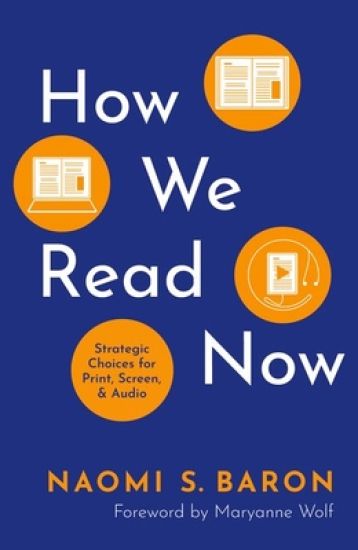
An engaging and authoritative guide to the impact of reading medium on learning, from a foremost expert in the field We face constant choices about how we read. Educators must select classroom materials. College students weigh their textbook options. Parents make decisions for their children. The digital revolution has transformed reading, and with the recent turn to remote learning, onscreen reading may seem like the only viable option. Yet selecting digital is often based on cost or convenience, not on educational evidence. Now more than ever it is imperative to understand how reading medium actually impacts learning--and what strategies we need in order to read effectively in all formats. In How We Read Now, Naomi Baron draws on a wealth of knowledge and research to explain important differences in the way we concentrate, understand, and remember across multiple formats. Mobilizing work from international scholarship along with findings from her own studies of reading practices, Baron addresses key challenges--from student complaints that print is boring to the hazards of digital reading for critical thinking. Rather than arguing for one format over another, she explains how we read and learn in different settings, shedding new light on the current state of reading. The book then crucially connects research insights to concrete applications, offering practical approaches for maximizing learning with print, digital text, audio, and video. Since screens and audio are now entrenched--and invaluable-platforms for reading, we need to rethink ways of helping readers at all stages use them more wisely. How We Read Now shows us how to do that.
Always On

Always On

Naomi Baron

Oxford University Press Inc
2010
nidottu
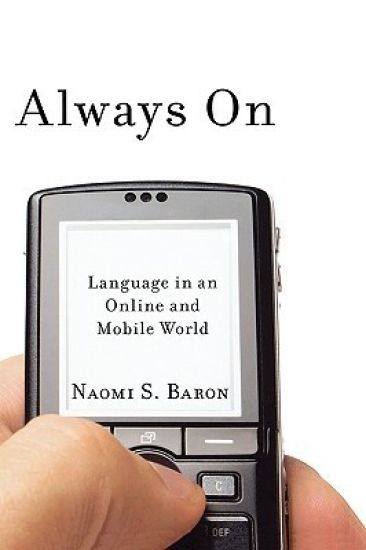
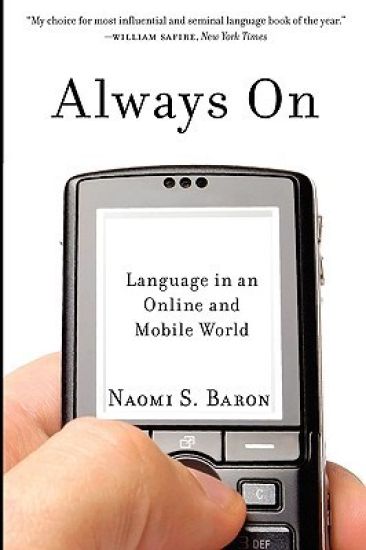
In Always On, Naomi S. Baron reveals that online and mobile technologies-including instant messaging, cell phones, multitasking, Facebooks, blogs, and wikis - are profoundly influencing how we read and write, speak and listen, but not in the ways we might suppose. Baron draws on a decade of research to provide an eye-opening look at language in an online and mobile world. She reveals for instance that email, IM, and text messaging have had surprisingly little impact on student writing. Electronic media has magnified the laid-back ¨whatever¨ attitude toward formal writing that young people everywhere have embraced, but it is not a cause of it. A more troubling trend, according to Baron, is the myriad ways in which we block incoming IMs, camouflage ourselves on Facebook, and use ring tones or caller ID to screen incoming calls on our mobile phones. Our ability to decide who to talk to, she argues, is likely to be among the most lasting influences that information technology has upon the ways we communicate with one another. Moreover, as more and more people are älways on¨ one technology or another-whether communicating, working, or just surfing the web or playing games-we have to ask what kind of people do we become, as individuals and as family members or friends, if the relationships we form must increasingly compete for our attention with digital media? Our 300-year-old written culture is on the verge of redefinition, Baron notes. It's up to us to determine how and when we use language technologies, and to weigh the personal and social benefits-and costs-of being älways on.¨ This engaging and lucidly-crafted book gives us the tools for taking on these challenges.
Always On

Always On

Naomi Baron

Oxford University Press Inc
2008
sidottu
In Always On, Naomi S. Baron reveals that online and mobile technologies - including instant messaging, cell phones, multitasking, Facebooks, blogs, and wikis - are profoundly influencing how we read and write, speak and listen, but not in the ways we might suppose. Baron draws on a decade of research to provide an eye-opening look at language in an online and mobile world. She reveals for instance that email, IM, and text messaging have had surprisingly little impact on student writing. Electronic media has magnified the laid-back "whatever" attitude toward formal writing that young people everywhere have embraced, but it is not a cause of it. A more troubling trend, according to Baron, is the myriad ways in which we block incoming IMs, camouflage ourselves on Facebook, and use ring tones or caller ID to screen incoming calls on our mobile phones. Our ability to decide who to talk to, she argues, is likely to be among the most lasting influences that information technology has upon the ways we communicate with one another. Moreover, as more and more people are "always on" one technology or another - whether communicating, working, or just surfing the web or playing games - we have to ask what kind of people do we become, as individuals and as family members or friends, if the relationships we form must increasingly compete for our attention with digital media? Our 300-year-old written culture is on the verge of redefinition, Baron notes. It's up to us to determine how and when we use language technologies, and to weigh the personal and social benefits - and costs - of being "always on." This engaging and lucidly-crafted book gives us the tools for taking on these challenges.
Growing Up With Language

Growing Up With Language

Naomi Baron

Da Capo Press Inc
1993
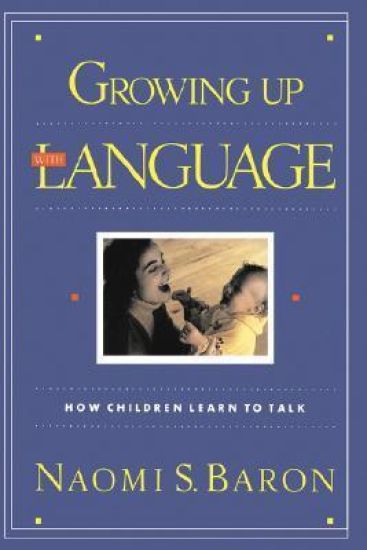
pokkari
"It is a gift when an academic can take a difficult subject and make it not just accessible but actually enjoyable for the average reader. Anyone who is around young children will find useful information on how humans create speech and language."--The Bloomsbury Review Children learn to make sense of the babble around them and become coherent speakers and incipient readers in just five or six years. In this remarkable book, linguist Naomi Baron takes us on a journey through language, showing the variety of ways in which children crack the language code and master the means of expression, and how parents play a vital role in the process. Every parent will see something of his or her child in the numerous and vivid examples; those whose kids don't fit preconceived norms will find reassurance and guidance in these pages. Spiced with enchanting examples of children putting their first words together, struggling to understand meaning, and coming to use language as a creative tool, Growing Up with Language reminds us that underneath all their efforts is the drive to make sense of the world.