Kirjojen hintavertailu. Mukana 12 216 203 kirjaa ja 12 kauppaa.

Kirjailija

Naomi Seidman

Kirjat ja teokset yhdessä paikassa: 10 kirjaa, julkaisuja vuosilta 2006-2024, suosituimpien joukossa Translating the Jewish Freud. Vertaile teosten hintoja ja tarkista saatavuus suomalaisista kirjakaupoista.

10 kirjaa

Kirjojen julkaisuhaarukka 2006-2024.

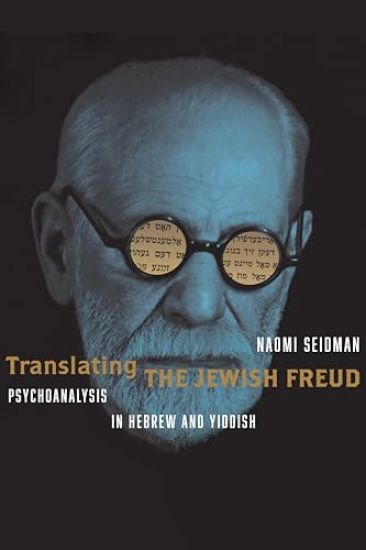
Translating the Jewish Freud

Translating the Jewish Freud

Naomi Seidman

STANFORD UNIVERSITY PRESS
2024
pokkari
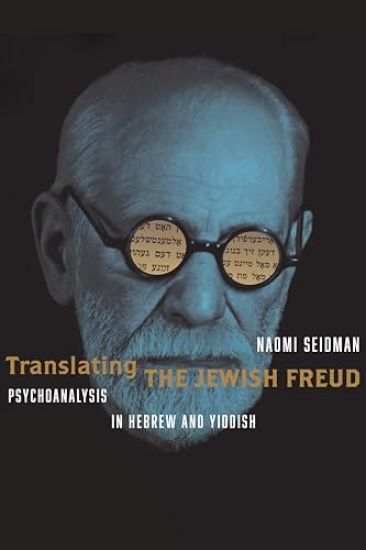
There is an academic cottage industry on the "Jewish Freud," aiming to detect Jewish influences on Freud, his own feelings about being Jewish, and suppressed traces of Jewishness in his thought. This book takes a different approach, turning its gaze not on Freud but rather on those who seek out his concealed Jewishness. What is it that propels the scholarly aim to show Freud in a Jewish light? Naomi Seidman explores attempts to "touch" Freud (and other famous Jews) through Jewish languages, seeking out his Hebrew name or evidence that he knew some Yiddish. Tracing a history of this drive to bring Freud into Jewish range, Seidman also charts Freud's responses to (and jokes about) this desire. More specifically, she reads the reception and translation of Freud in Hebrew and Yiddish as instances of the desire to touch, feel, "rescue," and connect with the famous Professor from Vienna.
Translating the Jewish Freud

Translating the Jewish Freud

Naomi Seidman

STANFORD UNIVERSITY PRESS
2024
sidottu
There is an academic cottage industry on the "Jewish Freud," aiming to detect Jewish influences on Freud, his own feelings about being Jewish, and suppressed traces of Jewishness in his thought. This book takes a different approach, turning its gaze not on Freud but rather on those who seek out his concealed Jewishness. What is it that propels the scholarly aim to show Freud in a Jewish light? Naomi Seidman explores attempts to "touch" Freud (and other famous Jews) through Jewish languages, seeking out his Hebrew name or evidence that he knew some Yiddish. Tracing a history of this drive to bring Freud into Jewish range, Seidman also charts Freud's responses to (and jokes about) this desire. More specifically, she reads the reception and translation of Freud in Hebrew and Yiddish as instances of the desire to touch, feel, "rescue," and connect with the famous Professor from Vienna.
Sarah Schenirer and the Bais Yaakov Movement

Sarah Schenirer and the Bais Yaakov Movement

Naomi Seidman

LIVERPOOL UNIVERSITY PRESS
2023
nidottu
National Jewish Book Awards 2019 Winner of the Barbara Dobkin Award for Women’s Studies and Finalist for Education and Jewish Identity.Sarah Schenirer is one of the unsung heroes of twentieth-century Orthodox Judaism. The Bais Yaakov schools she founded in interwar Poland had an unparalleled impact on a traditional Jewish society threatened by assimilation and modernity, educating a generation of girls to take an active part in their community. The movement grew at an astonishing pace, expanding to include high schools, teacher seminaries, summer programmes, vocational schools, and youth movements, in Poland and beyond; it continues to flourish throughout the Jewish diaspora.Naomi Seidman explores the movement through the tensions that characterized it, capturing its complexity as a revolution in the name of tradition. She presents the context which led to its founding, examining the impact of socialism, feminism, Zionism, and Polish electoral politics on the process, and recounts its history, from its foundation in interwar Kraków to its near-destruction in the Holocaust, and its role in the reconstruction of Orthodoxy in subsequent decades.A vivid portrait of Schenirer shines through. The book includes selections from her writings published in English for the first time. Her pioneering, determined character remains the subject of debate in a culture that still regards innovation, female initiative, and women’s Torah study with suspicion.
A Marriage Made in Heaven

A Marriage Made in Heaven

Naomi Seidman

University of California Press
2021
sidottu
With remarkably original formulations, Naomi Seidman examines the ways that Hebrew, the Holy Tongue, and Yiddish, the vernacular language of Ashkenazic Jews, came to represent the masculine and feminine faces, respectively, of Ashkenazic Jewish culture. Her sophisticated history is the first book-length exploration of the sexual politics underlying the "marriage" of Hebrew and Yiddish, and it has profound implications for understanding the centrality of language choices and ideologies in the construction of modern Jewish identity. Seidman particularly examines this sexual-linguistic system as it shaped the work of two bilingual authors, S.Y. Abramovitsh, the "grand-father" of modern Hebrew and Yiddish literature; and Dvora Baron, the first modern woman writer in Hebrew (and a writer in Yiddish as well). She also provides an analysis of the roles that Hebrew "masculinity" and Yiddish "femininity" played in the Hebrew-Yiddish language wars, the divorce that ultimately ended the marriage between the languages. Theorists have long debated the role of mother and father in the child's relationship to language. Seidman presents the Ashkenazic case as an illuminating example of a society in which "mother tongue" and "father tongue" are clearly differentiated. Her work speaks to important issues in contemporary scholarship, including the psychoanalysis of language acquisition, the feminist critique of Zionism, and the nexus of women's studies and Yiddish literary history. This title is part of UC Press's Voices Revived program, which commemorates University of California Press's mission to seek out and cultivate the brightest minds and give them voice, reach, and impact. Drawing on a backlist dating to 1893, Voices Revived makes high-quality, peer-reviewed scholarship accessible once again using print-on-demand technology. This title was originally published in 1997.
A Marriage Made in Heaven

A Marriage Made in Heaven

Naomi Seidman

University of California Press
2021
pokkari
With remarkably original formulations, Naomi Seidman examines the ways that Hebrew, the Holy Tongue, and Yiddish, the vernacular language of Ashkenazic Jews, came to represent the masculine and feminine faces, respectively, of Ashkenazic Jewish culture. Her sophisticated history is the first book-length exploration of the sexual politics underlying the "marriage" of Hebrew and Yiddish, and it has profound implications for understanding the centrality of language choices and ideologies in the construction of modern Jewish identity. Seidman particularly examines this sexual-linguistic system as it shaped the work of two bilingual authors, S.Y. Abramovitsh, the "grand-father" of modern Hebrew and Yiddish literature; and Dvora Baron, the first modern woman writer in Hebrew (and a writer in Yiddish as well). She also provides an analysis of the roles that Hebrew "masculinity" and Yiddish "femininity" played in the Hebrew-Yiddish language wars, the divorce that ultimately ended the marriage between the languages. Theorists have long debated the role of mother and father in the child's relationship to language. Seidman presents the Ashkenazic case as an illuminating example of a society in which "mother tongue" and "father tongue" are clearly differentiated. Her work speaks to important issues in contemporary scholarship, including the psychoanalysis of language acquisition, the feminist critique of Zionism, and the nexus of women's studies and Yiddish literary history. This title is part of UC Press's Voices Revived program, which commemorates University of California Press's mission to seek out and cultivate the brightest minds and give them voice, reach, and impact. Drawing on a backlist dating to 1893, Voices Revived makes high-quality, peer-reviewed scholarship accessible once again using print-on-demand technology. This title was originally published in 1997.
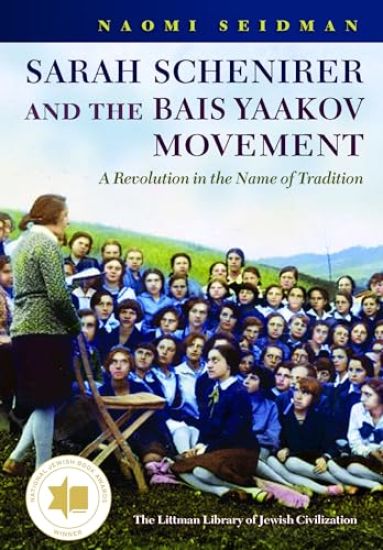
Sarah Schenirer and the Bais Yaakov Movement

Sarah Schenirer and the Bais Yaakov Movement

Naomi Seidman

The Littman Library of Jewish Civilization
2019
sidottu
Sarah Schenirer is one of the unsung heroes of twentieth-century Orthodox Judaism. The Bais Yaakov schools she founded in interwar Poland had an unparalleled impact on a traditional Jewish society threatened by assimilation and modernity, educating a generation of girls to take an active part in their community. The movement grew at an astonishing pace, expanding to include high schools, teacher seminaries, summer programmes, vocational schools, and youth movements, in Poland and beyond; it continues to flourish throughout the Jewish diaspora. Naomi Seidman explores the movement through the tensions that characterized it, capturing its complexity as a revolution in the name of tradition. She presents the context which led to its founding, examining the impact of socialism, feminism, Zionism, and Polish electoral politics on the process, and recounts its history, from its foundation in interwar Krakow to its near-destruction in the Holocaust, and its role in the reconstruction of Orthodoxy in subsequent decades. A vivid portrait of Schenirer shines through. The book includes selections from her writings published in English for the first time. Her pioneering, determined character remains the subject of debate in a culture that still regards innovation, female initiative, and women's Torah study with suspicion.
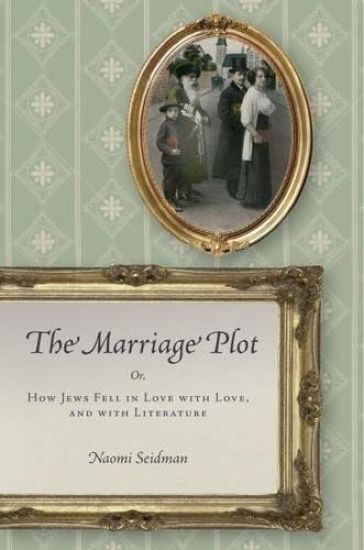
The Marriage Plot

The Marriage Plot

Naomi Seidman

Stanford University Press
2016
sidottu
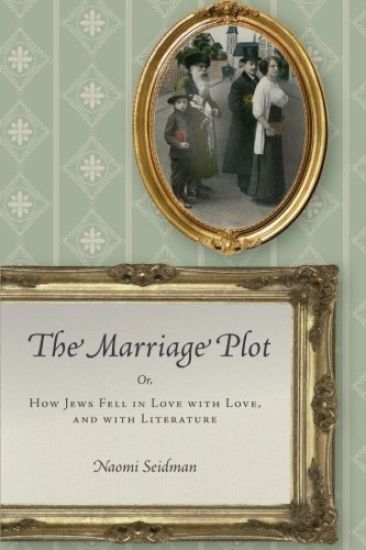
For nineteenth-century Eastern European Jews, modernization entailed the abandonment of arranged marriage in favor of the "love match." Romantic novels taught Jewish readers the rules of romance and the choreography of courtship. But because these new conceptions of romance were rooted in the Christian and chivalric traditions, the Jewish embrace of "the love religion" was always partial. In The Marriage Plot, Naomi Seidman considers the evolution of Jewish love and marriage though the literature that provided Jews with a sentimental education, highlighting a persistent ambivalence in the Jewish adoption of European romantic ideologies. Nineteenth-century Hebrew and Yiddish literature tempered romantic love with the claims of family and community, and treated the rules of gender complementarity as comedic fodder. Twentieth-century Jewish writers turned back to tradition, finding pleasures in matchmaking, intergenerational ties, and sexual segregation. In the modern Jewish voices of Sigmund Freud, Erica Jong, Philip Roth, and Tony Kushner, the Jewish heretical challenge to the European romantic sublime has become the central sexual ideology of our time.
The Marriage Plot

The Marriage Plot

Naomi Seidman

Stanford University Press
2016
pokkari
For nineteenth-century Eastern European Jews, modernization entailed the abandonment of arranged marriage in favor of the "love match." Romantic novels taught Jewish readers the rules of romance and the choreography of courtship. But because these new conceptions of romance were rooted in the Christian and chivalric traditions, the Jewish embrace of "the love religion" was always partial. In The Marriage Plot, Naomi Seidman considers the evolution of Jewish love and marriage though the literature that provided Jews with a sentimental education, highlighting a persistent ambivalence in the Jewish adoption of European romantic ideologies. Nineteenth-century Hebrew and Yiddish literature tempered romantic love with the claims of family and community, and treated the rules of gender complementarity as comedic fodder. Twentieth-century Jewish writers turned back to tradition, finding pleasures in matchmaking, intergenerational ties, and sexual segregation. In the modern Jewish voices of Sigmund Freud, Erica Jong, Philip Roth, and Tony Kushner, the Jewish heretical challenge to the European romantic sublime has become the central sexual ideology of our time.
Faithful Renderings

Faithful Renderings

Naomi Seidman

University of Chicago Press
2006
sidottu
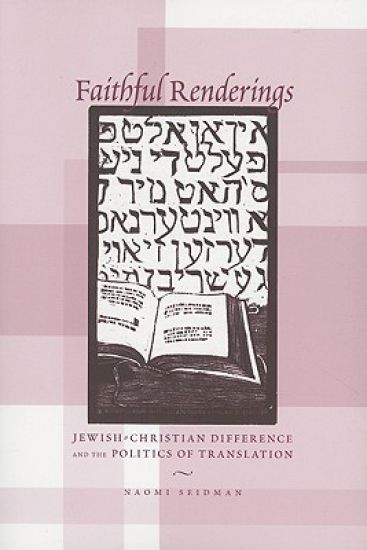
Faithful Renderings reads translation history through the lens of Jewish–Christian difference and, conversely, views Jewish–Christian difference as an effect of translation. Subjecting translation to a theological-political analysis, Seidman asks how the charged Jewish–Christian relationship—and more particularly the dependence of Christianity on the texts and translations of a rival religion—has haunted the theory and practice of translation in the West. Bringing together central issues in translation studies with episodes in Jewish–Christian history, Naomi Seidman considers a range of texts, from the Bible to Elie Wiesel’s Night, delving into such controversies as the accuracy of various Bible translations, the medieval use of converts from Judaism to Christianity as translators, the censorship of anti-Christian references in Jewish texts, and the translation of Holocaust testimony. Faithful Renderings ultimately reveals that translation is not a marginal phenomenon but rather a crucial issue for understanding the relations between Jews and Christians and indeed the development of each religious community.
Faithful Renderings

Faithful Renderings

Naomi Seidman

University of Chicago Press
2006
nidottu
Faithful Renderings reads translation history through the lens of Jewish–Christian difference and, conversely, views Jewish–Christian difference as an effect of translation. Subjecting translation to a theological-political analysis, Seidman asks how the charged Jewish–Christian relationship—and more particularly the dependence of Christianity on the texts and translations of a rival religion—has haunted the theory and practice of translation in the West. Bringing together central issues in translation studies with episodes in Jewish–Christian history, Naomi Seidman considers a range of texts, from the Bible to Elie Wiesel’s Night, delving into such controversies as the accuracy of various Bible translations, the medieval use of converts from Judaism to Christianity as translators, the censorship of anti-Christian references in Jewish texts, and the translation of Holocaust testimony. Faithful Renderings ultimately reveals that translation is not a marginal phenomenon but rather a crucial issue for understanding the relations between Jews and Christians and indeed the development of each religious community.