Kirjojen hintavertailu. Mukana 12 595 353 kirjaa ja 12 kauppaa.

Kirjailija

Naphtali Rishe

Kirjat ja teokset yhdessä paikassa: 3 kirjaa, julkaisuja vuosilta 2016-2023, suosituimpien joukossa 3D Multimodal Interaction with an Input Perspective. Vertaile teosten hintoja ja tarkista saatavuus suomalaisista kirjakaupoista.

3 kirjaa

Kirjojen julkaisuhaarukka 2016-2023.

3D Multimodal Interaction with an Input Perspective

3D Multimodal Interaction with an Input Perspective

Francisco Ortega; Naphtali Rishe; Armando Barreto

CRC Press
2023
sidottu
This book demonstrates state of the art multi-modal interaction with modern inout devices. Currently, most application are uni-modal (e.g., touch) and in some cases bi-modal (e.g., keyboard and mouse). The challenge for developers and researchers: is how to improve interaction when using multiple devices. This book provides the necessary background and then presents case studies in multi-modal interaction. In addition to Interactive Paint, Microsoft Hololens is used to demonstrate the need for multi-modal interaction when using multiple input devices. This book presents an input perspective (as opposed to output like displays and head-mounted displays). Key FeaturesDescribes multi-modal interaction of modern input devices using open sourcetools to provide hands-on experience and guidance. Chapter(s) describing multi-modal interaction using Microsoft HoloLens Source code available via github
Interaction Design for 3D User Interfaces

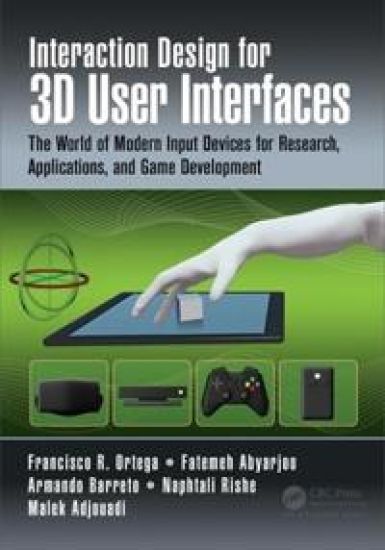
Interaction Design for 3D User Interfaces

Francisco R. Ortega; Fatemeh Abyarjoo; Armando Barreto; Naphtali Rishe; Malek Adjouadi

TAYLOR FRANCIS LTD
2021
nidottu
In this new era of computing, where the iPhone, iPad, Xbox Kinect, and similar devices have changed the way to interact with computers, many questions have risen about how modern input devices can be used for a more intuitive user interaction. Interaction Design for 3D User Interfaces: The World of Modern Input Devices for Research, Applications, and Game Development addresses this paradigm shift by looking at user interfaces from an input perspective.The book is divided into four parts:Theory of input devices and user interfaces, with an emphasis on multi-touch interactionAdvanced topics on reducing noise on input devices using Kalman FiltersA collection of hands-on approaches that allows the reader to gain experience with some devicesA case study examining speech as inputMost of the chapters contain exercises that provide practical experience to enhance knowledge of the material in the related chapter. With its hands-on approach and the affordability of the required hardware, this book is an excellent flexible resource for both the novice and the expert in 3D user input device development. Researchers and practitioners will gain a much deeper understanding about user input devices and user interfaces. Game developers and software designers will find new techniques to improve their products by adding intuitive user interaction mechanisms to their games and applications. In addition to the resources provided in the book, its companion website, http://3DInputBook.com, provides additional resources, which include: additional exercises and project ideas, additional chapters, source code, and class instructors’ resources. The additional resources are provided to keep helping you with new research and new technology as it becomes available to help you stay up to date.
Interaction Design for 3D User Interfaces

Interaction Design for 3D User Interfaces

Francisco R. Ortega; Fatemeh Abyarjoo; Armando Barreto; Naphtali Rishe; Malek Adjouadi

Apple Academic Press Inc.
2016
sidottu
In this new era of computing, where the iPhone, iPad, Xbox Kinect, and similar devices have changed the way to interact with computers, many questions have risen about how modern input devices can be used for a more intuitive user interaction. Interaction Design for 3D User Interfaces: The World of Modern Input Devices for Research, Applications, and Game Development addresses this paradigm shift by looking at user interfaces from an input perspective.The book is divided into four parts:Theory of input devices and user interfaces, with an emphasis on multi-touch interactionAdvanced topics on reducing noise on input devices using Kalman FiltersA collection of hands-on approaches that allows the reader to gain experience with some devicesA case study examining speech as inputMost of the chapters contain exercises that provide practical experience to enhance knowledge of the material in the related chapter. With its hands-on approach and the affordability of the required hardware, this book is an excellent flexible resource for both the novice and the expert in 3D user input device development. Researchers and practitioners will gain a much deeper understanding about user input devices and user interfaces. Game developers and software designers will find new techniques to improve their products by adding intuitive user interaction mechanisms to their games and applications. In addition to the resources provided in the book, its companion website, http://3DInputBook.com, provides additional resources, which include: additional exercises and project ideas, additional chapters, source code, and class instructors’ resources. The additional resources are provided to keep helping you with new research and new technology as it becomes available to help you stay up to date.