Kirjailija
Nat Brandt
Kirjat ja teokset yhdessä paikassa: 11 kirjaa, julkaisuja vuosilta 1986-2014, suosituimpien joukossa The Town That Started the Civil War. Vertaile teosten hintoja ja tarkista saatavuus suomalaisista kirjakaupoista.
11 kirjaa
Kirjojen julkaisuhaarukka 1986-2014.


Six years before the onset of the Civil War, two courageous figures - one a free white man and one an enslaved black woman - risked personal liberty to ensure each other's freedom in an explosive episode that captured the attention of a nation on the brink of cataclysmic change. In this deeply researched account of the rescue of the slave Jane Johnson by the Philadelphia Quaker and fervent abolitionist Passmore Williamson, of the federal court case that followed, and of Johnson's selfless efforts to free the jailed Williamson, veteran journalist Nat Brandt and Emmy-winning filmmaker Yanna Kroyt Brandt capture the heroism and humanity at the heart of this important moment in American history. In July 1855 Williamson and his colleague, William Still, responded to a written plea from Johnson and rushed to the Camden ferry dock to liberate her and her two children from their master in a daring confrontation. Unbeknownst to the abolitionists, Johnson's owner, Col. John Hill Wheeler, was connected to the highest levels of government and was a personal friend of President Franklin Pierce. As a result, Wheeler was able to have Williamson arrested and confined to Moyamensing Prison, an institution notorious for harboring Philadelphia's worst criminals. The case and Williamson's imprisonment became an international cause celebre with famous leaders of the abolitionist movement, black and white, visiting the prisoner. In one of the episode's most dramatic moments, Johnson returned to Philadelphia, risking her own freedom, to testify on Williamson's behalf. There were petitions in many states to impeach Judge John Kintzing Kane, who stubbornly refused to release Williamson. The case became a battle of wills between a man who was unwavering in his defiance of slavery and another determined to defend the so-called rights of the slave owner. Williamson's martyrdom spotlighted Philadelphia as one northern city where the growing rifts between states' rights, federal mandates, and personal liberties had come to the fore. Encompassing acts of brazen defiance, heroic self-sacrifice, high courtroom drama, and the rise of a cult of celebrity, the Brandts' brisk narrative takes readers into the lives of the central participants in this complex episode. Passmore Williamson, Jane Johnson, William Still, Colonel Wheeler, and Judge Kane are brought vibrantly to life as fully developed and flawed characters drawn unexpectedly into the annals of history. ""In the Shadow of the Civil War"" chronicles events that presage the divisive national conflict that followed and that underscore the passionate views on freedom and justice that continue to define the American experience.
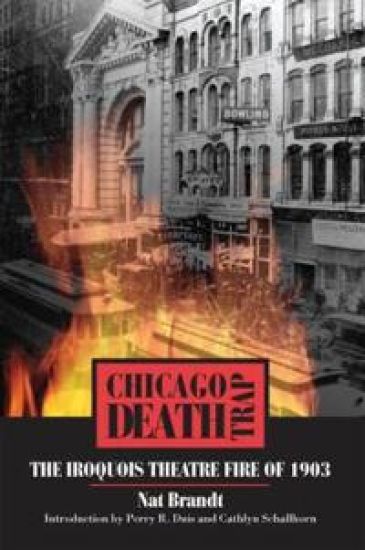
On the afternoon of December 30, 1903, during a sold out matinee performance, a fire broke out in Chicago's Iroquois Theatre. In the short span of twenty minutes, more than six hundred people were asphyxiated, burned, or trampled to death in a panicked mob's failed attempt to escape. In ""Chicago Death Trap: The Iroquois Theatre Fire of 1903"", Nat Brandt provides a detailed chronicle of this horrific event to assess not only the titanic tragedy of the fire itself but also the municipal corruption and greed that kindled the flames beforehand and the political cover-ups hidden in the smoke and ash afterwards. Advertised as ""absolutely fireproof,"" the Iroquois was Chicago's most modern playhouse when it opened in the fall of 1903. With the approval of the city's building department, theater developers Harry J. Powers and William J. Davis opened the theater prematurely to take full advantage of the holiday crowds, ignoring flagrant safety violations in the process. The aftermath of the fire proved to be a study in the miscarriage of justice. Despite overwhelming evidence that the building was not complete, that fire safety laws were ignored, and that management had deliberately sealed off exits during the performance, no one was ever convicted or otherwise held accountable for the enormous loss of life. Lavishly illustrated and featuring an introduction by Chicago historians Perry R. Duis and Cathlyn Schallhorn, ""Chicago Death Trap: The Iroquois Theatre Fire of 1903"" is rich with vivid details about this horrific disaster, captivatingly presented in human terms without losing sight of the broader historical context.
Chicago Death Trap: The Iroquois Theatre Fire of 1903
Nat Brandt; Perry R. Duis; Cathlyn Schallhorn
SOUTHERN ILLINOIS UNIVERSITY PRESS
2003
sidottu
On the afternoon of December 30, 1903, during a sold-out matinee performance, a fire broke out in Chicago's Iroquois Theatre. In the short span of twenty minutes, more than six hundred people, two thirds of whom were women and children, were asphyxiated, burned, or trampled to death in a panicked mob's failed attempt to escape. A century after the fire-- the deadliest in American history-- Nat Brandt provides the only detailed chronicle of this horrific event to assess not only the titanic tragedy of the fire itself but also the municipal corruption and greed that kindled the flames beforehand and the political cover-ups hidden in the smoke and ash afterwards. Advertised as " absolutely fireproof," the Iroquois was Chicago's most modern playhouse when it opened in the fall of 1903. With the approval of the city's building department, theater developers Harry J. Powers and William J. Davis opened the theater prematurely to take full advantage of the holiday crowds, ignoring flagrant safety violations in the process. During the matinee on this particular Wednesday, all 1,724 seats were filled and an additional two hundred people were standing. Midway through the second act, a spark from a defective light ignited a drop curtain and the blaze spread quickly to the scenery. Roof vents designed to handle smoke and heat were sealed off, and the fire curtain snagged before it could shield the audience from danger. A blast of gaseous fumes shot across the auditorium from an open stage door and asphyxiated hundreds of theatergoers almost instantly. Others were trampled or burned to death in the panic that ensued as they struggled to escape through locked exits, succeeding only in piling body upon body as the flames closed in. For days afterward, Chicago mourned as relatives and friends searched hospitals for missing loved ones. The aftermath of the fire proved to be a study in the miscarriage of justice. Despite overwhelming evidence that the building was not complete, that fire safety laws were ignored, and that management had deliberately sealed off exits during the performance, no one was ever convicted or otherwise held accountable for the enormous loss of life. Lavishly illustrated and featuring an introduction by Chicago historians Perry R. Duis and Cathlyn Schallhorn, Chicago Death Trap: The Iroquois Theatre Fire of 1903 is rich with vivid details about this horrific disaster, captivatingly presented in human terms without losing sight of the broader historical context.
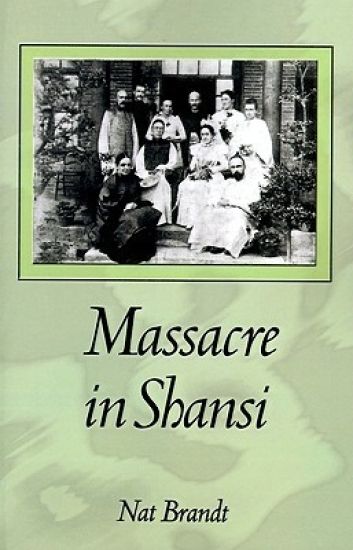
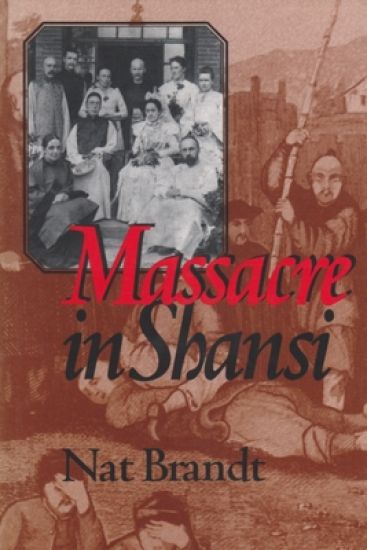
This text tells the tragic story of the 18 missionaries from Oberlin College, Ohio, and the Chinese Christians, who were all killed during the Boxer Rebellion in 1900. Caught up in a clash of cultures, the missionaries were self-righteous and offensive symbols of Western imperialism.
Before the War Between the States, there was the war between the U.S. government and Oberlin, Ohio. . . . "A fascinating, gripping narrative."--James M. McPherson, author of Battle Cry of FreedomOn a crisp autumn day in Ohio, 1858, two Kentucky slave hunters were closing in on a runaway slave named John Price. Federal law said they had the right to bring the man back across state lines. But to the people of Oberlin, Ohio, the law was wrong--and they were willing to prove it with their sweat and blood. In this fascinating, spirited telling of one of the most extraordinary confrontations in U.S. history, Nat Brandt gives a blow-by-blow account of how a small but passionate army of students, farmers, former slaves, a bookstore owner, a professor, a preacher, and a cobbler risked their lives to rescue a man they didn't know--and ignited a furious conflict with a wavering U.S. government. From its first blows to the controversial trials that followed, the Oberlin Rescue was an act of uncommon heroism and courage--and a true battle for the conscience of a land.