

Kirjailija
Nat Segaloff
Kirjat ja teokset yhdessä paikassa: 34 kirjaa, julkaisuja vuosilta 2013-2026, suosituimpien joukossa Hurricane Billy. Vertaile teosten hintoja ja tarkista saatavuus suomalaisista kirjakaupoista.
34 kirjaa
Kirjojen julkaisuhaarukka 2013-2026.

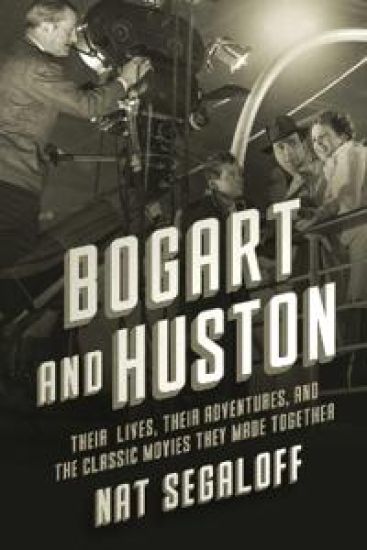
From 1941 to 1953, director John Huston and actor Humphrey Bogart made one classic film after another, from The Maltese Falcon to The African Queen. Here is the story of their close but combative friendship that produced some of the best movies ever made. Every time they made a movie together, they made a classic—or so it seemed for star Humphrey Bogart and writer/director John Huston. Their six collaborations from 1941 and 1953 include many of the "golden age” hits from Hollywood’s fabled film legacy: The Maltese Falcon, Across the Pacific, The Treasure of the Sierra Madre, Key Largo, The African Queen, and Beat the Devil. At the same time, both men led fiercely separate lives—except when they were making pictures together. Sometimes they agreed and sometimes they argued, always keeping their eyes on the results. What did each man bring to the collaboration, and how did their six films together reflect their disparate personalities? Their friendship was as dramatic as any of their movies. It survived nine marriages, a world war, the blacklist, leeches, alcohol, and Jack L. Warner. Here is the story of these two legendary talents, their films, their lives, their foes, and their remarkable devotion to each other.
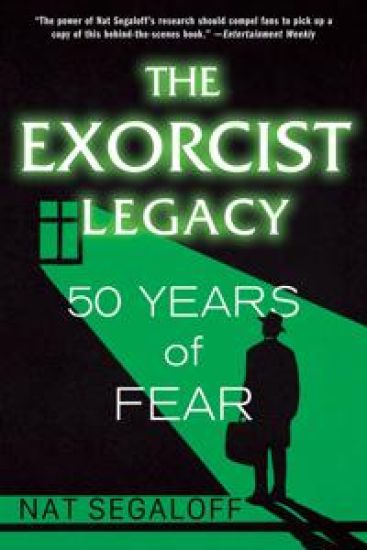
A provocative, fascinating, and compulsively readable account one of the most shocking, influential, and successful films of all time, The Exorcist, with a new coda on The Exorcist: Believer and the upcoming The Exorcist: Deceiver. On December 26, 1973, The Exorcist was released. Within days it had become legend. Moviegoers braved hours-long lines in winter weather to see it. Some audience members famously fainted or vomited. Half a century later, the movie that both inspired and transcends the modern horror genre has lost none of its power to terrify and unsettle. The Exorcist Legacy reveals the complete story of this cultural phenomenon, from the real-life exorcism in 1949 Maryland that inspired William Peter Blatty's bestselling novel on which the movie is based, to its many sequels, prequels, TV series, and homages. Nat Segaloff, biographer of the film's director, William Friedkin, draws on original interviews with cast, crew, and participants as well as revelations from personal papers to present an intriguing and surprising new view of the making of the movie, and its aftermath. Segaloff also examines as never before the keys to the movie's enduring appeal. Friedkin and Blatty's goal was far more ambitious than making a scary movie; they aimed to make people "think about the concept of good and evil." The Exorcist succeeds, and then some, not just by creating on-screen scares, but by challenging viewers' deepest personal beliefs--and fears. Foreword by John Russo Updated and Expanded with a New Coda
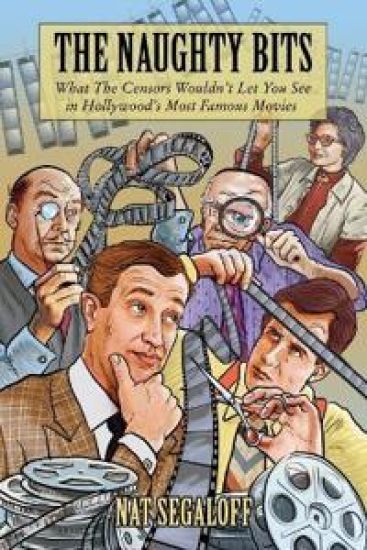

Between 1934 and 1968, no Hollywood studio could make a movie without the permission of and a seal of approval from the Production Code Administration. The Production Code was Hollywood's official censor. Screenplays, books, plays, costumes and even story ideas and songs had to be okayed by the Code before they could be filmed, and the Code monitored every stage of the production process to ensure compliance. The correspondence between the Code and the studios was confidential, and the memos within the Code office itself were even more so.Well, not any more. The Naughty Bits pores through those files to show how the censors did their job. What was the world prevented from seeing in some of the greatest movies ever made, including Stagecoach, Some Like It Hot, Convention City, Psycho, His Girl Friday and even The Ten Commandments? Here is the sometimes funny, sometimes outrageous, always riveting history of movie censorship on a nitty-gritty level.
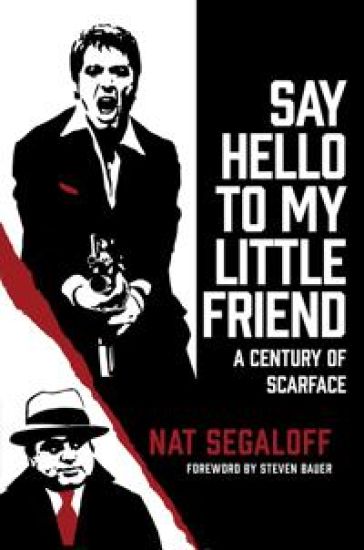
Celebrating the 40th anniversary of Scarface starring Al Pacino -- Brian DePalma's 1983 gangster film that shook the world, shocked the critics, and shot bullet holes through the American Dream--this explosive Hollywood tell-all charts not only the phenomenon of this controversial classic but also the equally controversial legacy of the original 1932 Scarface that inspired it... WITH A FOREWORD FROM STEVEN BAUER How many movies in the history of film have truly shaken society? Scarface did it twice. When Brian DePalma's operatically violent and profane Scarface debuted in 1983, the film drew almost as much fire as the relentless gunfire in the film itself. Starring Al Pacino as Cuban refugee-turned-crime-boss Tony Montana, Steven Bauer as his best friend Manny, and rising star Michelle Pfeiffer as an Eighties gangster's moll, the movie was a remake of 1932's Scarface--revamped for a new era of drugs, sex, and graphic violence. Attacked as both a celebration of cocaine-fueled excess and a condemnation of it, the film's reputation only grew as the years went by. But the real story of its success started nearly a century ago--when Hollywood first fell in love with the American gangster... Hollywood's infatuation with money, power, and organized crime has captured the public's imagination and made Scarface one of its most enduring modern myths. From a 1912 gangster film by D.W. Griffith to the 1932 hit Scarface starring Paul Muni, to Brian DePalma's 1983 shocker, the antihero's rise and fall exposes the dark side of the American Dream--whether it's Prohibition Era bootleggers or modern-day drug dealers. When actor Al Pacino got the idea of doing a remake of Scarface after screening the original, a legend was (re)born--and the rest is history. Filled with behind-the-scenes anecdotes, untold tales from Old and New Hollywood, and sixteen pages of eye-popping photos, Say Hello to My Little Friend is the ultimate guide to everything Scarface. With guns blazing and chainsaws whirring, movie biz writer Nat Segaloff tears into this pop culture phenomenon with fascinating insights, stunning revelations, and a true fan's glee. This is a must-have book for movie buffs, crime lovers, and culture vultures everywhere. "Brilliant. One of my favorite films. So many ways to look at it. So much I didn't know. Nat Segaloff is that rare film scholar: as entertaining as he's informative." --David Morrell, New York Times bestselling author of First Blood (Rambo) on Say Hello to My Little Friend
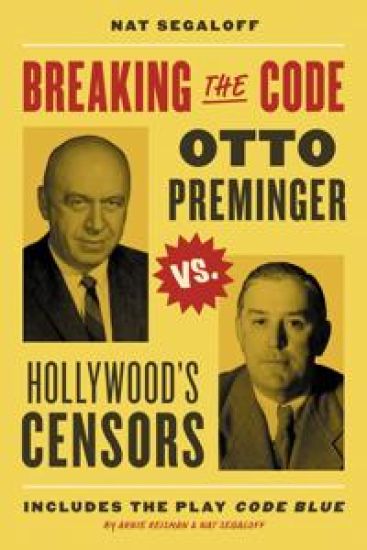
Breaking the Code reveals the efforts of director-producer Otto Preminger to bring his aesthetic vision to the screen even if it meant challenging the Production Code, a system of self-censorship that shaped the movies during the four decades it was in force. Along the way, Preminger sent shock waves through Hollywood and a network of exhibitors, publishers, and religious leaders who had personal, and even financial, stakes in the repression of artistic freedom. The process of telling this story began in 2003 when Arnie Reisman and Nat Segaloff thought it might be interesting to write a play about Preminger's efforts to get a Code seal for his 1954 romantic comedy The Moon is Blue, based on F. Hugh Herbert's 1951 play. In those days, no film could be shown that did not receive authorization from the Production Code Administration, and his film was deemed too "adult" for even adults to see. Preminger was met with opposition from administrator, Joseph Breen, who was prepared to go to war to save the rest of the country from its sensibilities. Along with their play Code Blue, which dramatizes the clash between these two evenly matched but wildly disparate titans, Breaking the Code chronicles the battle between Otto Preminger and the Code. Between 1953 and 1962, he fought the censorship of The Moon Is Blue, The Man with the Golden Arm, Anatomy of a Murder, and Advise and Consent. The details of each skirmish vary, but they cover the same issues: art versus commerce, freedom of speech versus censorship, and money versus principle. Times may have changed, but these battles continue. Breaking the Code is an attempt to go back and see how the walls can be made to crumble.


Shari Lewis and Lamb Chop
Nat Segaloff; Mallory Lewis; David Copperfield
THE UNIVERSITY PRESS OF KENTUCKY
2022
sidottu
For almost half a century, celebrated ventriloquist and entertainer Shari Lewis delighted generations of children and adults with the help of her trusted sock puppet sidekick Lamb Chop. For decades, the beloved pair were synonymous with children's television, educating and entrancing their young audience with their symbiotic personalities and their proclivity for song, dance, and the joy of silliness. But as iconic as their television personas were, relatively little inside knowledge has been revealed about Lewis herself and the life-changing moments that led her to the entertainment industry and perhaps, most importantly, to Lamb Chop. Renowned for her skills as a performer, Lewis was an equally skilled businesswoman. Operating in an era when women were largely left out of the conversation, she was one of the few women to run her own television production company. Whether it was singing, dancing, conducting, writing, drawing, or ventriloquism—a skill in which she was virtually unmatched – Lewis spent the entirety of her 65 years in pursuit of performative perfection. Constantly innovating and adapting to the needs of her audience and the market, Lewis extended the longevity of her career decade after decade. Her contributions, and that of Lamb Chop, and the rest of her puppet pals forever changed the history of children's television. Now, two decades after Lewis and Lamb Chop last graced television with their presence, Lewis' daughter Mallory and author Nat Segaloff have set the record straight about the iconic pair in Shari Lewis and Lamb Chop: The Team that Changed Children's Television. In this seminal biography, the pair pull the veritable wool from the eyes of audiences who adored the legendary entertainer to examine the joys, sorrows, triumphs, and sheer hard work that gave Lewis and Lamb Chop their enduring star power.
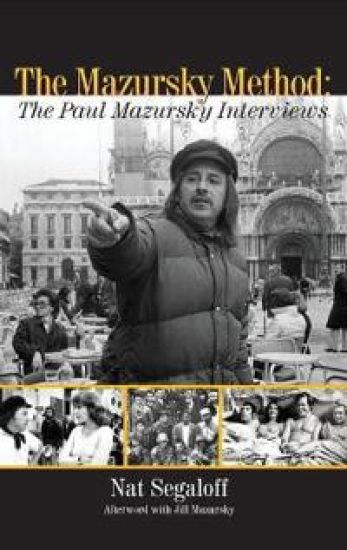
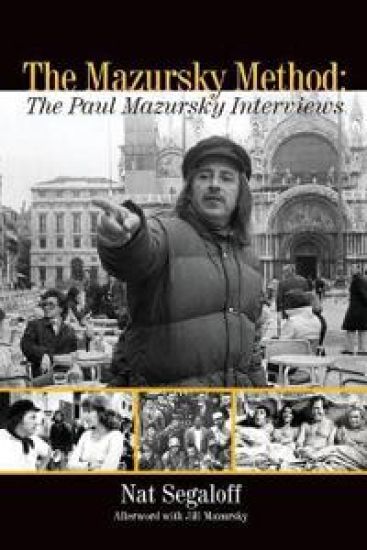
He was the most observant, sympathetic, and successful filmmaker about the American middle class. He found the humor and drama in their struggle to cope with the massive social changes of the 60s, 70s, and 80s. In Bob & Carol & Ted & Alice, Blume in Love, Down & Out in Beverly Hills, Harry & Tonto, and An Unmarried Woman, among other now-classics, he poked fun at--while still loving--a generation in search of itself. Yet Paul Mazursky's cinematic quest came at a cost. Although he was in sync with his audience, he was usually ahead of the studio brass upon whom he depended for financing. In The Mazursky Method: The Paul Mazursky Interviews, Nat Segaloff--who exhaustively researched and interviewed the mercurial Mazursky--charts this tenuous relationship and explores the highs and lows of being both a participant and a critic. Nat Segaloff is no stranger to elusive subjects. As the biographer of William Friedkin (The French Connection, Sorcerer), Harlan Ellison ("I have No Mouth, and I Must Scream"), and John Milius (Red Dawn, Apocalypse Now) he is used to pinning down the ineffable. In The Mazursky Method: The Paul Mazursky Interviews he conducts an unguarded career interview with a man who was the muse of, and then outlived, his movie-going generation. Nat Segaloff has been a film publicist, critic, teacher, and author (not all at the same time). He lives in Los Angeles waiting for his phone calls to be returned.
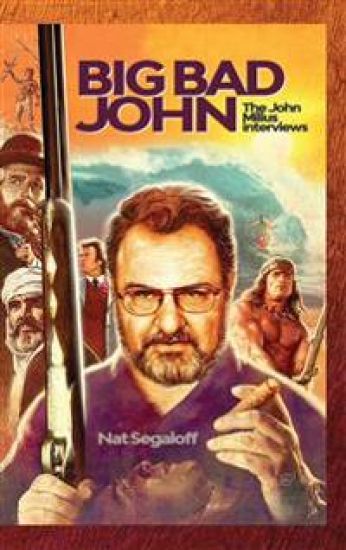
Interviews with the director of Conan the Barbarian, Red Dawn and more.

Interviews with the director of Conan the Barbarian, Red Dawn and more.
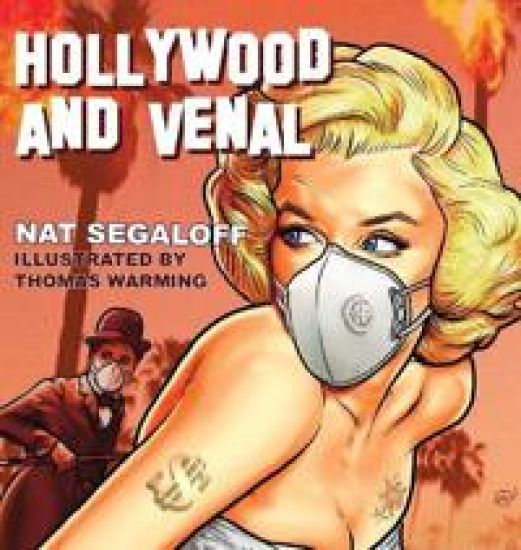
"Strip away the phony tinsel of Hollywood and you find the realtinsel underneath." - Oscar Levant Sometimes fiction is the best way to tell the truth. In this, his first collection of short stories, Nat Segaloff (Final Cuts, Guarding Gable, Mr. Huston/Mr. North) reveals the truth behind some of Hollywood's biggest scandals, agendas, and confidences. First published by reporter/columnist Nikki Finke on her acclaimed website HollywoodDementia.com(TM), these romans- -clef (stories with a key) expose long-hidden secrets about the Blacklist, the Oscars(R), publicity stunts, studio follies, ageism, celebrity weirdness, and other gambits that, even today, are barely whispered -- if they are discussed at all. For half a century author Segaloff has been a publicist, critic, historian, and producer (not all at the same time) absorbing film industry lore. And he kept notes. Where he could use real names, he put them into his memoirs Screen Saver and Screen Saver Too (both from BearManor). Where he had to hide identities, he saved them for Hollywood & Venal. Here is a collection of funny, revealing, moving, and sometimes absurd narratives, every one of which has its origins in an actual Hollywood event, legend, mindset, pitch, or occurrence known personally to the author. Readers are invited to guess who.Text (c)2020 Nat Segaloff. Illustrations (c)2020 Thomas Warming. The story pitches in this book are copyrighted and registered with the Writers Guild of America, west, Inc.

"Strip away the phony tinsel of Hollywood and you find the realtinsel underneath." - Oscar Levant Sometimes fiction is the best way to tell the truth. In this, his first collection of short stories, Nat Segaloff (Final Cuts, Guarding Gable, Mr. Huston/Mr. North) reveals the truth behind some of Hollywood's biggest scandals, agendas, and confidences. First published by reporter/columnist Nikki Finke on her acclaimed website HollywoodDementia.com(TM), these romans- -clef (stories with a key) expose long-hidden secrets about the Blacklist, the Oscars(R), publicity stunts, studio follies, ageism, celebrity weirdness, and other gambits that, even today, are barely whispered -- if they are discussed at all. For half a century author Segaloff has been a publicist, critic, historian, and producer (not all at the same time) absorbing film industry lore. And he kept notes. Where he could use real names, he put them into his memoirs Screen Saver and Screen Saver Too (both from BearManor). Where he had to hide identities, he saved them for Hollywood & Venal. Here is a collection of funny, revealing, moving, and sometimes absurd narratives, every one of which has its origins in an actual Hollywood event, legend, mindset, pitch, or occurrence known personally to the author. Readers are invited to guess who.Text (c)2020 Nat Segaloff. Illustrations (c)2020 Thomas Warming. The story pitches in this book are copyrighted and registered with the Writers Guild of America, west, Inc.
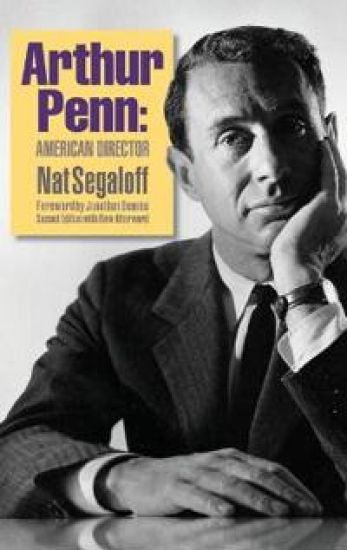
This is the hardback edition.First published to acclaim in 2011, Arthur Penn: American Director is the first biography of the acclaimed director of The Miracle Worker, Little Big Man, Alice's Restaurant, The Chase, Mickey One, The Missouri Breaks, and, of course, the motion picture that fired the first shot in the Film Revolution, Bonnie and Clyde.Born in Philadelphia to immigrant parents in 1922 and raised in Dickensian circumstances, Penn (and his older brother, Irving, who became the innovative fashion photographer) found himself behind the German lines at the Battle of the Bulge, a student in the formative years of Black Mountain College, in the director's seat at the beginning of the Golden Age of television, and at the blossoming of the Actors Studio, all of which influenced his filmmaking. Arthur Penn: American Director charts his personal and artistic odyssey. Written with Penn's intimate participation, it was completed days before his death in 2010. It features interviews with dozens of his collaborators and is being brought back into print by Bear Manor Media with an all-new Afterword containing tributes by his peers and a stunning revelation about the mysterious woman who educated young Arthur in the arts.NAT SEGALOFF has written and/or produced biographies of William Friedkin, Harlan Ellison, Stirling Silliphant, John Belushi, Stan Lee, Larry King, Walon Green, Paul Mazursky, and Shari Lewis & Lamb Chop. He lives in Los Angeles where he has given up expecting people to return his phone calls.
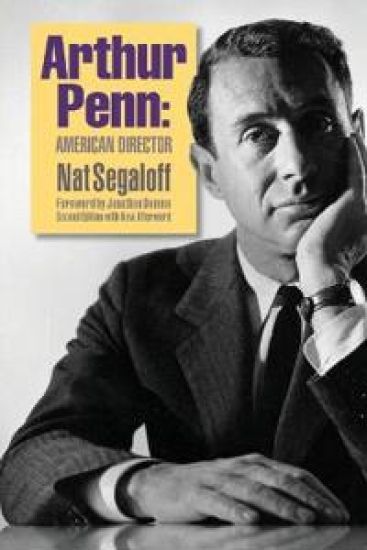
First published to acclaim in 2011, Arthur Penn: American Director is the first biography of the acclaimed director of The Miracle Worker, Little Big Man, Alice's Restaurant, The Chase, Mickey One, The Missouri Breaks, and, of course, the motion picture that fired the first shot in the Film Revolution, Bonnie and Clyde.Born in Philadelphia to immigrant parents in 1922 and raised in Dickensian circumstances, Penn (and his older brother, Irving, who became the innovative fashion photographer) found himself behind the German lines at the Battle of the Bulge, a student in the formative years of Black Mountain College, in the director's seat at the beginning of the Golden Age of television, and at the blossoming of the Actors Studio, all of which influenced his filmmaking. Arthur Penn: American Director charts his personal and artistic odyssey. Written with Penn's intimate participation, it was completed days before his death in 2010. It features interviews with dozens of his collaborators and is being brought back into print by Bear Manor Media with an all-new Afterword containing tributes by his peers and a stunning revelation about the mysterious woman who educated young Arthur in the arts.NAT SEGALOFF has written and/or produced biographies of William Friedkin, Harlan Ellison, Stirling Silliphant, John Belushi, Stan Lee, Larry King, Walon Green, Paul Mazursky, and Shari Lewis & Lamb Chop. He lives in Los Angeles where he has given up expecting people to return his phone calls.