Kirjojen hintavertailu. Mukana 12 317 221 kirjaa ja 12 kauppaa.

Kirjailija

Natalie Roxburgh

Kirjat ja teokset yhdessä paikassa: 3 kirjaa, julkaisuja vuosilta 2015-2025, suosituimpien joukossa The Politics of Disinterestedness in Nineteenth-Century Literature. Vertaile teosten hintoja ja tarkista saatavuus suomalaisista kirjakaupoista.

3 kirjaa

Kirjojen julkaisuhaarukka 2015-2025.

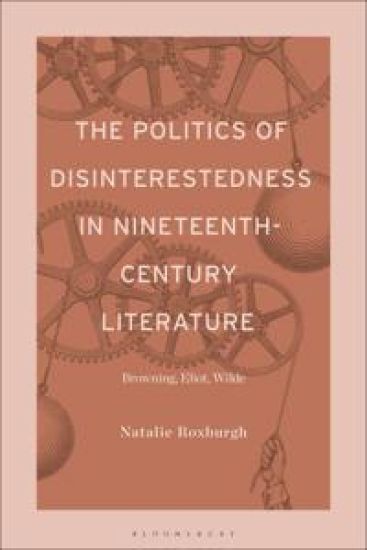
The Politics of Disinterestedness in Nineteenth-Century Literature
The Politics of Disinterestedness in Nineteenth-Century Literature historicizes the concept of disinterestedness by examining discourses on political economy during and before the 19th century. It argues that certain literary texts respond to the way all interests are transformed into economic interests during this period. It also shows that this has implications for aesthetics and questions of aesthetic autonomy, in which discourses on disinterestedness are tied up. Through a New Formalist approach, Natalie Roxburgh provides fresh readings of texts by Robert Browning, George Eliot, and Oscar Wilde, whose respective oeuvres demonstrate an attention to the formal affordances of literary disinterestedness that compete with—and critically assess—other versions. Browning develops a dramatic monologue so that the reader is enticed to re-read his poems; Eliot cultivates the problematic character who must struggle with her desire within a larger play of interests in a way that evolves the realist Condition of England novel; and Wilde experiments with the blending of genres in his critical essays by rendering them as dramatic dialogues that serve as contemplative mechanisms for playing with a multiplicity of interests, which he explores in terms of influence. Reading these canonical authors through the politics of disinterestedness sheds new light on literary value and, in particular, the formal techniques seen as important by the end of the 19th century, just as liberal democracy emerged in Britain.
Representing Public Credit

Representing Public Credit

Natalie Roxburgh

Routledge
2020
nidottu
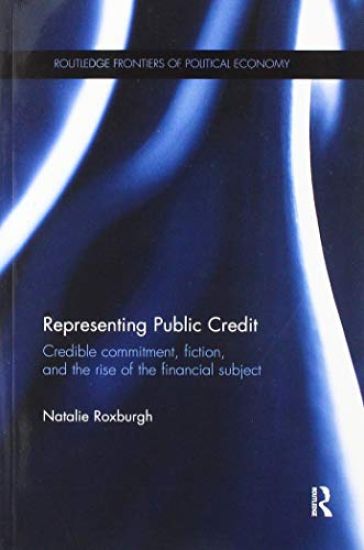
Public credit was controversial in seventeenth- and eighteenth-century England. It entailed new ways of thinking about the individual in relation to the State and was for many reasons a site of cultural negotiation and debate. At the same time, it required commitment from participants in order to function. Some of the debates relating to public credit, whose success was tied up in the way it was represented, find their way into contemporary fiction – in particular the eighteenth-century novel.This book reads eighteenth-century fiction alongside works of political economy in order to offer a new perspective on credible commitment and the rise of a credit economy facilitated by public credit. Works by authors such as Daniel Defoe, Samuel Richardson, and Frances Burney are explored alongside lesser-known fictional texts, including some early it-narratives and novels of sensibility, to give a fully rounded view of the perception of public credit within England and its wider cultural and social implications. Strategies for representing public credit, the book argues, can be seen as contributing to the development of the English novel, a type of fiction whose emphasis on the individual can also be read as helping to produce a certain type of person, the modern financial subject.This interdisciplinary book draws from economic history and literary/cultural studies in order to make connections between the development of finance and an important facet of modern Western culture, the novel.
Representing Public Credit

Representing Public Credit

Natalie Roxburgh

Routledge
2015
sidottu
Public credit was controversial in seventeenth- and eighteenth-century England. It entailed new ways of thinking about the individual in relation to the State and was for many reasons a site of cultural negotiation and debate. At the same time, it required commitment from participants in order to function. Some of the debates relating to public credit, whose success was tied up in the way it was represented, find their way into contemporary fiction – in particular the eighteenth-century novel.This book reads eighteenth-century fiction alongside works of political economy in order to offer a new perspective on credible commitment and the rise of a credit economy facilitated by public credit. Works by authors such as Daniel Defoe, Samuel Richardson, and Frances Burney are explored alongside lesser-known fictional texts, including some early it-narratives and novels of sensibility, to give a fully rounded view of the perception of public credit within England and its wider cultural and social implications. Strategies for representing public credit, the book argues, can be seen as contributing to the development of the English novel, a type of fiction whose emphasis on the individual can also be read as helping to produce a certain type of person, the modern financial subject.This interdisciplinary book draws from economic history and literary/cultural studies in order to make connections between the development of finance and an important facet of modern Western culture, the novel.