Kirjailija
Natalie Zemon Davis
Kirjat ja teokset yhdessä paikassa: 20 kirjaa, julkaisuja vuosilta 1975-2025, suosituimpien joukossa La Storia Al Cinema: La Schiavitu Sullo Schermo Da Kubrick a Spielberg. Vertaile teosten hintoja ja tarkista saatavuus suomalaisista kirjakaupoista.
20 kirjaa
Kirjojen julkaisuhaarukka 1975-2025.
Natalie Zemon Davis and Elizabeth Douvan’s Operation Mind is a body of evidence, a prophetic warning, and a call to action about the urgency of doing all we can to prevent thought control in America. In 1952, this meticulously researched pamphlet documented the House Committee on Un-American Activities’ attacks and impact. The HUAC abused its charge to intimidate and silence academics, union members, social critics, scientists, artists, teachers, political opponents, rabbis and other religious leaders, to make them appear suspect and “un-American” in the eyes of the American people. The 2025 reprint of Operation Mind, with a foreword by Silke-Maria Weineck and a new introduction by Natalie Zemon Davis, connects this history of McCarthyism with present-day attacks on academic freedom.
Listening to the Languages of the People
Natalie Zemon Davis
CENTRAL EUROPEAN UNIVERSITY PRESS
2022
sidottu
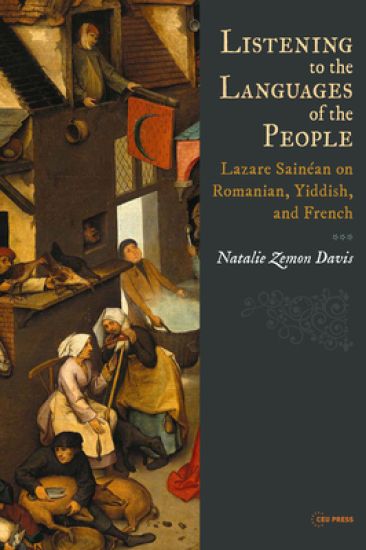
This tale of great achievements and great disappointments offers a fresh perspective on the interplay between scholarship and political sentiment in the late nineteenth and early twentieth centuries. Lazar ?aineanu (1859-1934), linguist and folklorist, was a pioneer in his native Romania, seeking out the popular elements in culture along with high literary ones. He was among the first to publish a study of Yiddish as a genuine language, and he uncovered Turkish features in Romanian language and customs. He also made an index of hundreds of Romanian folktales. Yet when he sought Romanian citizenship and a professorship, he was blocked by powerful figures who thought Jews could not be Romanians and who fancied the origins of Romanian culture to be wholly Latin. Faced with anti-Semitism, some of his friends turned to Zionism. Instead he tried baptism, which brought him only mockery and shame. Hoping to find a polity to which he could belong, ?aineanu moved with his family to Paris in 1900 and became Lazare Sainéan. There he made innovative studies of French popular speech and slang, culminating in his great work on the language of Rabelais. Once again, he was contributing to the development of a national tongue. Even then, while welcomed by literary scholars, Sainéan was unable to get a permanent university post. Though a naturalized citizen of France, he felt himself a foreigner, an “intruder,” into his old age.
An exquisite appreciation of the distinctive rewards of historical research and a classic guide to the personal yet disciplined craft of discovery, now in its first English translation. Arlette Farge’s Le Goût de l’archive is widely regarded as a historiographical classic. While combing through two-hundred-year-old judicial records from the Archives of the Bastille, historian Farge was struck by the extraordinarily intimate portrayal they provided of the lives of the poor in pre-Revolutionary France, especially women. She was seduced by the sensuality of old manuscripts and by the revelatory power of voices otherwise lost. In The Allure of the Archives, she conveys the exhilaration of uncovering hidden secrets and the thrill of venturing into new dimensions of the past. Originally published in 1989, Farge’s classic work communicates the tactile, interpretive, and emotional experience of archival research while sharing astonishing details about life under the Old Regime in France. At once a practical guide to research methodology and an elegant literary reflection on the challenges of writing history, this uniquely rich volume demonstrates how surrendering to the archive’s allure can forever change how we understand the past.
The Book of the City of Ladies
Christine de Pizan; Natalie Zemon Davis
Persea Books Inc
2013
nidottu
Christine de Pizan was born in 1365 in Venice. Her family moved to Paris three years later when her father was appointed court astrologer to King Charles V. Close ties to the royal court and her father's encouragement enabled Christine to obtain a good education, unusual for women of her time. At the age of fifteen, she married a court notary, who also fostered her learning and her literary activities. She was only twenty-five when she was widowed and left without an inheritance. With three children to support, Christine turned to writing to earn her living. From 1390 to 1429, the presumed year of her death, she wrote more than twenty works, nearly all concerned with two themes: the political life of France and the defense of women. The Book of the City of Ladies is Christine de Pizan's most eloquent expression of her feminist beliefs.
The path-breaking work of renowned historian Natalie Zemon Davis has added profoundly to our understanding of early modern society and culture. She rescues men and women from oblivion using her unique combination of rich imagination, keen intelligence, and archival sleuthing to uncover the past. Davis brings to life a dazzling cast of extraordinary people, revealing their thoughts, emotions, and choices in the world in which they lived. Thanks to Davis we can meet the impostor Arnaud du Tilh in her classic, "The Return of Martin Guerre", follow three remarkable lives in "Women on the Margins", and journey alongside a traveller and scholar in "Trickster Travels" as he moves between the Muslim and Christian worlds. In these conversations with Denis Crouzet, professor of history at the Sorbonne and well-known specialist on the French Wars of Religion, Davis examines the practices of history and controversies in historical method. Their discussion reveals how Davis has always pursued the thrill and joy of discovery through historical research. Her quest is influenced by growing up Jewish in the Midwest as a descendant of emigrants from Eastern Europe.She recounts how her own life as a citizen, a woman, and a scholar compels her to ceaselessly examine and transcend received opinions and certitudes. Natalie Zemon Davis reminds the reader of the broad possibilities to be found by studying the lives of those who came before us, and teaches us how to give voice to what was once silent.
This path-breaking work of renowned historian Natalie Zemon Davis has added profoundly to our understanding of early modern society and culture. She rescues men and women from oblivion using her unique combination of rich imagination, keen intelligence, and archival sleuthing to uncover the past. Davis brings to life a dazzling cast of extraordinary people, revealing their thoughts, emotions, and choices in the world in which they lived. Thanks to Davis we can meet the impostor Arnaud du Tilh in her classic, "The Return of Martin Guerre", follow three remarkable lives in Women on the Margins, and journey alongside a traveller and scholar in Trickster Travels as he moves between the Muslim and Christian worlds. In these conversations with Denis Crouzet, professor of history at the Sorbonne and well-known specialist on the French Wars of Religion, Davis examines the practices of history and controversies in historical method. Their discussion reveals how Davis has always pursued the thrill and joy of discovery through historical research. Her quest is influenced by growing up Jewish in the Midwest as a descendant of emigrants from Eastern Europe.She recounts how her own life as a citizen, a woman, and a scholar compels her to ceaselessly examine and transcend received opinions and certitudes. Natalie Zemon Davis reminds the reader of the broad possibilities to be found by studying the lives of those who came before us, and teaches us how to give voice to what was once silent.
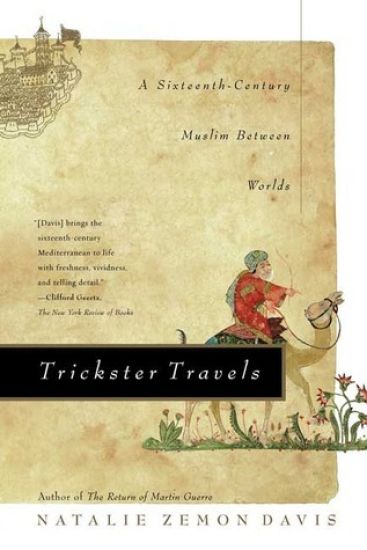
Acclaimed historian Natalie Zemon Davis's accessible and dramatic biography was widely hailed as a masterpiece and tells the story of Leo Africanus, a sixteenth-century Moroccan who embodies the rich and complex exchanges between Europe and Africa during the Renaissance. Trickster Travels offers a virtuoso study of the fragmentary, partial and often contradictory traces that al-Hasan al-Wazzan left behind him, and is a superb interpretation of his extraordinary life and work.
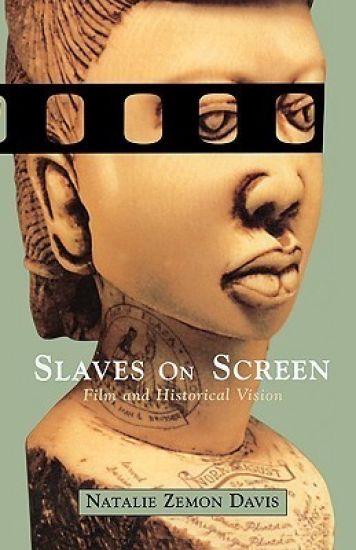
La Storia Al Cinema: La Schiavitu Sullo Schermo Da Kubrick a Spielberg
Natalie Zemon Davis; Alessandro Portelli
Viella
2007
nidottu
Il rapporto fra storia scritta e storia raccontata per immagini e al centro di questa affascinante incursione di una storica nelle rappresentazioni della resistenza alla schiavitu offerte dal mezzo cinematografico. Natalie Zemon Davis, che scrisse Le retour de Martin Guerre e collaboro come consulente per l'omonimo film francese, affronta qui la questione di come l'industria cinematografica abbia ritratto gli schiavi nelle opere di cinque grandi registi: Spartacus di Stanley Kubrick (1960), Queimada di Gillo Pontecorvo (1969), La ultima cena di Tomas Gutierrez Alea (1976), Amistad di Steven Spielberg (1997), Beloved di Jonathan Demme (1998). > Attraverso la scelta di un tema specifico, l'autrice sottolinea le potenzialita proprie del cinema di narrare il passato in modo efficace e significativo e di proporre riflessioni convincenti su eventi e processi storici; a condizione pero di rimanere fedele alle fonti, lasciando spazio alla creativita e all'invenzione nell'ambito della plausibilita e della verosimiglianza. >
Trickster Travels: A Sixteenth-Century Muslim Between Worlds
Natalie Zemon Davis
Hill Wang
2007
nidottu
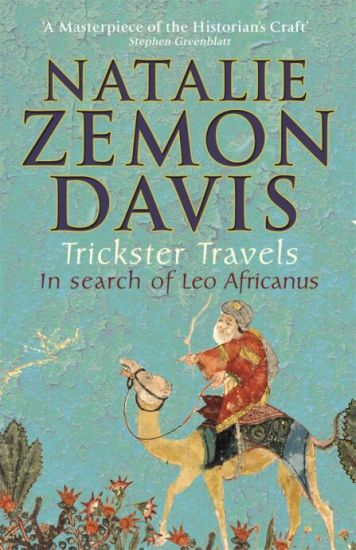
An engrossing study of Leo Africanus and his famous book, which introduced Africa to European readers Al-Hasan al-Wazzan--born in Granada to a Muslim family that in 1492 went to Morocco, where he traveled extensively on behalf of the sultan of Fez--is known to historians as Leo Africanus, author of the first geography of Africa to be published in Europe (in 1550). He had been captured by Christian pirates in the Mediterranean and imprisoned by the pope, then released, baptized, and allowed a European life of scholarship as the Christian writer Giovanni Leone. In this fascinating new book, the distinguished historian Natalie Zemon Davis offers a virtuoso study of the fragmentary, partial, and often contradictory traces that al-Hasan al-Wazzan left behind him, and a superb interpretation of his extraordinary life and work. In Trickster Travels, Davis describes all the sectors of her hero's life in rich detail, scrutinizing the evidence of al-Hasan's movement between cultural worlds; the Islamic and Arab traditions, genres, and ideas available to him; and his adventures with Christians and Jews in a European community of learned men and powerful church leaders. In depicting the life of this adventurous border-crosser, Davis suggests the many ways cultural barriers are negotiated and diverging traditions are fused.
Slaves on Screen: Film and Historical Vision
Natalie Zemon Davis
HARVARD UNIVERSITY PRESS
2002
nidottu
The written word and what the eye can see are brought together in this fascinating foray into the depiction of resistance to slavery through the modern medium of film. Natalie Zemon Davis, whose book The Return of Martin Guerre was written while she served as consultant to the French film of the same name, now tackles the large issue of how the moving picture industry has portrayed slaves in five major motion pictures spanning four generations. The potential of film to narrate the historical past in an effective and meaningful way, with insistence on loyalty to the evidence, is assessed in five films: Spartacus (1960), Burn (1969), The Last Supper (1976), Amistad (1997), and Beloved (1998). Davis shows how shifts in the viewpoints of screenwriters and directors parallel those of historians. Spartacus is polarized social history; the films on the Caribbean bring ceremony and carnival to bear on the origins of revolt; Amistad and Beloved draw upon the traumatic wounds in the memory of slavery and the resources for healing them. In each case Davis considers the intentions of filmmakers and evaluates the film and its techniques through historical evidence and interpretation. Family continuity emerges as a major element in the struggle against slavery. Slaves on Screen is based in part on interviews with the Nobel prize-winning author of Beloved, Toni Morrison, and with Manuel Moreno Fraginals, the historical consultant for The Last Supper. Davis brings a new approach to historical film as a source of "thought experiments" about the past. While the five motion pictures are sometimes cinematic triumphs, with sound history inspiring the imagination, Davis is critical of fictive scenes and characters when they mislead viewers in important ways. Good history makes good films.
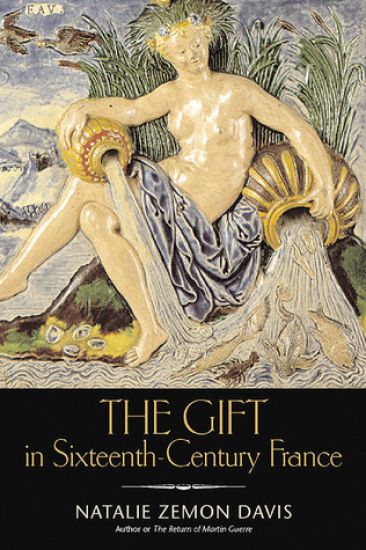
In this gem of a book, Natalie Zemon Davis explores the role of gifts in Renaissance France. From the King's bounty to the beggar's alms, from the lavish feasting and display of civic dignitaries to the humble tokens exchanged by peasant bride and groom, the giving and receiving of gifts - then, as now - held tremendous significance. Full of vignettes which illuminate life and belief in the sixteenth century, The Gift examines how the giving of presents functioned at all levels of society. As they do today, people evaluated gifts all the time - their own gifts and those of others - deciding what was at stake, and judging whether it was a good gift, a bad gift, or even a gift at all. Sometimes gifts brought peace and amity; sometimes they led to bitter quarrels and accusations of corruption. The Reformation and its liturgy were in part a quarrel between Protestants and Catholics about whether humans can give gifts to god, and what gifts we owe each other. Natalie Zemon Davis here deploys her own gift for the retelling of sometimes poignant personal stories to offer both telling cultural detail and a true historical perspective on the turbulent era of the Renaissance and Reformation.
In this gem of a book, Natalie Zemon Davis explores the role of gifts in Renaissance France. From the King's bounty to the beggar's alms, from the lavish feasting and display of civic dignitaries to the humble tokens exchanged by peasant bride and groom, the giving and receiving of gifts - then, as now - held tremendous significance.
As she did in The Return of Martin Guerre, Natalie Zemon Davis here retrieves individual lives from historical obscurity to give us a window onto the early modern world. As women living in the seventeenth century, Glikl bas Judah Leib, Marie de l’Incarnation, and Maria Sibylla Merian, equally remarkable though very different, were not queens or noblewomen, their every move publicly noted. Rather, they were living “on the margins” in seventeenth-century Europe, North America, and South America. Yet these women—one Jewish, one Catholic, one Protestant—left behind memoirs and writings that make for a spellbinding tale and that, in Davis’ deft narrative, tell us more about the life of early modern Europe than many an official history.All these women were originally city folk. Glikl bas Judah Leib was a merchant of Hamburg and Metz whose Yiddish autobiography blends folktales with anecdotes about her two marriages, her twelve children, and her business. Marie de l’Incarnation, widowed young, became a mystic visionary among the Ursuline sisters and cofounder of the first Christian school for Amerindian women in North America. Her letters are a rich source of information about the Huron, Algonquin, Montagnais, and Iroquois peoples of Quebec. Maria Sibylla Merian, a German painter and naturalist, produced an innovative work on tropical insects based on lore she gathered from the Carib, Arawak, and African women of Suriname. Along the way she abandoned her husband to join a radical Protestant sect in the Netherlands.Drawing on Glikl’s memoirs, Marie’s autobiography and correspondence, and Maria’s writings on entomology and botany, Davis brings these women to vibrant life. She reconstructs the divergent paths their stories took, and at the same time shows us each amid the common challenges and influences of the time—childrearing, religion, an outpouring of vernacular literature—and in relation to men. The resulting triptych suggests the range of experience, self-consciousness, and expression possible in seventeenth-century Europe and its outposts. It also shows how persons removed from the centers of power and learning ventured in novel directions, modifying in their own way Europe’s troubled and ambivalent relations with other “marginal” peoples.
To receive a royal pardon in sixteenth-century France for certain kinds of homicide—unpremeditated, unintended, in self-defense, or otherwise excusable—a supplicant had to tell the king a story. These stories took the form of letters of remission, documents narrated to royal notaries by admitted offenders who, in effect, stated their case for pardon to the king. Thousands of such stories are found in French archives, providing precious evidence of the narrative skills and interpretive schemes of peasants and artisans as well as the well-born. This book, by one of the most acclaimed historians of our time, is a pioneering effort to us the tools of literary analysis to interpret archival texts: to show how people from different stations in life shaped the events of a crime into a story, and to compare their stories with those told by Renaissance authors not intended to judge the truth or falsity of the pardon narratives, but rather to refer to the techniques for crafting stories. A number of fascinating crime stories, often possessing Rabelaisian humor, are told in the course of the book, which consists of three long chapters. These chapters explore the French law of homicide, depictions of "hot anger" and self-defense, and the distinctive characteristics of women's stories of bloodshed. The book is illustrated with seven contemporary woodcuts and a facsimile of a letter of remission, with appendixes providing several other original documents. This volume is based on the Harry Camp Memorial Lectures given at Stanford University in 1986.
This classic collection of essays has already established itself as a rich source of material for students of sixteenth and seventeenth-century France. Natalie Davis focuses on the lower social orders - peasants, artisans, the poor generally - and in a series of brilliantly penetrating cast-studies throws fresh light on some of the great issues of social change: the impact of printing, the rise of protestantism, the role of women, power-relations between groups and classes'.
The clever peasant Arnaud du Tilh had almost persuaded the learned judges at the Parlement of Toulouse when, on a summer’s day in 1560, a man swaggered into the court on a wooden leg, denounced Arnaud, and reestablished his claim to the identity, property, and wife of Martin Guerre. The astonishing case captured the imagination of the continent. Told and retold over the centuries, the story of Martin Guerre became a legend, still remembered in the Pyrenean village where the impostor was executed more than 400 years ago.Now a noted historian, who served as consultant for a new French film on Martin Guerre, has searched archives and lawbooks to add new dimensions to a tale already abundant in mysteries: we are led to ponder how a common man could become an impostor in the sixteenth century, why Bertrande de Rols, an honorable peasant woman, would accept such a man as her husband, and why lawyers, poets, and men of letters like Montaigne became so fascinated with the episode.Natalie Zemon Davis reconstructs the lives of ordinary people, in a sparkling way that reveals the hidden attachments and sensibilities of nonliterate sixteenth-century villagers. Here we see men and women trying to fashion their identities within a world of traditional ideas about property and family and of changing ideas about religion. We learn what happens when common people get involved in the workings of the criminal courts in the ancien régime, and how judges struggle to decide who a man was in the days before fingerprints and photographs. We sense the secret affinity between the eloquent men of law and the honey-tongued village impostor, a rare identification across class lines.Deftly written to please both the general public and specialists, The Return of Martin Guerre will interest those who want to know more about ordinary families and especially women of the past, and about the creation of literary legends. It is also a remarkable psychological narrative about where self-fashioning stops and lying begins.
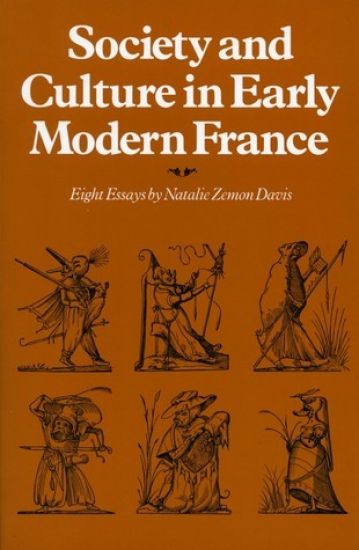
Society and Culture in Early Modern France
Natalie Zemon Davis
Stanford University Press
1975
pokkari
These essays, three of them previously unpublished, explore the competing claims of innovation and tradition among the lower orders in sixteenth-century France. The result is a wide-ranging view of the lives and values of men and women (artisans, tradesmen, the poor) who, because they left little or nothing in writing, have hitherto had little attention from scholars. The first three essays consider the social, vocational, and sexual context of the Protestant Reformation, its consequences for urban women, and the new attitudes toward poverty shared by Catholic humanists and Protestants alike in sixteenth-century Lyon. The next three essays describe the links between festive play and youth groups, domestic dissent, and political criticism in town and country, the festive reversal of sex roles and political order, and the ritualistic and dramatic structure of religious riots. The final two essays discuss the impact of printing on the quasi-literate, and the collecting of common proverbs and medical folklore by learned students of the "people" during the Ancien Régime. The book includes eight pages of illustrations.
Society and Culture in Early Modern France
Natalie Zemon Davis
Stanford University Press
1975
sidottu
Eight essays explore key aspects of the lives and values of sixteenth-century French peasant, artisan, poor, and tradesmen as they reflect the competing claims of tradition and innovation. Bibliogs