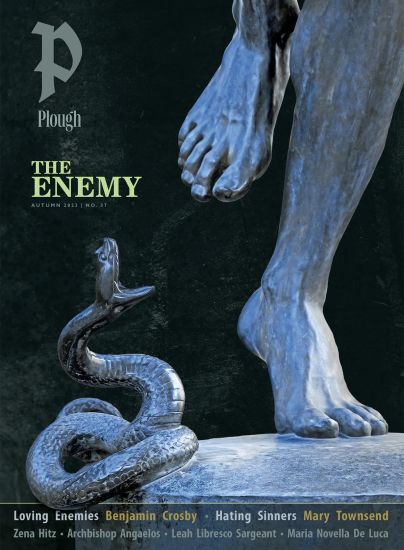
Plough Quarterly No. 37 – The Enemy
Benjamin Crosby; Archbishop Angaelos; Zena Hitz; Leah Libresco Sargeant; Nathan Beacom; Susannah Black Roberts; Mary Townsend; Sarah Clarkson; Antoine E. Davis; Aaron Edward Olson; Maria Novella De Luca; Rachel Cañon Naffziger; Stephen Edgar; Oddny Gumaer; Kathleen A. Mulhern
PLOUGH PUBLISHING HOUSE
2023
nidottu
What should we do with enemies?Jesus challenges us to love our enemies. In today’s swirl of hatemongering, political polarization, and online nastiness, even Christians have skirted this command or given it up as impossible or foolish. What does it really mean to love our enemies? And how might our lives and our world change if we did? In this issue we apply these tough questions to real situations, and hear from people who have put this command into practice in some of the toughest circumstances.On this theme: - Can we afford to love our enemies in a cancel culture?- What sort of enemies did Jesus expect us to love? - The problem with "love the sinner, hate the sin"- Channeling outrage while working with children displaced by war- What Coptic Christians know about praying for their persecutors- Two incarcerated friends defy a racist prison culture.- What about mental illness, when your mind becomes your enemy? - Students find ways to debate tough issues constructively.- A Russian Christian speaks out against the war in Ukraine.Also in the issue:- Maria Novella De Luca photographs Algerian women demining the Sahara.- Dana Wiser remembers civil rights activist Staughton Lynd.- Zena Hitz asks what we’d do with our time if we weren’t so busy.- Kathleen A. Mulhern gives advice for keeping the faith afterhours.- Susannah Black Roberts celebrates the life and example of Tim Keller.- Nathan Beacom call for reestablishing Lyceums in working-class towns.- Maureen swinger recounts the exploits of Monsignor Hugh O’Flaherty.Plough Quarterly features stories, ideas, and culture for people eager to apply their faith to the challenges we face. Each issue includes in-depth articles, interviews, poetry, book reviews, and art.