Kirjojen hintavertailu. Mukana 12 595 353 kirjaa ja 12 kauppaa.

Kirjailija

Nathan Waddell

Kirjat ja teokset yhdessä paikassa: 4 kirjaa, julkaisuja vuosilta 2009-2026, suosituimpien joukossa Modern John Buchan. Vertaile teosten hintoja ja tarkista saatavuus suomalaisista kirjakaupoista.

4 kirjaa

Kirjojen julkaisuhaarukka 2009-2026.

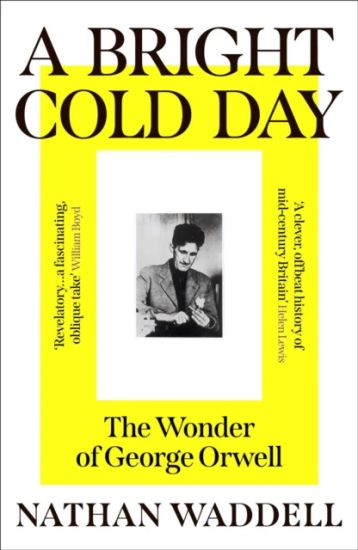
A Bright Cold Day

A Bright Cold Day

Nathan Waddell

Oneworld Publications
2026
pokkari
A pioneering biography of George Orwell told through moments of everyday life 'A clever, offbeat history of mid-century Britain through George Orwell’s eyes.' Helen Lewis When we think about Orwell, we imagine an angular, moustachioed sceptic crouched over a typewriter, who – between puffs on his cigarette – composes effortless streams of prose, unadorned but explosive. We see a man with ‘Important Things to Say’ about: the slow creep of authoritarianism; the consequences of all-seeing tech; the fragility of truth. Much less often do we see him as a person caught up in the business of everyday life. And yet Orwell’s work thrums with the quotidian: the smell of boiled cabbage, the chill of an unheated flat in early spring, the rumbling of old pipes. A Bright Cold Day reveals how the principles that govern us begin in the mundane. From waking and showering to breakfast, work, lunch, the pub, sleep and dreaming, Orwell was never dulled to the routines of living. And in the details of the day, we can understand how power, money, freedom and choice play out, not just for Orwell’s literary characters, but for us all. *** 'An astute and intimate portrait of George Orwell.' Dorian Lynskey, author of The Ministry of Truth 'Beautifully written... urgent and compelling.' Emma Smith, author of Portable Magic
Moonlighting

Moonlighting

Nathan Waddell

Oxford University Press
2019
sidottu
How and why did the life and music of Ludwig van Beethoven (1770-1827) matter to experimental writers in the early twentieth century? Previous answers to this question have tended to focus on structural analogies between musical works and literary texts, charting the many different ways in which poetry and prose resemble Beethoven's compositions. This book takes a different approach. It focuses on how early twentieth-century writers--chief among them E. M. Forster, Aldous Huxley, Wyndham Lewis, Dorothy Richardson, Rebecca West, and Virginia Woolf--profited from the representational conventions associated in the nineteenth century and beyond with Beethovenian culture. The emphasis of Moonlighting falls for the most part on how modernist writers made use of Beethovenian legend. It is concerned neither with formal similarities between Beethoven's music and modernist writing nor with the music of Beethoven per se, but with certain ways of understanding Beethoven's music which had long before 1900 taken shape as habit, myth, cliché, and fantasy, and with the influence they had on experimental writing up to 1930. Moonlighting suggests that the modernists drew knowingly and creatively on the conventional. It proposes that many of the most experimental works of modernist literature were shaped by a knowing reliance on Beethovenian consensus; in short, that the literary modernists knew Beethovenian legend when they saw it, and that they were eager to use it.
Modern John Buchan

Modern John Buchan

Nathan Waddell

Cambridge Scholars Publishing
2009
sidottu
This book offers an introduction to the breadth and diversity of the literary and non-literary work of John Buchan (1875–1940). It stakes a claim for him as an engaged interpreter of twentieth-century modernity, and provides evaluative readings of his output. In addition to demonstrating how Buchan's work complicates the reductive view of early twentieth-century literature as neatly cordoned-off into "low" and "high" forms of production, this book discusses his theories of empire and imperialism, his account of historiography, and his response to the First World War. In addition to his many roles as a journalist, propagandist, war reporter, editor, civil servant, and statesman, Buchan was a committed literary critic, philosopher, and writer of history. This book explores the many connections between his work and such modernists as Joseph Conrad, Ford Madox Ford, D. H. Lawrence, and Wyndham Lewis, and it situates Buchan as an intellectual figure who provided a distinctive set of readings of his modern times. Running throughout is a consideration of Buchan's fascination with binaries, doubles, and duality, which his work variously upholds and investigates. It ends with a discussion of Buchan's most famous work—The Thirty-Nine Steps (1915)—in relation to paranoia and pathology.