Kirjojen hintavertailu. Mukana 12 390 323 kirjaa ja 12 kauppaa.

Kirjailija

National Academies of Sciences Engineeri

Kirjat ja teokset yhdessä paikassa: 146 kirjaa, julkaisuja vuosilta 2022-2026, suosituimpien joukossa Gilbert W. Beebe Symposium: AI and ML Applications in Radiation Therapy, Medical Diagnostics, and Radiation Occupational Health and Safety. Vertaile teosten hintoja ja tarkista saatavuus suomalaisista kirjakaupoista.

146 kirjaa

Kirjojen julkaisuhaarukka 2022-2026.

Gilbert W. Beebe Symposium: AI and ML Applications in Radiation Therapy, Medical Diagnostics, and Radiation Occupational Health and Safety

Gilbert W. Beebe Symposium: AI and ML Applications in Radiation Therapy, Medical Diagnostics, and Radiation Occupational Health and Safety

National Academies of Sciences Engineeri; Division on Earth and Life Studies; Nuclear and Radiation Studies Board

National Academies Press
2025
nidottu
On March 13-14, 2025, the Nuclear and Radiation Studies Board of the National Academies of Sciences, Engineering, and Medicine hosted the most recent Gilbert W. Beebe symposium, with the goal of discussing the applications of artificial intelligence (AI) and machine learning (ML) in the fields of radiation therapy, medical diagnostics, and occupational health and safety. Among other topics, symposium participants discussed the importance of data for AI readiness, multimodal modeling, digital twins, uncertainty quantification and trustworthiness, and bias and ethics as it applies to each of these fields. The Gilbert W. Beebe Symposium was established by the Board on Radiation Effects Research (a predecessor of the Nuclear and Radiation Studies Board) in 2002 to honor the scientific achievements of the late Dr. Gilbert W. Beebe, a distinguished National Cancer Institute radiation epidemiologist who was one of the designers and key implementers of the epidemiology studies of Japanese atomic bomb survivors and a co-founder of the Medical Follow-up Agency. The symposium is used to promote discussions among scientists, federal staff, and other interested parties concerned with radiation health effects.
The Comprehensive Autism Care Demonstration: Solutions for Military Families

The Comprehensive Autism Care Demonstration: Solutions for Military Families

National Academies of Sciences Engineeri; Health and Medicine Division; Board on Health Care Services

National Academies Press
2026
nidottu
Military families raising children with autism often face unique challenges in accessing consistent, high-quality care across frequent moves and deployments. Applied behavior analysis, or ABA, is widely recognized as an effective intervention for many autistic individuals, yet military families report barriers that delay or restrict their access to these services. The report The Comprehensive Autism Care Demonstration: Solutions for Military Families examines how the Department of Defense's autism care demonstration program is serving families and whether ABA should be covered as a TRICARE Basic benefit. Drawing on a careful review of the scientific literature, the report finds that ABA meets the Department's own standards for reliable medical evidence and should be formally authorized as a TRICARE Basic benefit. The report identifies key areas where current demonstration policies differ from clinical standards. These include restrictive rules around assessments, limited flexibility in treatment goals and settings, and administrative requirements that impose unnecessary burdens on both families and ABA providers.
Applying Neurobiological Insights on Stress to Foster Resilience Across Life Stages: Proceedings of a Workshop

Applying Neurobiological Insights on Stress to Foster Resilience Across Life Stages: Proceedings of a Workshop

National Academies of Sciences Engineeri; Health and Medicine Division; Board on Health Sciences Policy

National Academies Press
2026
nidottu
Rising rates of stress, anxiety, and depression highlight the need to understand how the brain builds resilience across life stages. The National Academies' Forum on Neuroscience and Nervous System Disorders, in collaboration with the Forum on Mental Health and Substance Use Disorders, hosted a workshop in March 2025 to explore the neurobiological mechanisms of stress; critical periods for resilience development; and strategies to apply these insights in clinical, public health, and community-based approaches. This Proceedings of a Workshop highlights presentations and discussions that occurred at the workshop.
Pathways for New Nuclear Development: Proceedings of a Workshop

Pathways for New Nuclear Development: Proceedings of a Workshop

National Academies of Sciences Engineeri; Division on Engineering and Physical Sci; Board on Energy and Environmental System

National Academies Press
2026
nidottu
Recent years have brought a renewed focus on the potential for nuclear energy to help meet the United States' growing demands for abundant, reliable, low-carbon energy. Trends such as the increased electrification of transportation and industrial processes, along with the rapid expansion of data centers over the past decade, have accelerated and amplified these demands. Advances in nuclear energy technologies, along with the recent completion of Plant Vogtle - the largest nuclear power plant in the United States comprised of four reactor units - are opening new opportunities to build next-generation nuclear reactors and sparking interest and dialogue among utilities, investors, policymakers, and communities. However, significant barriers to nuclear power deployment include technical challenges, regulatory hurdles, and investment risks that complicate decision-making timelines. To explore pathways for new nuclear power development in the United States, the National Academies of Sciences, Engineering, and Medicine hosted the workshop Pathways for New Nuclear Development on January 29-30, 2025 in Washington, DC. Building on recommendations from the National Academies' report Laying the Foundation for New and Advanced Nuclear Reactors in the United States, the event facilitated in-depth discussions among policymakers, regulators, community leaders, and technical experts from industry, national laboratories, and academia. Participants examined the challenges of deploying more nuclear power and discussed potential opportunities to overcome some of those challenges, including strategies to facilitate decision making, public engagement, workforce development, financing, regulatory improvement, and construction. Attendees shared their experiences and perspectives regarding the real and perceived risks of new nuclear projects and projected timelines, the opportunities of co-locating nuclear plants with other facilities or in non-traditional locations, and the role different reactor designs could play in meeting growing electricity demand. This publication summarizes the presentations and discussion of the workshop.
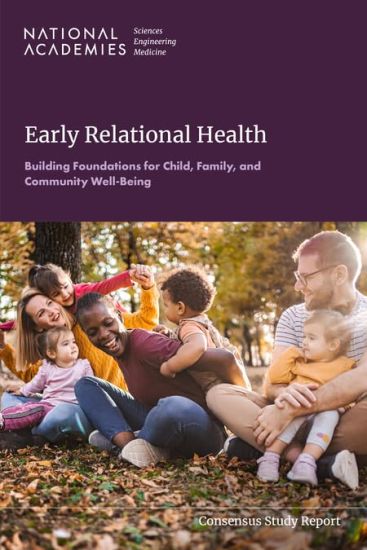
Early Relational Health: Building Foundations for Child, Family, and Community Well-Being

Early Relational Health: Building Foundations for Child, Family, and Community Well-Being

National Academies of Sciences Engineeri; Division of Behavioral and Social Scienc; Board on Children Youth and Families

National Academies Press
2026
nidottu
Early relationships are foundational for lifelong health, learning, and well-being. Mutual, meaningful, and affirming moments of connection in the youngest relationships support brain development, resilience, and social-emotional growth. These experiences, known as early relational health (ERH), can also buffer the impacts of adversity and help create pathways toward thriving children, families, and communities. Early Relational Health: Building Foundations for Child, Family, and Community Well-Being provides evidence-based opportunities for advancing ERH. Developed by a committee of experts, this report highlights opportunities for practice, policy, and research to strengthen supportive relationships. It emphasizes asset-based approaches, family and community leadership, workforce supports, and cross-sector collaboration to promote ERH across health care, education, and social systems.
Sickle Cell Disease in Social Security Disability Evaluations: Pain and Treatment Settings

Sickle Cell Disease in Social Security Disability Evaluations: Pain and Treatment Settings

National Academies of Sciences Engineeri; Health and Medicine Division; Board on Health Care Services

National Academies Press
2026
nidottu
This is the first of two reports requested by the Social Security Administration (SSA) to address best practices and community experiences in the management and treatment of sickle cell disease (SCD). SCD, a group of inherited blood disorders affecting approximately 100,000 people in the United States, is a chronic, life-long condition that affects every organ system in the body. The life of an individual with SCD is often complicated by frequent bouts of extreme pain and hospitalizations, fatigue, organ damage, and mental health conditions. The cumulative burden of SCD-related health effects can significantly affect quality of life, including the ability to regularly attend and participate fully in school and work. In response to SSA's request, the National Academies of Sciences, Engineering, and Medicine convened an expert, ad hoc committee to review the latest published scientific research and generate findings and conclusions on a variety of topics related to SCD. This report is the first report in a two-report series, and presents the committee's findings and conclusions pertaining to SCD pain crises, pain management, and treatment settings relevant to SSA disability determinations.
Assessing Research Security Efforts in Higher Education: Proceedings of a Workshop

Assessing Research Security Efforts in Higher Education: Proceedings of a Workshop

National Academies of Sciences Engineeri; Policy and Global Affairs; U S Science and Innovation Policy

National Academies Press
2026
nidottu
In recent years, concerns have grown about foreign actors exploiting the openness of the U.S. research ecosystem to misappropriate scientific and technological information to enhance their nations' scientific, economic, and military capabilities. Research security requirements for academic institutions currently include research security training, disclosure of funding sources in applications for federal research and development awards, and the development of comprehensive research security plans focused on cybersecurity, foreign travel security, insider threat awareness training, and export control training and compliance. These requirements are being implemented, and additional requirements are being contemplated. To consider the impacts of current and potential research security requirements, the National Academies of Sciences, Engineering, and Medicine convened a workshop on May 22-23, 2025, in Washington, DC. The event focused on potential measures of effectiveness and performance and the data needed to assess research security and protection efforts in higher education by a range of federal agencies. This proceedings describes the presentations and discussions at the workshop.