Kirjojen hintavertailu. Mukana 12 595 353 kirjaa ja 12 kauppaa.

Kirjailija

Natsuko Shintani

Kirjat ja teokset yhdessä paikassa: 6 kirjaa, julkaisuja vuosilta 2013-2024, suosituimpien joukossa Measuring Second Language Pragmatic Competence. Vertaile teosten hintoja ja tarkista saatavuus suomalaisista kirjakaupoista.

6 kirjaa

Kirjojen julkaisuhaarukka 2013-2024.

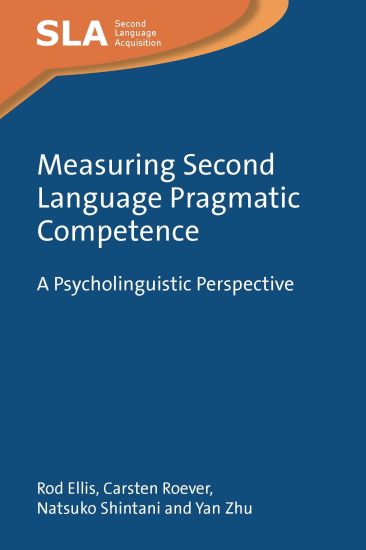
Measuring Second Language Pragmatic Competence

Measuring Second Language Pragmatic Competence

Rod Ellis; Carsten Roever; Natsuko Shintani; Yan Zhu

MULTILINGUAL MATTERS
2024
sidottu
Taking a psycholinguistic perspective, this book investigates how second language (L2) learners’ pragmatic abilities in English can be measured. It complements and extends earlier work on the testing of implicit and explicit grammar. The authors present a set of tests they developed using both well-established methods of measuring pragmatic knowledge (e.g. a Metapragmatic Knowledge Test and role plays) and more original tests (e.g. an Irony Test and an Elicited Imitation Test). They explain the development of the tests and report the results of their work with native speakers of English and Chinese and Japanese L2 learners. A confirmatory factor analysis lends support to the theoretical basis of the tests. The authors also report studies that explored the use of the tests to investigate L2 linguistic proficiency, study abroad and formal instruction. In concluding, they consider the strengths and limitations of the tests and propose some directions for future research.
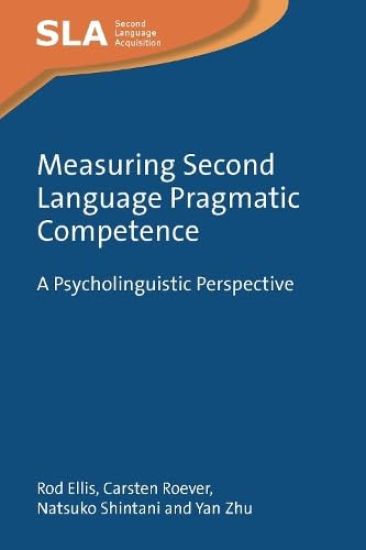
Measuring Second Language Pragmatic Competence

Measuring Second Language Pragmatic Competence

Rod Ellis; Carsten Roever; Natsuko Shintani; Yan Zhu

MULTILINGUAL MATTERS
2024
nidottu
Taking a psycholinguistic perspective, this book investigates how second language (L2) learners’ pragmatic abilities in English can be measured. It complements and extends earlier work on the testing of implicit and explicit grammar. The authors present a set of tests they developed using both well-established methods of measuring pragmatic knowledge (e.g. a Metapragmatic Knowledge Test and role plays) and more original tests (e.g. an Irony Test and an Elicited Imitation Test). They explain the development of the tests and report the results of their work with native speakers of English and Chinese and Japanese L2 learners. A confirmatory factor analysis lends support to the theoretical basis of the tests. The authors also report studies that explored the use of the tests to investigate L2 linguistic proficiency, study abroad and formal instruction. In concluding, they consider the strengths and limitations of the tests and propose some directions for future research.
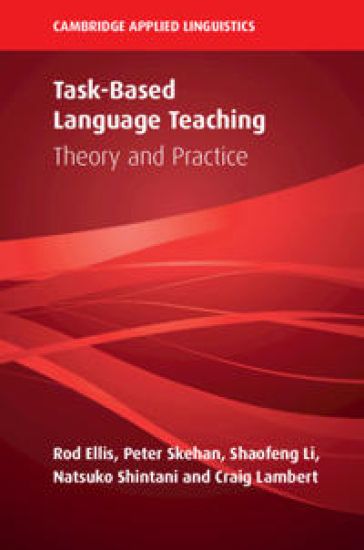
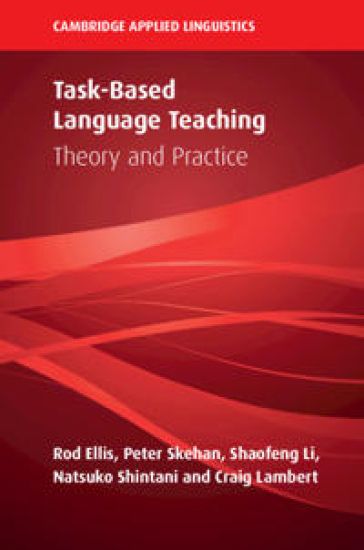
Task-Based Language Teaching

Task-Based Language Teaching

Rod Ellis; Peter Skehan; Shaofeng Li; Natsuko Shintani; Craig Lambert

Cambridge University Press
2019
pokkari
Task-based language teaching is an approach which differs from traditional approaches by emphasising the importance of engaging learners' natural abilities for acquiring language incidentally through the performance of tasks that draw learners' attention to form. Drawing on the multiple perspectives and expertise of five leading authorities in the field, this book provides a comprehensive and balanced account of task-based language teaching (TBLT). Split into five sections, the book provides an historical account of the development of TBLT and introduces the key issues facing the area. A number of different theoretical perspectives that have informed TBLT are presented, followed by a discussion on key pedagogic aspects - syllabus design, methodology of a task-based lesson, and task-based assessment. The final sections consider the research that has investigated the effectiveness of TBLT, addresses critiques and suggest directions for future research. Task-based language teaching is now mandated by many educational authorities throughout the world and this book serves as a core source of information for researchers, teachers and students.
Task-Based Language Teaching

Task-Based Language Teaching

Rod Ellis; Peter Skehan; Shaofeng Li; Natsuko Shintani; Craig Lambert

Cambridge University Press
2019
sidottu
Task-based language teaching is an approach which differs from traditional approaches by emphasising the importance of engaging learners' natural abilities for acquiring language incidentally through the performance of tasks that draw learners' attention to form. Drawing on the multiple perspectives and expertise of five leading authorities in the field, this book provides a comprehensive and balanced account of task-based language teaching (TBLT). Split into five sections, the book provides an historical account of the development of TBLT and introduces the key issues facing the area. A number of different theoretical perspectives that have informed TBLT are presented, followed by a discussion on key pedagogic aspects - syllabus design, methodology of a task-based lesson, and task-based assessment. The final sections consider the research that has investigated the effectiveness of TBLT, addresses critiques and suggest directions for future research. Task-based language teaching is now mandated by many educational authorities throughout the world and this book serves as a core source of information for researchers, teachers and students.
Exploring Language Pedagogy through Second Language Acquisition Research
Routledge Introductions to Applied Linguistics is a series of introductory level textbooks covering the core topics in Applied Linguistics, primarily designed for those beginning postgraduate studies, or taking an introductory MA course as well as advanced undergraduates. Titles in the series are also ideal for language professionals returning to academic study.The books take an innovative 'practice to theory' approach, with a 'back-to-front' structure. This leads the reader from real-world problems and issues, through a discussion of intervention and how to engage with these concerns, before finally relating these practical issues to theoretical foundations. Additional features include a glossary of key terms, and discussion questions.Following the back-to-front approach of the series, the book takes problematic issues in language pedagogy as its starting points. These are then examined in terms of second language acquisition. Each chapter begins with a look at the pedagogical proposals found in teacher guides and then asks ‘Do these proposals accord with what we know about how languages are acquired?’ Pedagogical topics covered include teaching methods, syllabus design, explicit instruction, comprehension versus production-based instruction, task-based instruction, authentic materials, the role of the learners’ first language in the classroom, error correction and catering for individual differences.Including a glossary of key terms and questions for discussion at the end of each chapter, and assuming no prior knowledge of second language acquisition, this is the ideal text for all students studying language teaching methods, language teacher education, English teaching methodology and second language acquisition modules in advanced undergraduate and postgraduate/graduate TESOL and Applied Linguistics courses.
Exploring Language Pedagogy through Second Language Acquisition Research
Routledge Introductions to Applied Linguistics is a series of introductory level textbooks covering the core topics in Applied Linguistics, primarily designed for those beginning postgraduate studies, or taking an introductory MA course as well as advanced undergraduates. Titles in the series are also ideal for language professionals returning to academic study.The books take an innovative 'practice to theory' approach, with a 'back-to-front' structure. This leads the reader from real-world problems and issues, through a discussion of intervention and how to engage with these concerns, before finally relating these practical issues to theoretical foundations. Additional features include a glossary of key terms, and discussion questions.Following the back-to-front approach of the series, the book takes problematic issues in language pedagogy as its starting points. These are then examined in terms of second language acquisition. Each chapter begins with a look at the pedagogical proposals found in teacher guides and then asks ‘Do these proposals accord with what we know about how languages are acquired?’ Pedagogical topics covered include teaching methods, syllabus design, explicit instruction, comprehension versus production-based instruction, task-based instruction, authentic materials, the role of the learners’ first language in the classroom, error correction and catering for individual differences.Including a glossary of key terms and questions for discussion at the end of each chapter, and assuming no prior knowledge of second language acquisition, this is the ideal text for all students studying language teaching methods, language teacher education, English teaching methodology and second language acquisition modules in advanced undergraduate and postgraduate/graduate TESOL and Applied Linguistics courses.