Kirjojen hintavertailu. Mukana 12 332 366 kirjaa ja 12 kauppaa.

Kirjailija

Navid Kermani

Kirjat ja teokset yhdessä paikassa: 61 kirjaa, julkaisuja vuosilta 2011-2026, suosituimpien joukossa Dein Name. Vertaile teosten hintoja ja tarkista saatavuus suomalaisista kirjakaupoista.

61 kirjaa

Kirjojen julkaisuhaarukka 2011-2026.

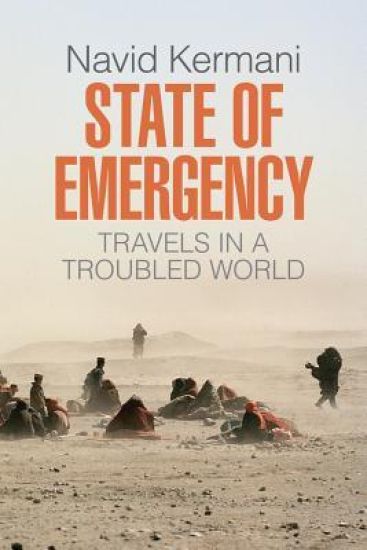
State of Emergency

State of Emergency

Navid Kermani

Polity Press
2018
sidottu
This book ventures into the world beyond Lampedusa: the crisis belt that stretches from Kashmir across Pakistan and Afghanistan to the Arab world and beyond, to the borders and coasts of Europe. Celebrated author Navid Kermani reports from a region which is our immediate neighbour, despite all too often being depicted as remote and distant from our daily concerns. Kermani has visited the places where no CNN transmitter truck is parked and yet smouldering fires threaten world peace. In his widely praised, wonderfully agile and careful prose, he reports on NATO's war in Afghanistan and the underside of globalization in India, on the civil war in Syria and the struggle of Shiites and Kurds against the 'Islamic State' in Iraq. He was the only Western reporter present at the suppression of the mass protests in Tehran, travelled with Sufis through Pakistan, talked with Grand Ayatollah Sistani in Najaf, and observed the disastrous Mediterranean refugee route in Lampedusa. Kermani's gripping reports allow us to understand a world in turmoil, to share the suspense and the suffering of the people in it. As if by magic, he brings individual lives and situations to life so vividly that complex and seemingly distant problems of world politics suddenly appear crystal clear. Our world too lies beyond Lampedusa.
Wonder Beyond Belief

Wonder Beyond Belief

Navid Kermani

Polity Press
2017
sidottu
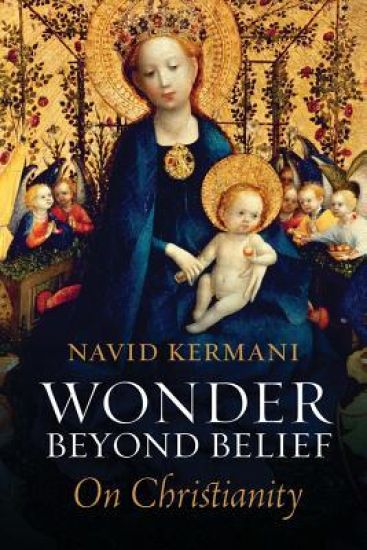
What happens when one of Germany’s most important writers, himself a Muslim, immerses himself in the world of Christian art? In this book, Navid Kermani is awestruck by a religion full of sacrifice and lamentation, love and wonder, the irrational and the unfathomable, the deeply human and the divine – a Christianity that today’s Christians rarely speak of so earnestly, boldly and enthusiastically. With the open-minded curiosity of a non-believer – or rather a believer in another faith – Kermani engages with Christian art in its great richness and diversity. The result is an enchanting reflection which reinvests in Christianity both its spectacular beauty and its terror. Kermani struggles with the cross, falls in love at the sight of Mary, experiences the Orthodox Mass and appreciates the greatness of St Francis. He teaches us to see the questions of our present-day lives in the pictures of old masters such as Botticelli, Caravaggio and Rembrandt – not with lectures on art history or theology, but with an intelligent eye for the essential details and the underlying relations to seemingly remote worlds, to literature and to mystical Islam. Kermani’s poetic school of seeing draws us in as we are carried along by his unique perspective on Christianity, rekindling our interest in great art at the same time. We are captivated by his unique and brilliant Islamic reading of the West.
Upheaval

Upheaval

Navid Kermani

Polity Press
2017
nidottu
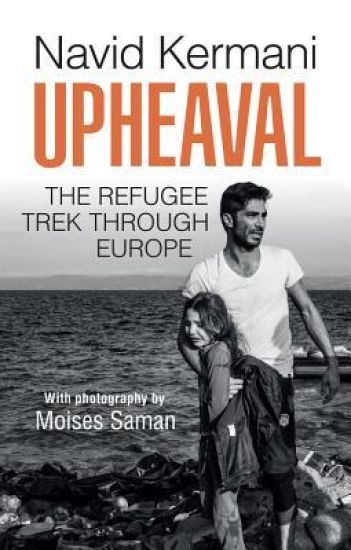
By foot, in buses, prison vans and trains, a steady stream of refugees traveled from the Greek island of Lesbos into Europe. In the autumn of 2015, award-winning writer Navid Kermani decided to accompany them on the "Balkan route." In this perceptive account from the front line of the "refugee crisis," Kermani shows how a seemingly distant world in which war and conflict rage has suddenly collided with our own. Kermani describes the situation on the Turkish west coast where thousands of refugees live in the most desperate conditions, waiting to take the perilous journey across the Mediterranean. Then, on Lesbos, he observes the culture shock amongst those who have survived the ordeal by sea. He speaks to aid workers and politicians, but most importantly of all to the refugees themselves, asking those who have come from Syria, Iraq, Afghanistan and elsewhere what has driven them to risk everything and embark on the long and treacherous journey to Europe. With great sensitivity Kermani reveals, often through small details, the cultural and political upheaval that has caused people to uproot their lives, and at the same time shining a light on Europe's inadequate and at times openly hostile response to the refugees. Interspersed with powerful images by the acclaimed photographer Moises Saman, Upheaval is a much-needed human account of a crisis we cannot ignore.
Upheaval

Upheaval

Navid Kermani

Polity Press
2017
sidottu
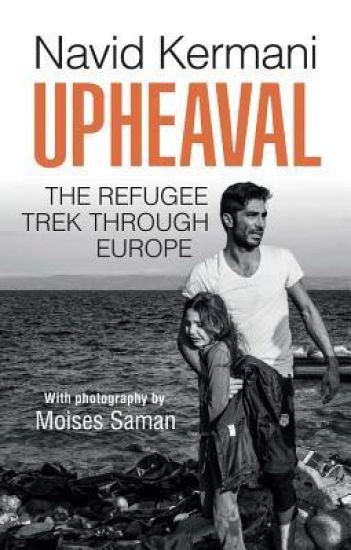
By foot, in buses, prison vans and trains, a steady stream of refugees traveled from the Greek island of Lesbos into Europe. In the autumn of 2015, award-winning writer Navid Kermani decided to accompany them on the "Balkan route." In this perceptive account from the front line of the "refugee crisis," Kermani shows how a seemingly distant world in which war and conflict rage has suddenly collided with our own. Kermani describes the situation on the Turkish west coast where thousands of refugees live in the most desperate conditions, waiting to take the perilous journey across the Mediterranean. Then, on Lesbos, he observes the culture shock amongst those who have survived the ordeal by sea. He speaks to aid workers and politicians, but most importantly of all to the refugees themselves, asking those who have come from Syria, Iraq, Afghanistan and elsewhere what has driven them to risk everything and embark on the long and treacherous journey to Europe. With great sensitivity Kermani reveals, often through small details, the cultural and political upheaval that has caused people to uproot their lives, and at the same time shining a light on Europe's inadequate and at times openly hostile response to the refugees. Interspersed with powerful images by the acclaimed photographer Moises Saman, Upheaval is a much-needed human account of a crisis we cannot ignore.
Between Quran and Kafka

Between Quran and Kafka

Navid Kermani

Polity Press
2016
sidottu
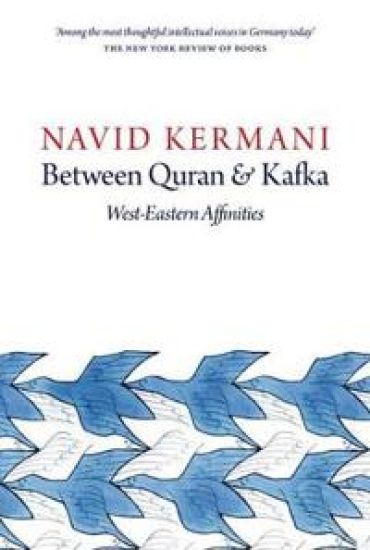
What connects Shiite passion plays with Brecht?s drama? Which of Goethe?s poems were inspired by the Quran? How can Ibn Arabi?s theology of sighs explain the plays of Heinrich von Kleist? And why did the Persian author Sadeq Hedayat identify with the Prague Jew Franz Kafka? ?One who knows himself and others will here too understand: Orient and Occident are no longer separable?: in this new book, the critically acclaimed author and scholar Navid Kermani takes Goethe at his word. He reads the Quran as a poetic text, opens Eastern literature to Western readers, unveils the mystical dimension in the works of Goethe and Kleist, and deciphers the political implications of theatre, from Shakespeare to Lessing to Brecht. Drawing striking comparisons between diverse literary traditions and cultures, Kermani argues for a literary cosmopolitanism that is opposed to all those who would play religions and cultures against one another, isolating them from one another by force. Between Quran and Kafka concludes with Kermani?s speech on receiving Germany?s highest literary prize, an impassioned plea for greater fraternity in the face of the tyranny and terrorism of Islamic State. Kermani?s personal assimilation of the classics gives his work that topical urgency that distinguishes universal literature when it speaks to our most intimate feelings. For, of course, love too lies ?between Quran and Kafka?.
Between Quran and Kafka

Between Quran and Kafka

Navid Kermani

Polity Press
2016
nidottu
What connects Shiite passion plays with Brecht?s drama? Which of Goethe?s poems were inspired by the Quran? How can Ibn Arabi?s theology of sighs explain the plays of Heinrich von Kleist? And why did the Persian author Sadeq Hedayat identify with the Prague Jew Franz Kafka? ?One who knows himself and others will here too understand: Orient and Occident are no longer separable?: in this new book, the critically acclaimed author and scholar Navid Kermani takes Goethe at his word. He reads the Quran as a poetic text, opens Eastern literature to Western readers, unveils the mystical dimension in the works of Goethe and Kleist, and deciphers the political implications of theatre, from Shakespeare to Lessing to Brecht. Drawing striking comparisons between diverse literary traditions and cultures, Kermani argues for a literary cosmopolitanism that is opposed to all those who would play religions and cultures against one another, isolating them from one another by force. Between Quran and Kafka concludes with Kermani?s speech on receiving Germany?s highest literary prize, an impassioned plea for greater fraternity in the face of the tyranny and terrorism of Islamic State. Kermani?s personal assimilation of the classics gives his work that topical urgency that distinguishes universal literature when it speaks to our most intimate feelings. For, of course, love too lies ?between Quran and Kafka?.
Plough Quarterly No. 8

Plough Quarterly No. 8

Gerhard Lohfink; Navid Kermani; Denise Uwimana; C.S. Lewis; Richard J. Foster; John Stott; Laurie Klein; Neil Shigley; Michael Yandell; Matthew Loftus; Eberhard Arnold

Plough Publishing House
2016
pokkari
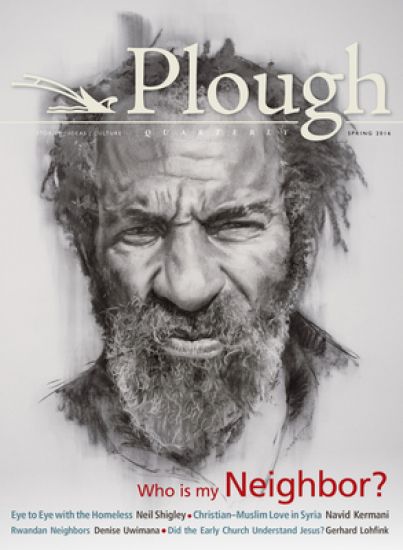
From Jordan to Germany, the influx of refugees is straining goodwill to the breaking point. This issue of Plough Quarterly focuses on the second half of Jesus’ Great Commandment: Love your neighbor as yourself. We found love of neighbor demonstrated by Christians and Muslims in ISIS-controlled Syria, and by volunteers who continue to welcome refugees despite growing public hostility. Here in election-year America, how do we as citizens live out love of neighbor in relation to immigrants? To the unborn threatened by abortion, and to their mothers? To prisoners, especially those held in solitary confinement for unconscionable terms and those on death row? To the victims of crime, and to the law enforcement officers charged with keeping the peace? To our youth, who are the ones most gravely harmed by our culture’s gender confusion? On all these fronts and many others, love of neighbor makes claims on us. But shouldn’t it start within the fellowship of believers, the church? When this happens, we can bear one another’s burdens – for example, those of the soldier returning from war, or the coworker battling an addiction. Perspectives from Navid Kermani, Neil Shigley, Denise Uwimana, Gerhard Lohfink, Michael Yandell, Teresa of Ávila, C.S. Lewis, John Stott, Matthew Loftus, Nathaniel Peters, Eberhard Arnold, Richard J. Foster, and Annemarie Wächter are sure to stimulate reflection and discussion. Then there’s new poetry by Laurie Klein, book reviews, a children’s story by Laura E. Richards, and world-class art by Dean Mitchell, Aristarkh Lentulov, Alex Vogel, Michael D. Fay, Paula Modersohn-Becker, Marc Chagall, Vasilij Ivanovic Surikov, and Sekino Jun’ichiro. Plough Quarterly features stories, ideas, and culture for people eager to put their faith into action. Each issue brings you in-depth articles, interviews, poetry, book reviews, and art to help you put Jesus’ message into practice and find common cause with others.
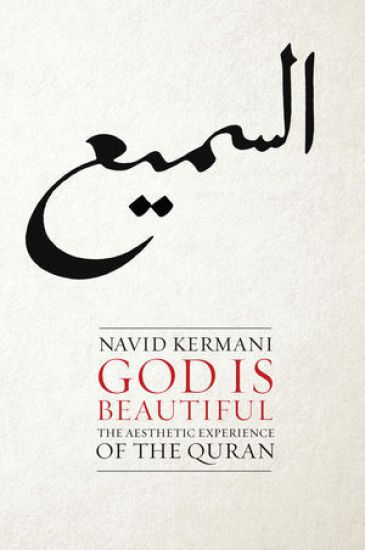
God is Beautiful

God is Beautiful

Navid Kermani

Polity Press
2014
sidottu
The melodious recitation of the Quran is a fundamental aesthetic experience for Muslims, and the start of a compelling journey of ideas. In this important new book, the prominent German writer and Islamic scholar Navid Kermani considers the manner in which the Quran has been perceived, apprehended and experienced by its recipients from the time of the Prophet to the present day.Drawing on a wide range of Muslim sources, from historians, theologians and philosophers to mystics and literary scholars, Kermani provides a close reading of the nature of this powerful text. He proceeds to analyze ancient and modern testimonies about the impact of Quranic language from a variety of angles. Although people have always reflected on the reception of texts, images and sounds that they find beautiful or moving, Kermani explains that Islam provides a particularly striking example of the close correlation, grounded in a common origin, between art and religion, revelation and poetry, and religious and aesthetic experience. This major new book will enhance the dialogue between Islam and the West and will appeal to students and scholars of Islam and comparative religion, as well as to a wider readership interested in Islam and the Quran.
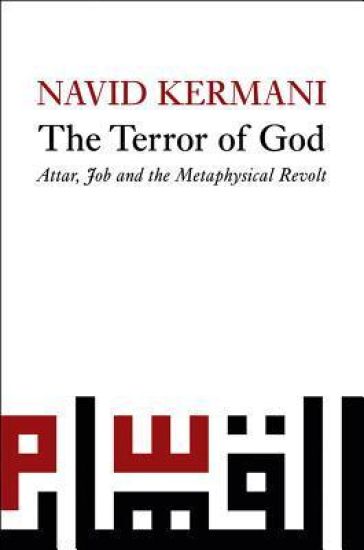
The Terror of God

The Terror of God

Navid Kermani

Polity Press
2011
nidottu
How can suffering and injustice be reconciled with the idea that God is good, that he loves humans and is merciful to them? Job's question runs through the history of the three monotheistic religions. Time and again, philosophers, theologians, poets, prophets and laypersons have questioned their image of God in the light of a reality full of hardship. Some see suffering as proof of God's existence, others as a demonstration that there can be no God, while others still respond by rebelling against Him. In this remarkable book Navid Kermani - a distinguished Islamic scholar of Iranian origin - sees this revolt against God as the central motif of one of the great but neglected works of literature: The Book of Suffering by the thirteenth-century Persian poet Faridoddin Attar. Through the prism of Attar's text Kermani tells the story of a religious faith that knows God but is angry with Him: a counter-theology that runs through many religions and connects Judaism, Islam and modernity. With astonishing range and stylistic brilliance Kermani brings Attar to life as one of us, enabling the great Persian poet to speak directly to us today despite the time that separates us.