Kirjojen hintavertailu. Mukana 12 207 011 kirjaa ja 12 kauppaa.

Kirjailija

Navin Sabharwal

Kirjat ja teokset yhdessä paikassa: 16 kirjaa, julkaisuja vuosilta 2012-2022, suosituimpien joukossa Cloud Capacity Management. Vertaile teosten hintoja ja tarkista saatavuus suomalaisista kirjakaupoista.

16 kirjaa

Kirjojen julkaisuhaarukka 2012-2022.

Workload Automation Using HWA

Workload Automation Using HWA

Navin Sabharwal; Subramani Kasiviswanathan

APRESS
2022
nidottu
Apply best practices for deploying and administering HCL Workload automation (HWA) to meet the automation requirements of the digitally transformed platform. This book will provide detailed architecture and deployment options to achieve this goal.Workload automation focuses on real-time processing, predefined event-driven triggers, and situational dependencies. It offers centralized control of managing multiple tasks, making it possible to schedule enterprise-wide tasks. You'll see how it supports the timely completion of tasks and is beneficial for processes that need to happen at a specific time or need to occur as a result of another event. HWA increases efficiency, reduces the turnaround time for workflows, and reduces errors along with delays in end-to-end processes. You'll review proven ways to deliver batch optimization and modernization requirements, and see how solutions can be aligned with the DevSecOps delivery model. Workload Automation Using HWA presents information on how to use the tool and has numerous use cases and implementation procedures to guide every workload automation deployment requirement. ?What You'll LearnAutomate and integrate your complex workload, workflow, and business processes across automation platforms, ERP systems, and business applicationsUnderstand event-driven batch automationPractice alignment of the workload automation solution with the DevSecOps principlesWho This Book Is ForSolution Architects, Infrastructure Architects, Technical Architects, Enterprise Architects, Workload Automation Tool Administrators or SME’s, Schedulers, Application owners, Automation Specialists, Service Delivery Managers
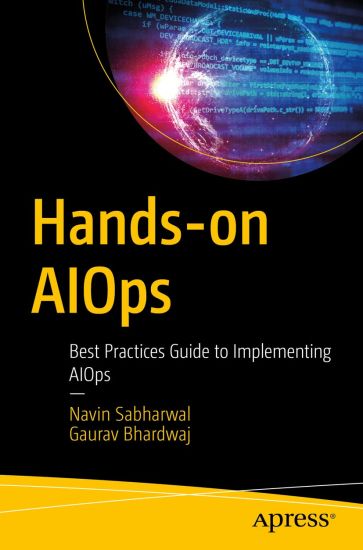
Hands-on AIOps

Hands-on AIOps

Navin Sabharwal; Gaurav Bhardwaj

APRESS
2022
nidottu
Welcome to your hands-on guide to artificial intelligence for IT operations (AIOps). This book provides in-depth coverage, including operations and technical aspects. The fundamentals of machine learning (ML) and artificial intelligence (AI) that form the core of AIOps are explained as well as the implementation of multiple AIOps uses cases using ML algorithms.The book begins with an overview of AIOps, covering its relevance and benefits in the current IT operations landscape. The authors discuss the evolution of AIOps, its architecture, technologies, AIOps challenges, and various practical use cases to efficiently implement AIOps and continuously improve it. The book provides detailed guidance on the role of AIOps in site reliability engineering (SRE) and DevOps models and explains how AIOps enables key SRE principles. The book provides ready-to-use best practices for implementing AIOps in an enterprise. Each component of AIOps and ML using Python code andtemplates is explained and shows how ML can be used to deliver AIOps use cases for IT operations.What You Will Learn Know what AIOps is and the technologies involvedUnderstand AIOps relevance through use casesUnderstand AIOps enablement in SRE and DevOpsUnderstand AI and ML technologies and algorithmsUse algorithms to implement AIOps use casesUse best practices and processes to set up AIOps practices in an enterpriseKnow the fundamentals of ML and deep learningStudy a hands-on use case on de-duplication in AIOpsUse regression techniques for automated baseliningUse anomaly detection techniques in AIOps Who This Book is For AIOps enthusiasts, monitoring and management consultants, observability engineers, site reliability engineers, infrastructure architects, cloud monitoring consultants, service management experts, DevOps architects, DevOps engineers, and DevSecOps experts
Hands-On Guide to AgileOps

Hands-On Guide to AgileOps

Navin Sabharwal; Raminder Rathore; Udita Agrawal

APRESS
2021
nidottu
Discover the best practices for transforming cloud and infrastructure operations by using Agile, Scrum, Kanban, Scrumban and Spotify models. This book will help you gain an in-depth understanding of these processes so that you can apply them to your own work. The book begins by offering an overview of current processes and methods used in IT Operations using ITIL and IT4IT. The Authors provide a background of the Agile, Scrum, Kanban, SaFe, Scrumban, and Spotify models used in software development. You’ll then gain in-depth guidance and best practices to implement Agile in the Operations world. You’ll see how Agile, Site Reliability Engineering and DevOps work in tandem to provide the foundation for modern day infrastructure and cloud operations. The book also offers a comparison of various agile processes and their suitability to the infrastructure and cloud operations world. After completing this is hands-on guide, you’ll know how to adopt Agile, DevOps and SRE and select the most suitable processes for your organization to achieve higher reliability, agility and lower costs while running cloud and infrastructure operations. What You Will LearnUnderstand how cloud computing and microservices architecture are changing operations dynamicsUnderstand ITIL, IT4IT, and LeanLearn how Site Reliability Engineering, Agile and DevOps work in tandemLeverage Agile, Scrum, Kanban, Scrumban, and Spotify models to run cloud operationsUse Site Reliability techniques along with Agile and DevOpsStudy the different agile frameworks (Spotify, SAFe, LeSS, DAD, Nexus), their purpose, benefits and implementation approaches.Learn a step-by-step process to identify and implement these frameworks in your organization Who This Book is For Infrastructure architects, DevOps architects, Agile practitioners, DevSecOps Experts, Product Managers/Scrum Masters, DevOps Engineers.
Infrastructure-as-Code Automation Using Terraform, Packer, Vault, Nomad and Consul
Discover the methodologies and best practices for getting started with HashiCorp tools, including Terraform, Vault, and Packer. The book begins with an introduction to the infrastructure-as-code concept while establishing the need for automation and management technologies. You’ll go over hands-on deployment, configuration, and best practices for Terraform, Packer, Vault, Nomad, and Consul. You’ll then delve deeper into developing automation code using Terraform for automating AWS/Azure/GCP public cloud tasks; advanced topics include leveraging Vault for secrets management and Packer for image management. Along the way you will also look at Nomad and Consul for managing application orchestration along with network interconnectivity. In each chapter you will cover automated infrastructure and application deployment on the VM/container base ecosystem. The book provides sample code and best-practice guidance for developers and architects to look at infrastructure-as-code adoptionfrom a holistic viewpoint. All the code presented in the book is available in the form of scripts, which allow you to try out the examples and extend them in interesting ways. What You Will Learn Get an overview of the architecture of Terraform, Vault, Packer, Nomad, and ConsulFollow hands-on steps for enabling Terraform, Vault, Packer, Nomad, and ConsulAutomate various services on the public cloud, including AWS, Azure, and GCP Who This Book Is For Developers, architects, and administrators who want to learn about infrastructure-as-code automation.
Hands-on Question Answering Systems with BERT

Hands-on Question Answering Systems with BERT

Navin Sabharwal; Amit Agrawal

APress
2021
nidottu
Get hands-on knowledge of how BERT (Bidirectional Encoder Representations from Transformers) can be used to develop question answering (QA) systems by using natural language processing (NLP) and deep learning. The book begins with an overview of the technology landscape behind BERT. It takes you through the basics of NLP, including natural language understanding with tokenization, stemming, and lemmatization, and bag of words. Next, you’ll look at neural networks for NLP starting with its variants such as recurrent neural networks, encoders and decoders, bi-directional encoders and decoders, and transformer models. Along the way, you’ll cover word embedding and their types along with the basics of BERT. After this solid foundation, you’ll be ready to take a deep dive into BERT algorithms such as masked language models and next sentence prediction. You’ll see different BERT variations followed by a hands-on example of a question answering system. Hands-on Question Answering Systems with BERT is a good starting point for developers and data scientists who want to develop and design NLP systems using BERT. It provides step-by-step guidance for using BERT. What You Will Learn Examine the fundamentals of word embeddings Apply neural networks and BERT for various NLP tasks Develop a question-answering system from scratch Train question-answering systems for your own data Who This Book Is For AI and machine learning developers and natural language processing developers.
Pro Google Cloud Automation

Pro Google Cloud Automation

Navin Sabharwal; Piyush Pandey

APress
2020
nidottu
Discover the methodologies and best practices for getting started with Google cloud automation services including Google Cloud Deployment Manager, Spinnaker, Tekton, and Jenkins to automate deployment of cloud infrastructure and applications. The book begins with an introduction to Google cloud services and takes you through the various platforms available to do automation on the GCP platform. You will do hands-on exercises and see best practices for using Google Cloud Deployment Manager, Spinnaker, Tekton, and Jenkins. You’ll cover the automation aspects of the Google Cloud Platform holistically using native and upcoming open source technologies. The authors cover the entire spectrum of automation from cloud infrastructure to application deployment and tie everything together in a release pipeline using Jenkins. Pro Google Cloud Automation provides in-depth guidance on automation and deployment of microservices-based applications running on the Kubernetes platform. It provides sample code and best practice guidance for developers and architects for their automation projects on the Google Cloud Platform. This book is a good starting point for developers, architects, and administrators who want to learn about Google cloud automation. What You Will Learn Gain the fundamentals of Google’s automation-enabling servicesSee an architecture overview for Google Cloud Deployment Manager, Spinnaker, Tekton, and JenkinsImplement automation for infrastructure and application use casesAutomate microservices-based applications running on GKEEnable Google Cloud Deployment Manager, Spinnaker, Tekton, and Jenkins Who This Book Is For Developers, architects, and administrators who want to learn about Google cloud automation.
Up and Running Google AutoML and AI Platform

Up and Running Google AutoML and AI Platform

Amit Agrawal; Navin Sabharwal

BPB Publications
2020
pokkari
Learn how to work towards making the most out of a career in emerging tech Key Features Understand the core concepts related to careers in emerging tech. Learn innovative, exclusive, and exciting ways to design a successful career in ET. Reduce your learning curve by examining the career trajectories of eminent ET professionals. Ways to evolve and adapt to changing ET paradigms. Practical perspective from the field. Description Cracking the emerging tech code will help you attain your Emerging Technology (ET) career goals faster without spending years in committing avoidable mistakes, recovering from them, and learning things the hard way. You can apply practical tips in areas such as improving your ability to craft market-friendly use cases and evolving a solution approach in new and diverse tech or business environments, to propel forward your career in strategic and proactive ways.It outlines ways in which you can explore and capitalize on hidden opportunities while working on important career aspects. The anecdotes and solutions provided will aid you in getting an inside out view to reduce your learning curve. This book will help you in gaining both magnitude and direction in your ET career journey and prevent you from getting overwhelmed or pinned down by the forces of ET.Authored by an ET professional, this book will take you through a series of steps to deepen your understanding of the forces that shape one's ET career and successfully dealing with them.It also helps bust myths, addresses fallacies, and common misconceptions that could harm one's career prospects. There are also practical and easy-to-adopt tips, methods, tracking mechanisms, and information that will improve career standing and professional growth.This book makes it easy for you to enhance your employability and job market relevance so that you can sprint towards a rewarding career.What will you learnThrough this book, you will connect with ways and means to build a strong and rewarding emerging tech career. You will be able to work on identifying the right technology and employer, enhancing employability and differentiation in the job market, addressing challenges and connecting with enablers, accurate growth strategies and execution principles. Who this book is forThis book is for current and aspiring emerging tech professionals, students, and anyone who wishes to understand ways to have a fulfilling career in emerging technologies such as AI, blockchain, cybersecurity, IoT, space tech, and more. Table of Contents 1. Introduction2. The best ET for me and some myth bursting3. Getting prepared and charting a roadmap4. Identifying the requirements and getting help5. Dealing with headwinds and drawing a career change action plan6. Building an ET friendly r sum and finding the right employer7. Getting hired through social media8. Job search9. Impressing the emerging tech jury10. The secret sauce11. Becoming a thought leader12. Measuring success and making course corrections13. Drawing the two-year plan14. Building your leadership capabilities15. To start-up or not?16. Communications skills: getting it right17. Building a personal brand18. Post-scriptAbout the Authors Prayukth has been actively involved in productizing and promoting cross eco-system collaboration in the IoT space for over half-a-decade. In recent years, he has focused on exposing APT groups, global footprint, and in evaluating the evolving threat landscape surrounding IoT and OT environments. In his current role, he has taken Subex's IoT business to new geographies. Your Linkedin profile: https: //www.linkedin.com/in/prayukthkv/
Pro Google Kubernetes Engine

Pro Google Kubernetes Engine

Navin Sabharwal; Piyush Pandey

APress
2020
nidottu
Discover methodologies and best practices for getting started with Google Kubernetes Engine (GKE). This book helps you understand how GKE provides a fully managed environment to deploy and operate containerized applications on Google Cloud infrastructure.You will see how Kubernetes makes it easier for users to manage clusters and the container ecosystem. And you will get detailed guidance on deploying and managing applications, handling administration of container clusters, managing policies, and monitoring cluster resources. You will learn how to operate the GKE environment through the GUI-based Google Cloud console and the "gcloud" command line interface. The book starts with an introduction to GKE and associated services. The authors provide hands-on examples to set up Container Registry and GKE Cluster, and you will follow through an application deployment on GKE. Later chapters focus on securing your GCP GKE environment, GKE monitoring anddashboarding, and CI/CD automation. All of the code presented in the book is provided in the form of scripts, which allow you to try out the examples and extend them in interesting ways.What You Will LearnUnderstand the main container services in GCP (Google Container Registry, Google Kubernetes Engine, Kubernetes Engine, Management Services)Perform hands-on steps to deploy, secure, scale, monitor, and automate your containerized environmentDeploy a sample microservices application on GKEDeploy monitoring for your GKE environmentUse DevOps automation in the CI/CD pipeline and integrate it with GKEWho This Book Is ForArchitects, developers, and DevOps engineers who want to learn Google Kubernetes Engine
Monitoring Microservices and Containerized Applications

Monitoring Microservices and Containerized Applications

Navin Sabharwal; Piyush Pandey

APress
2020
nidottu
Discover the methodologies and best practices for getting started with container services monitoring using Prometheus, AppDynamics, and Dynatrace. The book begins with the basics of working with the containerization and microservices architecture while establishing the need for monitoring and management technologies. You’ll go through hands-on deployment, configuration, and best practices for Prometheus. Next, you’ll delve deeper into monitoring of container ecosystems for availability, performance, and logs, and then cover the reporting capabilities of Prometheus. Further, you’ll move on to advanced topics of extending Prometheus including how to develop new use cases and scenarios. You’ll then use enterprise tools such as AppDynamics and Wavefront to discover deeper application monitoring best practices. You’ll conclude with fully automated deployment of the monitoring and management platforms integrated with the container ecosystem using infrastructure-as -codetools such as Jenkins, Ansible and Terraform. The book provides sample code and best practices for you to look at container monitoring from a holistic viewpoint. This book is a good starting point for developers, architects, and administrators who want to learn about monitoring and management of cloud native and microservices containerized applications. What You Will LearnExamine the fundamentals of container monitoringGet an overview of the architecture for Prometheus and Alert ManagerEnable Prometheus monitoring for containersMonitor containers using WavefrontUse the guidelines on container monitoring with enterprise solutions AppDynamics and Wavefront Who This Book Is For Software developers, system administrators, and DevOps engineers working for enterprise customers who want to use monitoring solutions for their container ecosystems.
Cognitive Virtual Assistants Using Google Dialogflow

Cognitive Virtual Assistants Using Google Dialogflow

Navin Sabharwal; Amit Agrawal

APress
2020
nidottu
Follow a step-by-step, hands-on approach to building production-ready enterprise cognitive virtual assistants using Google Dialogflow. This book provides an overview of the various cognitive technology choices available and takes a deep dive into cognitive virtual agents for handling complex real-life use cases in various industries such as travel and weather. You’ll delve deeper into the advanced features of cognitive virtual assistants implementing features such as input/output context, follow-up intents, actions and parameters, and handling complex multiple intents. You’ll learn how to integrate with third-party messaging platforms by integrating your cognitive bot with Facebook messenger. You’ll also integrate with third-party APIs to enrich your cognitive bots using webhooks. Cognitive Virtual Assistants Using Google Dialogflow takes the complexity out of the cognitive platform and provides rich guidance which you can use when developing your owncognitive bots. The book covers Google Dialogflow in-depth and starts with the basics, serving as a hands-on guide for developers who are starting out on their journey with Google Dialogflow. All the code presented in the book will be available in the form of scripts and configuration files, which allows you to try out the examples and extend them in interesting ways.What You Will LearnDevelop cognitive bots with Google Dialogflow technologyUse advanced features to handle complex conversation scenariosEnrich the bot’s conversations by understanding the sentiment of the userSee best practices for developing cognitive botsEnhance a cognitive bot by integrating with third-party services Who This Book Is For AI and ML developers.
Hands On Google Cloud SQL and Cloud Spanner

Hands On Google Cloud SQL and Cloud Spanner

Navin Sabharwal; Shakuntala Gupta Edward

APress
2019
nidottu
Discover the methodologies and best practices for getting started with Google Cloud Platform relational services – CloudSQL and CloudSpanner.The book begins with the basics of working with the Google Cloud Platform along with an introduction to the database technologies available for developers from Google Cloud. You'll then take an in-depth hands on journey into Google CloudSQL and CloudSpanner, including choosing the right platform for your application needs, planning, provisioning, designing and developing your application. Sample applications are given that use Python to connect to CloudSQL and CloudSpanner, along with helpful features provided by the engines. You''ll also implement practical best practices in the last chapter. Hands On Google Cloud SQL and Cloud Spanner is a great starting point to apply GCP data offerings in your technology stack and the code used allows you to try out the examples and extend them in interestingways.What You'll LearnGet started with Big Data technologies on the Google Cloud Platform Review CloudSQL and Cloud Spanner from basics to administrationApply best practices and use Google’s CloudSQL and CloudSpanner offeringWork with code in Python notebooks and scriptsWho This Book Is ForApplication architects, database architects, software developers, data engineers, cloud architects.
Developing Cognitive Bots Using the IBM Watson Engine

Developing Cognitive Bots Using the IBM Watson Engine

Navin Sabharwal; Sudipta Barua; Neha Anand; Pallavi Aggarwal

APress
2019
nidottu
Cognitive Virtual Bots are taking the technology and user experience world by storm. This book provides clear guidance on how different cognitive platforms can be used to develop Cognitive Virtual Assistants that enable a conversation by using DialogFlow and advanced Natural Language Processing. You will start by understanding the technology landscape and various use cases that Cognitive Virtual Assistants can be used in. Early chapters will take you through the basics of Cognitive Virtual Assistants, before moving onto advanced concepts and hands on examples of using IBM Watson Assistant and its advanced configurations with Watson Discovery Services, Watson Knowledge Studio and Spellchecker Service. You'll then examine integrations that enrich the Cognitive Virtual Assistant by providing data around weather, locations, stock markets. The book concludes by providing a glimpse of what to expect in the future for Cognitive Virtual Assistants.What You'll LearnReview the fundamentals of Cognitive Virtual Assistants.Develop a Cognitive Virtual Assistant from scratch using IBM Watson platform.Integrate and enrich your Virtual Agent with other services such as weather, location and stocks.Instantly deliver your bot on major messaging channels such as Skype, SMS, and WebchatTrain your Cognitive Virtual Agent on specific use cases.Who This Book Is ForAI and machine learning engineers, cognitive solutions architects and developers would find the book extremely useful
Practical MongoDB

Practical MongoDB

Shakuntala Gupta Edward; Navin Sabharwal

APress
2015
nidottu
The "one-size-fits-all" thinking regarding traditional RDBMSs has been challenged in the last few years by the emergence of diversified NoSQL databases. More than 120 NoSQL databases are now available in the market, and the market leader by far is MongoDB. With so many companies opting for MongoDB as their NoSQL database of choice, there's a need for a practical how-to combined with expert advice for getting the most out of the software. Beginning with a short introduction to the basics of NoSQL databases, MongoDB experts Navin Sabharwal and Shankatala Gupta Edward introduce readers to MongoDB – the leading document based NoSQL database, acquainting them step by step with all aspects of MongoDB. They cover the data model, underlying architecture, how to code using Mongo Shell, and administration of the MongoDB platform, among other topics. The book also provides clear guidelines and practical examples for architecting and developing applications using the MongoDB platform and deploying them. Database developers, architects, and database administrators will find useful information covering all aspects of the MongoDB platform and how to put it to use practically.Practical Guide to MongoDB provides readers with:A solid understanding of NoSQL databasesAn understanding of how to get started with MongoDBMethodical coverage of the architecture, development, and administration of MongoDBA plethora of "How to’s" enabling you to use the technology most efficiently to solve the problems you facePractical MongoDB is for those just starting to learning to work with NoSQL databases in general and MongoDB in particular. Skills in these areas are in demand, making this book essential reading for those who want to work more productively or break into big data work. It will prove equally useful for entrepreneurs and others who like to work with new technologies.
Automation through Chef Opscode

Automation through Chef Opscode

Navin Sabharwal; Manak Wadhwa

APress
2014
nidottu
Automation through Chef Opscode provides an in-depth understanding of Chef, which is written in Ruby and Erlang for configuration management, cloud infrastructure management, system administration, and network management. Targeted at administrators, consultants, and architect, the book guides them through the advanced features of the tool which are necessary for infrastructure automation, devops automation, and reporting. The book presumes knowledge of Ruby and Erlang which are used as reference languages for creating recipes and cookbooks and as a refresher on them to help the reader get on speed with the flow of book. The book provides step by step instructions on installation and configuration of Chef, usage scenarios of Chef, in infrastructure automation by providing common scenarios like virtual machine provisioning, OS configuration for Windows, Linux, and Unix, provisioning and configuration of web servers like Apache along with popular databases like MySQL. It further elaborates on the creation of recipes, and cookbooks, which help in deployment of servers and applications to any physical, virtual, or cloud location, no matter the size of the infrastructure. The books covers advanced features like LWRPs and Knife and also contains several illustrative sample cookbooks on MySQL, Apache, and CouchDB deployment using a step by step approach.
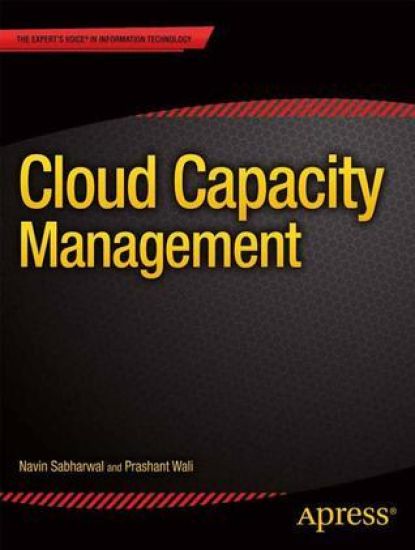
Cloud Capacity Management

Cloud Capacity Management

Navin Sabharwal; Prashant Wali

APress
2013
nidottu
Cloud Capacity Management helps readers in understanding what the cloud, IaaS, PaaS, SaaS are, how they relate to capacity planning and management and which stakeholders are involved in delivering value in the cloud value chain. It explains the role of capacity management for a creator, aggregator, and consumer of cloud services and how to provision for it in a 'pay as you use model'. This involves a high level of abstraction and virtualization to facilitate rapid and on demand provisioning of services. The conventional IT service models take a traditional approach when planning for service capacity to provide optimum services levels which has huge cost implications for service providers. This book addresses the gap areas between traditional capacity management practices and cloud service models. It also showcases capacity management process design and implementation in a cloud computing domain using ITSM best practices. This book is a blend of ITSM best practices and infrastructure capacity planning and optimization implementation in various cloud scenarios. Cloud Capacity Management addresses the basics of cloud computing, its various models, and their impact on capacity planning. This book also highlights the infrastructure capacity management implementation process in a cloud environment showcasing inherent capabilities of tool sets available and the various techniques for capacity planning and performance management. Techniques like dynamic resource scheduling, scaling, load balancing, and clustering etc are explained for implementing capacity management.