Kirjojen hintavertailu. Mukana 12 203 490 kirjaa ja 12 kauppaa.

Kirjailija

Neal Ford

Kirjat ja teokset yhdessä paikassa: 13 kirjaa, julkaisuja vuosilta 2003-2026, suosituimpien joukossa Software Architecture Metrics. Vertaile teosten hintoja ja tarkista saatavuus suomalaisista kirjakaupoista.

13 kirjaa

Kirjojen julkaisuhaarukka 2003-2026.

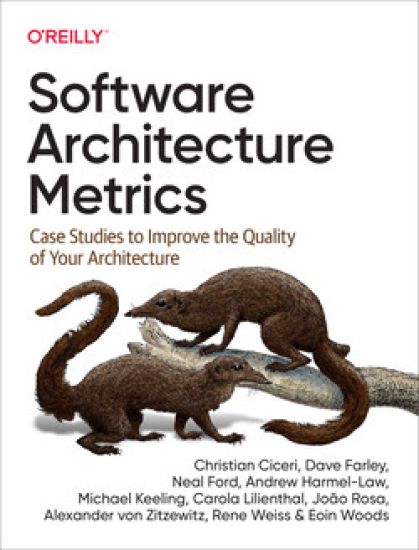
Software Architecture Metrics

Software Architecture Metrics

Christian Ciceri; Dave Farley; Neal Ford; Andrew Harmel-Law; Michael Keeling; Carola Lilienthal

O'Reilly Media
2022
nidottu
Software architecture metrics are key to the maintainability and architectural quality of a software project and they can warn you about dangerous accumulations of architectural and technical debt early in the process. In this practical book, leading hands-on software architects share case studies to introduce metrics that every software architect should know. This isn't a book about theory. It's more about practice and implementation, about what has already been tried and worked. Detecting software architectural issues early is crucial for the success of your software: it helps mitigate the risk of poor performance and lowers the cost of repairing those issues. Written by practitioners for software architects and software developers eager to explore successful case studies, this guide will help you learn more about decision and measurement effectiveness. Through contributions from 10 prominent practitioners, this book shares key software architecture metrics to help you set the right KPIs and measure the results. You'll learn how to: Measure how well your software architecture is meeting your goals Choose the right metrics to track (and skip the ones you don't need) Improve observability, testability, and deployability Prioritize software architecture projects Build insightful and relevant dashboards

Architecture as Code

Architecture as Code

Neal Ford; Mark Richards

O'Reilly Media
2026
nidottu
Most software architectures are still expressed in static diagrams and documents that can't be tested or automatically verified. As organizations grow, this gap between design and implementation leads to drift, manual governance, and mounting complexity. Architecture as Code offers a new approach: defining architecture itself in executable form. Acclaimed software architects Neal Ford and Mark Richards present a practical framework for treating architecture like source code—using fitness functions and automated feedback to define structure, constraints, governance, security, and communication across the entire organization. By capturing these intersections in code, teams can continuously validate alignment with technical and business goals, reduce risk, and evolve systems with confidence. This is your go-to guide for making architecture measurable, verifiable, and adaptable at scale. With clear examples and proven practices, this book shows you how to: Define architectural decisions and constraints as code Continuously test and validate architecture across implementation, infrastructure, and teams Align architecture with business objectives and compliance requirements Establish a governance mesh that unifies constraints across multiple intersection points Leverage generative AI to help craft and evolve fitness functions
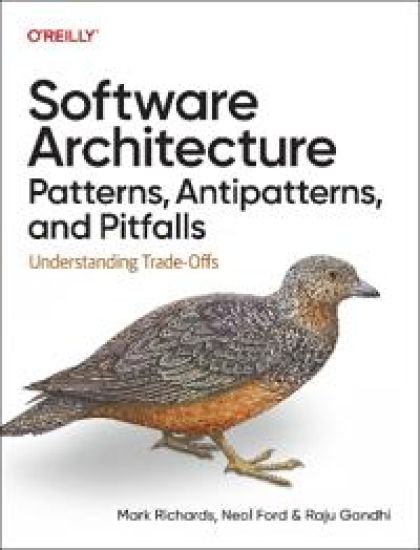
Software Architecture Patterns, Antipatterns, and Pitfalls

Software Architecture Patterns, Antipatterns, and Pitfalls

Mark Richards; Neal Ford; Raju Gandhi

O'Reilly Media
2026
nidottu
The increasing adoption of cloud native development, real-time applications, and AI-enabled services requires mastering the trade-offs of the most influential software architecture patterns and antipatterns shaping today's technology landscape. As software systems grow in complexity and scale, applying the right architectural pattern becomes critical to meeting performance, agility, and operational demands. This book from Neal Ford, Mark Richards, and Raju Gandhi focuses on modern software patterns and their practical use in building scalable, resilient, and maintainable systems. The authors' examination of use cases and analysis of trade-offs will help software developers, architects, and technical leaders select the right pattern for their system's needs. Whether you're modernizing a legacy monolith, building cloud native applications, or scaling distributed systems, you'll get clear guidance and insights to support your journey. Understand the core principles, strengths, and limitations of key software architecture patterns Evaluate architecture patterns using use cases and trade-offs Learn the role of supporting concepts within modern architectural ecosystems Select and apply appropriate architecture patterns based on business and technical requirements Analyze architectural trade-offs to make informed decisions about scalability, performance, complexity, and maintainability Design cohesive, resilient, and evolvable systems using proven patterns and modern industry practices
Fundamentals of Software Architecture

Fundamentals of Software Architecture

Mark Richards; Neal Ford

O'Reilly Media
2025
nidottu
Salary surveys worldwide regularly place software architect in the top 10 best jobs, yet no real guide exists to help developers become architects. Until now. This updated edition provides a comprehensive overview of software architecture's many aspects, with five new chapters covering the latest insights from the field. Aspiring and existing architects alike will examine architectural characteristics, architectural patterns, component determination, diagramming architecture, governance, data, generative AI, team topologies, and many other topics.Mark Richards and Neal Ford-hands-on practitioners who have taught software architecture classes professionally for years-focus on architecture principles that apply across all technology stacks. You'll explore software architecture in a modern light, taking into account all the innovations of the past decade.This book examines:Architecture styles and patterns: Microservices, modular monoliths, microkernels, layered architectures, and many moreComponents: Identification, coupling, cohesion, partitioning, and granularitySoft skills: Effective team management, collaboration, business engagement models, negotiation, presentations, and moreModernity: Engineering practices and operational approaches that have changed radically in the past few years, including cloud considerations and generative AIArchitecture as an engineering discipline: Repeatable results, metrics, and concrete valuations that add rigor to software architecture
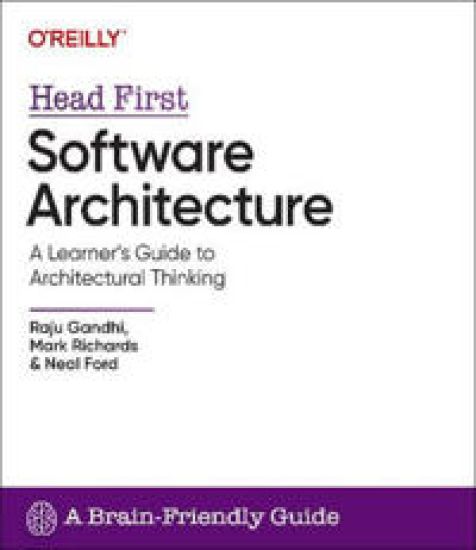
Head First Software Architecture

Head First Software Architecture

Raju Gandhi; Mark Richards; Neal Ford

O'Reilly Media
2024
pokkari
What will you learn from this book? If you're a software developer looking for a quick on-ramp to software architecture, this handy guide is a great place to start. From the authors of Fundamentals of Software Architecture, Head First Software Architecture teaches you how to think architecturally and explores the unique challenges of software architecture. You'll learn the distinction between architecture and design and the relationship between code, components, and architectural styles. You'll also learn how to work with some common architectural styles through vivid, fun examples. Quick, easy, and entertaining, this book is a valuable introduction to the world of software architecture. Why does this book look so different? Based on the latest research in cognitive science and learning theory, Head First Software Architecture uses a visually rich format to engage your mind, rather than a text-heavy approach that puts you to sleep. Why waste your time struggling with new concepts? This multisensory learning experience is designed for the way your brain really works.
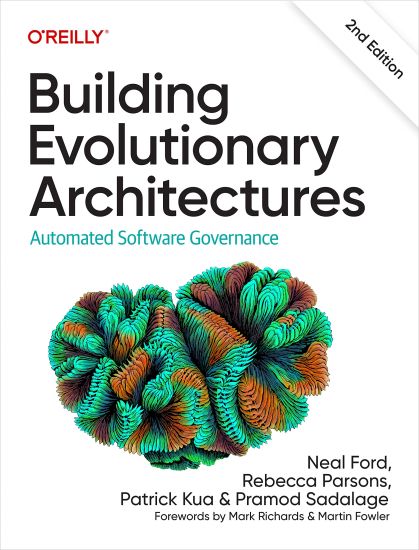
Building Evolutionary Architectures

Building Evolutionary Architectures

Neal Ford; Rebecca Parsons; Patrick Kua; Pramod Sadalage

O'Reilly Media
2022
pokkari
The software development ecosystem is constantly changing, providing a constant stream of new tools, frameworks, techniques, and paradigms. Over the past few years, incremental developments in core engineering practices for software development have created the foundations for rethinking how architecture changes over time, along with ways to protect important architectural characteristics as it evolves. This practical guide ties those parts together with a new way to think about architecture and time.
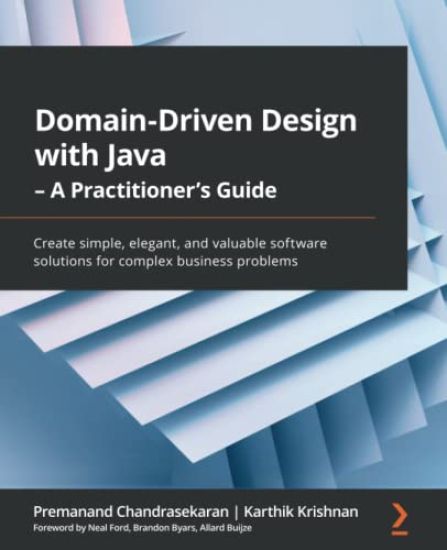
Domain-Driven Design with Java - A Practitioner's Guide

Domain-Driven Design with Java - A Practitioner's Guide

Premanand Chandrasekaran; Karthik Krishnan; Neal Ford; Brandon Byars; Allard Buijze

PACKT PUBLISHING LIMITED
2022
nidottu
Adopt a practical and modern approach to architecting and implementing DDD-inspired solutions to transform abstract business ideas into working software across the entire spectrum of the software development life cycleKey FeaturesImplement DDD principles to build simple, effective, and well-factored solutionsUse lightweight modeling techniques to arrive at a common collective understanding of the problem domainDecompose monolithic applications into loosely coupled, distributed components using modern design patternsBook DescriptionDomain-Driven Design (DDD) makes available a set of techniques and patterns that enable domain experts, architects, and developers to work together to decompose complex business problems into a set of well-factored, collaborating, and loosely coupled subsystems.This practical guide will help you as a developer and architect to put your knowledge to work in order to create elegant software designs that are enjoyable to work with and easy to reason about. You'll begin with an introduction to the concepts of domain-driven design and discover various ways to apply them in real-world scenarios. You'll also appreciate how DDD is extremely relevant when creating cloud native solutions that employ modern techniques such as event-driven microservices and fine-grained architectures. As you advance through the chapters, you'll get acquainted with core DDD's strategic design concepts such as the ubiquitous language, context maps, bounded contexts, and tactical design elements like aggregates and domain models and events. You'll understand how to apply modern, lightweight modeling techniques such as business value canvas, Wardley mapping, domain storytelling, and event storming, while also learning how to test-drive the system to create solutions that exhibit high degrees of internal quality.By the end of this software design book, you'll be able to architect, design, and implement robust, resilient, and performant distributed software solutions.What you will learnDiscover how to develop a shared understanding of the problem domainEstablish a clear demarcation between core and peripheral systemsIdentify how to evolve and decompose complex systems into well-factored componentsApply elaboration techniques like domain storytelling and event stormingImplement EDA, CQRS, event sourcing, and much moreDesign an ecosystem of cohesive, loosely coupled, and distributed microservicesTest-drive the implementation of an event-driven system in JavaGrasp how non-functional requirements influence bounded context decompositionsWho this book is forThis book is for intermediate Java programmers looking to upgrade their software engineering skills and adopt a collaborative and structured approach to designing complex software systems. Specifically, the book will assist senior developers and hands-on architects to gain a deeper understanding of domain-driven design and implement it in their organization. Familiarity with DDD techniques is not a prerequisite; however, working knowledge of Java is expected.
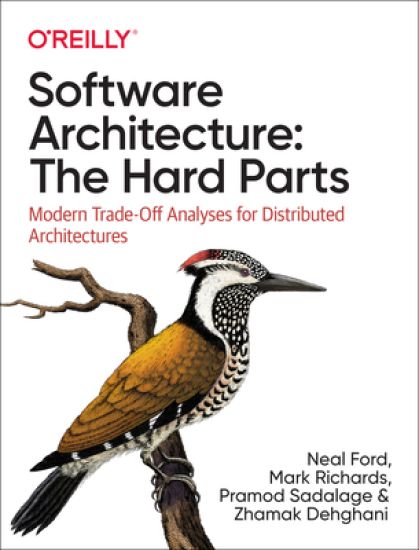
Software Architecture: The Hard Parts

Software Architecture: The Hard Parts

Neal Ford; Mark Richards; Pramod Sadalage; Zhamak Dehghani

O'Reilly Media, Inc, USA
2021
nidottu
There are no easy decisions in software architecture. Instead, there are many hard parts--difficult problems or issues with no best practices--that force you to choose among various compromises. With this book, you'll learn how to think critically about the trade-offs involved with distributed architectures. Architecture veterans and practicing consultants Neal Ford, Mark Richards, Pramod Sadalage, and Zhamak Dehghani discuss strategies for choosing an appropriate architecture. By interweaving a story about a fictional group of technology professionals--the Sysops Squad--they examine everything from how to determine service granularity, manage workflows and orchestration, manage and decouple contracts, and manage distributed transactions to how to optimize operational characteristics, such as scalability, elasticity, and performance. By focusing on commonly asked questions, this book provides techniques to help you discover and weigh the trade-offs as you confront the issues you face as an architect. Analyze trade-offs and effectively document your decisions Make better decisions regarding service granularity Understand the complexities of breaking apart monolithic applications Manage and decouple contracts between services Handle data in a highly distributed architecture Learn patterns to manage workflow and transactions when breaking apart applications
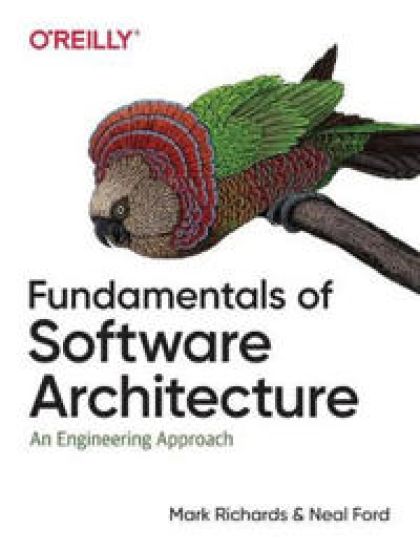
Fundamentals of Software Architecture

Fundamentals of Software Architecture

Mark Richards; Neal Ford

O'Reilly Media, Inc, USA
2020
pokkari
Salary surveys worldwide regularly place software architect in the top 10 best jobs, yet no real guide exists to help developers become architects. Until now. This book provides the first comprehensive overview of software architecture's many aspects. Aspiring and existing architects alike will examine architectural characteristics, architectural patterns, component determination, diagramming and presenting architecture, evolutionary architecture, and many other topics. Mark Richards and Neal Ford-hands-on practitioners who have taught software architecture classes professionally for years-focus on architecture principles that apply across all technology stacks. You'll explore software architecture in a modern light, taking into account all the innovations of the past decade. This book examines: Architecture patterns: The technical basis for many architectural decisions Components: Identification, coupling, cohesion, partitioning, and granularity Soft skills: Effective team management, meetings, negotiation, presentations, and more Modernity: Engineering practices and operational approaches that have changed radically in the past few years Architecture as an engineering discipline: Repeatable results, metrics, and concrete valuations that add rigor to software architecture
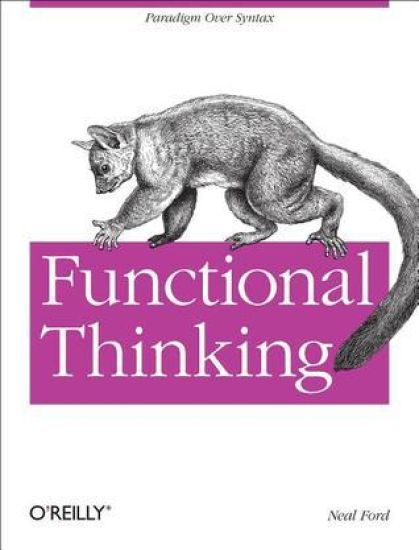
Functional Thinking

Functional Thinking

Neal Ford

O'Reilly Media, Inc, USA
2014
nidottu
If you want to take advantage of functional programming features in Java and other languages, this in-depth guide takes you beyond syntax and demonstrates how you need to think in a new way. Software architect Neal Ford shows intermediate to advanced developers how functional coding allows you to step back a level of abstraction so you can see your programming problem with greater clarity. Each chapter shows you various examples of functional thinking, using numerous code examples from Java 8 and other JVM languages that include functional capabilities. This book may bend your mind, but you'll come away with a good grasp of functional programming concepts. Understand why many imperative languages are adding functional capabilities Compare functional and imperative solutions to common problems Examine ways to cede control of routine chores to the runtime Learn how memoization and laziness eliminate hand-crafted solutions Explore functional approaches to design patterns and code reuse View real-world examples of functional thinking with Java 8, and in functional architectures and web frameworks Learn the pros and cons of living in a paradigmatically richer world
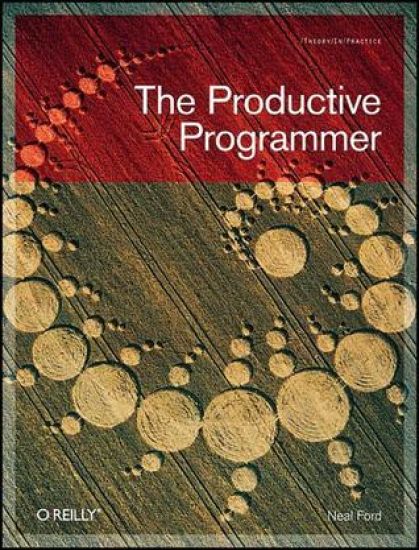
The Productive Programmer

The Productive Programmer

Neal Ford

O'Reilly Media, Inc, USA
2008
nidottu
Anyone who develops software for a living needs a proven way to produce it better, faster, and cheaper. "The Productive Programmer" offers critical timesaving and productivity tools that you can adopt right away, no matter what platform you use. Master developer Neal Ford not only offers advice on the mechanics of productivity-how to work smarter, spurn interruptions, get the most out your computer, and avoid repetition-he also details valuable practices that will help you elude common traps, improve your code, and become more valuable to your team.You'll learn to: write the test before you write the code; manage the lifecycle of your objects fastidiously; build only what you need now, not what you might need later; apply ancient philosophies to software development; question authority, rather than blindly adhere to standards; make hard things easier and impossible things possible through meta-programming; be sure all code within a method is at the same level of abstraction; and, pick the right editor and assemble the best tools for the job. This isn't theory, but the fruits of Ford's real-world experience as an Application Architect at the global IT consultancy ThoughtWorks. Whether you're a beginner or a pro with years of experience, you'll improve your work and your career with the simple and straightforward principles in The Productive Programmer.
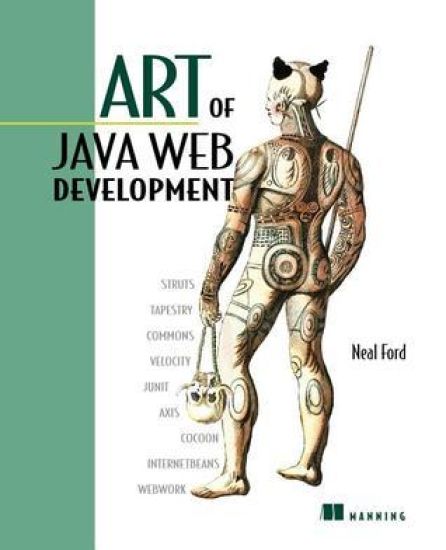
Art of Java Web Development

Art of Java Web Development

Neal Ford

Manning Publications
2003
nidottu
A guide to the topics required for state of the art web development, this book covers wide-ranging topics, including a variety of web development frameworks and best practices. Beginning with coverage of the history of the architecture of web applications, highlighting the uses of the standard web API to create applications with increasingly sophisticated architectures, developers are led through a discussion on the development of industry accepted best practices for architecture. Described is the history and evolution towards this architecture and the reasons that it is superior to previous efforts. Also provided is an overview of the most popular web application frameworks, covering their architecture and use. Numerous frameworks exist, but trying to evaluate them is difficult because their documentation stresses their advantages but hides their deficiencies. Here, the same application is built in six different frameworks, providing a way to perform an informed comparison. Also provided is an evaluation of the pros and cons of each framework to assist in making a decision or evaluating a framework on your own. Finally, best practices are covered, including sophisticated user interface techniques, intelligent caching and resource management, performance tuning, debugging, testing, and Web services.