Kirjojen hintavertailu. Mukana 12 471 229 kirjaa ja 12 kauppaa.

Kirjailija

Necati Polat

Kirjat ja teokset yhdessä paikassa: 4 kirjaa, julkaisuja vuosilta 2012-2016, suosituimpien joukossa International Relations, Meaning and Mimesis. Vertaile teosten hintoja ja tarkista saatavuus suomalaisista kirjakaupoista.

4 kirjaa

Kirjojen julkaisuhaarukka 2012-2016.

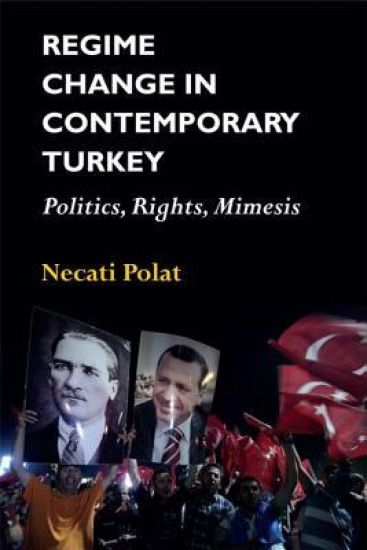
Regime Change in Contemporary Turkey

Regime Change in Contemporary Turkey

Necati Polat

Edinburgh University Press
2016
sidottu
Turkey has undergone a series of upheavals in its political regime from the mid-19th century. This book details the most recent change, locating it in its broader historical setting. Beginning with the Justice and Development Party's rule from late 2002, supported by a broad informal coalition that included liberals, the book shows how the former Islamists gradually acquired full power between 2007 and 2011. It then describes the subsequent phase, looking at politics and rights under the amorphous new order.This is the first scholarly yet accessible assessment of this historic change, placing it in the larger context of political modernisation in the country over the past 150 years.
Regime Change in Contemporary Turkey

Regime Change in Contemporary Turkey

Necati Polat

Edinburgh University Press
2016
nidottu
Turkey has undergone a series of upheavals in its political regime from the mid-19th century. This book details the most recent change, locating it in its broader historical setting. Beginning with the Justice and Development Party's rule from late 2002, supported by a broad informal coalition that included liberals, the book shows how the former Islamists gradually acquired full power between 2007 and 2011. It then describes the subsequent phase, looking at politics and rights under the amorphous new order.This is the first scholarly yet accessible assessment of this historic change, placing it in the larger context of political modernisation in the country over the past 150 years.
International Relations, Meaning and Mimesis
International Relations, Meaning and Mimesis is an innovative assessment of the uses of theory in making sense of international politics, opening up new pathways to thinking about the basics of the study area. Insights drawn from an interdisciplinary corpus of critical scholarship are synthesized and brought to bear on key concepts such as sovereignty, the state, peace, law, justice, ethics, and supranationality. The mainstream characteristically dismisses the narrativity that accompanies these concepts as derivative, tending to treat meaning attributable to them as static. The work shows how problematic this disdain of mimesis (exchange, reproduction, imitation) is and how this mindset effectively incapacitates conventional theorizing in both predicting phenomena and providing a normative vision. Integrating the study of international politics into debates in the wider academia over meaning and mimesis, this ambitious work is fluent and accessible at the same time, with exceptional lucidity in presenting difficult philosophical notions.A series of radical positions advanced in the book on theory and methodology not only address and call to account the mainstream imagination on international politics but also outline the implications of this critique for a host of specific issue areas, including peace research, normative theories, international law, and European studies.
International Relations, Meaning and Mimesis
International Relations, Meaning and Mimesis is an innovative assessment of the uses of theory in making sense of international politics, opening up new pathways to thinking about the basics of the study area. Insights drawn from an interdisciplinary corpus of critical scholarship are synthesized and brought to bear on key concepts such as sovereignty, the state, peace, law, justice, ethics, and supranationality. The mainstream characteristically dismisses the narrativity that accompanies these concepts as derivative, tending to treat meaning attributable to them as static. The work shows how problematic this disdain of mimesis (exchange, reproduction, imitation) is and how this mindset effectively incapacitates conventional theorizing in both predicting phenomena and providing a normative vision. Integrating the study of international politics into debates in the wider academia over meaning and mimesis, this ambitious work is fluent and accessible at the same time, with exceptional lucidity in presenting difficult philosophical notions.A series of radical positions advanced in the book on theory and methodology not only address and call to account the mainstream imagination on international politics but also outline the implications of this critique for a host of specific issue areas, including peace research, normative theories, international law, and European studies.