
Kirjailija
Neil Jackson
Kirjat ja teokset yhdessä paikassa: 11 kirjaa, julkaisuja vuosilta 1996-2026, suosituimpien joukossa The General Practice Journey. Vertaile teosten hintoja ja tarkista saatavuus suomalaisista kirjakaupoista.
11 kirjaa
Kirjojen julkaisuhaarukka 1996-2026.
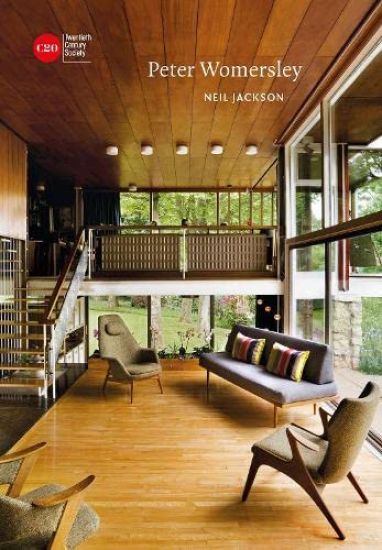
Published in his centenary year, this book celebrates the life and work of the British architect Peter Womersley (1923-1993). From Farnley Hey near Huddersfield, his award-winning first building completed in 1954, to the angular, look-no-hands concrete structure of the Fairydean football stand in Galashiels, Womersley continuously pushed the frontiers of architectural design. Working from a small office in the remote Scottish Borders village of Gattonside, he claimed a place on the world stage: nowhere was this more apparent than in the California-inspired High Sunderland near Selkirk, the ‘See-Through House’ built for Bernat Klein. Six of Womersley’s buildings in Scotland are now listed, three at the top-rate of Category A, while Farnley Hey is listed Grade II. Yet, despite such success, Womersley’s work is at risk: the Category A Bernat Klein studio is derelict while the Category B Garlton Admissions Unit at Haddington, is boarded-up and the site deserted. The intention of this new book is to draw attention to the significance of his work, placing it in its national and international context. With plans and illustrations of all his buildings and projects, as well as a catalogue raisonné including a bibliography by buildings, this book will secure Womersley’s reputation.

Post-Nearly Press Conversation Series Editions 1-5/2014-2019
Neil Jackson
Chroma Editions
2021
nidottu
Perfect for fans, collectors and newcomers alike, the Post-Nearly Press Conversation Series traverse the compelling methods, inspirations and creative outlooks from five of the UK's most visionary authors/artists. Iain Sinclair kicks it all off with a fascinating ride through the navigation of territory and the enduring influence of J.G. Ballard. Chris Petit discusses The Museum of Loneliness and relationships with screens. Andrew K tting penetrates the London Olympic site and the post-punk era of music, while the illustrious Alan Moore performs an impromptu Mandrill rap in a unique Northampton studio. Lastly, Stewart Lee recalls the late Vorticist poet bloke - Mark E Smith from The Fall.
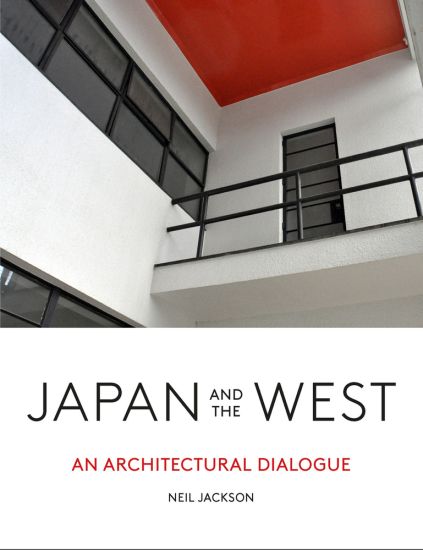
This book discusses the architectural influence that Japan and the West have had on each other during the last 150 years. While the recent histories of Western and Japanese architecture have been well recorded, they have rarely been interwoven. Based on extensive research, Japan and the West provides a synthetic overview that brings together the main themes of Japanese and Western architecture since 1850 and shows that neither could exist in its present state without the other. It should be no surprise that Meiji architecture drew heavily upon Western precedents, or that Le Corbusier was strongly influenced by the Japanese minka. In considering these histories, this book demonstrates the mutual inter-dependence of both architectural cultures while, at the same time, acknowledging their differences.In conclusion, the book moves beyond style and structure to the Japanese concept of ma — the pause or the space between, and demonstrates how this concept has found a place in Western architecture.
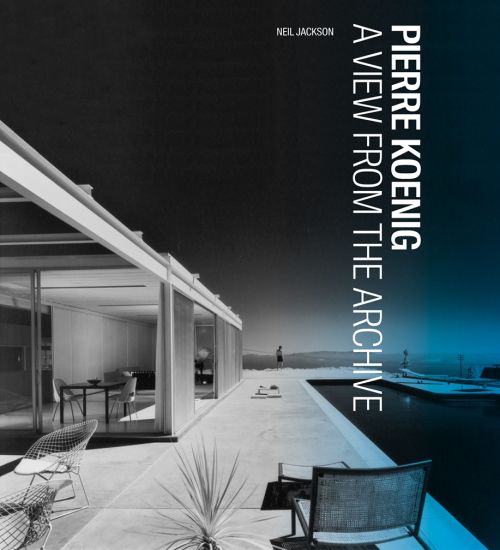
In this remarkable and gorgeously illustrated book, Neil Jackson presents a vibrant profile of the Los Angeles architect Pierre Koenig, who Time magazine said lived long enough to become "cool twice." From the influences of Koenig's youth in San Francisco and his military service during World War II to the Case Study Houses and his later award-laden years, Jackson's study plots the evolution of Koenig's oeuvre against the backdrop of Los Angeles-a city that both shaped and was shaped by his architecture. The book is anchored by Jackson's exciting discoveries in Koenig's archive at the Getty Research Institute. Drawings, photographs, diaries, letters, lecture notes, building contracts, and university projects-many of which are published for the first time-provide an expanded understanding of Koenig and additional context for his architectural achievements. An examination of Koenig's Case Study Houses shows how his often single-minded and pragmatic approach to domestic architecture recognised the advantages of production housing and presciently embraced sustainable, ecologically responsible design. A new account of the Chemehuevi housing project in Havasu Lake, California, demonstrates the special role that learning and teaching played in the development of his architecture. Over his fifty-year career, Koenig not only designed iconic houses but also directed their restoration and curated their legacy, ensuring that his work could be seen and appreciated by present and future admirers of midcentury Los Angeles.
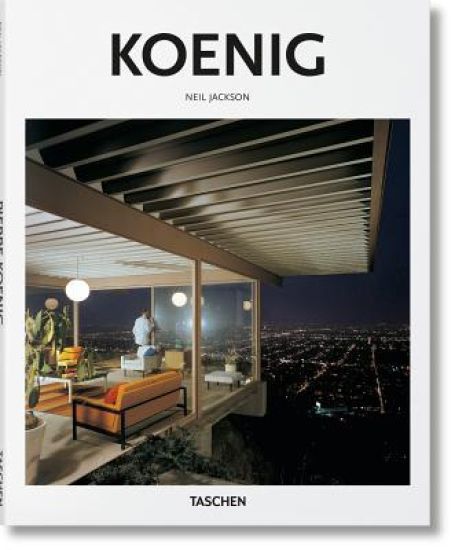
There are few images of 20th-century architecture more iconic than the nighttime view of Case Study House #22. At its eagle’s nest promontory above Los Angeles, the building is a vision of streamlined glass and steel, its slick lines echoing the twinkling city boulevards below. With this and his other equally innovative build for the famous project of the Arts & Architecture magazine, American architect Pierre Koenig (1925–2004) became one of the leading figures of the Modern movement. While still a student of architecture, Koenig designed and built his first exposed steel house in 1950, proving that the use of prefabricated materials could allow for spatial freedom in affordable houses. Throughout his career, he would champion socially responsible design, as well as buildings that responded deftly and directly to the Southern California climate. Through windows, water, terraces, skylights, and glazing, his buildings optimized the rapport between inside and outside, while aiming for a simplistic purity of appearance. Through all of Koenig’s major projects, including the Johnson House (1962) and Oberman House (1962), this book introduces an architect who was pioneering in method and material and iconic of his time, as fueled by experimentalism as the postwar optimism of the age.
Assessment in Medical Education and Training
Neil Jackson; Alex Jamieson; Anwar Khan
Radcliffe Publishing Ltd
2007
nidottu
This work contains a foreword by Dame Lesley Southgate, President, Royal Free and University College Medical School, London. Assessment is a key method of improving standards as well as establishing competency. However, despite major developments in the assessment of clinical competence in the last two decades, there is still more bad practice and ignorance of significant issues in this area than any other aspect of medical higher education. This book comprehensively covers all aspects of assessment. It considers current and future policy and practice, including the Modernising Medical Careers training programme; it promotes a system incorporating more meaningful assessments, rather than just 'tests' of knowledge and skill. "Assessment in Medical Education and Training" will be useful to everyone involved in healthcare education, including tutors, trainers, clinical supervisors and assessors in both primary and secondary care. It will also be important reading for consultants and general practitioners with responsibility for registrars, and healthcare education policy makers and shapers. 'Acquisition of knowledge and skills is not sufficient alone; we need to be able to apply the knowledge, skills and strategies learnt, and in turn these can be the appropriate targets of assessment. There is a movement away from traditional, multiple-choice tests to assessments that include a wide variety of methods and so provide for more meaningful assessments which can better capture significant outcomes in order to assure their future success.' - Neil Jackson, Alex Jamieson and Anwar Khan, in the Introduction. 'This thoughtful, provocative and eclectic book is published at a time of enormous change in the content, structure and quality assurance of postgraduate medical education in the United Kingdom. The reader will be challenged and stimulated by the variety of views and emphases. Essential.' - Dame Lesley Southgate, in the Foreword.
This comprehensive book provides up-to-date information examining the breadth and depth of postgraduate general practice education at the outset of the 21st century. It includes many keynote contributions from representatives of the Department of Health, undergraduate medicine and the Royal College of General Practitioners. The journey of general practice is challenging and eventful, from undergraduate education through vocational training and on to the Higher Professional Education (HPE). This book provides guidance for readers to benefit from the changing structures of general practice by sharing knowledge and best practice on eduction and professional development. It is essential reading for all general practitioners involved in training and all members of the primary healthcare team facing change and opportunities within their organisations.
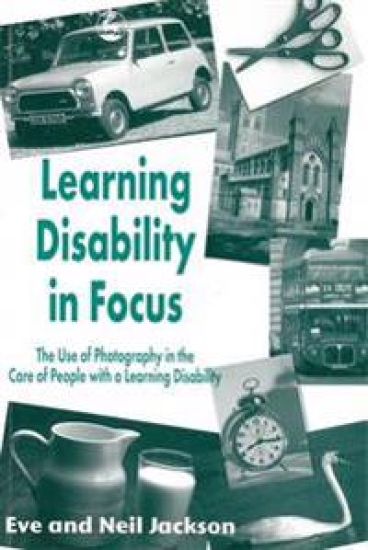
Photography can form a valuable aid to the lives of people with learning disabilities: it can be used to resolve problems and enhance understanding. This book explores the possibilities which photography makes available to the carers and families of people with learning disabilities.The core of the book consists of scenarios in which photography is employed in this way. These scenarios include Brian, who wanted to practise his newly-learned cookery skills at home; Joy, who moved to a new flat; and Laura, who loved art and craft but whose work was often lost when she took it home. In each case practical problems or sources of distress were eased by an imaginative use of photography. Each scenario concludes with a list of practical points to guide the carer; and the book commences with recommendations of situations where a camera could be used as an adjunct to working with people with learning disabilities.
Postgraduate Medical Education and Training
Anne Hastie; Ian Hastie; Neil Jackson
Radcliffe Publishing Ltd
1997
nidottu
This is an exploration of how the higher functions of the brain can be investigated, evaluated and, possibly, explained. A central theme throughout the book is rationality, since issues requiring rational evaluation confront many people everyday though emotional factors are often more influential in determining action. The book looks at various questions: is it possible to understand what is going on in someone else's mind?; why do people who are known very well often react irrationally, in a totally different way to what is expected?; what are emotions, beliefs, feelings and desire? Throughout, episodes from history involving famous artists and politicians are used - Gladstone and Lincoln, Bach and Graupner, Austen and Dickens - all providing useful examples to illustrate how rationality can provide an insight into the feeling self.
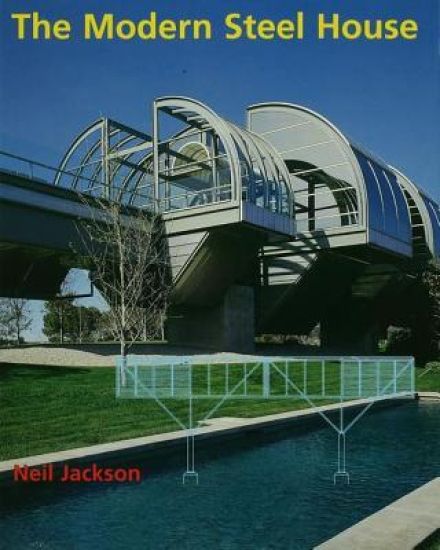
This book provides a comprehensive survey of Modern Movement houses constructed with steel frames. Arranged chronologically and thematically, it traces the development over the last seventy years of steel houses in Europe, Australia and the United States, with special reference to London, Paris, Sydney and Los Angeles and to the work elsewhere of Mies van der Rohe, Philip Johnson and Jean Prouve. Examples of steel houses from around the world demonstrate that steel structures can provide a better quality of life within a cleaner, lighter home environment.