Kirjojen hintavertailu. Mukana 12 246 732 kirjaa ja 12 kauppaa.

Kirjailija

Neil Messer

Kirjat ja teokset yhdessä paikassa: 10 kirjaa, julkaisuja vuosilta 2006-2025, suosituimpien joukossa Science in Theology. Vertaile teosten hintoja ja tarkista saatavuus suomalaisista kirjakaupoista.

10 kirjaa

Kirjojen julkaisuhaarukka 2006-2025.

God, Struggle, and Suffering in the Evolution of Life

God, Struggle, and Suffering in the Evolution of Life

Christopher Southgate; Paul S. Fiddes; Michael Lloyd; Neil Messer; Bethany Sollereder; Mark R. Wynn

BLOOMSBURY PUBLISHING PLC
2025
nidottu
This open access book stems from a unique set of conversations between six scholars concerned with the theological problem of suffering in the non-human world over millions of years. How is the confession of the Christian God compatible with all the struggle, violence and suffering to which the Darwinian world testifies? This work identifies key fault lines in this rapidly growing debate - over the questions of resistance to the divine will in the non-human creation in particular. Is the picture of the biological world we derive from the sciences indicative of a profound resistance, distorting the character of creation? If so, what is the origin and character of this resistance? Or is it unnecessary to postulate such resistance before the evolution of human beings and their sin? Or is an intermediate position, in which some specific characteristics hint at resistance, the most coherent approach?Six leading academic press on this question in a way that illustrates the quality of the conversation we have been able to achieve in our colloquia. As such it also provides a model for how theology can be done collaboratively, respecting diversity of positions and using that diversity to advance the frontiers of debate.The eBook editions of this book are available open access under a CC BY-NC-ND 4.0 license on bloomsburycollections.com. Open Access was funded by the University of Exeter, Baylor University, and Wycliffe Hall, Oxford.
God, Struggle, and Suffering in the Evolution of Life

God, Struggle, and Suffering in the Evolution of Life

Christopher Southgate; Paul S. Fiddes; Michael Lloyd; Neil Messer; Bethany Sollereder; Mark R. Wynn

BLOOMSBURY PUBLISHING PLC
2025
sidottu
This open access book stems from a unique set of conversations between six scholars concerned with the theological problem of suffering in the non-human world over millions of years. How is the confession of the Christian God compatible with all the struggle, violence and suffering to which the Darwinian world testifies? This work identifies key fault lines in this rapidly growing debate - over the questions of resistance to the divine will in the non-human creation in particular. Is the picture of the biological world we derive from the sciences indicative of a profound resistance, distorting the character of creation? If so, what is the origin and character of this resistance? Or is it unnecessary to postulate such resistance before the evolution of human beings and their sin? Or is an intermediate position, in which some specific characteristics hint at resistance, the most coherent approach?Six leading academic press on this question in a way that illustrates the quality of the conversation we have been able to achieve in our colloquia. As such it also provides a model for how theology can be done collaboratively, respecting diversity of positions and using that diversity to advance the frontiers of debate.The eBook editions of this book are available open access under a CC BY-NC-ND 4.0 license on bloomsburycollections.com. Open Access was funded by the University of Exeter, Baylor University, and Wycliffe Hall, Oxford.
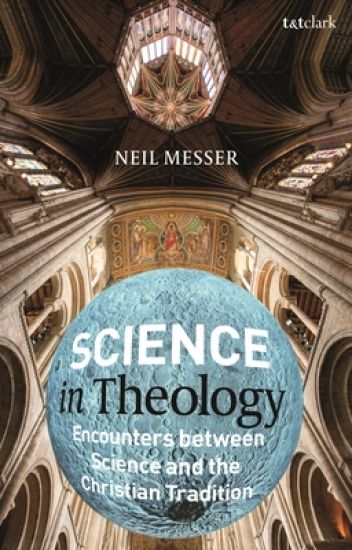
Science in Theology

Science in Theology

Neil Messer

T. T.Clark Ltd
2020
sidottu
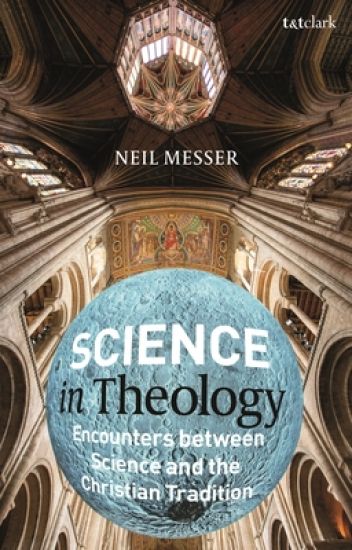
- If we wish to understand ourselves and the world in relation to God, what contribution to our understanding should we expect from a Christian tradition with its roots in the Bible, and what should we expect from the natural sciences?- Neil Messer sets out five types of answer to that question. The responses range from the view that the Christian tradition has nothing to contribute, through various forms of dialogue, to the claim that science is irrelevant to theological understanding. This classification scheme is illustrated and tested by extended explorations of three topics in the science and theology field: how to think about God’s action in the world, how to make theological sense of the suffering and destruction involved in the evolution of life, and how theology should respond to the scientific study of religion. The classification offers a way to understand and evaluate these debates, and the discussion of specific examples demonstrates the strengths and weaknesses of each type of approach.- The book concludes with suggestions for how readers might use this scheme to guide their own work on science and theology. For students and researchers in science and theology, this book offers three things: a tool for understanding specific debates in science and theology, critical surveys of some of the most important debates in the field, and a concise guide to ways of setting up encounters of theology with science.
Science in Theology

Science in Theology

Neil Messer

T. T.Clark Ltd
2020
nidottu
If we wish to understand ourselves and the world in relation to God, what contribution to our understanding should we expect from a Christian tradition with its roots in the Bible, and what should we expect from the natural sciences?Neil Messer sets out five types of answer to that question. The responses range from the view that the Christian tradition has nothing to contribute, through various forms of dialogue, to the claim that science is irrelevant to theological understanding. This classification scheme is illustrated and tested by extended explorations of three topics in the science and theology field: how to think about God’s action in the world, how to make theological sense of the suffering and destruction involved in the evolution of life, and how theology should respond to the scientific study of religion. The classification offers a way to understand and evaluate these debates, and the discussion of specific examples demonstrates the strengths and weaknesses of each type of approach.The book concludes with suggestions for how readers might use this scheme to guide their own work on science and theology. For students and researchers in science and theology, this book offers three things: a tool for understanding specific debates in science and theology, critical surveys of some of the most important debates in the field, and a concise guide to ways of setting up encounters of theology with science.
Theological Neuroethics

Theological Neuroethics

Neil Messer

T. T.Clark Ltd
2019
nidottu
Neil Messer brings together a range of theoretical and practical questions raised by current research on the human brain: questions about both the ‘ethics of neuroscience’ and the ‘neuroscience of ethics’. While some of these are familiar to theologians, others have been more or less ignored hitherto, and the field of neuroethics as a whole has received little theological attention. Drawing on both theological ethics and the science-and-theology field, Messer discusses cognitive-scientific and neuroscientific studies of religion, arguing that they do not give grounds to dismiss theological perspectives on the human self. He examines a representative range of topics across the whole field of neuroethics, including consciousness, the self and the value of human life; the neuroscience of morality; determinism, freewill and moral responsibility; and the ethics of cognitive enhancement.
Theological Neuroethics

Theological Neuroethics

Neil Messer

T. T.Clark Ltd
2017
sidottu
Neil Messer brings together a range of theoretical and practical questions raised by current research on the human brain: questions about both the ‘ethics of neuroscience’ and the ‘neuroscience of ethics’. While some of these are familiar to theologians, others have been more or less ignored hitherto, and the field of neuroethics as a whole has received little theological attention. Drawing on both theological ethics and the science-and-theology field, Messer discusses cognitive-scientific and neuroscientific studies of religion, arguing that they do not give grounds to dismiss theological perspectives on the human self. He examines a representative range of topics across the whole field of neuroethics, including consciousness, the self and the value of human life; the neuroscience of morality; determinism, freewill and moral responsibility; and the ethics of cognitive enhancement.
Flourishing

Flourishing

Neil Messer

William B Eerdmans Publishing Co
2013
nidottu
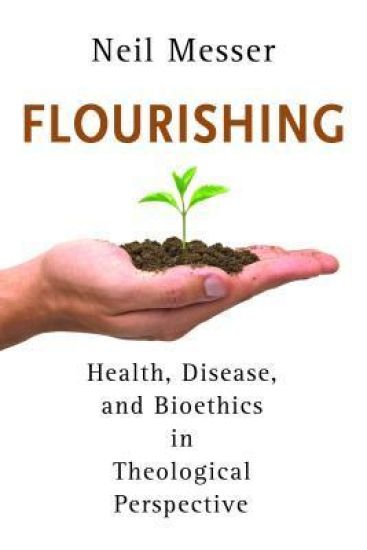
This book gives a theologically satisfying discussion of health and disease that addresses key areas neglected by medical ethicists. We use such words as "health," "disease," and "illness" all the time without stopping to consider exactly what we understand by them. Yet their meanings are far from straightforward, and disagreements over them have important practical consequences in health care and bioethics. In this book, Neil Messer develops a distinctive and innovative theological account of these concepts. He engages in earnest with debates in the philosophy of medicine and disability studies and draws on a wide array of theological resources including Barth, Bonhoeffer, Aquinas, and recent disability theologies. By enabling us to understand health in the wider perspective of the flourishing and ultimate destiny of human beings, Messer's Flourishing sheds new light on a range of practical bioethical issues and dilemmas.
Respecting Life

Respecting Life

Neil Messer

SCM Press
2011
nidottu
Bioethical issues are rarely out of view in Western societies. New developments in areas such as human embryology continually raise new ethical questions, while more familiar issues frequently reappear in public debate. These are issues of central concern for Christians and for a wider public, because they raise questions about the value of life, the meaning of suffering and death and humanity’s place in the natural world.
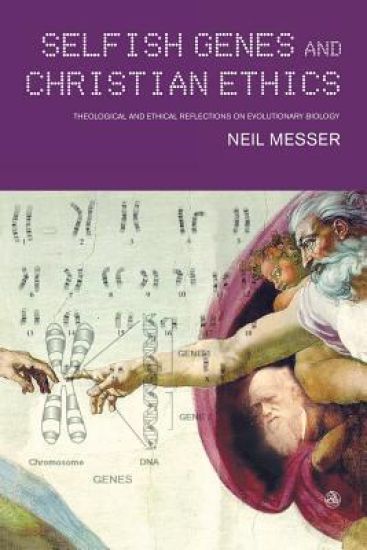
Selfish Genes and Christian Ethics
The evolutionary origins of human beings, and in particular the origins of human morality, have always attracted debate and speculation, not just in the academic community but in popular science and the wider general population as well. The arguments and explanations put forward over the years seem to thoroughly catch the popular imagination, but there is the danger that these explanations tend to step outside the bounds of scientific theory and become powerful popular myths instead. In Neil Messer's "Selfish Genes and Christian Ethics", the author is challenging this tendency. Instead, he provides a Christian theological anthropology, which, among other things, aims to give Christians and the churches the confidence to engage with assumptions that evolutionary theory and religious beliefs are untenable. This is a valuable resource for anyone engaged in the study of theology, providing the reader with the ability to consider both the theoretical and the practical questions raised by evolutionary discussions of ethics and morality.
SCM Studyguide

SCM Studyguide

Neil Messer

SCM Press
2006
nidottu
Providing the level one student with all they will need to know to understand their course fully, "SCM Study Guide: Christian Ethics" is full of helpful features to aid memory and learning and pointers for further reading and further study. The book covers the major areas of ethical theory and methodology that are key to any introductory course, including the use of the Bible in Christian ethics, natural law, conscience, various philosophical approaches to ethics and the influence of liberation theologies. In addition, three methodological topics often neglected in textbooks in this area but included here, are Christian ethics and science, Christian ethics and pastoral care and the relationship between Christian ethics and the wider public debates in ethics. The book also covers a wide range of topics in practical Christian ethics, all introduced by case studies, ranging from abortion, euthanasia, human genetic manipulation, health care rationing, divorce and remarriage, homosexuality, capital punishment, just war and "humanitarian intervention" GM crops, the environment, employment and globalisation.