Kirjojen hintavertailu. Mukana 12 595 353 kirjaa ja 12 kauppaa.
Kirjailija
Neil Robinson
Kirjat ja teokset yhdessä paikassa: 25 kirjaa, julkaisuja vuosilta 1995-2026, suosituimpien joukossa Cyber Practices. Vertaile teosten hintoja ja tarkista saatavuus suomalaisista kirjakaupoista.
Lara Schmidt; Caolionn O'Connell; Hirokazu Miyake; Akhil R. Shah; Joshua William Baron; Geof Nieboer; Rose Jourdan; David Senty; Zev Winkelman; Louise Taggart; Susanne Sondergaard; Neil Robinson
This report describes commercial practices for cyber workforce management and organization, as determined from a literature review and interviews with reputable organizations that have similarities to the U.S. Air Force (USAF). These practices are applicable to USAF as it endeavors to improve the management of its cyber forces. The authors describe the basis for each practice, the benefits it conveys, and how it could be implemented by USAF.
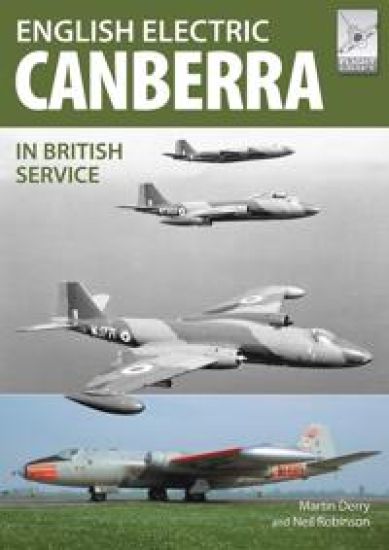
Developed by English Electric during the late 1940s - essentially as a successor to the wartime de Havilland Mosquito twin-engine, unarmed, fast bomber concept - the Canberra can lay claim to being the first British jet-powered medium bomber when it was introduced in to RAF service in May 1951\. The Canberra became the first jet aircraft to make a non-stop transatlantic flight and amongst the performance requirements for the type was the demand for a high altitude bombing capability in addition to flying at high speeds, and in February 1951, and throughout most of the decade, the Canberra could fly at a higher altitude than any other bomber or even any other aircraft, establishing a world altitude record of 70,310ft in 1957. The Canberra proved to be a highly adaptable airframe, and following the entry of the Vickers Valiant, the first of the trio of V Bombers in to RAF service in 1955, (see Flight Craft 7 'Valiant, Victor and Vulcan') which were capable of carrying much heavier weapon loads (including nuclear weapons) over longer ranges, the Canberra continued to serve in a variety of varied roles including tactical nuclear strike, low-level strike and ground attack in its B(I).6 and B(I).8 variants, photographic and electronic reconnaissance platform in its PR variants, multi-task training aircraft and inevitably its invaluable service with specialised MoD Test and Evaluation units. Serving in all the RAF's Theatres of Operations including the UK, the Middle and Far East and RAF Germany, the RAF continued to operate the Canberra for 50 years from the Suez Crisis in November 1956 to its service in Afghanistan in June 2006\. The Royal Navy's Fleet Air Arm also operated Canberras, initially as radio controlled target drones and later by the Fleet Requirements Unit. Although outside the scope of this particular title, it is of interest to note that the Canberra was a significant aircraft on the export market, being operated by the air forces of many nations and was licence produced in Australia and the USA.
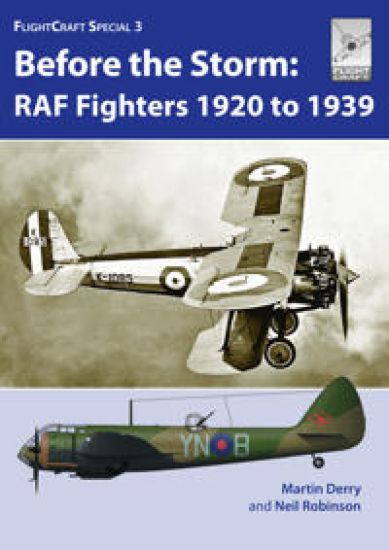
When the First World War ended the then recently established Royal Air Force was awash with aircraft of all descriptions. More surprising, perhaps, was the fact that despite an ongoing cull of obsolescing types, on the last day of 1919, the RAF still possessed 9,122 non-obsolete aircraft , with a further 1,100 more assigned to the Fleet Air Arm. Whilst the famous SE.5A and Sopwith Camel had by this time largely been consigned to history, the RAF possessed no less than 1,860 Sopwith Snipes which, from 1920, would become the RAF’s standard single-seat fighter for years to come. Other core types on charge on 31 December 1919 included some 1,650 Bristol F.2B fighters and 1,250 de Havilland DH.9As, which, together with the Snipe, accounted for over fifty per cent of the RAF’s inventory at that time. Avro 504 training aircraft accounted for a further 2,700 airframes. In this Flight Craft Special, the authors provide a detailed and informative pictorial history of those scout/fighter aircraft that served in an operational capacity with the RAF from January 1920 until the last day of 1939 – a period in which Britain once again moved from an era of peace to war with an old enemy, albeit this time Hitler’s totalitarian National Socialist Germany as opposed to the Imperial Germany of old. As well as covering each of the fighter types used during the inter-war period, and featuring most of the squadrons, the photographs themselves convey the sense of the technical advances that rapidly took root within Britain’s aero industries from the mid-1930s onwards, moving from the brightly-marked overall silver wood and linen biplanes to the dull camouflaged metal-skinned monoplanes. The progression of machine-gun development – from the Lewis and Vickers of the First World War to the later Browning – is covered, spanning the days of the biplanes’ two fixed synchronised Lewis or Vickers .303-inch machine-guns mounted in the forward fuselage to eight wing-mounted .303-inch Browning machine-guns in the ‘new’ monoplane fighters. There is also a small, but fascinating, section on the monoplane ‘also rans’ – the monoplane fighters that were designed and had prototypes built but failed to reach the finishing post!
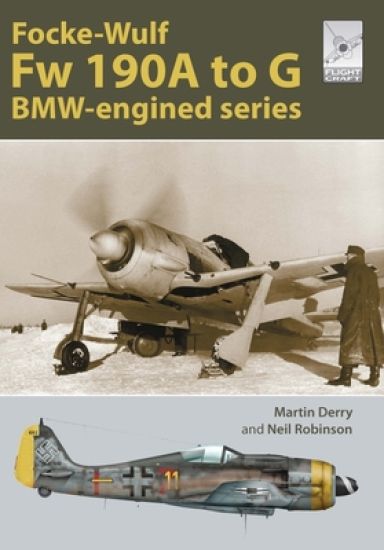
The Focke-Wulf Fw 190 was arguably the Luftwaffe's most outstanding piston-engine fighter of the Second World War, virtually dominating the skies over Europe for more than a year after its initial introduction into service in the summer of 1941\. Continual development and improvements then kept it at the forefront of operations in the theatres of Northern Europe, the Mediterranean and the Eastern Front for the remainder of the war, while maintaining a competitive edge over many other types as well as gaining and retaining the grudging respect of those Allied pilots who faced it in combat. Despite being designed as a fighter, the BMW 801-powered Fw 190 sub-types performed practically every role possible for a single-engine, single-seat aircraft - including offensive and defensive day fighter, day and night fighter-bomber, ground attack, reconnaissance platform, night-fighter and trainer. The Fw 190A also served in the Hungarian Air Force during the later stages of the Second World War, the Turkish Air Force from mid-1942 to 1948, and post-war with the French, where the SNCAC aircraft company re-built over fifty Fw 190A-5/A-6s under the designation NC 900 for service with the new Arm e de l'Air. Despite having standard factory-applied camouflage and markings schemes, many Fw 190s were also finished in a variety of on unit' and seasonal' and/or operational theatre' schemes which add to the aircraft's story.
This essential guide to comparative European politics provides the broadest range of coverage on Europe, illustrated via the widest range of examples, applied to contemporary events. In Comparative European Politics the team of expert authors explore the politics of a range of European countries, providing insight into everything you need to know on the subject, from the fundamentals of democratic politics, institutions, and practices of government, to key contemporary challenges. Key Features · A broad introduction to contemporary European politics, providing an accessible introduction to the fundamental elements of European democracies, institutions, and practices of government · A unique emphasis on contemporary political issues sees a whole part dedicated to common challenges, which explores issues such as immigration, European integration, the financial crisis, and the COVID-19 pandemic · Includes up-to-date examples such as growing instability in Europe, Brexit, recent migration policies, the threat of international terrorism, and the rise of anti-establishment parties, to help students understand the real-world context of European politics · Developed with engaging learning features such as end of chapter discussion questions, 'thinking comparatively' sections, and 'over to you' boxes, to help students understand 'why' and 'how' to compare European countries and their political systems · Provides comprehensive coverage of the 27 member states of the European Union, additionally drawing on examples from the UK, Switzerland, Norway, Iceland, Serbia, and Bosnia-Herzegovina · Written by leading scholars in the field who provide clear analysis on complex subjects, intricate relationships, and controversial issues · Also available as an e-book with functionality, navigation features, and links that offer extra learning support New to this Edition · Three new chapters cover topics around climate politics and policy, national governments in the European Union's political system, and populism and its challenges to democracy. · A reorganized table of contents adds clarity. · Updated tables and figures and the addition of photos offer an engaging learning experience. Digital formats and resources Comparative European Politics is available for students and institutions to purchase in a variety of formats, and is supported by online resources. The e-book offers a mobile experience and convenient access along with self-test multiple choice questions, functionality tools, navigation features, and links that offer extra learning support: www.oxfordtextbooks.co.uk/ebooks The digital version, available on Politics Trove, is also accompanied by online resources. These include: For students: - Over thirty European country profiles, from Austria to the UK, with useful data for comparison including population size, gender equality, political parties, and electoral systems. - Helpful links to relevant online tools with instructions for use, including voting advice applications from European countries For lecturers: - Save time preparing for seminars with activities created to help engage students - PowerPoint slides with a deck for each chapter to help build lecture materials
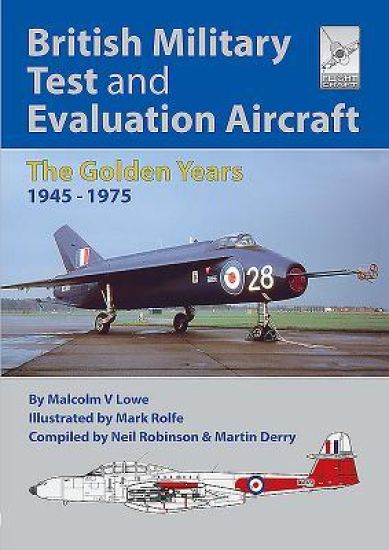
It could be argued that the heyday of British military aircraft flight testing began in the 1940s, and continued throughout the three decades that followed, during the so-called Cold War period, and as such, the authors have purposely chosen the first 30 years, The Golden Years, 1945 to 1975, from the end of World War Two until the mid-1970s, as this was arguably the most exciting period with many wonderful and new types rubbing shoulders with wartime and immediate post-war designs that were utilised for development purposes, making for an eclectic mix of shapes and colour schemes. Alongside the technical aspects of military testing and development, are the many and varied colour schemes and markings carried by the aircraft themselves - not only by the brand-new experimental designs, but by existing production machines, suitably modified, to greater or lesser degrees, to develop the technical advances in systems and weaponry. Scores of different aircraft types are covered in _British Military Test & Evaluation Aircraft The Golden Years 1945 - 1975_, with over 65 rarely seen contemporary photographs from private collections, and, differing slightly from previous _Flight Craft_ book formats, over 50 pages of specially commissioned full colour profiles and plan views, visually chronicling the diverse range of colour schemes and markings applied to these fascinating aeroplanes. Compiled by Neil Robinson and Martin Derry, who have authored several other _Flight Craft_ books, with informative background text by well known aviation historian Malcolm V Lowe and superbly executed illustrations by Mark Rolfe. As with other books in the _Flight Craft_ series, although published with aircraft modellers in mind, it is hoped that most aviation enthusiasts will find something of interest here too.
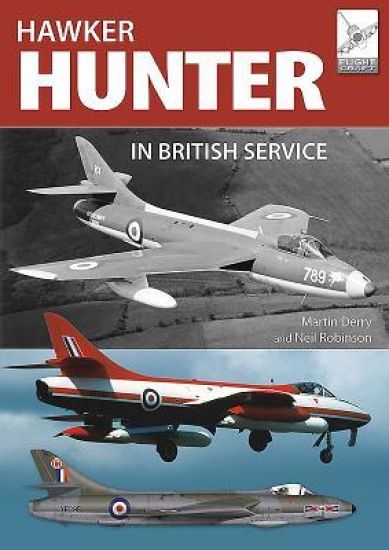
The Hawker Hunter is one of Britain's classic post-war jet aircraft. Initially introduced in 1954 as a swept-wing, transonic, single-seat day interceptor, it rapidly succeeded the first-generation jet fighters in RAF service such as the Gloster Meteor (see Flight Craft 13) and the de Havilland Venom. Powered by the then newly developed Rolls-Royce Avon turbojet, the Hunter's performance transformed the RAF's day fighter squadrons from the mid-1950s until the advent of the English Electric Lightning from the early 1960s (see Flight Craft 11). Even then, as successively improved variants of the type were produced with increasingly more capable engines and expanded fuel capacity, the Hunter successfully transitioned into a strike/ground attack fighter-bomber and fighter reconnaissance platform. Two-seat variants were developed for training and other secondary roles with the RAF and the Royal Navy and a few remained in use until 2001, albeit with specialised MoD Test and Evaluation units - well over forty years after the type's initial introduction. Hunters were also famously used by two RAF display teams, the 'Black Arrows', who looped a record-breaking twenty-two Hunters in formation, and later the 'Blue Diamonds' as well as the Royal Navy's 'Blue Herons'. The Hunter saw combat service with the RAF in a range of conflicts including the Suez Crisis as well as various emergencies in the Middle East and Far East. The Hunter was also widely exported, serving with many foreign air forces, in which it also saw active service, which unfortunately lies outside the scope of this particular publication. Almost 2,000 Hunters were manufactured by Hawker Siddeley Aviation, as well as being produced under licence overseas and will remain one of the UK's most iconic aircraft designs of all time.
Vladimir Putin’s return to the Kremlin for a fourth presidential term in 2018 has seen Russian democracy weaken further and Russia’s relations with the West deteriorate seriously. Yet, within Russia, Putin’s position remains unchallenged and his foreign policy battles have received widespread public support. But is Putin as safe as his approval ratings lead us to believe? And how secure is the regime that he heads? In this new book, Neil Robinson places contemporary Russian politics in historical perspective to argue that Putin’s regime has not overcome the problems that underpinned the momentous changes in twentieth-century Russian history when the country veered from tsarism to Soviet rule to post-communist chaos. The first part of the book, outlining why crises have been perennial problems for Russia, is followed by an exploration of contemporary Russian political institutions and policy to show how Putin has stabilised Russian politics. But, while Putin’s achievements as a politician have been considerable in strengthening his personal position, they have not dealt successfully with the enduring problem of the Russian state’s functionality. Like other Russian rulers, Putin has been much better at establishing a political system that supports his rule than he has at building up a state that can deliver material wealth and protection to the Russian people. As a result, Robinson argues, Russia has been and remains vulnerable to political crisis and regime change.
Vladimir Putin’s return to the Kremlin for a fourth presidential term in 2018 has seen Russian democracy weaken further and Russia’s relations with the West deteriorate seriously. Yet, within Russia, Putin’s position remains unchallenged and his foreign policy battles have received widespread public support. But is Putin as safe as his approval ratings lead us to believe? And how secure is the regime that he heads? In this new book, Neil Robinson places contemporary Russian politics in historical perspective to argue that Putin’s regime has not overcome the problems that underpinned the momentous changes in twentieth-century Russian history when the country veered from tsarism to Soviet rule to post-communist chaos. The first part of the book, outlining why crises have been perennial problems for Russia, is followed by an exploration of contemporary Russian political institutions and policy to show how Putin has stabilised Russian politics. But, while Putin’s achievements as a politician have been considerable in strengthening his personal position, they have not dealt successfully with the enduring problem of the Russian state’s functionality. Like other Russian rulers, Putin has been much better at establishing a political system that supports his rule than he has at building up a state that can deliver material wealth and protection to the Russian people. As a result, Robinson argues, Russia has been and remains vulnerable to political crisis and regime change.
A brand new collection of short stories from the slightly barking imagination of Neil Robinson. Each tall tail/tale, he promises, is absolutely true - but then, if that's the case, why has he called them 'Shaggy Dog Stories'? Perhaps because life is one long shaggy dog story and the tales in this collection contain at least a kernel - or maybe that should be kennel - of truth, as best he understands it, anyway. Which is not to say that any of these stories are 'preachy'. Far from it; they are designed, first and foremost, to entertain. Should one or two lead you to ponder on life, truth and relationships, well that's a bonus, surely. So, enjoy exercising each of these shaggy dogs; maybe one will even bring back a stick for you.
Neil Robinson follows up his successful 'Rejecting Jesus' and 'Why Christians Don't Do What Jesus Tells Them ...And What They Believe Instead' with 'Jesus Exposed', a brand new collection of posts from his 'Rejecting Jesus' blog, each one a blistering critique of all things Christian. 'Jesus Exposed' explores the main components of religious make-believe (God, Jesus, the Bible, The Resurrection and the Second Coming) and exposes them for the discredited nonsense they really are. If you have ever been caught up in the Jesus cult, you will want read this book. If you haven't, find out what you've missed
Companion volume to 'Jesus Exposed, ' 'Faith Exposed: What's Love Got To Do With It? ' collects more of Neil Robinson's blog posts from RejectingJesus.com to take a withering look at Christianity in action. 'By their fruits shall you know them, ' Jesus said - so how do his modern-day followers measure up? What sort of fruit do they produce? Or are they, to mix his metaphors, merely salt that has lost its flavour? And what has love got to do with the way Christianity is practised today? Not to give too much away, but take a guess... Better still, read these blistering critiques of all things Christian. You'll never look at Faith in the same way again.
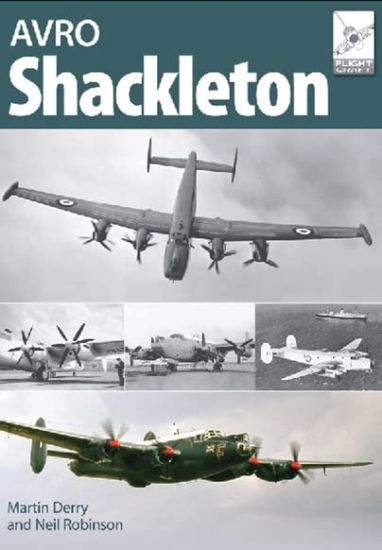
Initially projected as a maritime reconnaissance version of the Lincoln bomber, itself a development of the famous wartime Lancaster which saw post-war service in a General/Maritime Reconnaissance role, (see Flight Craft No 4), the Avro Shackleton, (named after the polar explorer Sir Ernest Shackleton) was a completely new design, powered by four Rolls Royce Griffon 57 engines driving six blade contra-rotating propellers.Split into three main sections, this latest Flight Craft title, perfectly timed to coincide with the release of the first examples of the eagerly awaited new tool 1/72 scale Airfix kit, offers a concise history of the Shackleton's development and operational career from the prototype and initial entry in to RAF service in 1951, and its use with the South African Air Force, the only other operator of the type. Section 1 chronicles its design, ongoing improvements and development through the three main Marks, in both the Maritime Reconnaissance and Airborne Early Warning roles, until its retirement after four decades of RAF service in 1991, which includes scores of contemporary photographs with detailed captions, many of which have never been seen in print before.This is followed by a 16-page colour illustration section featuring profiles and 2-views of the color schemes and markings carried by the type in RAF and SAAF service. The final section lists all the plastic model kits, accessories and decal sheets produced of the Shackleton in all scales. As with the other books in the Flight Craft series, whilst published primarily with the scale aircraft modeler in mind, it is hoped that those readers who might perhaps describe themselves as 'occasional' modelers may also find that this colorful and informative work offers something to provoke their interests too.
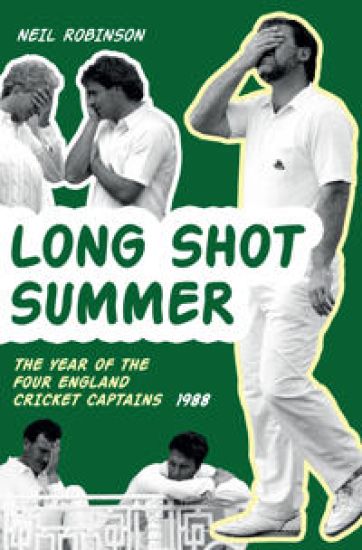
In the summer of 1988 England began its Test series against the mighty West Indies with a draw at Trent Bridge. Defeated 5-0 in each of its last two series against the world’s most fearsome cricket team, for England simply to avoid defeat and stand up to perhaps the greatest fast bowling attack in history seemed like a huge step in the right direction. But within days the team’s captain, Mike Gatting, had been sacked following a tabloid scandal. Over the remaining five Test matches that summer, England would select a further three captains and field a total of twenty-eight players as English cricket plunged into turmoil. Using interviews with the main protagonists and contemporary reports, Neil Robinson reconstructs the events of an unparalleled summer for English cricket and asks: what was the truth behind the circumstances of Gatting’s dismissal? Why did a season of such promise descend into chaos? And what was the legacy of 1988 for the next generation of English cricketers?
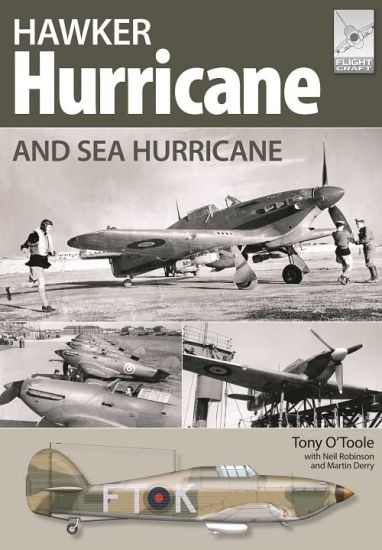
When Sidney Camm's masterpiece, the Hawker Hurricane, entered RAF service in late 1937 it quickly became one of the most important aircraft in Britain's military arsenal, especially in the first three years of the Second World War. This title covers the history of this iconic design, from the prototype and the initial production variants' entry in to RAF service, through its development and use, first as a day fighter, and then night fighter, intruder, fighter-bomber, catapult-launched and then carrier-based fighter, and eventually dedicated ground attack machine. The Hurricane served in every wartime theatre, from Norway and France, the Battle of Britain, the defence of Malta, to the campaigns in the Western Desert and the Mediterranean, on the Russian Front and in the Far East where it saw service until the end of hostilities. Split into three primary sections, this volume offers a concise yet informative history of the Hurricane's development, operational career and design improvements, including many contemporary photographs with detailed captions; a 16-page colour illustration section featuring 48 separate aircraft (in profiles and 2-views); and finally a section prepared by that well-known and established doyen of model makers, Tony O'Toole, listing and illustrating the plastic model kits produced of the Hurricane in all scales. As with the other books in the Flight Craft series, whilst published primarily with the scale aircraft modeler in mind, it is hoped that those readers who might perhaps describe themselves as 'occasional' modelers - if indeed they model at all - may also find that this colourful and informative work offers something to provoke their interests too.
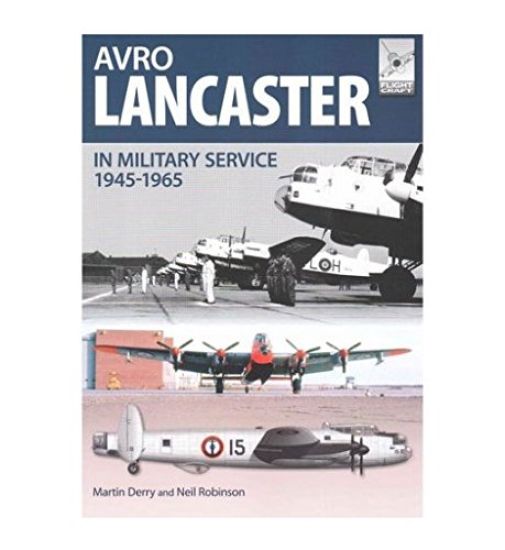
The Avro Lancaster, such a stalwart of the skies during the Second World War, also enjoyed an interesting and surprisingly colourful post-war career. It is this era that the authors have chosen to focus on by profiling the type across its many variants. Split into three primary sections, this book offers a concise yet informative history of the Lancaster's post-war operational career (from 1945-1965) charting the course of the various alterations and improvements that occurred during this time and including a selection of contemporary photographs with detailed captions. A 16-page section features 32 colour illustrations (in profiles, 2-views and 4-views) specially prepared by Mark Gauntlett. The book's final section provides a list and box top illustrations of the plastic model kits produced of the Lancaster in all scales plus reviews and 'how to' construction notes on building a selection of kits in 1/144, 1/72 and 1/48 scales. As with the other books in the Flight Craft series, whilst published primarily with the scale aircraft modeller in mind, it is hoped that those readers who might perhaps describe themselves as 'occasional' modellers - if indeed they model at all - may also find that this colourful and informative work offers something to provoke their interests too.