Kirjojen hintavertailu. Mukana 12 595 353 kirjaa ja 12 kauppaa.

Kirjailija

Neil Selwyn

Kirjat ja teokset yhdessä paikassa: 32 kirjaa, julkaisuja vuosilta 2005-2027, suosituimpien joukossa Facial Recognition in Everyday Life. Vertaile teosten hintoja ja tarkista saatavuus suomalaisista kirjakaupoista.

32 kirjaa

Kirjojen julkaisuhaarukka 2005-2027.

Facial Recognition in Everyday Life

Facial Recognition in Everyday Life

Mark Andrejevic; Neil Selwyn; Gavin Smith; Xin Gu; Pat O'Malley

STANFORD UNIVERSITY PRESS
2027
pokkari
Facial recognition technology is one of the defining surveillance technologies of our time, and as the technology continues to develop it is urgently important to consider the ways in which it amplifies and reconfigures power relations. While much of the critical work on facial recognition technology has focused on bias and accuracy, this book considers the social, cultural, and political implications of a surveillance technology poised to dramatically transform our experience of anonymity in shared and public space. Drawing on a series of case studies to explore how existing logics of digital surveillance are transformed when physical space is equipped with automated recognition, the book develops several defining concepts for understanding what this level of surveillance means for strategies of governance and control. Long the object of physiognomic calculations, the face, as subjected to automated forms of data collection, is now already being used to predict everything from people's future career success to their potential for criminality. Further, as the authors show, as "smart" cameras proliferate, society moves into a post-panoptic realm in which people are actually being watched all the time. This shift from surveillance scarcity to glut allows "pattern-of-life" analysis on a mass scale, aiding in the customization of both physical and informational environments at the level of the individual and enabling the ongoing replacement of human-to-human interactions with automated human-to-machine ones – a process the authors describe as a "social recession."
Facial Recognition in Everyday Life

Facial Recognition in Everyday Life

Mark Andrejevic; Neil Selwyn; Gavin Smith; Xin Gu; Pat O'Malley

STANFORD UNIVERSITY PRESS
2027
sidottu
Facial recognition technology is one of the defining surveillance technologies of our time, and as the technology continues to develop it is urgently important to consider the ways in which it amplifies and reconfigures power relations. While much of the critical work on facial recognition technology has focused on bias and accuracy, this book considers the social, cultural, and political implications of a surveillance technology poised to dramatically transform our experience of anonymity in shared and public space. Drawing on a series of case studies to explore how existing logics of digital surveillance are transformed when physical space is equipped with automated recognition, the book develops several defining concepts for understanding what this level of surveillance means for strategies of governance and control. Long the object of physiognomic calculations, the face, as subjected to automated forms of data collection, is now already being used to predict everything from people's future career success to their potential for criminality. Further, as the authors show, as "smart" cameras proliferate, society moves into a post-panoptic realm in which people are actually being watched all the time. This shift from surveillance scarcity to glut allows "pattern-of-life" analysis on a mass scale, aiding in the customization of both physical and informational environments at the level of the individual and enabling the ongoing replacement of human-to-human interactions with automated human-to-machine ones – a process the authors describe as a "social recession."
Digital Degrowth

Digital Degrowth

Neil Selwyn

JOHN WILEY AND SONS LTD
2025
sidottu
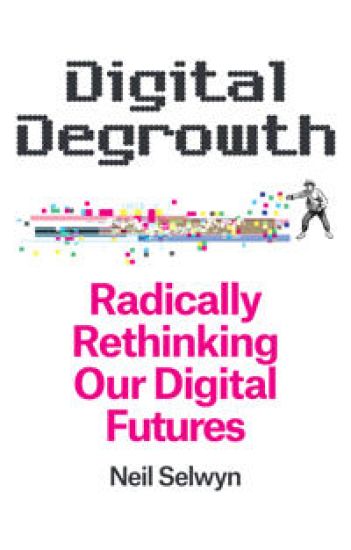
We are fast approaching the point of “peak digital”, with the continued mass production and excessive consumption of digital technologies set to become a key driver of climate crisis, ecological breakdown and ongoing societal instability. Digital Degrowth is a call to completely rethink our digital futures in these fast-changing times. It explores how degrowth thinking and alternate forms of “radically sustainable computing” might support ambitions of sustainable, scaled-down and equitable ways of living with digital technologies. Neil Selwyn proposes a rebalancing of digital technology use: digital degrowth is not a call for simply making reduced use of the digital technologies that we already have – rather it is an argument to reimagine digital practices that maximise societal benefits with minimal environmental and social impact. Drawing on illustrative examples from across computer science, hacker and environmental activist communities, this book examines how core degrowth principles of conviviality, autonomy and care are already being used to reimagine alternate forms of digital technology. Original and stimulating, this is essential reading for students and scholars of media and communication, sustainability studies, political ecology, computer/data sciences, and across the social sciences.
Digital Degrowth

Digital Degrowth

Neil Selwyn

JOHN WILEY AND SONS LTD
2025
nidottu
We are fast approaching the point of “peak digital”, with the continued mass production and excessive consumption of digital technologies set to become a key driver of climate crisis, ecological breakdown and ongoing societal instability. Digital Degrowth is a call to completely rethink our digital futures in these fast-changing times. It explores how degrowth thinking and alternate forms of “radically sustainable computing” might support ambitions of sustainable, scaled-down and equitable ways of living with digital technologies. Neil Selwyn proposes a rebalancing of digital technology use: digital degrowth is not a call for simply making reduced use of the digital technologies that we already have – rather it is an argument to reimagine digital practices that maximise societal benefits with minimal environmental and social impact. Drawing on illustrative examples from across computer science, hacker and environmental activist communities, this book examines how core degrowth principles of conviviality, autonomy and care are already being used to reimagine alternate forms of digital technology. Original and stimulating, this is essential reading for students and scholars of media and communication, sustainability studies, political ecology, computer/data sciences, and across the social sciences.
Facial Recognition

Facial Recognition

Mark Andrejevic; Neil Selwyn

JOHN WILEY AND SONS LTD
2022
nidottu
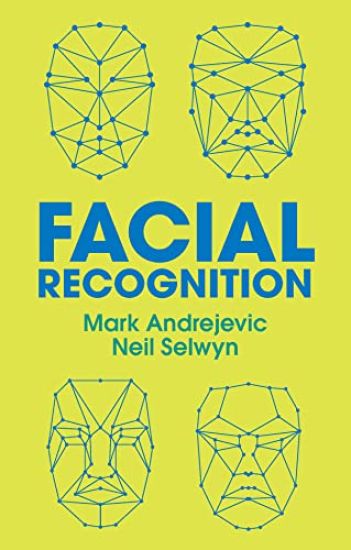
Facial recognition is set to fundamentally change our experience and understanding of monitoring, surveillance, and privacy. Backed by powerful industry interests, this technology is being integrated into many areas of society – from airports to shopping malls, classrooms to casinos. Despite the promise of security and efficiency, fears are growing that this technology is inherently biased, intrusive, and oppressive, with broad-ranging societal consequences. In this timely book, Neil Selwyn and Mark Andrejevic provide a critical introduction to facial recognition. Outlining its complex social history and future technical forms, as well as its conceptual and technical underpinnings, the book considers the arguments being advanced for the continued uptake of facial recognition. In assessing these developments, the book argues that we are at the cusp of a generational shift in surveillance technology that will reconfigure our expectations of anonymity in shared and public spaces. Throughout, the book addresses a deceptively simple question: do we really want to live in a world where our face is our ID? Facial Recognition is essential reading for students and scholars of media and communications studies, surveillance studies, criminology, and sociology, as well as for anyone interested in one of the defining technologies of our times.
Facial Recognition

Facial Recognition

Mark Andrejevic; Neil Selwyn

JOHN WILEY AND SONS LTD
2022
sidottu
Facial recognition is set to fundamentally change our experience and understanding of monitoring, surveillance, and privacy. Backed by powerful industry interests, this technology is being integrated into many areas of society – from airports to shopping malls, classrooms to casinos. Despite the promise of security and efficiency, fears are growing that this technology is inherently biased, intrusive, and oppressive, with broad-ranging societal consequences. In this timely book, Neil Selwyn and Mark Andrejevic provide a critical introduction to facial recognition. Outlining its complex social history and future technical forms, as well as its conceptual and technical underpinnings, the book considers the arguments being advanced for the continued uptake of facial recognition. In assessing these developments, the book argues that we are at the cusp of a generational shift in surveillance technology that will reconfigure our expectations of anonymity in shared and public spaces. Throughout, the book addresses a deceptively simple question: do we really want to live in a world where our face is our ID? Facial Recognition is essential reading for students and scholars of media and communications studies, surveillance studies, criminology, and sociology, as well as for anyone interested in one of the defining technologies of our times.
Education and Technology

Education and Technology

Neil Selwyn

Bloomsbury Academic
2021
nidottu
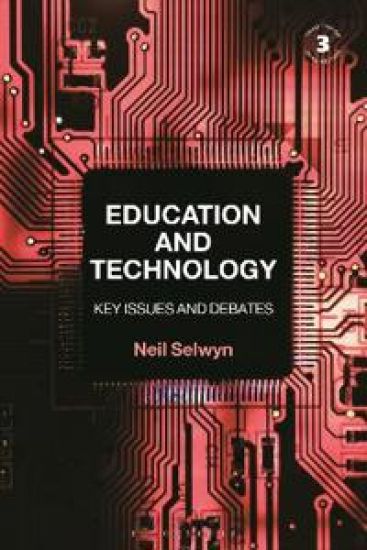
What does the future hold for digital technology and education? What can be learnt from the history of technology use in education? Does digital technology make education more individualized? Will it eventually replace the school, university and teacher? In a thoroughly revised edition of this successful book, Neil Selwyn takes a critical look at some of the major current debates and controversies concerning digital technologies and education. Focusing on the social as well as the technical aspects of these issues, Selwyn addresses fundamental but often unvoiced questions about education and technology. Over the course of eight chapters, the book gives careful thought to the people, practices, processes and structures behind the rapidly increasing use of technologies in education, with an emphasis on the implications of digital technologies for individuals and institutions. Brand new chapters on trends in AI and 'big data' driven automation of education, and the future(s) of education and technology are included. This edition also features new sections exploring ‘post-digital’ perspectives, personalized learning, digital labour, and the impending need for sustainable forms of digital education. The book focuses attention on the connections between recent technology developments and broader changes in education practice, education policy and education theory over the past few decades. It also challenges us to reflect on future directions and controversies for education in the (post)digital age. Expanded study questions, annotated further reading and a new glossary of key terms are included to support readers. An updated companion website links to bonus chapters and audio recordings for further discussion.
Education and Technology

Education and Technology

Neil Selwyn

Bloomsbury Academic
2021
sidottu
What does the future hold for digital technology and education? What can be learnt from the history of technology use in education? Does digital technology make education more individualized? Will it eventually replace the school, university and teacher? In a thoroughly revised edition of this successful book, Neil Selwyn takes a critical look at some of the major current debates and controversies concerning digital technologies and education. Focusing on the social as well as the technical aspects of these issues, Selwyn addresses fundamental but often unvoiced questions about education and technology. Over the course of eight chapters, the book gives careful thought to the people, practices, processes and structures behind the rapidly increasing use of technologies in education, with an emphasis on the implications of digital technologies for individuals and institutions. Brand new chapters on trends in AI and 'big data' driven automation of education, and the future(s) of education and technology are included. This edition also features new sections exploring ‘post-digital’ perspectives, personalized learning, digital labour, and the impending need for sustainable forms of digital education. The book focuses attention on the connections between recent technology developments and broader changes in education practice, education policy and education theory over the past few decades. It also challenges us to reflect on future directions and controversies for education in the (post)digital age. Expanded study questions, annotated further reading and a new glossary of key terms are included to support readers. An updated companion website links to bonus chapters and audio recordings for further discussion.
Telling Tales on Technology

Telling Tales on Technology

Neil Selwyn

Routledge
2019
nidottu
This title was first published in 2002.The educational potential of information and communications technology (ICT) has been speculated upon endlessly - from the early days of the micro-computer to the present excitement surrounding virtual education and e-learning. Now, with current multi-billion dollar initiatives such as the UK National Grid for Learning and US Technology Literacy Challenge, ICT is an unavoidable element of education. Yet despite a plethora of promises and policies, new technologies have failed to be wholly integrated into education. Telling Tales on Technology critically examines the role of ICT in education and explores how, given its assumed importance, new technology remains a peripheral part of much of what goes on in education. Based on in-depth qualitative studies, the book takes a comprehensive yet questioning look over the past two decades of educational technology policy and practice and positions it within the wider social, cultural, political and economic notion of the information age. Drawing on interviews with students, teachers, politicians and business people as well as comprehensive documentary analysis, this is an essential text for anyone thinking seriously about the use of ICT in education.
Should Robots Replace Teachers?

Should Robots Replace Teachers?

Neil Selwyn

Polity Press
2019
sidottu
Developments in AI, robotics and big data are changing the nature of education. Yet the implications of these technologies for the teaching profession are uncertain. While most educators remain convinced of the need for human teachers, outside the profession there is growing anticipation of a technological reinvention of the ways in which teaching and learning take place.Through an examination of technological developments such as autonomous classroom robots, intelligent tutoring systems, learning analytics and automated decision-making, Neil Selwyn highlights the need for nuanced discussions around the capacity of AI to replicate the social, emotional and cognitive qualities of human teachers. He pushes conversations about AI and education into the realm of values, judgements and politics, ultimately arguing that the integration of any technology into society must be presented as a choice. Should Robots Replace Teachers? is a must-read for anyone interested in the future of education and work in our increasingly automated times.
Should Robots Replace Teachers?

Should Robots Replace Teachers?

Neil Selwyn

Polity Press
2019
nidottu
Developments in AI, robotics and big data are changing the nature of education. Yet the implications of these technologies for the teaching profession are uncertain. While most educators remain convinced of the need for human teachers, outside the profession there is growing anticipation of a technological reinvention of the ways in which teaching and learning take place.Through an examination of technological developments such as autonomous classroom robots, intelligent tutoring systems, learning analytics and automated decision-making, Neil Selwyn highlights the need for nuanced discussions around the capacity of AI to replicate the social, emotional and cognitive qualities of human teachers. He pushes conversations about AI and education into the realm of values, judgements and politics, ultimately arguing that the integration of any technology into society must be presented as a choice. Should Robots Replace Teachers? is a must-read for anyone interested in the future of education and work in our increasingly automated times.
What is Digital Sociology?

What is Digital Sociology?

Neil Selwyn

Polity Press
2018
nidottu
The rise of digital technology is transforming the world in which we live. Our digitalized societies demand new ways of thinking about the social, and this short book introduces readers to an approach that can deliver this: digital sociology. Neil Selwyn examines the concepts, tools and practices that sociologists are developing to analyze the intersections of the social and the digital. Blending theory and empirical examples, the five chapters highlight areas of inquiry where digital approaches are taking hold and shaping the discipline of sociology today. The book explores key topics such as digital race and digital labor, as well as the fast-changing nature of digital research methods and diversifying forms of digital scholarship. Designed for use in advanced undergraduate and graduate courses, this timely introduction will be an invaluable resource for all sociologists seeking to focus their craft and thinking toward the social complexities of the digital age.
What is Digital Sociology?

What is Digital Sociology?

Neil Selwyn

Polity Press
2018
sidottu
The rise of digital technology is transforming the world in which we live. Our digitalized societies demand new ways of thinking about the social, and this short book introduces readers to an approach that can deliver this: digital sociology. Neil Selwyn examines the concepts, tools and practices that sociologists are developing to analyze the intersections of the social and the digital. Blending theory and empirical examples, the five chapters highlight areas of inquiry where digital approaches are taking hold and shaping the discipline of sociology today. The book explores key topics such as digital race and digital labor, as well as the fast-changing nature of digital research methods and diversifying forms of digital scholarship. Designed for use in advanced undergraduate and graduate courses, this timely introduction will be an invaluable resource for all sociologists seeking to focus their craft and thinking toward the social complexities of the digital age.
Telling Tales on Technology

Telling Tales on Technology

Neil Selwyn

Routledge
2018
sidottu
This title was first published in 2002.The educational potential of information and communications technology (ICT) has been speculated upon endlessly - from the early days of the micro-computer to the present excitement surrounding virtual education and e-learning. Now, with current multi-billion dollar initiatives such as the UK National Grid for Learning and US Technology Literacy Challenge, ICT is an unavoidable element of education. Yet despite a plethora of promises and policies, new technologies have failed to be wholly integrated into education. Telling Tales on Technology critically examines the role of ICT in education and explores how, given its assumed importance, new technology remains a peripheral part of much of what goes on in education. Based on in-depth qualitative studies, the book takes a comprehensive yet questioning look over the past two decades of educational technology policy and practice and positions it within the wider social, cultural, political and economic notion of the information age. Drawing on interviews with students, teachers, politicians and business people as well as comprehensive documentary analysis, this is an essential text for anyone thinking seriously about the use of ICT in education.
Everyday Schooling in the Digital Age

Everyday Schooling in the Digital Age

Neil Selwyn; Selena Nemorin; Scott Bulfin; Nicola F. Johnson

Routledge
2017
nidottu
Today’s high schools are increasingly based around the use of digital technologies. Students and teachers are encouraged to ‘Bring Your Own Device’, teaching takes place through ‘learning management systems’ and educators are rushing to implement innovations such as flipped classrooms, personalized learning, analytics and ‘maker’ technologies. Yet despite these developments, the core processes of school appear to have altered little over the past 50 years. As the twenty-first century progresses, concerns are growing that the basic model of ‘school’ is ‘broken’ and no longer ‘fit for purpose’.This book moves beyond the hype and examines the everyday realities of digital technology use in today’s high schools. Based on a major ethnographic study of three contrasting Australian schools, the authors lay bare the reasons underlying the inconsistent impact of digital technologies on day-to-day schooling. The book examines leadership and management of technology in schools, the changing nature of teachers’ work in the digital age, as well as student (mis)uses of technologies in and out of classrooms. In-depth case studies are presented of the adoption of personalized learning apps, social media and 3D printers. These investigations all lead to a detailed understanding of why schools make use of digital technologies in the ways that they do.Everyday Schooling in the Digital Age: High School, High Tech? offers a revealing analysis of the realities of contemporary schools and schooling – drawing on arguments and debates from various academic literatures such as policy studies, sociology of education, social studies of technology, media and communication studies. Over the course of ten wide-ranging chapters, a range of suggestions are developed as to how the full potential of digital technology might be realized within schools. Written in a detailed but accessible manner, this book offers an ambitious critique that is essential reading for anyone interested in the fast-changing nature of contemporary education.
Everyday Schooling in the Digital Age

Everyday Schooling in the Digital Age

Neil Selwyn; Selena Nemorin; Scott Bulfin; Nicola F. Johnson

Routledge
2017
sidottu
Today’s high schools are increasingly based around the use of digital technologies. Students and teachers are encouraged to ‘Bring Your Own Device’, teaching takes place through ‘learning management systems’ and educators are rushing to implement innovations such as flipped classrooms, personalized learning, analytics and ‘maker’ technologies. Yet despite these developments, the core processes of school appear to have altered little over the past 50 years. As the twenty-first century progresses, concerns are growing that the basic model of ‘school’ is ‘broken’ and no longer ‘fit for purpose’.This book moves beyond the hype and examines the everyday realities of digital technology use in today’s high schools. Based on a major ethnographic study of three contrasting Australian schools, the authors lay bare the reasons underlying the inconsistent impact of digital technologies on day-to-day schooling. The book examines leadership and management of technology in schools, the changing nature of teachers’ work in the digital age, as well as student (mis)uses of technologies in and out of classrooms. In-depth case studies are presented of the adoption of personalized learning apps, social media and 3D printers. These investigations all lead to a detailed understanding of why schools make use of digital technologies in the ways that they do.Everyday Schooling in the Digital Age: High School, High Tech? offers a revealing analysis of the realities of contemporary schools and schooling – drawing on arguments and debates from various academic literatures such as policy studies, sociology of education, social studies of technology, media and communication studies. Over the course of ten wide-ranging chapters, a range of suggestions are developed as to how the full potential of digital technology might be realized within schools. Written in a detailed but accessible manner, this book offers an ambitious critique that is essential reading for anyone interested in the fast-changing nature of contemporary education.
Skolan och digitaliseringen : blir utbildningen bättre med digital teknik?
Digital teknik är idag en integrerad del av utbildningssektorn. Men kommer tekniken, som vissa debattörer menar, att förändra arbetsformer och prioriteringar inom undervisningen på samma radikala vis som den gjort inom andra områden? Eller säger det ymniga talet om en digital revolution inom utbildningen i själva verket mer om våra förhoppningar, förväntningar, önskemål och rädslor än om vad som faktiskt har hänt eller kommer att hända? Pedagogikprofessorn Neil Selwyn är ingen motståndare till digital teknik i skolan, men hör heller inte till de entusiastiska förespråkarna. I "Skolan och digitaliseringen. Blir utbildningen bättre med digital teknik?" är han ute efter att belysa aspekter av digitaliseringen som inte alltid har fått plats i utbildningsdiskussionen och som till exempel har med individanpassning, kommersialisering och demokrati att göra. ”Mötet mellan utbildning och modern teknik är komplicerat, motsägelsefullt och rörigt. Det finns inga enkla svar och inga färdiga lösningar.” Men detta betyder inte att det inte går att vända och vrida på det i tanken. Det här är en bok för den som vill göra just detta. Neil Selwyn är verksam vid Monash University i Melbourne.
Is Technology Good for Education?

Is Technology Good for Education?

Neil Selwyn

Polity Press
2016
sidottu
Digital technologies are a key feature of contemporary education. Schools, colleges and universities operate along high-tech lines, while alternate forms of online education have emerged to challenge the dominance of traditional institutions. According to many experts, the rapid digitization of education over the past ten years has undoubtedly been a ‘good thing’. Is Technology Good For Education? offers a critical counterpoint to this received wisdom, challenging some of the central ways in which digital technology is presumed to be positively affecting education. Instead Neil Selwyn considers what is being lost as digital technologies become ever more integral to education provision and engagement. Crucially, he questions the values, agendas and interests that stand to gain most from the rise of digital education. This concise, up-to-the-minute analysis concludes by considering alternate approaches that might be capable of rescuing and perhaps revitalizing the ideals of public education, while not denying the possibilities of digital technology altogether.
Is Technology Good for Education?

Is Technology Good for Education?

Neil Selwyn

Polity Press
2016
nidottu
Digital technologies are a key feature of contemporary education. Schools, colleges and universities operate along high-tech lines, while alternate forms of online education have emerged to challenge the dominance of traditional institutions. According to many experts, the rapid digitization of education over the past ten years has undoubtedly been a ‘good thing’. Is Technology Good For Education? offers a critical counterpoint to this received wisdom, challenging some of the central ways in which digital technology is presumed to be positively affecting education. Instead Neil Selwyn considers what is being lost as digital technologies become ever more integral to education provision and engagement. Crucially, he questions the values, agendas and interests that stand to gain most from the rise of digital education. This concise, up-to-the-minute analysis concludes by considering alternate approaches that might be capable of rescuing and perhaps revitalizing the ideals of public education, while not denying the possibilities of digital technology altogether.