Kirjojen hintavertailu. Mukana 12 287 852 kirjaa ja 12 kauppaa.

Kirjailija

Nélia Dias

Kirjat ja teokset yhdessä paikassa: 11 kirjaa, julkaisuja vuosilta 2017-2021, suosituimpien joukossa Collecting, Ordering, Governing. Vertaile teosten hintoja ja tarkista saatavuus suomalaisista kirjakaupoista.

Mukana myös kirjoitusasut: Nelia Dias

11 kirjaa

Kirjojen julkaisuhaarukka 2017-2021.

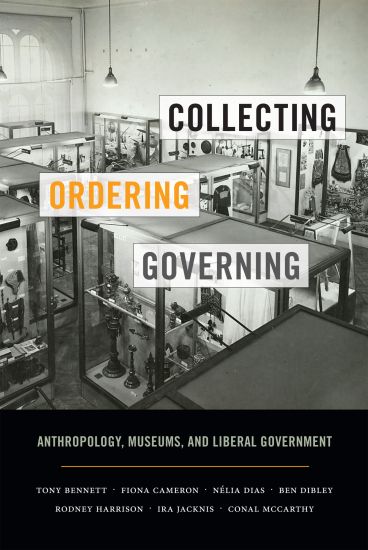
Collecting, Ordering, Governing

Collecting, Ordering, Governing

Tony Bennett; Fiona Cameron; Nélia Dias; Ben Dibley; Rodney Harrison; Ira Jacknis; Conal McCarthy

Duke University Press
2017
sidottu
The coauthors of this theoretically innovative work explore the relationships among anthropological fieldwork, museum collecting and display, and social governance in the early twentieth century in Australia, Britain, France, New Zealand, and the United States. With case studies ranging from the Musée de l'Homme's 1930s fieldwork missions in French Indo-China to the influence of Franz Boas's culture concept on the development of American museums, the authors illuminate recent debates about postwar forms of multicultural governance, cultural conceptions of difference, and postcolonial policy and practice in museums. Collecting, Ordering, Governing is essential reading for scholars and students of anthropology, museum studies, cultural studies, and indigenous studies as well as museum and heritage professionals.
Collecting, Ordering, Governing

Collecting, Ordering, Governing

Tony Bennett; Fiona Cameron; Nélia Dias; Ben Dibley; Rodney Harrison; Ira Jacknis; Conal McCarthy

Duke University Press
2017
pokkari
The coauthors of this theoretically innovative work explore the relationships among anthropological fieldwork, museum collecting and display, and social governance in the early twentieth century in Australia, Britain, France, New Zealand, and the United States. With case studies ranging from the Musée de l'Homme's 1930s fieldwork missions in French Indo-China to the influence of Franz Boas's culture concept on the development of American museums, the authors illuminate recent debates about postwar forms of multicultural governance, cultural conceptions of difference, and postcolonial policy and practice in museums. Collecting, Ordering, Governing is essential reading for scholars and students of anthropology, museum studies, cultural studies, and indigenous studies as well as museum and heritage professionals.