Kirjailija
Nesta H. Webster
Kirjat ja teokset yhdessä paikassa: 34 kirjaa, julkaisuja vuosilta 2000-2026, suosituimpien joukossa The Socialist Network. Vertaile teosten hintoja ja tarkista saatavuus suomalaisista kirjakaupoista.
Mukana myös kirjoitusasut: Nesta H Webster
34 kirjaa
Kirjojen julkaisuhaarukka 2000-2026.




We have been told a dozen times the story of Julie de Lespinasse and her love-affairs, of Madame de Sta l and the victims of her amatory experiments, of Lauzun, Fersen, and Lafayette; yet one of the greatest romances of this enthralling period, the love-story of the Chevalier de Boufflers and the Comtesse de Sabran, has been allowed to pass into oblivion. Theirs was the "grande passion" of the times, "they loved each other," says Monsieur Victor du Bled, "with a deep love, so different to the liaisons la mode, with a love such as we understand it"-we of today. Besides reconstructing the story, the author has endeavoured to reconstruct the background on which it was enacted-the Revolutionary Era. The French Revolution has been persistently misrepresented, and in consequence a host of popular delusions have grown up around it which must be dispelled if one would present fairly the point of view of those who played their part in that amazing drama.

Secret societies and subversive movements by Nesta H Weber. good condition. paperback, great resource. First Published in 1924 this is a reprint. Has some great pictures no penciling no names no bookplate. not X library, not remainder marked no smoke smell, minimal Shelfware, paper good quality, some pictures. be sure and check out my pictures, tight binding no tears or writing on the pages, back cover top left-hand corner has been bumped.

Secret societies and subversive movements by Nesta H Weber. good condition. paperback, great resource. First Published in 1924 this is a reprint. Has some great pictures no penciling no names no bookplate. not X library, not remainder marked no smoke smell, minimal Shelfware, paper good quality, some pictures. be sure and check out my pictures, tight binding no tears or writing on the pages, back cover top left-hand corner has been bumped.

We have been told a dozen times the story of Julie de Lespinasse and her love-affairs, of Madame de Stael and the victims of her amatory experiments, of Lauzun, Fersen, and Lafayette; yet one of the greatest romances of this enthralling period, the love-story of the Chevalier de Boufflers and the Comtesse de Sabran, has been allowed to pass into oblivion. Theirs was the "grande passion" of the times, "they loved each other," says Monsieur Victor du Bled, "with a deep love, so different to the liaisons a la mode, with a love such as we understand it"-we of today.Besides reconstructing the story, the author has endeavoured to reconstruct the background on which it was enacted-the Revolutionary Era. The French Revolution has been persistently misrepresented, and in consequence a host of popular delusions have grown up around it which must be dispelled if one would present fairly the point of view of those who played their part in that amazing drama.

Secret Societies And Subversive Movements
Nesta H. Webster
Createspace Independent Publishing Platform
2017
nidottu



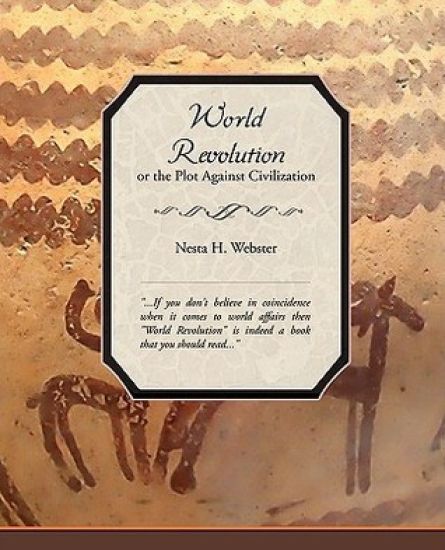
World Revolution: Or the Plot Against Civilization
Nesta H. Webster
Literary Licensing, LLC
2014
nidottu

The Chevalier de Boufflers a Romance of the French Revolution
Nesta H. Webster
Literary Licensing, LLC
2013
nidottu

Louis XVI and Marie Antoinette Before the Revolution
Nesta H. Webster
Literary Licensing, LLC
2013
nidottu

Louis XVI and Marie Antoinette Before the Revolution
Nesta H. Webster
Literary Licensing, LLC
2013
sidottu
Louis XVI And Marie Antoinette Before The Revolution is a historical book written by Nesta H. Webster. The book explores the lives of Louis XVI, the last King of France, and his wife Marie Antoinette, before the French Revolution. The author delves into their childhood, their marriage, and their reign as King and Queen of France. The book provides an in-depth analysis of their personalities, their relationship with each other, and their relationship with the people of France. The author also sheds light on the political and social climate of France during the 18th century, which ultimately led to the French Revolution. The book is a fascinating read for anyone interested in French history, the monarchy, and the events that led to the downfall of the French monarchy.This is a new release of the original 1936 edition.This scarce antiquarian book is a facsimile reprint of the old original and may contain some imperfections such as library marks and notations. Because we believe this work is culturally important, we have made it available as part of our commitment for protecting, preserving, and promoting the world's literature in affordable, high quality, modern editions, that are true to their original work.

World Revolution: The Plot against Civilization By Nesta H. Webster Amongst all the books, pamphlets, and newspaper articles that are now devoted to the World Revolution through which we are passing, it is strange to notice how little scientific investigation is being brought to bear on the origins of the movement. A frequent explanation advanced, and, I believe, the most fallacious, is that the present unrest must be attributed to *' war weariness." Human nature, we are told, exasperated by the protracted horror of the recent international conflict, has become the victim of a crise de nerfs which finds its expression in world-wide discontent. In support of this theory we are reminded that former wars have likewise been followed by periods of social disturbance, and that by a process of analogy the symptoms may be expected to subside as the strain of war is relieved, in the same manner as they have subsided hitherto. It is true that political conflicts between nations have frequently in the past been followed by social upheavals - the Napoleonic Wars by industrial troubles in England, the Franco- Prussian War by revolutionary agitation not only in the land of the conquered, but of the conquerors - but to regard these social manifestations as the direct outcome of the preceding international conflict is to mistake contributing for fundamental causes. Revolution is not the product of war, but a malady that a nation suffering from the after-effects of a war is most likely to develop, just as a man enfeebled by fatigue is more liable to contract disease than one who is in a state of perfect vigor. Yet this predisposing cause is by no means essential to the outbreak of revolutionary fever. The great French Revolution was not immediately preceded by a war of any magnitude, and to the observant mind England in 1914 was as near to revolution as in 1919. The intervening World War, far from producing the explosion in this country, merely retarded it by rallying citizens of all classes around the standard of national defense. The truth is that for the last one hundred and forty- five years the fire of revolution has smoldered steadily beneath the ancient structure of civilization, and already at moments has burst out into flame threatening to destroy to its very foundations that social edifice which eighteen centuries have been spent in constructing. The crisis of today is then no development of modem times, but a mere continuation of the immense movement that began in the middle of the eighteenth century. In a word, it is all one and the same revolution - the revolution that found its first expression in France of 1789. Both in its nature and its aims it differs entirely from former revolutions which had for their origin some localized or... ------------------------------------------------------------------------------------------------------------------------------------------ Windham Press is committed to bringing the lost cultural heritage of ages past into the 21st century through high-quality reproductions of original, classic printed works at affordable prices. This book has been carefully crafted to utilize the original images of antique books rather than error-prone OCR text. This also preserves the work of the original typesetters of these classics, unknown craftsmen who laid out the text, often by hand, of each and every page you will read. Their subtle art involving judgment and interaction with the text is in many ways superior and more human than the mechanical methods utilized today, and gave each book a unique, hand-crafted feel in its text that connected the reader organically to the art of bindery and book-making. We think these benefits are worth the occasional imperfection resulting from the age of these books at the time of scanning, and their vintage feel provides a connection to the past that goes beyond the mere words of the text.