Kirjojen hintavertailu. Mukana 12 657 676 kirjaa ja 12 kauppaa.

Kirjailija

Neta Alexander

Kirjat ja teokset yhdessä paikassa: 4 kirjaa, julkaisuja vuosilta 2019-2025, suosituimpien joukossa Failure. Vertaile teosten hintoja ja tarkista saatavuus suomalaisista kirjakaupoista.

4 kirjaa

Kirjojen julkaisuhaarukka 2019-2025.

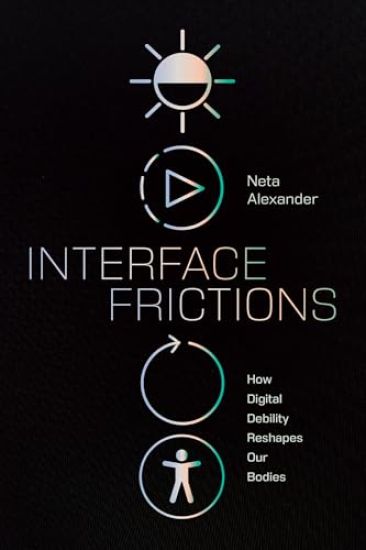
Interface Frictions: How Digital Debility Reshapes Our Bodies
In Interface Frictions, Neta Alexander explores how ubiquitous design features in digital platforms reshape, condition, and break our bodies. She shows that while features such as refresh, playback speed, autoplay, and night mode are convenient, they can lead to "digital debility"--the slow and often invisible ways that technologies may harm human bodies. These features all assume an able-bodied user and at the same time push users to ignore their bodily limitations like the need for rest, nourishment, or movement. Building on the lived experiences of people with disabilities, Alexander explores alternative design solutions that arise from a multisensorial approach to communication. She demonstrates what can be gained from centering the nonaverage user, such as blind people who pioneered ways to control the playback speed of media, and Netflix subscribers with invisible disabilities like PTSD who successfully pushed the company to redesign its previews autoplay feature. Drawing on artworks, video games, and creative hacking by users with disabilities, Alexander challenges our understanding of media consumption, the attention economy, and the digital interface.
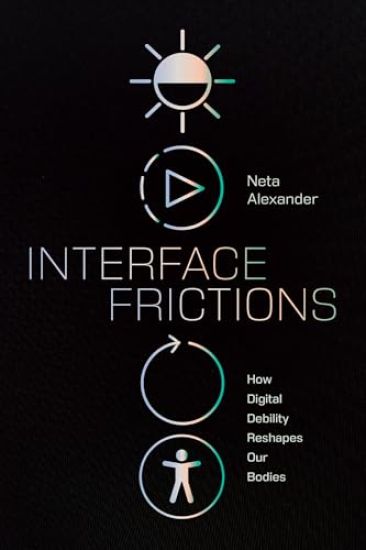
Interface Frictions: How Digital Debility Reshapes Our Bodies
In Interface Frictions, Neta Alexander explores how ubiquitous design features in digital platforms reshape, condition, and break our bodies. She shows that while features such as refresh, playback speed, autoplay, and night mode are convenient, they can lead to "digital debility"--the slow and often invisible ways that technologies may harm human bodies. These features all assume an able-bodied user and at the same time push users to ignore their bodily limitations like the need for rest, nourishment, or movement. Building on the lived experiences of people with disabilities, Alexander explores alternative design solutions that arise from a multisensorial approach to communication. She demonstrates what can be gained from centering the nonaverage user, such as blind people who pioneered ways to control the playback speed of media, and Netflix subscribers with invisible disabilities like PTSD who successfully pushed the company to redesign its previews autoplay feature. Drawing on artworks, video games, and creative hacking by users with disabilities, Alexander challenges our understanding of media consumption, the attention economy, and the digital interface.
Failure

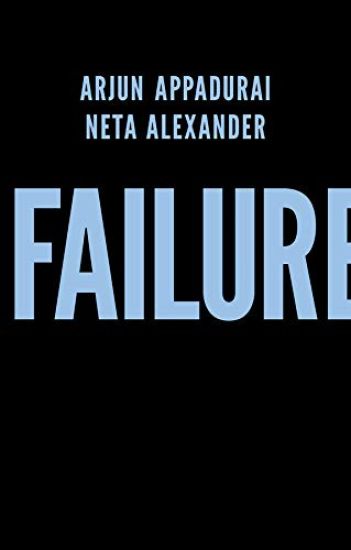
Failure

Arjun Appadurai; Neta Alexander

Polity Press
2019
sidottu
Wall Street and Silicon Valley – the two worlds this book examines – promote the illusion that scarcity can and should be eliminated in the age of seamless “flow.” Instead, Appadurai and Alexander propose a theory of habitual and strategic failure by exploring debt, crisis, digital divides, and (dis)connectivity. Moving between the planned obsolescence and deliberate precariousness of digital technologies and the “too big to fail” logic of the Great Recession, they argue that the sense of failure is real in that it produces disappointment and pain. Yet, failure is not a self-evident quality of projects, institutions, technologies, or lives. It requires a new and urgent understanding of the conditions under which repeated breakdowns and collapses are quickly forgotten. By looking at such moments of forgetfulness, this highly original book offers a multilayered account of failure and a general theory of denial, memory, and nascent systems of control.
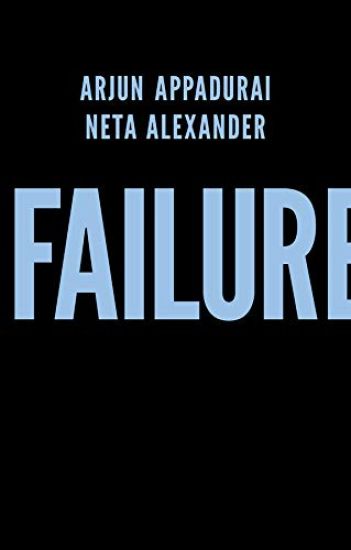
Failure

Failure

Arjun Appadurai; Neta Alexander

Polity Press
2019
nidottu
Wall Street and Silicon Valley – the two worlds this book examines – promote the illusion that scarcity can and should be eliminated in the age of seamless “flow.” Instead, Appadurai and Alexander propose a theory of habitual and strategic failure by exploring debt, crisis, digital divides, and (dis)connectivity. Moving between the planned obsolescence and deliberate precariousness of digital technologies and the “too big to fail” logic of the Great Recession, they argue that the sense of failure is real in that it produces disappointment and pain. Yet, failure is not a self-evident quality of projects, institutions, technologies, or lives. It requires a new and urgent understanding of the conditions under which repeated breakdowns and collapses are quickly forgotten. By looking at such moments of forgetfulness, this highly original book offers a multilayered account of failure and a general theory of denial, memory, and nascent systems of control.