Kirjojen hintavertailu. Mukana 12 595 353 kirjaa ja 12 kauppaa.

Kirjailija

Ngaire Woods

Kirjat ja teokset yhdessä paikassa: 6 kirjaa, julkaisuja vuosilta 2000-2010, suosituimpien joukossa Manoeuvring at the Margins. Vertaile teosten hintoja ja tarkista saatavuus suomalaisista kirjakaupoista.

6 kirjaa

Kirjojen julkaisuhaarukka 2000-2010.

Manoeuvring at the Margins

Manoeuvring at the Margins

Emily Jones; Carolyn Deere-Birkbeck; Ngaire Woods

Commonwealth Secretariat
2010
nidottu
Of enduring concern for small states are the numerous constraints they face in international trade negotiations. This study provides evidence that small states can still have an important influence over the outcomes of negotiations if they successfully identify and tackle these underlying constraints.Building on existing scholarship, Manoeuvring at the Margins is the first attempt to thoroughly analyse the views of representatives from small states on the constraints they face in this area. The authors, led by Dr Ngaire Woods and Dr Carolyn Deere Birkbeck of the University of Oxford, highlight three areas where small states can maximise their potential influence: establishing an effective negotiating team by strengthening human resources; harnessing the support of civil society and the private sector; and improving negotiation strategies. The recommendations they provide will be useful in assisting trade policy-makers in small states to achieve greater success in WTO and other trade arenas.
The Globalizers

The Globalizers

Ngaire Woods

Cornell University Press
2007
pokkari
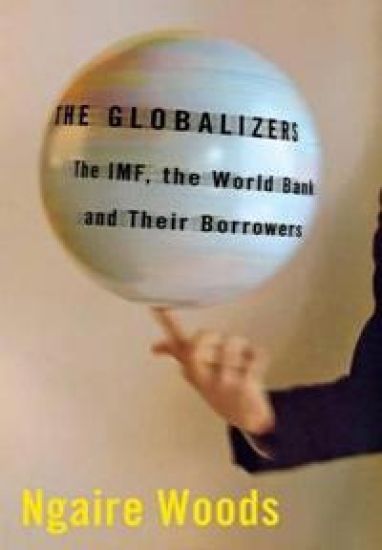
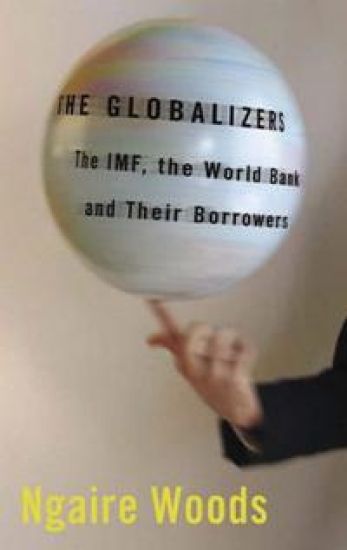
"The IMF and the World Bank have integrated a large number of countries into the world economy by requiring governments to open up to global trade, investment, and capital. They have not done this out of pure economic zeal. Politics and their own rules and habits explain much of why they have presented globalization as a solution to challenges they have faced in the world economy."—from the IntroductionThe greatest success of the International Monetary Fund and the World Bank has been as globalizers. But at whose cost? Would borrowing countries be better off without the IMF and World Bank? This book takes readers inside these institutions and the governments they work with. Ngaire Woods brilliantly decodes what they do and why they do it, using original research, extensive interviews carried out across many countries and institutions, and scholarship from the fields of economics, law, and politics.The Globalizers focuses on both the political context of IMF and World Bank actions and their impact on the countries in which they intervene. After describing the important debates between U.S. planners and the Allies in the 1944 foundation at Bretton Woods, she analyzes understandings of their missions over the last quarter century. She traces the impact of the Bank and the Fund in the recent economic history of Mexico, of post-Soviet Russia, and in the independent states of Africa. Woods concludes by proposing a range of reforms that would make the World Bank and the IMF more effective, equitable, and just.
The Globalizers

The Globalizers

Ngaire Woods

Cornell University Press
2006
sidottu
"The IMF and the World Bank have integrated a large number of countries into the world economy by requiring governments to open up to global trade, investment, and capital. They have not done this out of pure economic zeal. Politics and their own rules and habits explain much of why they have presented globalization as a solution to challenges they have faced in the world economy."—from the IntroductionThe greatest success of the International Monetary Fund and the World Bank has been as globalizers. But at whose cost? Would borrowing countries be better off without the IMF and World Bank? This book takes readers inside these institutions and the governments they work with. Ngaire Woods brilliantly decodes what they do and why they do it, using original research, extensive interviews carried out across many countries and institutions, and scholarship from the fields of economics, law, and politics.The Globalizers focuses on both the political context of IMF and World Bank actions and their impact on the countries in which they intervene. After describing the important debates between U.S. planners and the Allies in the 1944 foundation at Bretton Woods, she analyzes understandings of their missions over the last quarter century. She traces the impact of the Bank and the Fund in the recent economic history of Mexico, of post-Soviet Russia, and in the independent states of Africa. Woods concludes by proposing a range of reforms that would make the World Bank and the IMF more effective, equitable, and just.
Making Democracy Work for Pro-poor Development

Making Democracy Work for Pro-poor Development

Manmohan Singh; Jocelyne Bourgon; Robert Champion De Crespigny; Richard Jolly; Martin Khor; Akinjide Osuntokun; Salim Ahmed Salim; Tuiloma Neroni Slade; Dwight Venner; Ngaire Woods

Commonwealth Secretariat
2003
nidottu
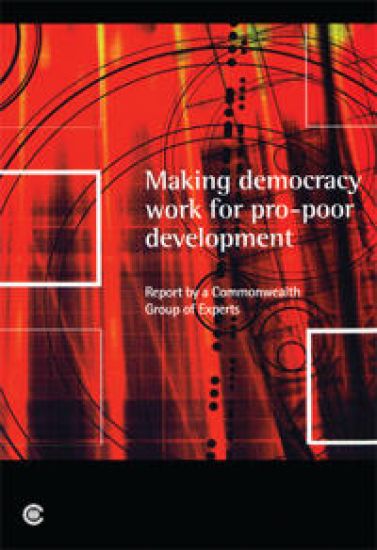
Starting from the premise that democracy is more than simply a matter of universal suffrage and the holding of regular multiparty elections, and that development is about much more than growth of GDP, this Report focuses on how to make democracy work for pro-poor development and on development policies that in themselves uphold and promote democratic values. It argues that development and democracy are not only goals in their own right but must also be mutually reinforcing. Pro-poor development recognises that people need the ‘capabilities' to do and be the things that they have reason to value, such as being adequately nourished, having equitable access to justice and participating in decisions that affect their lives. It also recognises that development policies aimed at the general populace may have a more limited positive impact on particularly disadvantaged groups. Such groups need to be identified (for example, in terms of gender, ethnicity, religion, age or occupation) and policies need to be specifically designed for improving the lives of the poor. The Report argues that governments, the private sector, civil society and the international community each have a vital role to play in delivering development and democracy, and calls for responsibility, partnership and concrete actions from all these actors. Without responsibility on all these levels, development and democracy will remain rhetoric rather than become reality. Prepared by the Commonwealth Expert Group on Development and Democracy at the request of Commonwealth Heads of Government, the Report contains a number of recommendations for action at the national and international levels. It will be of interest to policy-makers, multilateral and bilateral agencies, the private sector, civil society organisations and all those committed to development, democracy and the achievement of the Millennium Development Goals.
The Political Economy of Globalization

The Political Economy of Globalization

Ngaire Woods

Red Globe Press
2000
nidottu
The Political Economy of Globalization brings together original chapters by leading authorities to provide much-needed evidence and analysis in relation to a highly contentious phenomenon and concept. The book shows how investment patterns are being transformed, a global civil society is emerging, and governments are losing control of national currencies. However, it also makes it clear that globalization does not prohibit strong governments from maintaining a welfare state and good working conditions and how they can co-operate to manage the flow of goods, money, people, and problems across borders.
The Political Economy of Globalization

The Political Economy of Globalization

Ngaire Woods

Red Globe Press
2000
sidottu
The Political Economy of Globalization brings together original chapters by leading authorities to provide much-needed evidence and analysis in relation to a highly contentious phenomenon and concept. The book shows how investment patterns are being transformed, a global civil society is emerging, and governments are losing control of national currencies. However, it also makes it clear that globalization does not prohibit strong governments from maintaining a welfare state and good working conditions and how they can co-operate to manage the flow of goods, money, people, and problems across borders.