Kirjojen hintavertailu. Mukana 12 101 447 kirjaa ja 12 kauppaa.

Kirjailija

Niamh Thornton

Kirjat ja teokset yhdessä paikassa: 6 kirjaa, julkaisuja vuosilta 2013-2026, suosituimpien joukossa María Félix. Vertaile teosten hintoja ja tarkista saatavuus suomalaisista kirjakaupoista.

6 kirjaa

Kirjojen julkaisuhaarukka 2013-2026.

María Félix

María Félix

Niamh Thornton

BOYDELL BREWER LTD
2026
pokkari
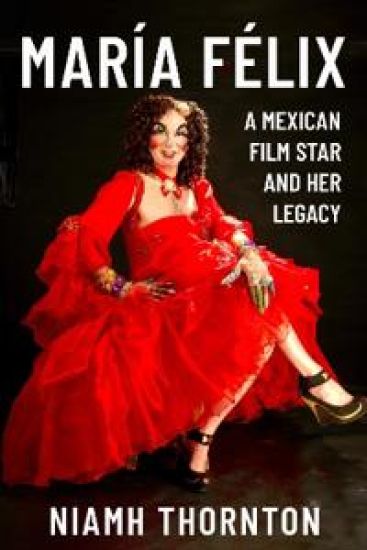
María Félix (1914-2002) left her mark on Mexican and European film as well as fashion, art and jewellery design. Cartier created one-of-a-kind pieces; Leonora Carrington and Diego Rivera painted portraits; Carlos Fuentes wrote a play; Agustín Lara, a bestselling song. But she was nobody's muse. Did Félix really bring baby crocodiles to the Cartier boutique to request lifelike copies in a necklace? The story may be apocryphal, but it perfectly encapsulates her powerful, independent and unconventional persona. This book first examines Félix's life and work, reviewing her films and acting style and considering what they say about gender norms and a woman's place on screen. It then turns to her role as curator and benefactor, exploring how art, literature and song sustained her image. It concludes by exploring the persistent interest in her life story and evaluating her significance for contemporary audiences.
María Félix

María Félix

Niamh Thornton

BOYDELL BREWER LTD
2023
sidottu
María Félix (1914-2002) left her mark on Mexican and European film as well as fashion, art and jewellery design. Cartier created one-of-a-kind pieces; Leonora Carrington and Diego Rivera painted portraits; Carlos Fuentes wrote a play; Agustín Lara, a bestselling song. But she was nobody's muse. Did Félix really bring baby crocodiles to the Cartier boutique to request lifelike copies in a necklace? The story may be apocryphal, but it perfectly encapsulates her powerful, independent and unconventional persona. This book first examines Félix's life and work, reviewing her films and acting style and considering what they say about gender norms and a woman's place on screen. It then turns to her role as curator and benefactor, exploring how art, literature and song sustained her image. It concludes by exploring the persistent interest in her life story and evaluating her significance for contemporary audiences.
Tastemakers and Tastemaking

Tastemakers and Tastemaking

Niamh Thornton

State University of New York Press
2021
pokkari
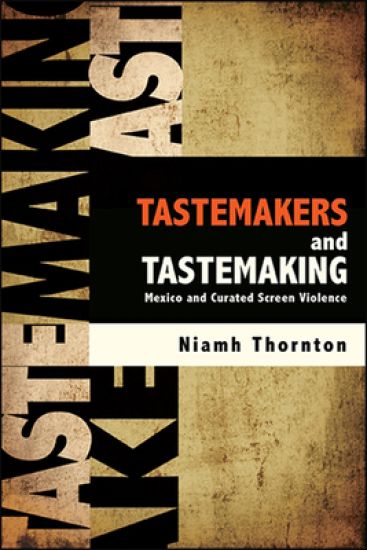
Considers how and why taste persists in the analysis of Mexican film and television by looking at key figures and their impact on the curation of violence.Tastemakers and Tastemaking develops a new approach to analyzing violence in Mexican films and television by examining the curation of violence in relation to three key moments: the decade-long centennial commemoration of the Mexican Revolution launched in 2010; the assaults and murders of women in Northern Mexico since the late 1990s; and the havoc wreaked by the illegal drug trade since the early 2000s. Niamh Thornton considers how violence is created, mediated, selected, or categorized by tastemakers, through the strategic choices made by institutions, filmmakers, actors, and critics. Challenging assumptions about whose and what kind of work merit attention and traversing normative boundaries between "good" and "bad" taste, Thornton draws attention to the role of tastemaking in both "high" and "low" media, including film cycles and festivals, adaptations of Mariano Azuela's 1915 novel, Los de Abajo, Amat Escalante's hyperrealist art films, and female stars of recent genre films and the telenovela, La reina del sur. Making extensive use of videographic criticism, Thornton pays particularly close attention to the gendered dimensions of violence, both on and off screen.
Tastemakers and Tastemaking

Tastemakers and Tastemaking

Niamh Thornton

State University of New York Press
2020
sidottu
Considers how and why taste persists in the analysis of Mexican film and television by looking at key figures and their impact on the curation of violence.Tastemakers and Tastemaking develops a new approach to analyzing violence in Mexican films and television by examining the curation of violence in relation to three key moments: the decade-long centennial commemoration of the Mexican Revolution launched in 2010; the assaults and murders of women in Northern Mexico since the late 1990s; and the havoc wreaked by the illegal drug trade since the early 2000s. Niamh Thornton considers how violence is created, mediated, selected, or categorized by tastemakers, through the strategic choices made by institutions, filmmakers, actors, and critics. Challenging assumptions about whose and what kind of work merit attention and traversing normative boundaries between "good" and "bad" taste, Thornton draws attention to the role of tastemaking in both "high" and "low" media, including film cycles and festivals, adaptations of Mariano Azuela's 1915 novel, Los de Abajo, Amat Escalante's hyperrealist art films, and female stars of recent genre films and the telenovela, La reina del sur. Making extensive use of videographic criticism, Thornton pays particularly close attention to the gendered dimensions of violence, both on and off screen.
Revolution and Rebellion in Mexican Film

Revolution and Rebellion in Mexican Film

Niamh Thornton

Bloomsbury Academic USA
2015
nidottu
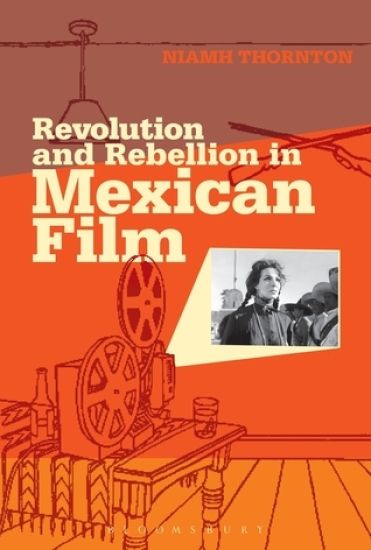
Revolution and Rebellion in Mexican Film examines Mexican films of political conflict from the early studio Revolutionary films of the 1930-50s up to the campaigning Zapatista films of the 2000s. Mapping this evolution out for the first time, the author takes three key events under consideration: the Mexican Revolution (1910-1920); the student movement and massacre in 1968; and, finally, the more recent Zapatista Rebellion (1994-present). Analyzing films such as Vamanos con Pancho Villa (1936), El Grito (1968), and Corazon del Tiempo (2008), the author uses the term 'political conflict' to refer to those violent disturbances, dramatic periods of confrontation, injury and death, which characterize particular historical events involving state and non-state actors that may have a finite duration, but have a long-lasting legacy on the nation. These conflicts have been an important component of Mexican film since its inception and include studio productions, documentaries, and independent films.
Revolution and Rebellion in Mexican Film

Revolution and Rebellion in Mexican Film

Niamh Thornton

Bloomsbury Academic USA
2013
sidottu
Revolution and Rebellion in Mexican Film examines Mexican films of political conflict from the early studio Revolutionary films of the 1930-50s up to the campaigning Zapatista films of the 2000s. Mapping this evolution out for the first time, the author takes three key events under consideration: the Mexican Revolution (1910-1920); the student movement and massacre in 1968; and, finally, the more recent Zapatista Rebellion (1994-present). Analyzing films such as Vamanos con Pancho Villa (1936), El Grito (1968), and Corazon del Tiempo (2008), the author uses the term 'political conflict' to refer to those violent disturbances, dramatic periods of confrontation, injury and death, which characterize particular historical events involving state and non-state actors that may have a finite duration, but have a long-lasting legacy on the nation. These conflicts have been an important component of Mexican film since its inception and include studio productions, documentaries, and independent films.