Kirjojen hintavertailu. Mukana 12 459 402 kirjaa ja 12 kauppaa.

Kirjailija

Nicholaj De Mattos Frisvold

Kirjat ja teokset yhdessä paikassa: 14 kirjaa, julkaisuja vuosilta 2011-2026, suosituimpien joukossa Macumba: The Varieties of Brazilian Magic & Spirituality. Vertaile teosten hintoja ja tarkista saatavuus suomalaisista kirjakaupoista.

14 kirjaa

Kirjojen julkaisuhaarukka 2011-2026.

The Cunning Craft

The Cunning Craft

Nicholaj de Mattos Frisvold

Crossed Crow Books
2025
nidottu
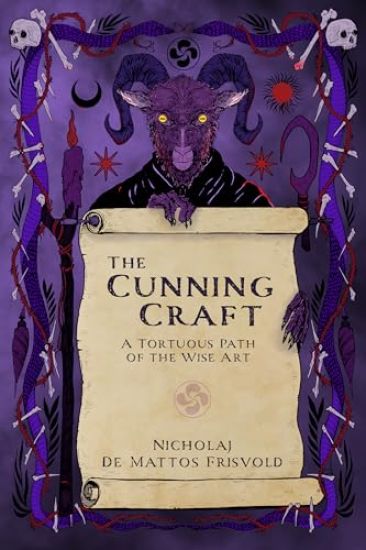
In The Cunning Craft, Frisvold strives to clarify in a hermeneutic manner the deeper levels of the wise arts, with a particular focus on their connections with the opposer, more commonly known as the devil, the mysteries of the night, and the crossroads where power, wisdom, and mysteries are found. In The Cunning Craft, Frisvold delves deep into the hidden realms of ancient wisdom, shining a light on the enigmatic connections between the craft and its opposing forces, such as the devil, the mysteries of the night, and the powerful crossroads where secrets converge. This book unveils the cunning arts in all their forms, from the revered to the feared. Here, the devil stands as pivotal as any saint, and wisdom flourishes where others dare not tread. The cunning ones, adept in magical arts and aided by denizens from beyond, serve as conduits between worlds, their rituals and rites steeped in both peril and power. From the arcane teachings of Picatrix to the bold insights of Giordano Bruno, this book celebrates the rich tapestry of esoteric knowledge. With rituals honoring both poison and healing, and nods to ancient figures like Master Cain, The Cunning Craft invites sorcerers, witches, historians, and the curious alike to explore the depths of mystery veiled by the celestial bodies and the shadowy figure of the devil.
Invisible Fire

Invisible Fire

Nicholaj de Mattos Frisvold

Crossed Crow Books
2024
nidottu
Invisible Fire is a work that presents the traditional themes in Western Mysticism as it pertains to the perennial school of theology, mysticism, and metaphysics. Invisible Fire strives toward presenting metaphysical exploration in an engaging and all-embracing way. Hence, it fills a vacuum in the mystical and philosophical literature that tends to be too dry and academic for many readers. Still, solidly anchored in history, philosophy, and metaphysics, it is a book that strives to engage the reader with its Gnostic vision to rediscover one's own center, if not the cosmic center and the divinity of the anima mundi and the world at large in all its cosmic splendor. As such, Invisible Fire is a book that unifies and inspires, a book that brings a vision of world, tradition, and spirituality into a unified and integrated whole that will expand the horizon of the reader and make their perspective on faith and mystery richer. When we speak of Western Mysticism, it is vital to understand that this refers to a cultural conglomerate of shared cosmologies and epistemologies. This means that Sufi schools, schools of Kabbalah, Christian Mystics, Gnostics, and even Eastern traditions are bound by similar cosmologies through shared ideas and a common focus on divine revelation. This commonality is known as "The Timeless Tradition" and the Way of Seth, and Invisible Fire discusses these themes in great length, both in theory and practice.
Voudon Gnosticism

Voudon Gnosticism

Frater Vameri; Nicholaj De Mattos Frisvold

INNER TRADITIONS BEAR AND COMPANY
2024
pokkari
A comprehensive introduction to the Voudon Gnostic system of magic The Voudon Gnostic system—a unique melding of Haitian Vodou with Gnosticism, Martinism, and other traditions—is one of the most creative and rich ways to explore magic. Providing a comprehensive introduction to this complex magical tradition, Frater Vameri explores its history and practices, initiating novices and more advanced readers into his own Vodounist world and the tradition’s conceptions of life and death. Vameri begins by exploring the founding and evolution of the system from its origins in Haiti to its séances in Chicago, including significant teachers such as Martinez de Pasqually, Lucien François Jean-Maine, Papus, and Michael Paul Bertiaux. He looks at Voudon Gnosticism’s early connections with Caribbean Martinist colonies, the Black Templars, Paschal Beverly Randolph, the Ordo Templi Orientis Antiqua, and the Hermetic Brotherhood of Luxor. The author explains the difference between Voudon Gnosticism and Haitian Vodou while also exploring the strong connection between them. The author explains how the Lwas of Voudon Gnosticism are the same spirits found in traditional Haitian Vodou, yet approached differently. He explores how to learn to speak with the Lwas, establish relationships with them, and profit from their revelations. He examines the Hoodoo system of the Voudon Gnosticism tradition and details how to build a Hoodoo altar as well as an atua, or spirit house, for adepts who have decided to establish enduring relationships with the spirits. The author also includes other magical techniques, such as practices to attune to the Voudon Gnostic current, methods for receiving spirit messages, and an exploration of how to use sexual Voudon energy. Presenting a practical guide to this unique system, Vameri not only enables you to understand the history and intricate mechanisms of Voudon Gnosticism, but also reveals how to build your own magical universe with the help of Les Vudu.
Source Magic

Source Magic

Carl Abrahamsson; Nicholaj de Mattos Frisvold

INNER TRADITIONS BEAR AND COMPANY
2023
pokkari
Since the dawn of time, magic is the node around which all human activities and culture revolve. As magic entered the development of science, art, philosophy, religion, myth, and psychology, it still retained its essence: that we have a dynamic connection with all other forms of life.Exploring the source magic that flows beneath the surface of culture and occulture throughout the ages, Carl Abrahamsson offers a “magical-anthropological” journey from ancient Norse shamanism to the modern magick of occultists like Genesis P-Orridge. He looks at how human beings relate to and are naturally attracted to magic. He examines in depth the consequences of magical practice and how the attraction to magic can be corrupted by both religious organizations and occult societies. He shows how the positive effects of magic are instinctively grasped by children, who view the world as magical.The author looks at magic and occulture as they relate to psychedelics, Witchcraft, shamanism, Thee Temple ov Psychick Youth (TOPY), the panic rituals of the Master Musicians of Joujouka in Morocco, psychological individuation processes, literary “magical realism,” and the cut-up technique of Beat icons like William S. Burroughs and Brion Gysin. He explores the similarities in psychology between poet Ezra Pound and magician Austin Osman Spare. He looks at the Scandinavian Fenris Wolf as a mythic force and how personal pilgrimages can greatly enrich our lives. He also examines the philosophy of German author Ernst Jünger, the magical techniques of British filmmaker Derek Jarman, and the quintessential importance of accepting our own mortality.
Exu and the Quimbanda of Night and Fire

Exu and the Quimbanda of Night and Fire

Nicholaj de Mattos Frisvold

Scarlet Imprint
2012
nidottu
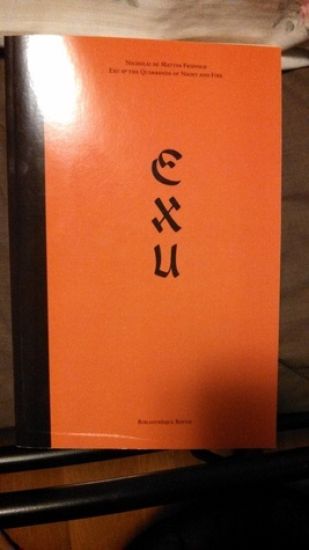
Exu and the Quimbanda of Night and Fire is the companion to Pomba Gira. Together they give the most complete account of this sorcerous cult. Exu is the fusion of Umbanda, Angolan sorcery, European demonology and Kardec's Spiritsm, erupting in a uniquely Brazilian cult of practical magical action. Spells, workings, hierarchies and origins are all given in detail. This is an essential text for students of the grimoires, Satanism and Traditional Witchcraft, as well as those drawn to or working within the cults of Quimbanda, Candomble, Santeria, Palo Mayombe and the African diaspora religions. Quimbanda is a living tradition that gets results. It is a massive storehouse of magical lore, heresies and history which has absorbed aspects of Goetia, Grimorium Verum, Red Dragon and even Huysman's La Bas. The origin of Exu is explored from the iconic Baphomet of Eliphas Levi and the influence of St Cyprian, the patron saint of necromancers, back to Umbanda and the traditional African religions. Exu revels in a unique heritage that encompasses a Gnostic account of the crucifixion mystery, the concealed nature of St Michael Archangel and the native shamanism of the Caboclos. A forceful spirit, Exu presides over the kingdom of the world, and offers a fierce path for those that would take him as companion. The Seven Legions of Exus are 'hot' spirits, and their work is considered black magic. The perils of this work are given, with the dangers of obsession by the Qlippoth and vampirism described. Guidance is offered and the path to ascension shown. In Exu and the Quimbanda of Night and Fire Frisvold gives explicit workings for good and ill, a herbarium and details of offerings, powders and baths, songs and seals. He discusses the fearsome Exu Mor for the first time, a subject not treated in his previous works. Frisvold is an intiate and gives an insider's view, drawing upon his years of experience in the cult. With access to texts, manuscripts and personal testimony this is the most definitive work on Exu available in English.
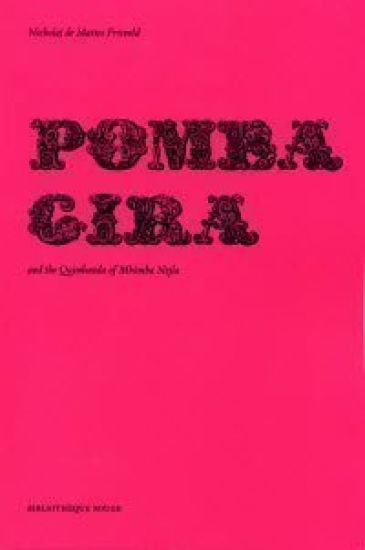
Pomba Gira and the Quimbanda of Mbumba Nzila

Pomba Gira and the Quimbanda of Mbumba Nzila

Nicholaj de Mattos Frisvold

Scarlet Imprint
2011
nidottu
A significant study on the cult of Pomba Gira, this is the most comprehensive work in the English language on the Devil's mistress, whose Brazilian cult has bewitched so many. It is a book that those seeking congress with the current of strong female magical sexuality have long desired. A beguiling spirit, Pomba Gira gives solace to the broken hearted, vengeance for the wronged, and a fierce path for those that would take her as muse. In Pomba Gira and the Quimbanda of Mbumba Nzila Frisvold gives explicit workings, baths and waters, her songs and chants. Her plant allies among the nightshades are described in a full herbarium. The attractions and dangers for both men and women who make cult to her are presented, as are her many faces. Pomba Gira has origins in the witchcraft of Portugal, the Basque Country as well as Congo and the native influences of Brazil. The witchcraft fusion makes her cult particularly accessible to Westerners whose own traditions share much ground with Quimbanda. Frisvold carefully unravels the skeins, revealing her origin in historical figures such as Maria Padilha, but more deeply still through archetype and myth to the very essence of her skin shedding nature. He finds the origin of her name in Congo, the cult of divine possession amongst the slave camps of Brazil, and brings us through to her more modern manifestations and his personal work with the Queen of the Fig Tree in Hell. As an initiate and devotee, he gives an insider's view with the same respect and experience he demonstrates in Palo Mayombe: The Garden of Blood and Bones. We walk through the Queendoms of Lyre, Cemetery, Sepulchres, Streets, Crossroads, Wilderness, Soul, Oceanshore and Calunga. The workings of twenty four different Pomba Giras are given, from Cigana the gypsy to the split skull face of Rosa Caveira. Through the razor blades in honey, the cigarette smoke and the sweet anisette spilt in the graveyard, Pomba Gira takes seductive shape.