Kirjojen hintavertailu. Mukana 12 595 353 kirjaa ja 12 kauppaa.

Kirjailija

Nicholas Cook

Kirjat ja teokset yhdessä paikassa: 14 kirjaa, julkaisuja vuosilta 1992-2024, suosituimpien joukossa Theory Into Practice. Vertaile teosten hintoja ja tarkista saatavuus suomalaisista kirjakaupoista.

14 kirjaa

Kirjojen julkaisuhaarukka 1992-2024.

Music, Encounter, Togetherness

Music, Encounter, Togetherness

Nicholas Cook

OXFORD UNIVERSITY PRESS INC
2024
sidottu
In today's technological and globalised world, music remains a basic dimension of society. Music, Encounter, Togetherness outlines a relational approach to music that creates space for both human agency and social relationship. Throughout the book, author Nicholas Cook puts Euro-American musical traditions into dialogue with other world music cultures, complementing theory-driven approaches with comprehensive case studies ranging from late eighteenth-century India to contemporary China, and from Debussy's encounter with Javanese music and dance to cross-cultural musicking in Australia and in cyberspace. Through these examples, Cook examines how music affords interpersonal relationship and social togetherness, and what happens when musicians from different cultures interact. Central to the book is the idea of encounter, which highlights the dynamic and processual nature of musicking, as much in therapy or at home as in the jazz club or concert hall. Western musicologists have traditionally thought of music as primarily a repertory of objects; Cook illustrates how thinking of it in processual terms--through an expanded idea of performance--can make as much sense of Western art music as of other traditions. In basing an understanding of music on acts rather than objects and focussing on people and their relationships rather than on the impersonal forces of evolutionary or stylistic histories, the book opens up ways of thinking that counter some of the dehumanising aspects of musical thinking and practice in global modernity.
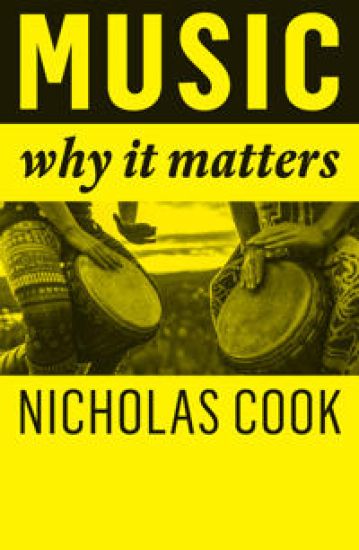
Music

Music

Nicholas Cook

JOHN WILEY AND SONS LTD
2023
sidottu
As countries went into lockdown in 2020, people turned to music for comfort and solidarity. Neighbours sang to each other from their balconies; people participated in online music sessions that created an experience of socially distanced togetherness. Nicholas Cook argues that the value of music goes far beyond simple enjoyment. Music can enhance well-being, interpersonal relationships, cultural tolerance, and civil cohesion. At the same time, music can be a tool of persuasion or ideology. Thinking about music helps bring into focus the values that are mobilised in today’s culture wars. Making music together builds relationships of interdependence and trust: rather than escapism, it offers a blueprint for a community of mutual obligation and interdependence. Music: Why It Matters is for anyone who loves playing, listening to, or thinking about music, as well as those pursuing it as a career.
Music

Music

Nicholas Cook

JOHN WILEY AND SONS LTD
2023
nidottu
As countries went into lockdown in 2020, people turned to music for comfort and solidarity. Neighbours sang to each other from their balconies; people participated in online music sessions that created an experience of socially distanced togetherness. Nicholas Cook argues that the value of music goes far beyond simple enjoyment. Music can enhance well-being, interpersonal relationships, cultural tolerance, and civil cohesion. At the same time, music can be a tool of persuasion or ideology. Thinking about music helps bring into focus the values that are mobilised in today’s culture wars. Making music together builds relationships of interdependence and trust: rather than escapism, it offers a blueprint for a community of mutual obligation and interdependence. Music: Why It Matters is for anyone who loves playing, listening to, or thinking about music, as well as those pursuing it as a career.
Music

Music

Nicholas Cook

Oxford University Press
2021
nidottu
Very Short Introductions: Brilliant, Sharp, Inspiring The world teems with different kinds of music - traditional, folk, classical, jazz, rock, pop - and each type of music tends to come with its own way of thinking. Drawing on a wealth of accessible examples ranging from Beethoven to Chinese zither music, this Very Short Introduction considers the history of music and thinking about music, focussing on its social and cultural dimensions. Nicholas Cook balances the Western Classical traditions within the context of many other musical cultures in today's world, tracing the way in which their development since the eighteenth century has conditioned present-day thinking and practice both within and beyond the West. He also considers the nature of music as a real-time performance practice; the role of music in contexts of social and political action; and the nature of musical thinking, including the roles played in it by instruments, notations, and creative imagination. In this new edition Cook explores the impact of digital technology on the production and consumption of music, including how it has transformed participatory music-making and the music business. He also discusses music's position in a globalized world, from the role it played in historical processes of colonisation and decolonisation to its present-day significance as a vehicle of cross-cultural communication. ABOUT THE SERIES: The Very Short Introductions series from Oxford University Press contains hundreds of titles in almost every subject area. These pocket-sized books are the perfect way to get ahead in a new subject quickly. Our expert authors combine facts, analysis, perspective, new ideas, and enthusiasm to make interesting and challenging topics highly readable.
Music as Creative Practice

Music as Creative Practice

Nicholas Cook

Oxford University Press Inc
2018
sidottu
Until recently, ideas of creativity in music revolved around composers in garrets and the lone genius. But the last decade has witnessed a sea change: musical creativity is now overwhelmingly thought of in terms of collaboration and real-time performance. Music as Creative Practice is a first attempt to synthesize both perspectives. It begins by developing the idea that creativity arises out of social interaction-of which making music together is perhaps the clearest possible illustration-and then shows how the same thinking can be applied to the ostensively solitary practices of composition. The book also emphasizes the contextual dimensions of musical creativity, ranging from the prodigy phenomenon, long-term collaborative relationships within and beyond the family, and creative learning to the copyright system that is supposed to incentivize creativity but is widely seen as inhibiting it. Music as Creative Practice encompasses the classical tradition, jazz and popular music, and music emerges as an arena in which changing concepts of creativity-from the old myths about genius to present-day sociocultural theory-can be traced with particular clarity. The perspective of creativity tells us much about music, but the reverse is also true, and this fifth and last instalment of the Studies in Musical Performance as Creative Practice series offers an approach to musical creativity that is attuned to the practices of both music and everyday life.
Beyond the Score

Beyond the Score

Nicholas Cook

Oxford University Press Inc
2014
sidottu
In Beyond the Score: Music as Performance, author Nicholas Cook supplants the traditional musicological notion of music as writing, asserting instead that it is as performance that music is loved, understood, and consumed. This book reconceives music as an activity through which meaning is generated in real time, as Cook rethinks familiar assumptions and develops new approaches. Focusing primarily but not exclusively on the Western 'art' tradition, Cook explores perspectives that range from close listening to computational analysis, from ethnography to the study of recordings, and from the social relations constructed through performance to the performing (and listening) body. In doing so, he reveals not only that the notion of music as text has hampered academic understanding of music, but also that it has inhibited performance practices, placing them in a textualist straightjacket. Beyond the Score has a strong historical emphasis, touching on broad developments in twentieth-century performance style and setting them into their larger cultural context. Cook also investigates the relationship between recordings and performance, arguing that we do not experience recordings as mere reproductions of a performance but as performances in their own right. Beyond the Score is a comprehensive exploration of new approaches and methods for the study of music as performance, and will be an invaluable addition to the libraries of music scholars-including musicologists, music theorists, and music cognition scholars-everywhere.
The Schenker Project

The Schenker Project

Nicholas Cook

Oxford University Press Inc
2010
nidottu
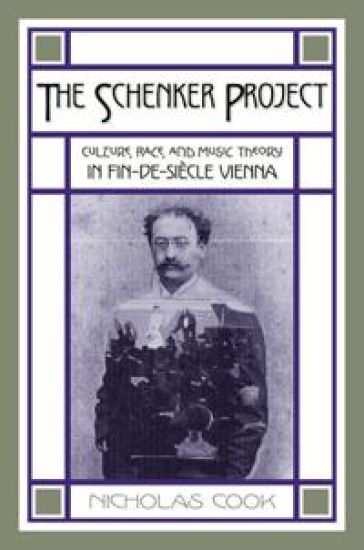
Today we think of Heinrich Schenker, who lived in Vienna from 1884 until his death in 1935, as the most influential music theorist of the twentieth century. But he saw his theoretical writings as part of a comprehensive project for the reform of musical composition, performance, criticism, and education-and beyond that, as addressing fundamental cultural, social, and political problems of the deeply troubled age in which he lived. This book aims at an understandingof Schenker's project through reading his key works within a series of period contexts. These include music criticism, the field in which Schenker first made his name; Viennese modernism, particularly the debate over architectural ornamentation; German cultural conservatism, which is the source ofmany of Schenker's most deeply entrenched values; and Schenker's own position as a Galician Jew who came to Vienna just as traditional anti-semitism was becoming fully racialized. As well as presenting an unfamiliar perspective on the cultural and political ferment of fin-de-siecle Vienna, this approach reveals how deeply the social and political were thought into Schenker's theory. It also raises issues concerning the meaning and value of music theory, and the extent to which today'smusic-theoretical agenda unwittingly reflects the values and concerns of a very different world.
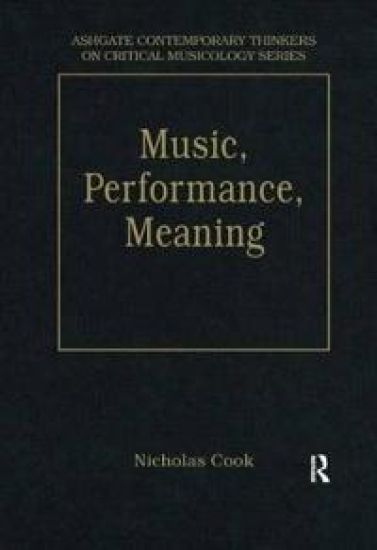
Music, Performance, Meaning

Music, Performance, Meaning

Nicholas Cook

Ashgate Publishing Limited
2007
sidottu
This selection of sixteen of Nicholas Cook's essays covers the period from 1987 to 2004 and brings out the development of the author's ideas over these years. In particular the two keywords of the title -Meaning and Performance- represent critical directions that expand to the point that, by the end of the book, they become coextensive: music is seen as social action and meaning as created by that action. Within this overall direction, a wide variety of topics is explored, ranging from Beethoven to Schenker, from Chinese qin music to jazz and rock, from perceptual psychology to sketch studies and analysis of record sleeves. A substantial introduction draws out the links (and differences) between the essays, sometimes critiquing them and always setting them into the developing context of the author's work as a whole.
The Schenker Project

The Schenker Project

Nicholas Cook

Oxford University Press Inc
2007
sidottu
Today we think of Heinrich Schenker, who lived in Vienna from 1884 until his death in 1935, as the most influential music theorist of the twentieth century. But he saw his theoretical writings as part of a comprehensive project for the reform of musical composition, performance, criticism, and education-and beyond that, as addressing fundamental cultural, social, and political problems of the deeply troubled age in which he lived. This book aims to explain Schenker'sproject through reading his key works within a series of period contexts. These include music criticism, the field in which Schenker first made his name; Viennese modernism, particularly the debate over architectural ornamentation; German cultural conservatism, which is the source of many ofSchenker's most deeply entrenched values; and Schenker's own position as a Galician Jew who came to Vienna just as fully racialized anti-semitism was developing there. As well as presenting an unfamiliar perspective on the cultural and political ferment of fin-de-siecle Vienna, this book reveals how deeply Schenker's theory is permeated by the social and political. It also raises issues concerning the meaning and value of music theory, and the extent to which today'smusic-theoretical agenda unwittingly reflects the values and concerns of a very different world.
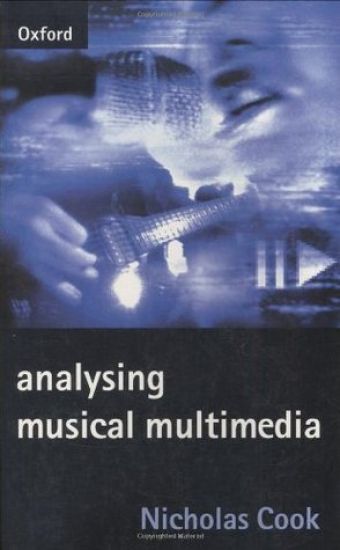
Analysing Musical Multimedia

Analysing Musical Multimedia

Nicholas Cook

Oxford University Press
2000
nidottu
Analysing Musical Multimedia is the first study to produce a general theory of how different media - music, words, moving picture, and dance - work together to created multimedia. Though generally associated with contemporary developments, in particular music video and film, a general theory of musical multimedia also encompasses traditional genres such as song and opera. Critical writing in these areas, however, is genre-specific; Nicholas Cook establishes principles, and a terminology for their description, that apply across the whole spectrum of musical multimedia. Beginning with a study of how meaning is mediated in television commercials, Cook concludes with in-depth readings of Fantasia, Madonna's video Material Girl, and Armide (Godard's sequence from the collaborative film Aria). Analysing Musical Multimedia not only shows how approaches deriving from music theory can contribute to the understanding of multimedia, but also draws conclusions from the practice and further development of musical analysis.
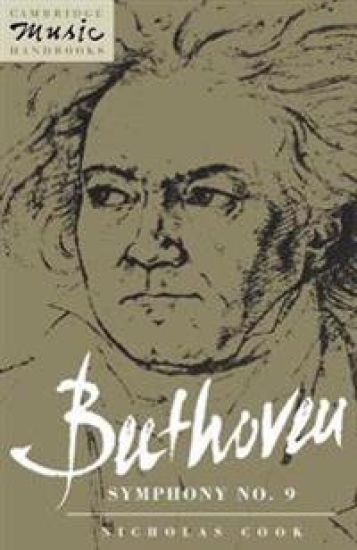
Beethoven

Beethoven

Nicholas Cook

Cambridge University Press
1993
pokkari
Beethoven’s Ninth Symphony is acknowledged as one of the supreme masterpieces of the Western tradition. More than any other musical work it has become an international symbol of unity and affirmation. Yet early critics rejected it as cryptic and eccentric, the product of a deaf and ageing composer. Nicholas Cook’s guide charts the dramatic transformation in the reception of this work. The story begins in Vienna, with the responses of listeners at the first performance, and ends in contemporary China and Japan, where the symphony has acquired diametrically opposed interpretations. The account embraces many of the major figures of nineteenth- and twentieth-century music, among them Wagner and Schenker. Including an account of the sketches, an examination of the performance tradition, and a suggested new interpretation, this book opens up new dimensions in our understanding of Beethoven’s last symphony.
Music, Imagination, and Culture

Music, Imagination, and Culture

Nicholas Cook

Clarendon Press
1992
nidottu
It is a common experience that words are inadequate for music; there seems always to be a disparity between how music is experienced, and how it is described or rationalized. This book is a study of musical imagination. Musicians imagine music by means of functional models which determine certain aspects of the music while leaving others open. This means that there is inevitably a gap between the image and the experience that it models, and this gap can be a source of compositional creativity. Different musical cultures embody different ways of imagining sound as music, and thus every culture creates its own distinctive pattern of discrepancies between image and experience - discrepancies which are reflected in theoretical thinking about music. Drawing on psychological and philosophical materials as well as the analysis of specific musical examples, Nicholas Cook makes a clear distinction between the province of music theory and that of aesthetic criticism. In doing so he affirms the importance of the `ordinary listener' in musical culture, and the validity of his or her experience of music.
A Guide to Musical Analysis

A Guide to Musical Analysis

Nicholas Cook

W. W. Norton Company
1992
nidottu
The text is divided into two parts: part One deals with the most important analytical methods current in the English-speaking world, treating each in turn. They are presented method by method because each one involves a characteristic set of beliefs and it is important to identify those beliefs i order to avoid applying inappropriate techniques that produce irrelevant data. The question of how you decide what method to adopt is addressed in the second part of the book, in which given compositions rather than given analytical methods form the starting point. The analyses in this section are each designed to highlight a different aspect of analytical procedure.