Kirjailija
Nicholas Fox Weber
Kirjat ja teokset yhdessä paikassa: 16 kirjaa, julkaisuja vuosilta 2009-2025, suosituimpien joukossa Wayne Thiebaud. Vertaile teosten hintoja ja tarkista saatavuus suomalaisista kirjakaupoista.
16 kirjaa
Kirjojen julkaisuhaarukka 2009-2025.
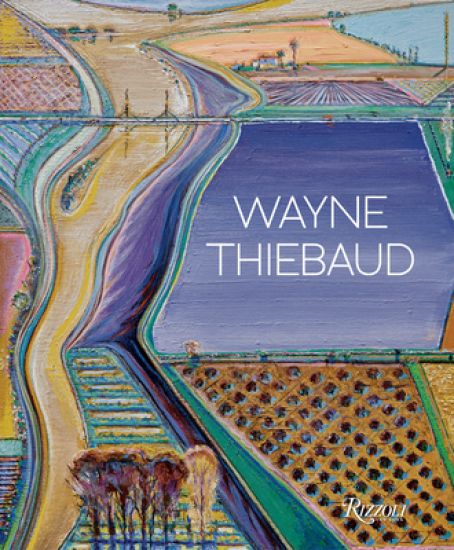
As he turns 100, the definitive monograph of Wayne Thiebaud's work is now available in a reformatted, accessibly priced edition, and including his most recent paintings. This is the most comprehensive monograph to date on Wayne Thiebaud, with new works added, in a reformatted size. Spanning the length of his career from the 1950s to the present, the book has been made in close collaboration with the artist. Thiebaud selected the works himself, making the book an act of autobiography in a sense. At age 100, he looks back over his life and his work, rich with breakthroughs in painting and masterful individuality. Required reading for those who have a healthy appetite for provocative art. -Bloomberg Business This comprehensive monograph of more than 200 illustrations can literally be considered eye candy. American artist Wayne Thiebaud is famed for his brightly coloured canvases of cakes, diner pies, pastries, ice cream cones, candy and brightly coloured gumball machines. . . . Whether still lifes or landscapes, Thiebaud's paintings are akin to visual Prozac; you simply cannot be in a bad mood looking at them. -Kansas City Magazine While Thiebaud is best known for his heavily pigmented still lifes of cakes, pies, and candies, [this] book shows his broader range, from vibrant landscapes depicting highways and farmland to portraits of solitary figures. . . The texts examine Thiebaud's influences as well as his impact on the art world and the individual viewers of his work. -Architectural Digest

The first monograph on an American abstract artist of unparalleled subtlety. James Howell (1935-2014) was an American abstract artist who used infinite variations of the colour grey to explore the fundamentals of light, space, time, and [kinesthetic] perception. He appreciated the colour’s mystery, softness, simplicity, and capaciousness. His precise, systematic methods, developed over many years, yielded accomplished square paintings and works on paper. Their subtle revelations — absent of illusion, narrative, and symbolic references — expand in the viewer’s consciousness. In this comprehensive first monograph, Alistair Rider traces Howell’s artistic evolution, from the beginnings of his career in the early 1970s through the artist’s greatest achievement — the group of abstractions called Series 10, which occupied the last two decades of his life. Rider’s multi-faceted essay also chronicles Howell’s biography, including his early studies and accomplishments in architecture, and offers several interpretive frameworks for Howell’s oeuvre, notably a connection to East Asian philosophies. The beautifully produced book presents dozens of full-colour plates of artworks and exhibitions, and Rider’s essay is thoroughly illustrated with archival images and documents from the James Howell Foundation. This publication makes a critical contribution to the reevaluation of an artist whose studies of light into shadow have for many years been in a dynamic conversation with recognised trends in contemporary art.
A spectacular and unprecedented visual biography of the leading pioneers and protagonists of modern art and design Josef - painter, designer, and teacher - and Anni Albers - textile artist and printmaker - are among the twentieth century's most important abstract artists, and this is the first monograph to celebrate the rich creative output and beguiling relationship of these two masters in one elegant volume. It presents their life and work as never before, from their formative years at the Bauhaus in Germany to their remarkable influence at Black Mountain College in the United States through their intensely productive period in Connecticut. Accessibly written, the book is packed with more than 750 artworks, archival images, and documents - many published here for the first time - all tracing the remarkable lives and careers of this legendary couple. Dispersed throughout area series of short essays on artists that focuses on the Alberses relationship with a number of important artists and architects of the 20th century, like Ruth Asawa, Marcel Breuer, Merce Cunningham, Philip Johnson, Paul Klee, Jacob Lawrence, and many more. The beautifully cloth-bound package utilizes an elegant color palette and design that speaks to the work of both artists. This comprehensive visual biography showcases the artists' rich and dynamic lives, and their infinite influence on each other, as they shared the profound conviction that art was central to human existence.
The classic book on the art and history of weaving--now expanded and in full color Written by one of the twentieth century's leading textile artists, this splendidly illustrated book is a luminous meditation on the art of weaving, its history, its tools and techniques, and its implications for modern design. First published in 1965, On Weaving bridges the transition between handcraft and the machine-made, highlighting the essential importance of material awareness and the creative leaps that can occur when design problems are tackled by hand. With her focus on materials and handlooms, Anni Albers discusses how technology and mass production place limits on creativity and problem solving, and makes the case for a renewed embrace of human ingenuity that is particularly important today. Her lucid and engaging prose is illustrated with a wealth of rare and extraordinary images showing the history of the medium, from hand-drawn diagrams and close-ups of pre-Columbian textiles to material studies with corn, paper, and the typewriter, as well as illuminating examples of her own work. Now available for a new generation of readers, this expanded edition of On Weaving updates the book's original black-and-white illustrations with full-color photos, and features an afterword by Nicholas Fox Weber and essays by Manuel Cirauqui and T'ai Smith that shed critical light on Albers and her career.
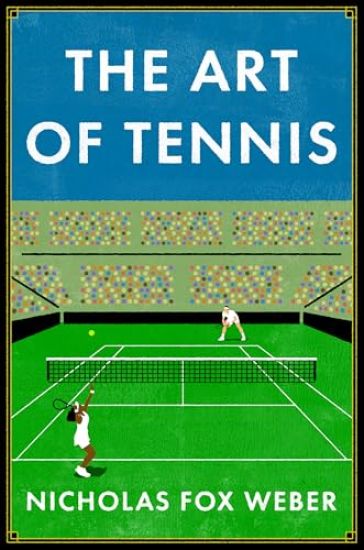
A celebration of tennis, the game and its players, for any fan. Tennis has inspired paintings, ballets, music, fiction, poetry, theatre, and even clothing design. This book presents riveting exemplars from all the arts while also lovingly portraying the game of tennis as an art form of its own. Tennis is a game of precision, timing, athleticism, strategy, and, sometimes, a little luck. Small wonder this sport attracts so many players and fans--including artists and writers who see something transcendent in hitting a ball with a racket over a net and inside a rectangular field. As Nicholas Fox Weber writes, "The thrill of the thwack of the racquet and the perpetual state of suspense about what is coming next appeals to individuals from every walk of life....It has prompted the creation of sublime architecture and moved composers of music in wonderful new directions; it has seeded literary fantasy and been the source of hilarious cartoons. It has also, in fabulous ways, enabled human beings to demonstrate some of their most admirable qualities: courage, tenacity, generosity of heart." This book explores the charisma and spell the sport has cast on the likes of Nabokov, Coco Chanel, Caravaggio, and Bonnard. And, of course, there is much about the players who have given the sports its special magic, from the master strategist Bill Tilden to the supreme exemplar of athleticism, Novak Djokovic. Weber, best known for artworld biographies, has been a lifelong tennis player and takes us through his own personal relationship with the sport: from his college-age summers in the 1960s working at New Hampshire's Tamarack Tennis Camp to a pickup game on a court in Guangzhou, China where he was struck, yet again, that tennis is its own language, understood by all who play it. Whether a reader is fluent in the language of tennis or just admires it as an outsider, The Art of Tennis will delight all lovers of the game.
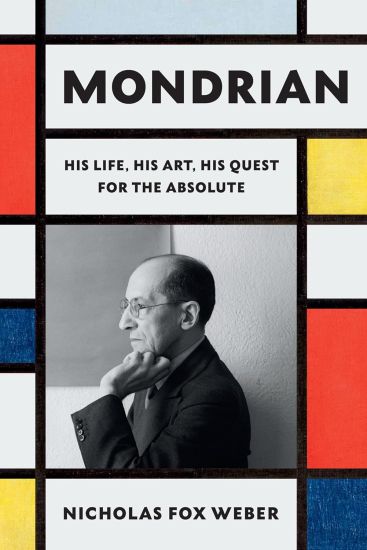
THE NEW YORK TIMES BOOK REVIEW EDITORS' CHOICE - The extraordinary and surprising life of Piet Mondrian, whose unprecedented geometric art revolutionized modern painting, architecture, graphic art, fashion design, and more--from acclaimed cultural historian Nicholas Fox Weber "As fastidiously passionate as his subject's paintings. How wonderful it is to read of Mondrian's gaiety and zest. . . as well as his rigour and unrelenting commitment to his own, absolutely his own, view of art and the world." --John Banville, national bestselling author of The Lock-Up In the early 1920s, surrounded by the roaring streets of avant-garde Paris, Piet Mondrian began creating what would become some of the most recognizable abstract paintings of the 20th century. With rectangles of primary colors against a dazzling white background, this was geometric abstraction in its purest form. These revolutionary compositions exhilarated, intoxicated, confused, and enraged the international public--and changed the course of modern art forever. Now, for the first time, Mondrian emerges alongside his thrilling art. Here is the life of an elusive modern master: from his youth in a religious household in the Netherlands where he first began painting Dutch farmhouses and sand dunes, to his move to Paris where he embraced the work of Pablo Picasso, Georges Seurat, and C zanne, to the 1920s and onward where, surviving the turmoil of two world wars and embracing a rapidly shifting culture, Mondrian challenged the concept of art and invented a new world of undiluted colors and rhythmic straight lines. His work would go on to affect painting, architecture, fashion, and design in decades to come. Here is also an intimate portrait of a complex artist, his solitude and avoidance of intimacy, his eccentricities and his philosophy, his passion for ballroom dancing, and his unwavering belief in art as a vehicle to reveal universal truths.
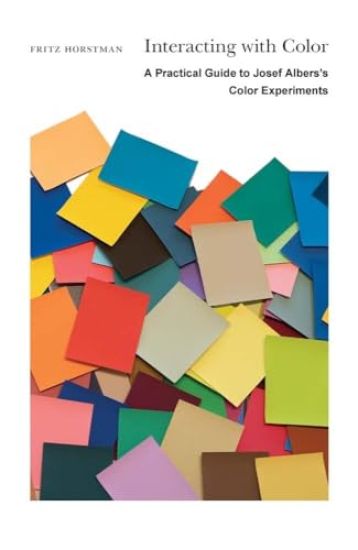
The essence of Josef Albers’s Interaction of Color in a format that engages learners of all ages and levels and encourages a hands-on approach Interaction of Color is often presented as an overarching theory of color, but it is actually a method of learning how to better see and understand color—many of the color exercises illustrated in Interaction of Color were devised by Albers’s students: cutting and pasting, looking, pondering, and learning. This workbook companion is a teaching tool designed to enable readers to engage in the kinds of tactile creativity and exploration that characterized Albers’s own classroom. Focusing on eight of the most important lessons in Interaction of Color, this book invites readers to learn by doing, using only simple materials. Core instructions for each exercise are enhanced by additional tips, references to Albers’s original text and illustrations, and stories about how Albers presented the ideas in class. The book and exercises are sufficiently nuanced to challenge and inspire seasoned artists, designers, and educators while also being readily accessible to younger readers and less-experienced practitioners.
Toshiko Mori Architect
Landon Brown; Charles Burke; Toshiko Mori; Andres Lepik; Nicholas Fox Weber
ArchiTangle GmbH
2020
sidottu
Selected research projects and architecture exploring the role of design within complex social, political and environmental conditions Toshiko Mori is a New York-based architect and Professor in the Practice of Architecture at the Harvard University Graduate School of Design for many years. As a long-time member of the World Economic Forum’s Global Agenda Council on the Future of Cities, Mori led research and inquiry into sustainable architecture, enhancing cities’ livability, and creating efficient urban services. Mori is also on the board of Dassault Systems, a company connecting technology to environment and life science. And she has founded the platform VisionArc, a think tank dedicated to exploring the role of design within complex social and environmental issues. This book will focus on TMA’s projects based on research, and the impact of socially valuable projects to society. The book will illustrate how the observation of the architect operates as opposed to how the imagination of the architect manifests itself. Different chapters in the book are describing various ways of approaching the task of observation. Seven chapters are divided into specific projects and provide a look at the hidden thought processes that can take place behind the ideas, solutions, and physical manifestations or architecture. Presented projects include the Portable Concert Hall, called Paracoustica, which is an ongoing nonprofit work to come up with an affordable and sharable concert hall among many constituents in remote and underserved community; the Novartis Institutes for BioMedical Research focusing on socialization among scientists as a new model of work that promotes further discovery and teamwork. And i.e. the research on the role of libraries in the future using the example of the Brooklyn Public Library Central Branch. Another chapter is dedicated to the vernacular typology development in Senegal with the Albers Foundation, and the research on social spaces for collaborative educational environments.
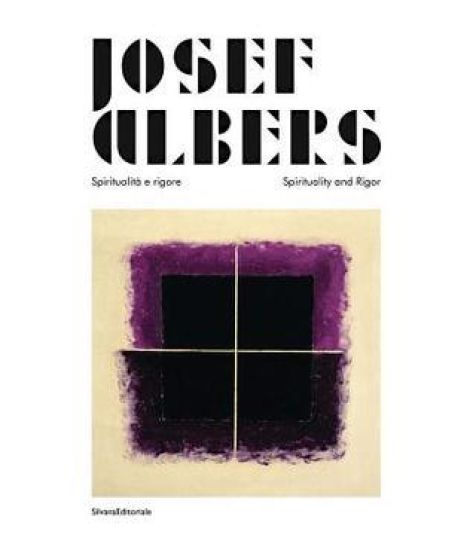
This important volume is the most thorough portrait yet published of Albers' spiritual convictions. Josef Albers (1888-1976) believed firmly in art's spiritual dimension. Among his several aphorisms on the topic, none reflects the humble, ascetic character of his spiritual disposition better than the following: 'Easy to know that diamonds are precious. Good to know that rubies have depth. But more to see that pebbles are miraculous'. Conceived by the renowned Albers expert Nicholas Fox Weber, who directed the Albers Foundation for 20 years and knew the artist well, Spirituality and Rigor presents a selection of work by Albers that illustrates his ascetic spirituality and his deeply felt Catholicism. The book stems in part from Fox Weber's The Sacred Modernist: Josef Albers as a Catholic Artist, and is augmented with additional work by Fabio De Chirico. It includes Albers' early drawings of country churches and cathedrals; 'Rosa Mystica', his stained glass window for St Michael's Church, and other glass works containing religious imagery; his abstractions of crosses and geometric abstractions with spiritually themed titles, from his 'Black Mountain' years; his prints of Mexican gods; photographic interpretations of the theme of angels; and a selection from the 'Homage to the Square' series. Text in English and French.
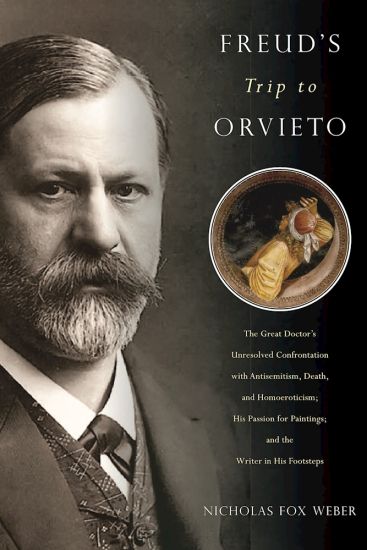
"[An] unusual meditation on sex, death, art, and Jewishness. . . . Weber weaves in musings on his own sexual and religious experiences, creating a freewheeling psychoanalytic document whose approach would surely delight the doctor, even if its conclusions might surprise him." —New Yorker"Freud's Trip to Orvieto is at once profound and wonderfully diverse, and as gripping as any detective story. Nicholas Fox Weber mixes psychoanalysis, art history, and the personal with an intricacy and spiritedness that Freud himself would have admired." —John Banville, author of The Sea and The Blue Guitar"This is an ingenious and fascinating reading of Freud's response to Signorelli's frescoes at Orvieto. It is also a meditation on Jewish identity, and on masculinity, memory, and the power of the image. It is filled with intelligence, wit, and clear-eyed analysis not only of the paintings themselves, but how we respond to them in all their startling sexuality and invigorating beauty." —Colm Tóibín, author of Brooklyn and Nora WebsterAfter a visit to the cathedral at Orvieto in Italy, Sigmund Freud deemed Luca Signorelli's frescoes the greatest artwork he'd ever encountered; yet, a year later, he couldn't recall the artist's name. When the name came back to him, the images he had so admired vanished from his mind's eye. This is known as the "Signorelli parapraxis" in the annals of Freudian psychoanalysis and is a famous example from Freud's own life of his principle of repressed memory. What was at the bottom of this? There have been many theories on the subject, but Nicholas Fox Weber is the first to study the actual Signorelli frescoes for clues.What Weber finds in these extraordinary Renaissance paintings provides unexpected insight into this famously confounding incident in Freud's biography. As he sounds the depths of Freud's feelings surrounding his masculinity and Jewish identity, Weber is drawn back into his own past, including his memories of an adolescent obsession with a much older woman.Freud's Trip to Orvieto is an intellectual mystery with a very personal, intimate dimension. Through rich illustrations, Weber evokes art's singular capacity to provoke, destabilize, and enchant us, as it did Freud, and awaken our deepest memories, fears, and desires.Nicholas Fox Weber is the director of the Josef and Anni Albers Foundation and author of fourteen books, including biographies of Balthus and Le Corbusier. He has written for the New Yorker, New York Times, Los Angeles Times, Wall Street Journal, Le Monde, ARTnews, Town & Country, and Vogue, among other publications.
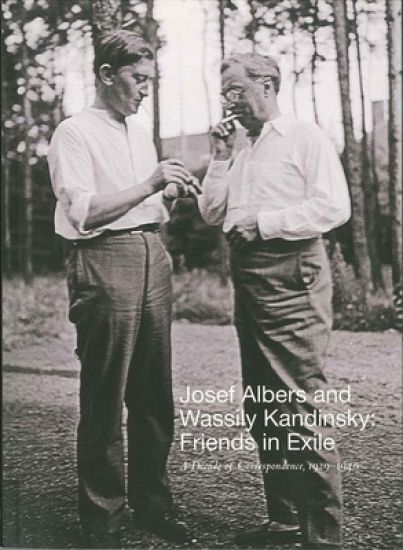
Josef Albers (1888–1976) and Wassily Kandinsky (1866–1944), artists and teachers at the Bauhaus, were exiled from Germany when the school was forced to close in the early 1930s. The 46 letters in this volume document the intimate exchange between these two friends in a period when the world was coming apart. Despite the tumult, each wrote to the other of his continuous creative evolution, while also providing rich impressions of his new world. For Kandinsky, this was Paris where he navigated a new avant-garde scene. For Albers, it was the United States where he and his wife Anni began teaching at the recently founded Black Mountain College in North Carolina. Kandinsky’s and Albers’s correspondence reveals their warmth and humor, their strength in coping with unexpected circumstances, and above all their conviction in the resilience and power of art. Archival photographs, artwork, and ephemera accompany the collection, which brings together the artists’ full extant correspondence for the first time in English and German. Distributed for the Josef and Anni Albers Foundation
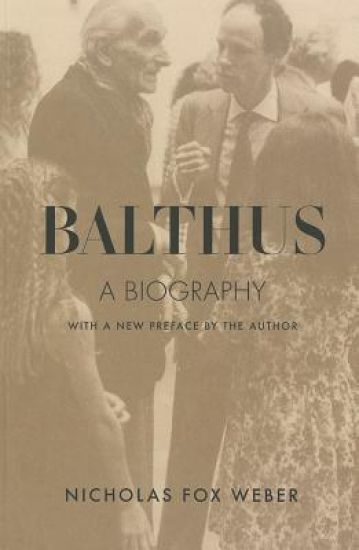
This is the first full-scale biography of one of the most elusive and enigmatic painters of our time: the self-proclaimed Count Balthus Klossowski de Rola, whose brilliant, markedly sexualized portraits, especially of young girls, are among the most memorable images in contemporary art. Balthus’s complexities are clarified and his genius understood in this book that derives its immediacy from Nicholas Fox Weber’s long and intense conversations with Balthus himself–who never previously consented to discuss his life and work with a biographer–as well as Weber’s interviews with the artist’s closest associates. This biography was first published by Knopf in 1999 and is now available for the first time from Dalkey Archive Press.
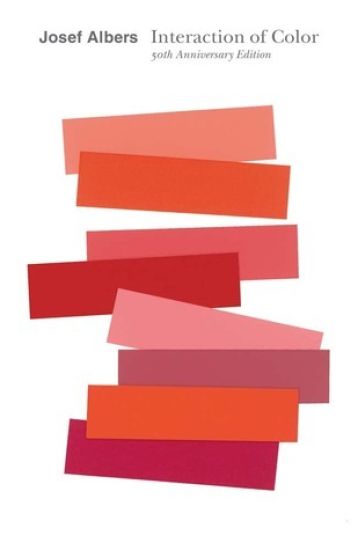
The 50th anniversary edition of a classic text, featuring an expanded selection of color studies “The landmark 1963 book by Josef Albers . . . isn’t just for aspiring artists. Its mesmerizing illustrations are a revelation for anyone interested in color theory and human perception.”—Pilar Viladas, New York Times “A visionary work.”—Malcolm Jones, Newsweek Josef Albers’s classic Interaction of Color is a masterwork in art education. Conceived as a handbook and teaching aid for artists, instructors, and students, this influential book presents Albers’s singular explanation of complex color theory principles. Originally published by Yale University Press in 1963 as a limited silkscreen edition with 150 color plates, Interaction of Color first appeared in paperback in 1971, featuring ten color studies chosen by Albers, and has remained in print ever since. With over a quarter of a million copies sold in its various editions since 1963, Interaction of Color remains an essential resource on color, as pioneering today as when Albers created it. Fifty years after Interaction’s initial publication, this anniversary edition presents a significantly expanded selection of close to sixty color studies alongside Albers’s original text, demonstrating such principles as color relativity, intensity, and temperature; vibrating and vanishing boundaries; and the illusion of transparency and reversed grounds. A celebration of the longevity and unique authority of Albers’s contribution, this landmark edition will find new audiences in studios and classrooms around the world.
A Window on the World
Giovanni Iovane; Francesca Bernasconi; Rosalind Krauss; Victor I. Stoichita; Daniela Ferrari; Bruno Reichlin; Elio Grazioli; Alberto Pezzotta; Angelica Jawlensky; Angelika Affentranger-Kichrath; Brenda Danilowitz; Nicholas Fox Weber
Skira
2013
sidottu
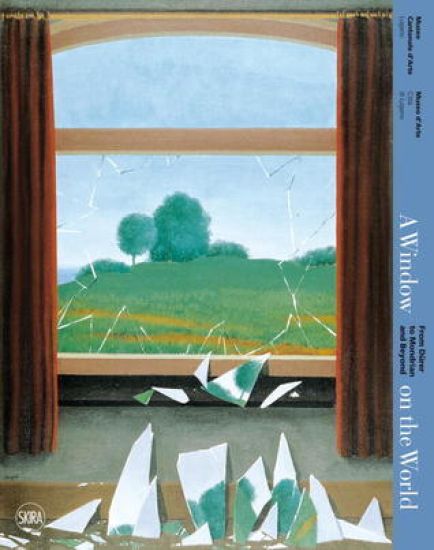
Through more than 200 works, the representation and pictorial meaning of the window in the Western Art Since the Renaissance, the window has been both a metaphor and an essential conceptual tool in Western painting. A Window on the World seeks to thoroughly analyze the gradual changes which have occurred in the representation and pictorial meaning of the window, in particular in the course of the twentieth century. It explores the radical change in perspective whereby artists developed and offered us a “global vision”, a formal perception freed from the need to imitate the objective world. The catalogue is structured into four main sections: Historical introduction, Seeing through, Grids, From the Window to the Screen. These sections include specific analysis consecrated to artists who have chosen the window as the privileged means of their artistic research or to recurrent themes such as the fascinating relationship between window and still life.
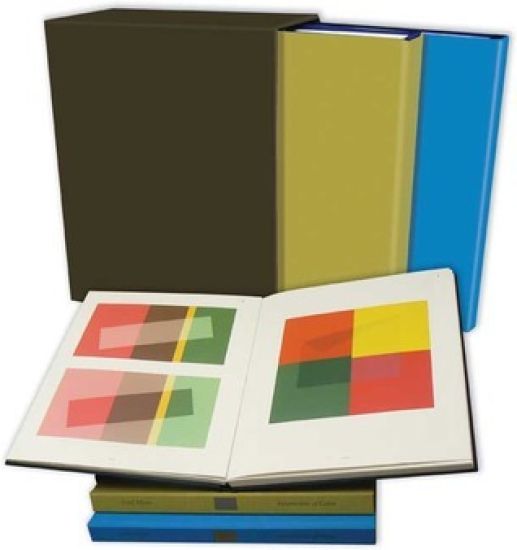
A luxurious two-volume edition with the complete original plates, text, and commentary “Absolutely stunning.”—Felix Salmon, Reuters Josef Albers’s masterwork, Interaction of Color, is one of the most influential books on color ever published. Originally issued in 1963 as a limited-edition set of commentary and 150 silkscreened color plates, the book introduced generations of students, artists, designers, and collectors to Albers’s unique approach to complex principles. This beautiful edition brings Interaction back into classrooms and studios and onto bookshelves, where it will find an eager new audience. It replicates Albers’s revolutionary exercises, explaining concepts such as color relativity and vibrating and vanishing boundaries through the use of color, shape, die-cut forms, and movable flaps that illustrate his astonishing demonstrations of the changing and relative nature of color. Also included for the first time are studies from the Albers archive, produced by the artist’s students in the early 1960s. This celebration of Albers’s legendary achievements is an essential addition to any serious art library. Published in association with the Josef and Anni Albers Foundation