Kirjojen hintavertailu. Mukana 12 595 353 kirjaa ja 12 kauppaa.

Kirjailija

Nicholas Guyatt

Kirjat ja teokset yhdessä paikassa: 10 kirjaa, julkaisuja vuosilta 1998-2026, suosituimpien joukossa Jefferson's Wolf. Vertaile teosten hintoja ja tarkista saatavuus suomalaisista kirjakaupoista.

10 kirjaa

Kirjojen julkaisuhaarukka 1998-2026.

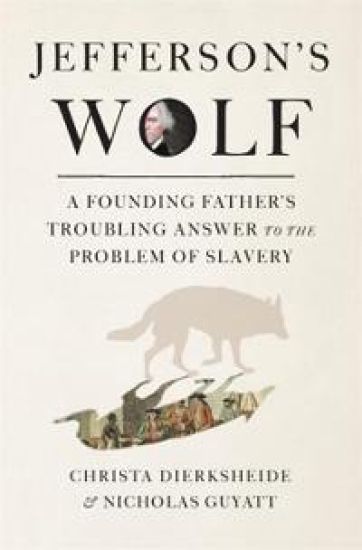
Jefferson's Wolf

Jefferson's Wolf

Christa Dierksheide; Nicholas Guyatt

HARVARD UNIVERSITY PRESS
2026
sidottu
A decisive reassessment of Thomas Jefferson's long-debated views on slavery, showing that his chief antislavery strategy was racial exclusion: the removal of emancipated Black people from the United States. Toward the end of his life, Thomas Jefferson made his most famous statement about American slavery: "We have the wolf by the ear, and we can neither hold him safely, nor let him go." Presenting abolition as both necessary and perilous, the phrase has long been relied upon to explain an apparent paradox: despite publicly opposing slavery for four decades, Jefferson had made no progress toward Black freedom in his political career by the time he died in 1826. Nor had he done so in his expansive household, where he enslaved more than 600 people, including Sally Hemings and the four children he fathered with her. Christa Dierksheide and Nicholas Guyatt argue that the key to understanding Jefferson's antislavery position is his commitment to racial exclusion. Jefferson believed that the principal reason to abolish slavery was the threat of a massive slave revolt, but he viewed the presence of free Black people in the new nation as no less dangerous. To avert racial violence, Jefferson argued, the gradual abolition of slavery had to be paired with Black exile. Even when challenged by white and Black contemporaries with more expansive views of American belonging, Jefferson held fast to his vision for a white republic. Neither an egalitarian antiracist nor a proslavery apologist, Jefferson became the most influential advocate for racial separation in the early United States. Charting the evolution of his thought across the nation's formative decades, Jefferson's Wolf is a surprising and provocative account of the problem of slavery in the founding era.
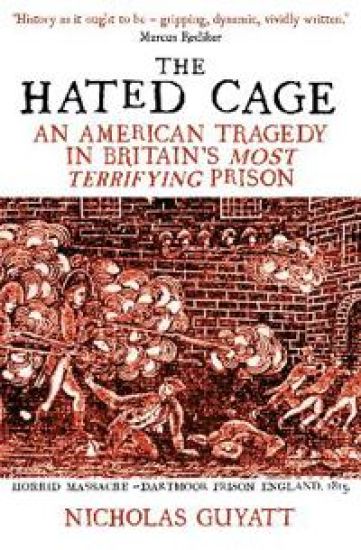
The Hated Cage

The Hated Cage

Nicholas Guyatt

Oneworld Publications
2023
pokkari
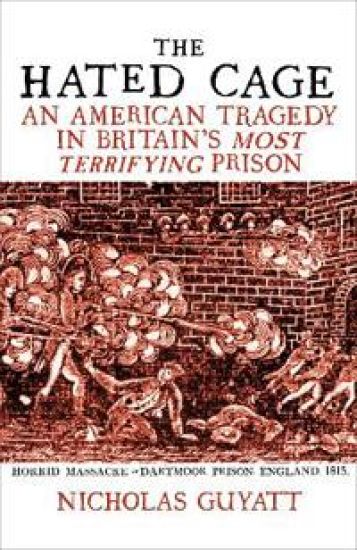
‘Beguiling.’ The Times ‘Compelling.’ Wall Street Journal ‘A vivid portrait.’ Daily Mail Buried in the history of our most famous jail, a unique story of captivity, violence and race. It's 1812 – Britain and America are at war. British redcoats torch the White House and six thousand American sailors languish in the world’s largest prisoner-of-war camp, Dartmoor. A myriad of races and backgrounds, some are as young as thirteen. Known as the ‘hated cage’, Dartmoor was designed to break its inmates, body and spirit. Yet, somehow, life continued to flourish behind its tall granite walls. Prisoners taught each other foreign languages and science, put on plays and staged boxing matches. In daring efforts to escape they lived every prison-break cliché – how to hide the tunnel entrances, what to do with the earth, which disguises might pass… Drawing on meticulous research, The Hated Cage documents the extraordinary communities these men built within the prison – and the terrible massacre that destroyed these worlds. ‘This is history as it ought to be – gripping, dynamic, vividly written.’ Marcus Rediker
The Hated Cage

The Hated Cage

Nicholas Guyatt

Oneworld Publications
2022
sidottu
‘Beguiling.’ The Times ‘Compelling.’ Wall Street Journal ‘A vivid portrait.’ Daily Mail Buried in the history of our most famous jail, a unique story of captivity, violence and race. It's 1812 – Britain and America are at war. British redcoats torch the White House and six thousand American sailors languish in the world’s largest prisoner-of-war camp, Dartmoor. A myriad of races and backgrounds, some are as young as thirteen. Known as the ‘hated cage’, Dartmoor was designed to break its inmates, body and spirit. Yet, somehow, life continued to flourish behind its tall granite walls. Prisoners taught each other foreign languages and science, put on plays and staged boxing matches. In daring efforts to escape they lived every prison-break cliché – how to hide the tunnel entrances, what to do with the earth, which disguises might pass… Drawing on meticulous research, The Hated Cage documents the extraordinary communities these men built within the prison – and the terrible massacre that destroyed these worlds. ‘This is history as it ought to be – gripping, dynamic, vividly written.’ Marcus Rediker
Bind Us Apart

Bind Us Apart

Nicholas Guyatt

Basic Books
2016
sidottu
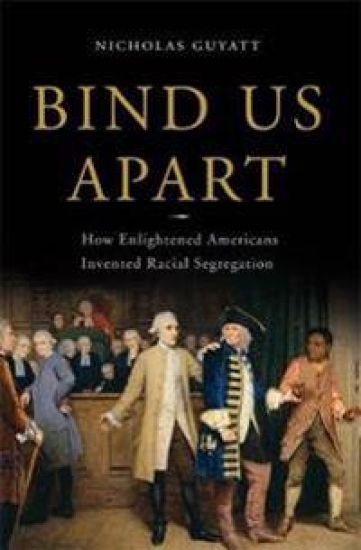
Why did the Founding Fathers fail to include blacks and Indians in their cherished proposition that all men are created equal"? The usual answer is racism, but the reality is more complex and unsettling. In Bind Us Apart , historian Nicholas Guyatt argues that, from the Revolution through the Civil War, most white liberals believed in the unity of all human beings. But their philosophy faltered when it came to the practical work of forging a colour-blind society. Unable to convince others,and themselves,that racial mixing was viable, white reformers began instead to claim that people of colour could only thrive in separate republics: in Native states in the American West or in the West African colony of Liberia. Herein lie the origins of separate but equal." Decades before Reconstruction, America's liberal elite was unable to imagine how people of colour could become citizens of the United States. Throughout the nineteenth century, Native Americans were pushed farther and farther westward, while four million slaves freed after the Civil War found themselves among a white population that had spent decades imagining that they would live somewhere else. Essential reading for anyone disturbed by America's ongoing failure to achieve true racial integration, Bind Us Apart shows conclusively that separate but equal" represented far more than a southern backlash against emancipation,it was a founding principle of our nation.
Have a Nice Doomsday

Have a Nice Doomsday

Nicholas Guyatt

Ebury Publishing
2008
pokkari
Journeying to the dusty heartlands of America's Bible Belt, Nicholas Guyatt goes in search of the truth behind a startling statistic: 50 million Americans believe the apocalypse will take place in their own lifetimes. They're convinced that, any day now, Jesus will snatch up his followers and spirit them to heaven.
Have a Nice Doomsday: Why Millions of Americans Are Looking Forward to the End of the World
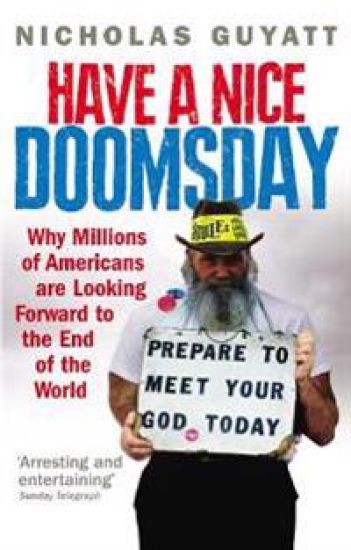
In Have a Nice Doomsday, Nicholas Guyatt searches for the truth behind a startling statistic: 50 million Americans have come to believe that the apocalypse will take place in their lifetime. They're convinced that, any day now, Jesus will snatch up his followers and spirit them to heaven. The rest of us will be left behind to endure massive earthquakes, devastating wars, and the terrifying rise of the Antichrist. But true believers aren't sitting around waiting for the Rapture. They're getting involved in debates over abortion, gay rights, and even foreign policy. Are they devout or deranged? Does their influence stretch beyond America's religious heartland--perhaps even to the White House?Journeying from Texas megachurches to the southern California deserts--and stopping off for a chat with prophecy superstar Tim LaHaye--Guyatt looks for answers to some burning questions: When will Russia attack Israel and ignite the Tribulation? Does the president of Iran appear in Bible prophecy? And is the Antichrist a homosexual?Bizarre, funny, and unsettling in equal measure, Have a Nice Doomsday uncovers the apocalyptic obsessions at the heart of the world's only superpower.
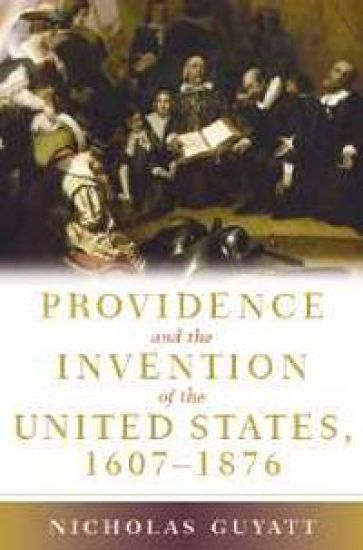
Providence and the Invention of the United States, 1607–1876

Providence and the Invention of the United States, 1607–1876

Nicholas Guyatt

Cambridge University Press
2007
pokkari
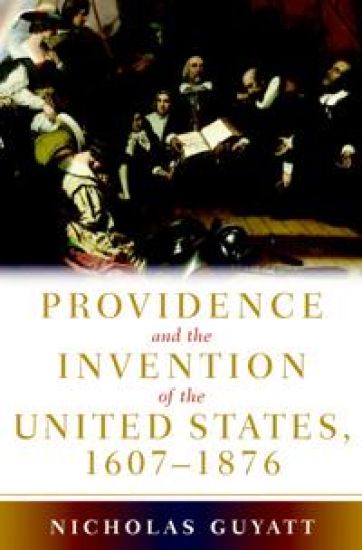
Nicholas Guyatt offers a completely new understanding of a central question in American history: how did Americans come to think that God favored the United States above other nations? Tracing the story of American providentialism, this book uncovers the British roots of American religious nationalism before the American Revolution and the extraordinary struggles of white Americans to reconcile their ideas of national mission with the racial diversity of the early republic. Making sense of previously diffuse debates on manifest destiny, millenarianism, and American mission, Providence and the Invention of the United States explains the origins and development of the idea that God has a special plan for America. This conviction supplied the United States with a powerful sense of national purpose, but it also prevented Americans from clearly understanding events and people that could not easily be fitted into the providential scheme.
Providence and the Invention of the United States, 1607–1876

Providence and the Invention of the United States, 1607–1876

Nicholas Guyatt

Cambridge University Press
2007
sidottu
Nicholas Guyatt offers a completely new understanding of a central question in American history: how did Americans come to think that God favored the United States above other nations? Tracing the story of American providentialism, this book uncovers the British roots of American religious nationalism before the American Revolution and the extraordinary struggles of white Americans to reconcile their ideas of national mission with the racial diversity of the early republic. Making sense of previously diffuse debates on manifest destiny, millenarianism, and American mission, Providence and the Invention of the United States explains the origins and development of the idea that God has a special plan for America. This conviction supplied the United States with a powerful sense of national purpose, but it also prevented Americans from clearly understanding events and people that could not easily be fitted into the providential scheme.
Another American Century

Another American Century

Nicholas Guyatt

Zed Books Ltd
2003
nidottu
Did September 11th change everything? Is George W. Bush responsible for America's international isolation? Why did the United States declare 'war on terror', and what does this war mean for the future of the world? Nicholas Guyatt answers these questions with a sweeping and penetrating study of the United States since the end of the Cold War. In doing so, he reveals the economic, diplomatic and military dimensions of American foreign policy, and investigates what Americans say and believe about their relationship with the rest of the world. A major new chapter discusses September 11th, the wars in Afghanistan and Iraq, and the motives and ideas behind America's 'war on terror'.
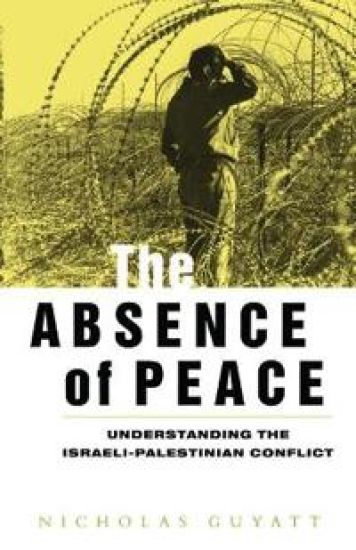
The Absence of Peace

The Absence of Peace

Nicholas Guyatt

Zed Books Ltd
1998
nidottu
Why does the Israeli army still occupy the vast majority of the West Bank? Why has the Palestinian standard of living declined dramatically since the beginning of the Oslo peace process? Why do suicide bombers attack Israel's cities? Fifty years after Israel's founding, why is there no peace between Israelis and Palestinians? The Absence of Peace offers an answer to all these questions, combining an analysis of the political events surrounding the Oslo process with an account of life on the ground in the West Bank and Gaza Strip under the 'peace' regime. Nicholas Guyatt explains the historical context of the latest peace efforts and the motives and interests of the various players, regional and international, who are party to the agreements. This book also plots the disastrous course on which the present peace process is headed, towards a greater Israel, a series of Palestinian reservations and even more violence between the two sides. Most importantly, The Absence of Peace rejects the suggestions that there is no solution to the conflict, and offers practical ideas for a more stable and enduring agreement between Palestinians and Israelis.