Kirjojen hintavertailu. Mukana 12 390 323 kirjaa ja 12 kauppaa.
Kirjailija
Nicholas Herman
Kirjat ja teokset yhdessä paikassa: 5 kirjaa, julkaisuja vuosilta 2007-2021, suosituimpien joukossa Brother Lawrence: The Practice of the Presence of God the Best Rule of a Holy Life. Vertaile teosten hintoja ja tarkista saatavuus suomalaisista kirjakaupoista.
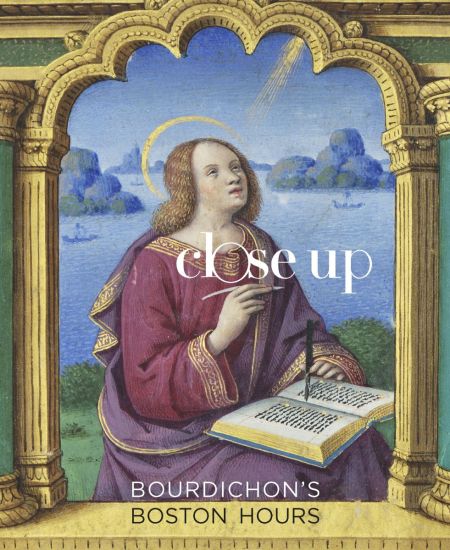
An absorbing exploration of the crown jewel of the Isabella Stewart Gardner Museum's collection of rare books and manuscripts: Jean Bourdichon's Boston Hours. Jean Bourdichon remains today one of the most celebrated artists of the French Renaissance. Painter to two kings, Bourdichon produced paintings, books, and even parade floats for the sovereign and his entourage. His illustrious career at the French royal court led to a wide range of commissions—from portraits to wall maps to stained glass—but he is remembered principally for astonishing illuminated manuscripts. One of these masterpieces is Boston Hours, his only intact book of hours in the United States. Acquired by Isabella Stewart Gardner in 1890, it became the most prized of her collection of rare books and manuscripts. Leading scholars Anne-Marie Eze and Nicholas Herman explore its history in depth, shedding new light on the book's patronage and provenance—from the shelves of a wealthy Catholic landowner in Lincolnshire to the shop of a Venetian art and antiques dealer.
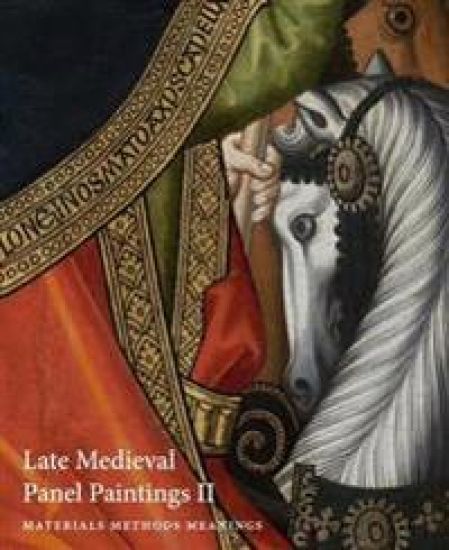
This beautiful and extensively illustrated catalogue presents in-depth case studies of twenty-four rare and remarkable Late Medieval panel paintings, many from the German-speaking regions of Europe, but also from Spain, France and the Southern Netherlands. These works – often fragments of larger altarpieces designed for liturgical performance and communal or private devotion – can be monumental and dramatic or small and intimate, but all on close examination prove to be rich in meaning – even in cases where the painters remain anonymous, and the precise contexts of their creation have become obscured or fragmented. The collected essays will encompass a broad spectrum of artistic styles, techniques, and interests, including in some instances the works’ original frames, and the attendant meanings they give to the imagery housed within. The group will also be augmented by a rare and important small-scale tapestry altarpiece with close links to panel painting. The inclusion of such a piece, one of the many newly resurfaced works to be included in the catalogue, will offer an innovative approach to the scholarship of Medieval paintings, and enrich our understanding of the cross-pollination of ideas between mediums and the role played by painters in tapestry production at the turn of the sixteenth century. The book, a follow-up to Susie Nash’s important 2011 catalogue, considers the physical history, original form, condition and technique of the assembled works, using wood analysis and dendrochronology, paint samples, infrared, x-rays and macro photography to document the materials and methods involved in their making and the alterations and transformations they have undergone with time. This new information is combined with close readings of their imagery and its presentation to explore issues of meaning, creative process, patronal intervention and artistic intention, leading in many cases to new reconstructions, attributions, dates and iconographic readings. The text is extensively illustrated with a series of images of all of the works, along with technical photographs and comparative material.
Brother Lawrence was born Nicolas Herman in H rim nil, near Lun ville in the region of Lorraine, located in modern day eastern France. Having felt he had received a revelation of the providence and power of God at the age of 18, within six years he joined the Discalced Carmelite Priory in Paris. In this intervening period he fought in the Thirty Years' War and later served as a valet. Nicolas entered the priory in Paris as a lay brother, not having the education necessary to become a cleric, and took the religious name, "Lawrence of the Resurrection". He spent almost all of the rest of his life within the walls of the priory, working in the kitchen for most of his life and as a repairer of sandals in his later years. Despite his lowly position in life and the priory, his character attracted many to him. He had a reputation for experiencing profound peace and visitors came to seek spiritual guidance from him. The wisdom he passed on to them, in conversations and in letters, would later become the basis for the book, The Practice of the Presence of God. Father Joseph de Beaufort, later vicar general to the Archbishop of Paris, compiled this work after Brother Lawrence died. It became popular among Catholics and Protestants alike, with John Wesley and A. W. Tozer recommending it to others. As a young man, Herman's poverty forced him into joining the army, which guaranteed him meals and a small stipend. During this period, Herman claimed an experience that set him on a unique spiritual journey. He considered it a supernatural clarity into a common sight, more so than as a supernatural vision. During the winter, Herman looked at a barren tree, stripped of leaves and fruit, and realized it awaited the sure hope of a springtime revival and summer abundance. Gazing at the tree, Herman grasped deeply the extravagance of God's grace and the unfailing sovereignty of divine providence. Like the tree, he felt seemingly dead, but held hope that God had life waiting for him, and the turn of seasons would bring fullness. At that moment, he said, that leafless tree "first flashed in upon my soul the fact of God," and a love for God that never ceased. Shortly after, an injury forced his retirement from the army, and after a stint as a footman, he sought a place where he could suffer for his failures. He thus entered the Discalced Carmelite monastery in Paris as Brother Lawrence. This is an out-of-print manuscript. All pages are intact and it has been carefully reviewed.