Kirjojen hintavertailu. Mukana 12 595 353 kirjaa ja 12 kauppaa.

Kirjailija

Nicholas Jenkins

Kirjat ja teokset yhdessä paikassa: 4 kirjaa, julkaisuja vuosilta 2017-2026, suosituimpien joukossa The Island. Vertaile teosten hintoja ja tarkista saatavuus suomalaisista kirjakaupoista.

4 kirjaa

Kirjojen julkaisuhaarukka 2017-2026.

The Island: War and Belonging in Auden's England
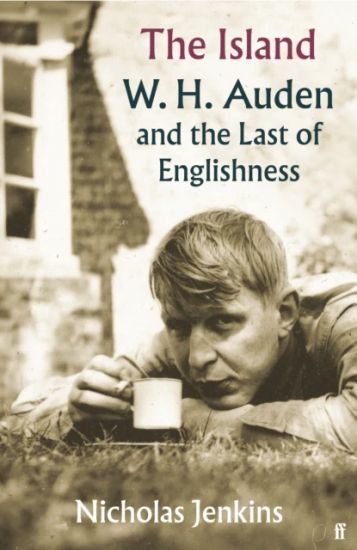
A Times Literary Supplement Best Book of the Year A groundbreaking reassessment of W. H. Auden's early life and poetry, shedding new light on his artistic development as well as on his shifting beliefs about political belonging in interwar England. W. H. Auden's early works, from his first poems in 1922 to the publication of his landmark collection On This Island in the mid-1930s, are prized for their psychological depth. Yet Nicholas Jenkins argues that they are political poems as well, illuminating Auden's intuitions about a key aspect of modern experience: national identity. The Island presents a new picture of Auden as he explored a genteel, lyrical nationalism in response to World War I. Amid artists' and intellectuals' "rediscovery" of England's rural landscapes, Auden's poems reflect on a world in ruins while cultivating visions of a beautiful--if morally compromised--English isle. They also speak to aspects of Auden's personal search for belonging, including his negotiation of the codes that structured gay life. As Europe veered toward a second immolation, Auden began to realize that poetic myths centered on English identity held little potential. Reexamining one of the twentieth century's most moving and controversial poets, The Island is a fresh account of Auden's early works and a striking parable about the politics of modernism.
The Island

The Island

Nicholas Jenkins

FABER FABER
2026
nidottu
Winner of the 2024 Warren-Brooks Award for Outstanding Literary Criticism Winner of the Northern California Book Award for General Nonfiction 'The Island makes an outstanding contribution to our knowledge of both Auden's intentions and his achievement in the first part of his writing life.' Andrew Motion, New Statesman 'Jenkins, miner-like, digs down into the verse and brings every influence up to the surface . . . a richly striated landscape, not only in complexity of mood, but also courtesy of its cast of strange, dazzling and sometimes highly dubious characters.' Rachel Cooke, Observer Nicholas Jenkins's The Island is daring in its ideas, written with loving tenderness and implacably true in its revisionism. Jenkins shows Auden's mentality to have been graven by the Great War, proves his youthful aspiration to become an English national poet and renews our sense of the numinous.' Richard Davenport-Hines, TLS, Books of the Year '[The Island is] a dense, detailed and hugely rewarding account of the making of this very English poet before he became an American one.' Peter Parker, TLS Books of the Year 'In The Island (Faber, £25), an epic study of the young W.H. Auden, Nicholas Jenkins brilliantly scales up fine-grained literary criticism into wide-angled cultural history.' Boyd Tonkin, Spectator A groundbreaking reassessment of W. H. Auden's early life and poetry, shedding new light on his artistic development as well as on his shifting beliefs about political belonging in interwar England. W. H. Auden is a towering figure in modern literary history with a complex private self. Hannah Arendt wrote that he had 'the necessary secretiveness of the great poet'. The Island lays bare for the first time some of the most telling 'secrets' of Auden's early poetry, his world, his emotional life, his values and the sources of his art. In a book that is an argument but also a story, Nicholas Jenkins gives compelling readings of iconic poems. He presents Auden in the inter-War years as both a visionary writer, creatively dependent on dreams and intuitions, and a traumatized poet, haunted by war and suffering, and shadowed by his outsider status as a privileged but queer man. The Island considers, as well, Auden's imaginative flirtations with a lyrical nationalism appealing to a poet who, for a while, felt his psyche was like a map of English culture. The narrative ends in Auden's disillusionment with these potent myths and beliefs and the time when he left 'the island'. Auden's preoccupations - with the vicissitudes of war and the problems of love, belonging and identity - are of their time but they still resonate profoundly today. 'A superb, deeply researched study of Auden's early work and identity. Jenkins's understanding of young Auden as a poet shaped and haunted by the First World War - assimilating the influence of Wilfred Owen, Edward Thomas, Robert Graves, and W. H. R. Rivers - is convincing, original, and poignant. Fusing biography, cultural history, and literary criticism in innovative and elegant ways, The Island is a landmark publication in modernist studies.' Heather Clark, author of Red Comet: The Short Life and Blazing Art of Sylvia Plath 'Nicholas Jenkins is one of our most perceptive and resourceful critics. In this wonderful study of the early Auden, he brings to bear history, biography, and an acute sense of the artistic moment to fashion for us a young genius who is conservative, bucolic, gay, a patriotic adherent of post-imperial Little England. Most people work backwards from a writer's ultimate reputation, but Jenkins gives us a new, unexpected image of a poet developing in the aftermath of World War I and the collapse of modernism.' Edmund White, author of The Humble Lover 'The Island is a Copernican Revolution in Auden studies, a revelatory and often exciting book that presents a new and convincing account of Auden's early years. It explores, for the first time, the deep connections between the inner workings of his poems and the worlds of politics and economics. By bringing to light Auden's ambition to be a national poet, Jenkins transforms our understanding of not only Auden himself but all of modernist literature.' Edward Mendelson, author of Early Auden and Later Auden
The Island

The Island

Nicholas Jenkins

FABER FABER
2024
sidottu
A groundbreaking reassessment of W. H. Auden's early life and poetry, shedding new light on his artistic development as well as on his shifting beliefs about political belonging in interwar England.W. H. Auden is a towering figure in modern literary history with a complex private self. Hannah Arendt wrote that he had 'the necessary secretiveness of the great poet'. The Island lays bare for the first time some of the most telling 'secrets' of Auden's early poetry, his world, his emotional life, his values and the sources of his art.In a book that is an argument but also a story, Nicholas Jenkins gives compelling readings of iconic poems. He presents Auden in the inter-War years as both a visionary writer, creatively dependent on dreams and intuitions, and a traumatized poet, haunted by war and suffering, and shadowed by his outsider status as a privileged but queer man.The Island considers, as well, Auden's imaginative flirtations with a lyrical nationalism appealing to a poet who, for a while, felt his psyche was like a map of English culture. The narrative ends in Auden's disillusionment with these potent myths and beliefs and the time when he left 'the island'.Auden's preoccupations - with the vicissitudes of war and the problems of love, belonging and identity - are of their time but they still resonate profoundly today. 'A superb, deeply researched study of Auden's early work and identity. Jenkins's understanding of young Auden as a poet shaped and haunted by the First World War - assimilating the influence of Wilfred Owen, Edward Thomas, Robert Graves, and W. H. R. Rivers - is convincing, original, and poignant. Fusing biography, cultural history, and literary criticism in innovative and elegant ways, The Island is a landmark publication in modernist studies.'Heather Clark, author of Red Comet: The Short Life and Blazing Art of Sylvia Plath'Nicholas Jenkins is one of our most perceptive and resourceful critics. In this wonderful study of the early Auden, he brings to bear history, biography, and an acute sense of the artistic moment to fashion for us a young genius who is conservative, bucolic, gay, a patriotic adherent of post-imperial Little England. Most people work backwards from a writer's ultimate reputation, but Jenkins gives us a new, unexpected image of a poet developing in the aftermath of World War I and the collapse of modernism.'Edmund White, author of The Humble Lover'The Island is a Copernican Revolution in Auden studies, a revelatory and often exciting book that presents a new and convincing account of Auden's early years. It explores, for the first time, the deep connections between the inner workings of his poems and the worlds of politics and economics. By bringing to light Auden's ambition to be a national poet, Jenkins transforms our understanding of not only Auden himself but all of modernist literature.'Edward Mendelson, author of Early Auden and Later Auden

Renewable Energy Engineering

Renewable Energy Engineering

Nicholas Jenkins; Janaka Ekanayake

Cambridge University Press
2017
sidottu
This book provides a quantitative yet accessible overview of renewable energy engineering practice and the technologies that will transform our energy supply system over the coming years. Covering wind, hydro, solar thermal, photovoltaic, ocean and bioenergy, the text is suitable for engineering undergraduates as well as graduate students from other numerate degrees. The technologies involved, background theory and how projects are developed, constructed, and operated are described. Worked examples of the simple techniques used to calculate the output of renewable energy schemes engage students by showing how theory relates to real applications. Tutorial chapters provide background material, supporting students from a range of disciplines and ensuring they receive the broad understanding essential for a successful career in the field. Over 150 end-of-chapter problems are included with answers to the problems available in the book and full solutions at www.cambridge.org/jenkins, password-protected for instructors.