Kirjojen hintavertailu. Mukana 12 390 323 kirjaa ja 12 kauppaa.

Kirjailija

Nicholas Jones

Kirjat ja teokset yhdessä paikassa: 8 kirjaa, julkaisuja vuosilta 2008-2020, suosituimpien joukossa Poems for Dawn. Vertaile teosten hintoja ja tarkista saatavuus suomalaisista kirjakaupoista.

8 kirjaa

Kirjojen julkaisuhaarukka 2008-2020.

The Music of Peter Maxwell Davies

The Music of Peter Maxwell Davies

Nicholas Jones; Richard McGregor

The Boydell Press
2020
sidottu
Peter Maxwell Davies (1934-2016) was one of the leading international composers of the post-war period as well as one of the most productive. Peter Maxwell Davies (1934-2016) was one of the leading international composers of the post-war period as well as one of the most productive. This book provides a global view of his music, integrating a number of resonant themes in the composer's work while covering a representative cross-section of his vast output - his work list encompasses nearly 550 compositions in every established genre. Each chapter focuses on specific major works and offers generaldiscussion of other selected works connected to the main themes. These themes include compositional technique and process; genre; form and architecture; tonality and texture; allusion, quotation and musical critique; and place and landscape. Throughout, the book contends that Davies's works are not created in a vacuum but are intimately connected to, and are a reflection of, 'the past'. This deep engagement occurs on a number of levels, fluctuating and interacting with the composer's own predominantly modernist idiom and evoking a chain of historical resonances. Making sustained reference to Davies's own words, articles and programme notes as well as privileged access to primary source material from his estate, the book illuminates the composer's practices and approaches while shaping a discourse around his music.
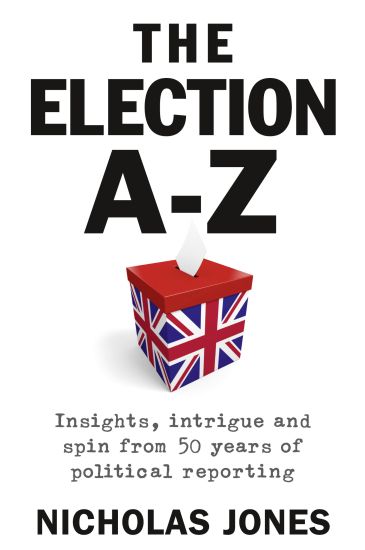
The Election A-Z

The Election A-Z

Nicholas Jones

Urbane Publications
2016
nidottu
For his fifth general election book, Nicholas Jones presents a personal A-Z of election highlights and insights from fifty years of political reporting. Jones was a parliamentary and political reporter for The Times in the late 1960s and joined the BBC in the mid-1970s where he was an industrial and political correspondent for thirty years. In his A-Z he draws on his experiences of reporting a dozen general elections. He offers a selection of untold stories and commentaries on political intrigues and changing political fortunes, from the Wilson and Callaghan era, through the Thatcher decade, the Premierships of John Major, Tony Blair and Gordon Brown and on to the unprecedented post-war coalition government led by David Cameron. From election battle buses to shadowy world of election fixers, from the pitfalls of campaigning to the highs and lows of an election results night, Jones reflects on fifty years of political unpredictability and the love-hate relationship between politicians and the media. Such has been the speculation in the lead-up to the 2015 general election (and the prospect of political fragmentation and another hung Parliament) that Jones A-Z will offer a welcome perspective on momentous elections of the past, as witnessed during a lifetime of political reporting. Nick's previous election books: Election 92, Campaign 1997, Campaign 2001 and Campaign 2010; other titles include Soundbites and Spin Doctors, Sultans of Spin and Trading Information: Leaks, Lies and Tip-offs
The Courts of Genocide

The Courts of Genocide

Nicholas Jones

Routledge Cavendish
2011
nidottu
The Courts of Genocide focuses on the judicial response to the genocide in Rwanda in order to address the search for justice following mass atrocities. The central concern of the book is how the politics of justice can get in the way of its administration. Considering both the ICTR (International Criminal tribunal for Rwanda), and all of the politics surrounding its work, and the Rwandan approach (the Gacaca courts and the national judiciary) and the politics that surround it, The Courts of Genocide addresses the relationship between these three 'courts' which, whilst oriented by similar concerns, stand in stark opposition to each other. In this respect, the book addresses a series of questions, including: What aspects of the Rwandan genocide itself played a role in directing the judicial response that has been adopted? On what basis did the government of Rwanda decide to address the genocide in a legalistic manner? Around what goals has each judicial response been organized? What are the specific procedures and processes of this response? And, finally, what challenges does its multifaceted character create for those involved in its operation, well as for Rwandan society? Addressing conceptual issues of restorative and retributive justice, liberal legalism and cosmopolitan law, The Courts of Genocide constitutes a substantially grounded reflection upon the problem of 'doing justice' after genocide.
The Courts of Genocide

The Courts of Genocide

Nicholas Jones

Routledge Cavendish
2009
sidottu
The Courts of Genocide focuses on the judicial response to the genocide in Rwanda in order to address the search for justice following mass atrocities. The central concern of the book is how the politics of justice can get in the way of its administration. Considering both the ICTR (International Criminal tribunal for Rwanda), and all of the politics surrounding its work, and the Rwandan approach (the Gacaca courts and the national judiciary) and the politics that surround it, The Courts of Genocide addresses the relationship between these three 'courts' which, whilst oriented by similar concerns, stand in stark opposition to each other. In this respect, the book addresses a series of questions, including: What aspects of the Rwandan genocide itself played a role in directing the judicial response that has been adopted? On what basis did the government of Rwanda decide to address the genocide in a legalistic manner? Around what goals has each judicial response been organized? What are the specific procedures and processes of this response? And, finally, what challenges does its multifaceted character create for those involved in its operation, well as for Rwandan society? Addressing conceptual issues of restorative and retributive justice, liberal legalism and cosmopolitan law, The Courts of Genocide constitutes a substantially grounded reflection upon the problem of 'doing justice' after genocide.