Kirjojen hintavertailu. Mukana 12 595 353 kirjaa ja 12 kauppaa.

Kirjailija

Nicholas Laughlin

Kirjat ja teokset yhdessä paikassa: 5 kirjaa, julkaisuja vuosilta 2015-2019, suosituimpien joukossa BAT: Bridging Art + Text. Vertaile teosten hintoja ja tarkista saatavuus suomalaisista kirjakaupoista.

5 kirjaa

Kirjojen julkaisuhaarukka 2015-2019.

BAT: Bridging Art + Text

BAT: Bridging Art + Text

Michelle Eistrup; Anders Juhl; Bárbaro Martìnez-Ruìz; C. Daniel Dawson; Carlos Moore; Christopher Cozier; Dudley Joseph Thompson; Ebony G. Patterson; Ery Cámara; James Muriuki; Joseph Adandé; Kenneth Dossar; Nicholas Laughlin; Robert Farris Thompson; Britt Kramvig; Catherine Lefebvre; Charl Landvreugd; Gillion Grantsaan; Jeannette Ehlers; Noufel Bouzeboudja; Patricia Kaersenhout; Sasha Huber; Søren Assenholt; Temi Odumosu; Yo-Yo Gonthier; Yvette Brackman m.fl.

Hurricane
2017
muu
BAT: Bridging Art + Text viser komplekse historiske og nutidige forbindelser med værker og tekster af over 50 internationale kunstnere, forskere, kuratorer og forfattere.Bind I præsenterer kunst og performance med spiritualitet. Bind II præsenterer kunstnerne, som modarbejder racisme og diskrimination, og fremmer forskellige stemmer og identiteter. Bind III fokuserer på kritik af historiske hændelser og deres påvirkning af vores samtid.Med: Anders Juhl, Britt Kramvig, Catherine Lefebvre, Charl Landvreugd, Gillion Grantsaan, Jeannette Ehlers, Noufel Bouzeboudja, Patricia Kaersenhout, Sasha Huber, Søren Assenholt, Temi Odumosu, Yo-Yo Gonthier, Yvette Brackman m.fl.
Enemy Luck

Enemy Luck

Nicholas Laughlin

Peepal Tree Press Ltd
2019
nidottu
In using an epigraph from the 18th century poet Christopher Smart, for years incarcerated in the madhouse (“For I am not without authority in my jeopardy”), Nicholas Laughlin stakes his case for a poetics of radical innocence (for “The less you know, the less mistaken”) that includes the accidental, the punning slip, the puzzlingly axiomatic, (“You bruise a grammar before it bruises you”). Indeed, when a poem speaks of “the unstable topography” of dreams, some readers may feel they have arrived at a more stable and recognisable place. This is a poetics by no means without Caribbean precedent. Like the brilliant Jamaican poet, Anthony McNeill with his “mutants” (retained typos), for Laughlin “Errors are not accidents”.Enemy Luck is almost an encyclopaedia of ingenious devices and forms: cut-outs that hint at kidnapping threats; a poem that resembles the often mystifying chapter summaries of the 19th century novel (in which…); visits to geographical territories mutated from a Wilson Harris fiction (Borges is also an inspiration); found fragments; lengthier extracts from a variety of sources, from Strabo to Oliver Goldsmith, whose meaning is changed by their new contexts; Poundian translations where the original is absorbed into a characteristic Laughlin voice rather than being attempts to replicate the original; an index to some fugitive travel narrative that invites the reader to construct their own story; seemingly absurd narratives that make perfectly good sense; seemingly realistic narratives that mystify like an Escher building; a cast of personas from Cousin Hermes to King Q.Here is a collection that invites us to active reading, to picking up clues, to inserting ourselves into the dialogue between the poems. Above all, Nicholas Laughlin challenges us to think about the expectations and accumulated experiences we bring to the shaping influence of a variety of literary forms – and helps us to deconstruct them.
So Many Islands: Stories from the Caribbean, Mediterranean, Indian, and Pacific Oceans
"The 17 selections of fiction, nonfiction, and poetry in this vibrant collection unite the voices of islanders from around the globe, complete with an excellent introduction by Marlon James . . . Readers encounter the language, customs, and flora and fauna of many island nations in this delightful and enlightening volume, an invitation to share and experience islands around the globe." --Publishers Weekly, Starred Review "As an anthology, this collection of work is amazingly well-rounded . . . This collection is a unique and worthy addition to any library . . . These writers offer a window into genuine, unglazed local life in far-flung, ill-understood parts of the world. It's a gift beyond price." --Sinkhole Magazine Collecting new fiction, essays, and poems from seventeen countries around the world, So Many Islands brings us stories about love and protest, about childhood innocence and the traumas of history, about leaving home and trying to return. These writers' island homes may seem remote on the map, but there is nothing isolated about their compelling, fresh voices. Featuring contributions by authors from Antigua and Barbuda, Barbados, Bermuda, Cyprus, Grenada, Jamaica, Kiribati, Malta, Mauritius, Niue, Rotuma (Fiji), Samoa, Singapore, Saint Lucia, Saint Vincent and the Grenadines, Tonga, and Trinidad and Tobago. So Many Islands is the fourth publication of Peekash Press, an imprint of Akashic Books and Peepal Tree Press, committed to supporting the emergence of new Caribbean writing, and as part of the CaribLit project. From the introduction by Marlon James: I wonder if it is because we island people are surrounded by sea, hemmed in and branching out at once, that we are always in a state of flux. The sea and even the sky are definers and confiners, they have spent millions of years carving space, while at the same time giving us clear openings to map the voyage out. And, today, to be an islander is to live in one place and a thousand, to be part of a family that is way too close by for your business ever to be your own, or way too far but only a remittance cheque away. Or, put another way, to be island people means to be both coming and going. Passing and running, running and passing, as the song goes. Living there, but not always present, travelling or migrating, but never leaving. Or what has never been a new thing but might turn into a new movement: more and more authors staying put, all the better to let their words wander.
So Many Islands: Stories from the Caribbean, Mediterranean, Indian, and Pacific Oceans
"The 17 selections of fiction, nonfiction, and poetry in this vibrant collection unite the voices of islanders from around the globe, complete with an excellent introduction by Marlon James . . . Readers encounter the language, customs, and flora and fauna of many island nations in this delightful and enlightening volume, an invitation to share and experience islands around the globe." --Publishers Weekly, Starred Review "As an anthology, this collection of work is amazingly well-rounded . . . This collection is a unique and worthy addition to any library . . . These writers offer a window into genuine, unglazed local life in far-flung, ill-understood parts of the world. It's a gift beyond price." --Sinkhole Magazine Collecting new fiction, essays, and poems from seventeen countries around the world, So Many Islands brings us stories about love and protest, about childhood innocence and the traumas of history, about leaving home and trying to return. These writers' island homes may seem remote on the map, but there is nothing isolated about their compelling, fresh voices. Featuring contributions by authors from Antigua and Barbuda, Barbados, Bermuda, Cyprus, Grenada, Jamaica, Kiribati, Malta, Mauritius, Niue, Rotuma (Fiji), Samoa, Singapore, Saint Lucia, Saint Vincent and the Grenadines, Tonga, and Trinidad and Tobago. So Many Islands is the fourth publication of Peekash Press, an imprint of Akashic Books and Peepal Tree Press, committed to supporting the emergence of new Caribbean writing, and as part of the CaribLit project. From the introduction by Marlon James: I wonder if it is because we island people are surrounded by sea, hemmed in and branching out at once, that we are always in a state of flux. The sea and even the sky are definers and confiners, they have spent millions of years carving space, while at the same time giving us clear openings to map the voyage out. And, today, to be an islander is to live in one place and a thousand, to be part of a family that is way too close by for your business ever to be your own, or way too far but only a remittance cheque away. Or, put another way, to be island people means to be both coming and going. Passing and running, running and passing, as the song goes. Living there, but not always present, travelling or migrating, but never leaving. Or what has never been a new thing but might turn into a new movement: more and more authors staying put, all the better to let their words wander.
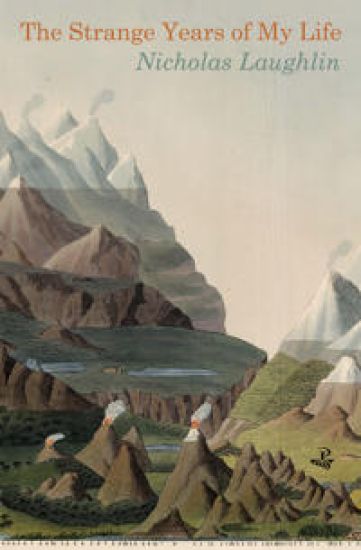
The Strange Years of My Life

The Strange Years of My Life

Nicholas Laughlin

Peepal Tree Press Ltd
2015
nidottu
"I never thought I would come all this wayto come all this way."The troupe of "friends" and "strangers" whom the reader meets in these poems are sometimes alter egos, sometimes aliases, sometimes adversaries. Located in worlds such as those of French film noir, spy movies, and travellers' tales, they inhabit a milieu of mistaken identity, deliberate disguise and random encounters in hotels. For the voyager, "there are too many wrong countries" and "already no one remembers you at home." Despite the book's title, these poems are rarely autobiographical - though the tastes they reveal are intriguing - and they have few straightforward stories to tell. They are subtly humorous at one turn, sinister at another, heartbroken at the next. They puzzle over accidents, coincidences, and moments of passion, as they edge towards a sense of the world's curious strangeness, the complications of history and the encounters brought by the geography of migration. Poems balance on the edge between concealment and revelation, between bemused fascination and tentative comprehension. Yet for all the disguises, the book offers glimpses of a distinctive and engaging sensibility involved with art, language and the nature of love. While Trinidad is scarcely mentioned, this is, if obliquely, the work of a poet trying to make sense of what it means to write in such an island society.