Kirjojen hintavertailu. Mukana 12 595 353 kirjaa ja 12 kauppaa.

Kirjailija

Nicholas Orme

Kirjat ja teokset yhdessä paikassa: 22 kirjaa, julkaisuja vuosilta 1983-2026, suosituimpien joukossa Chaucer's England. Vertaile teosten hintoja ja tarkista saatavuus suomalaisista kirjakaupoista.

22 kirjaa

Kirjojen julkaisuhaarukka 1983-2026.

Chaucer's England

Chaucer's England

Nicholas Orme

YALE UNIVERSITY PRESS
2026
sidottu
A lively account of medieval England through the eyes of its most famous poet and chronicler Who were Chaucer’s thirty-three pilgrims, and why were they heading to Canterbury? What do they and their tales tell us about medieval England as a place and the daily lives of its people? Nicholas Orme, one of our leading historians, brings literature and history together to answer this question, using the Canterbury Tales and the other great writings of Chaucer’s day. In ten chapters, he explains what people thought: about time and space, religion and the social system. He shows their wide degree of literacy and how they spent their leisure. He takes us through the politics of the day, the crusades, and the lifestyles of the nobility, clergy, townsfolk and country dwellers, along with the landscapes they lived in. This is an intimate and intriguing guide to the world which produced the first poetry in Middle English, recreating Chaucer’s England in all its richness and variety.
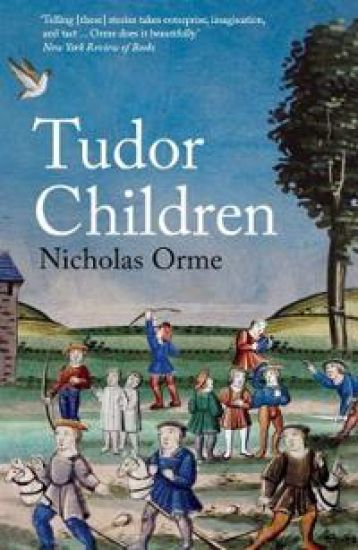
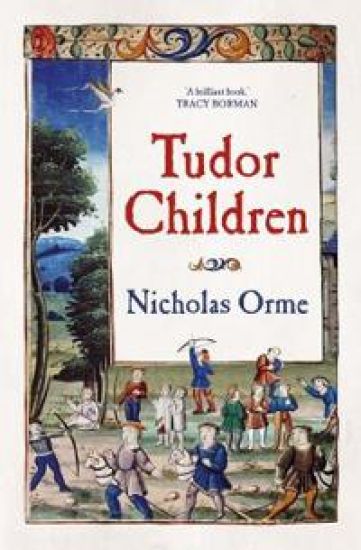
Tudor Children

Tudor Children

Nicholas Orme

YALE UNIVERSITY PRESS
2024
pokkari
The first history of childhood in Tudor England “Tudor Children is social history at its best. . . . By connecting with our own history as children, Orme invites us to embrace a new way of engaging with the past.”—Joanne Paul, Times (UK) What was it like to grow up in England under the Tudors? How were children cared for, what did they play with, and what dangers did they face? In this beautifully illustrated and characteristically lively account, leading historian Nicholas Orme provides a rich survey of childhood in the period. Beginning with birth and infancy, he explores all aspects of children’s experiences, including the games they played, such as Blind Man’s Bluff and Mumble-the-Peg, and the songs they sang, such as “Three Blind Mice” and “Jack Boy, Ho Boy.” He shows how social status determined everything from the food children ate and the clothes they wore to the education they received and the work they undertook. Although childhood and adolescence could be challenging and even hazardous, it was also, as Nicholas Orme shows, a treasured time of learning and development. By looking at the lives of Tudor children we can gain a richer understanding of the era as a whole.
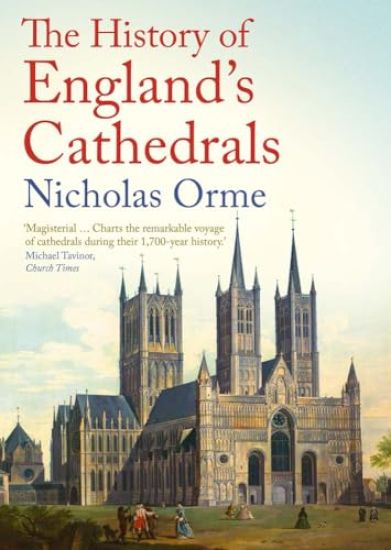
The History of England's Cathedrals

The History of England's Cathedrals

Nicholas Orme

YALE UNIVERSITY PRESS
2024
pokkari
The first history of all the English cathedrals, from Birmingham and Bury St Edmunds to Worcester and York Minster England’s sixty-two Anglican and Catholic cathedrals are some of our most iconic buildings, attracting millions of worshippers and visitors every year. Yet although much has been written about their architecture, there is no complete history of their life and activities. This is the first such book to provide one, stretching from Roman times to the present day. The History of England’s Cathedrals explains where and why they were founded, who staffed them, and how their structures evolved. It describes their worship and how this changed over the centuries, their schools and libraries, and their links with the outside world. The history of these astonishing buildings is the history of England. Reading this book will bring you face to face with the Anglo-Saxons, Vikings, Normans, Reformation, Civil War, Victorian England, World War Two, and finally modern democracy.
Tudor Children

Tudor Children

Nicholas Orme

YALE UNIVERSITY PRESS
2023
sidottu
The first history of childhood in Tudor England “Tudor Children is social history at its best. . . . By connecting with our own history as children, Orme invites us to embrace a new way of engaging with the past.”—Joanne Paul, Times (UK) What was it like to grow up in England under the Tudors? How were children cared for, what did they play with, and what dangers did they face? In this beautifully illustrated and characteristically lively account, leading historian Nicholas Orme provides a rich survey of childhood in the period. Beginning with birth and infancy, he explores all aspects of children’s experiences, including the games they played, such as Blind Man’s Bluff and Mumble-the-Peg, and the songs they sang, such as “Three Blind Mice” and “Jack Boy, Ho Boy.” He shows how social status determined everything from the food children ate and the clothes they wore to the education they received and the work they undertook. Although childhood and adolescence could be challenging and even hazardous, it was also, as Nicholas Orme shows, a treasured time of learning and development. By looking at the lives of Tudor children we can gain a richer understanding of the era as a whole.
Ten Cathedral Ghosts

Ten Cathedral Ghosts

Nicholas Orme

The Self-Publishing Partnership Ltd
2022
nidottu
Acester (known as Ayster) is one of England’s oldest cathedrals. It is also home to a startling assortment of ghosts. They include a bishop’s skeleton, a mischievous imp, a Jacobean actor, an eighteenth-century murderer, a woman in a mirror, a legless and an eyeless ghost, a mysterious chorister, and an ugly spider. Meanwhile, alongside the ghosts, the busy life of a modern cathedral goes on, spiced by the sparrings between a rather vague Dean and a very acerbic Canon. This is a book for all who love stories of ghosts and clergy life in the Church of England.
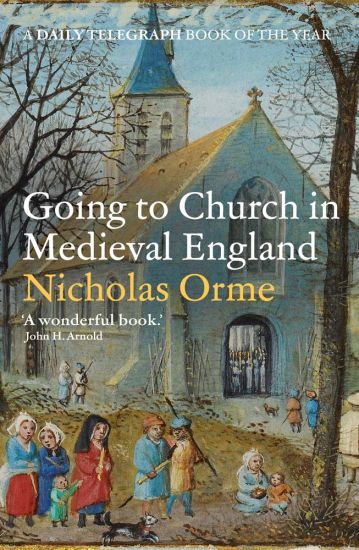
Going to Church in Medieval England

Going to Church in Medieval England

Nicholas Orme

YALE UNIVERSITY PRESS
2022
pokkari
An engaging, richly illustrated account of parish churches and churchgoers in England, from the Anglo-Saxons to the mid-sixteenth century Parish churches were at the heart of English religious and social life in the Middle Ages and the sixteenth century. In this comprehensive study, Nicholas Orme shows how they came into existence, who staffed them, and how their buildings were used. He explains who went to church, who did not attend, how people behaved there, and how they—not merely the clergy—affected how worship was staged. The book provides an accessible account of what happened in the daily and weekly services, and how churches marked the seasons of Christmas, Lent, Easter, and summer. It describes how they celebrated the great events of life: birth, coming of age, and marriage, and gave comfort in sickness and death. A final chapter covers the English Reformation in the sixteenth century and shows how, alongside its changes, much that went on in parish churches remained as before.
From Childhood to Chivalry

From Childhood to Chivalry

Nicholas Orme

Routledge
2019
nidottu
Originally published in 1984, this is a study of the kings and the aristocracy who ruled England between the Conquest and the Reformation. Not, as usual, about their adult lives, but how they became the people they were through childhood and education. The first such study of its kind, it follows noble boys and girls from birth through the care of their nurses, masters and mistresses, until they left home for further training in noble households, monasteries and universities. The author examines the theories and treatises on noble education, again for the first time.The rest of the book broadens into a wide cultural survey as Dr Orme describes the skills and ideas which noble children learnt. He explains how they mastered speech and literacy; worship and behaviour; dancing, music and applied art; athletics and training for war. This part of the study is a handbook of noble pursuits in medieval times. In his final chapter the author considers the nature of noble education in the middles ages, and examines how and whether it changed at the Renaissance. Nicholas Orme has written a comprehensive study, spanning 450 years of English history and making a major contribution to social and cultural history, as well as the history of education. His book will be invaluable to historians and medievalists of all disciplines, and essential reading from those who study the Renaissance.
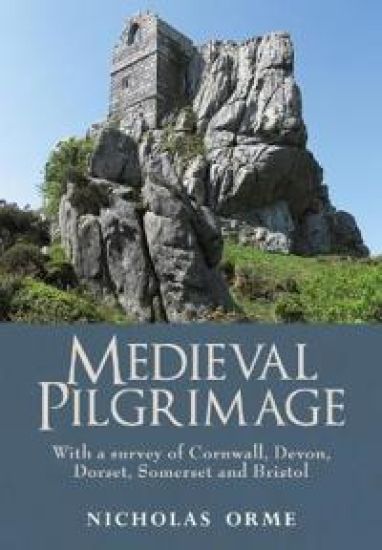
Medieval Pilgrimage: With a survey of Cornwall, Devon, Dorset, Somerset and Bristol
Pilgrimage was popular throughout medieval England until it was suppressed at the Reformation. This book explains how it originated, what it involved, and what it meant to those who practised it. Normally it is imagined in terms of long journeys to famous places in England or Christendom. In fact most pilgrimages were short ones, made to hundreds of nearby shrines and images. This study breaks new ground by exploring the subject through these local journeys and reveals the places that most people visited for most of the time. It shows who went, where and why they went, and what they experienced when they got there. The general study is followed by a detailed survey of the whole of the West of England: from Bristol to the Scillies and back to east Dorset. It lists over 80 sites, ranging from great churches like the cathedrals at Bristol, Exeter, and Wells down to small rural chapels and holy wells. Many of these sites still exist, allowing the book to be used as a guide to places to visit, where one can get a sense of what it was like to be a medieval pilgrim. The book contains four maps and forty illustrations.
History of England's Cathedrals

History of England's Cathedrals

Nicholas Orme; Pontifical Institute of Mediaeval Studies

Impress Books
2017
pokkari
England's sixty or so Anglican and Roman Catholic cathedrals are among its most iconic buildings and attract thousands of worshippers and visitors every year. Yet though much has been written about their architecture, this book provides the first rounded account of the whole of their 1700 years from Roman times to the present day.
From Childhood to Chivalry

From Childhood to Chivalry

Nicholas Orme

Routledge
2017
sidottu
Originally published in 1984, this is a study of the kings and the aristocracy who ruled England between the Conquest and the Reformation. Not, as usual, about their adult lives, but how they became the people they were through childhood and education. The first such study of its kind, it follows noble boys and girls from birth through the care of their nurses, masters and mistresses, until they left home for further training in noble households, monasteries and universities. The author examines the theories and treatises on noble education, again for the first time.The rest of the book broadens into a wide cultural survey as Dr Orme describes the skills and ideas which noble children learnt. He explains how they mastered speech and literacy; worship and behaviour; dancing, music and applied art; athletics and training for war. This part of the study is a handbook of noble pursuits in medieval times. In his final chapter the author considers the nature of noble education in the middles ages, and examines how and whether it changed at the Renaissance. Nicholas Orme has written a comprehensive study, spanning 450 years of English history and making a major contribution to social and cultural history, as well as the history of education. His book will be invaluable to historians and medievalists of all disciplines, and essential reading from those who study the Renaissance.
The Minor Clergy of Exeter Cathedral

The Minor Clergy of Exeter Cathedral

Nicholas Orme

Devon Cornwall Record Society
2013
pokkari
Exeter Cathedral is rich in its medieval archives, which record not only its buildings but also its personnel from the thirteenth century onwards. This volume lists the names of about a thousand people who served in the Cathedralbetween 1250 and the Reformation in 1548, including vicars choral, chantry priests and choristers. It provides their biographies as far as these can be constructed. In this way the book recreates a medieval religious community inalmost unparalleled detail, ranging from distinguished musicians to violent or unsatisfactory men, some of whom were dismissed. It also traces many of the boys and men back to their places of origin in Devon and Cornwall, and shows how cathedral clergy often left to work in churches elsewhere in the South West. It is therefore an important resource for local history, providing information about the origins and careers of many clergy of the region's parishchurches.
Fleas, Flies, and Friars

Fleas, Flies, and Friars

Nicholas Orme

Cornell University Press
2012
pokkari
Medieval children lived in a world rich in poetry, from lullabies, nursery rhymes, and songs to riddles, tongue twisters, and nonsensical verses. They read or listened to stories in verse: ballads of Robin Hood, romances, and comic tales. Poems were composed to teach them how to behave, eat at meals, hunt game, and even learn Latin and French. In Fleas, Flies, and Friars, Nicholas Orme, an expert on childhood in the Middle Ages, has gathered a wide variety of children's verse that circulated in England beginning in the 1400s, providing a way for modern readers of all ages to experience the medieval world through the eyes of its children. In his delightful treasury of medieval children's verse, Orme does a masterful job of recovering a lively and largely unknown tradition, preserving the playfulness of the originals while clearly explaining their meaning, significance, or context. Poems written in Latin or French have been translated into English, and Middle English has been modernized. Fleas, Flies, and Friars has five parts. The first two contain short lyrical pieces and fragments, together with excerpts from essays in verse that address childhood or were written for children. The third part presents poems for young people about behavior. The fourth contains three long stories and the fifth brings together verse relating to education and school life.
Fleas, Flies, and Friars

Fleas, Flies, and Friars

Nicholas Orme

Cornell University Press
2012
sidottu
Medieval children lived in a world rich in poetry, from lullabies, nursery rhymes, and songs to riddles, tongue twisters, and nonsensical verses. They read or listened to stories in verse: ballads of Robin Hood, romances, and comic tales. Poems were composed to teach them how to behave, eat at meals, hunt game, and even learn Latin and French. In Fleas, Flies, and Friars, Nicholas Orme, an expert on childhood in the Middle Ages, has gathered a wide variety of children’s verse that circulated in England beginning in the 1400s, providing a way for modern readers of all ages to experience the medieval world through the eyes of its children.In his delightful treasury of medieval children’s verse, Orme does a masterful job of recovering a lively and largely unknown tradition, preserving the playfulness of the originals while clearly explaining their meaning, significance, or context. Poems written in Latin or French have been translated into English, and Middle English has been modernized. Fleas, Flies, and Friars has five parts. The first two contain short lyrical pieces and fragments, together with excerpts from essays in verse that address childhood or were written for children. The third part presents poems for young people about behavior. The fourth contains three long stories and the fifth brings together verse relating to education and school life.
A History of the County of Cornwall

A History of the County of Cornwall

Nicholas Orme

Victoria County History
2010
sidottu
First survey of the religious history of Cornwall, from the county's Romano-British origins to the sixteenth century. Highly Commended in Class 6 - Non-Fiction: History and Creative Arts of the Holyer an Gof Awards 2011. Religious history is the focus of this volume, which covers the development of Christianity in the county from its Romano-British origins up to the Elizabethan Church Settlement of 1559; it provides the first ever in-depth study of the county's religious history during the Middle Ages and the Reformation. The story it tells is a highly distinctive one, full of interest, covering the uniquely numerous local saints and founders, their legends and the parish churches, chapels, holy wells and religious sites associated with them, as well as the larger religious communities. The Cornish clergy are placed in a national context and the impact of their scholarship on the wider word is emphasised. Five general chapters are followed by detailed histories of the 35 monasteries, friaries, collegiate churches, and hospitals in the county. The book is well-illustrated throughout, with numerous maps, plans,and photographs. NICHOLAS ORME is Emeritus Professor of History at Exeter University and an honorary canon of Truro Cathedral. He has written some twenty books on English religious, cultural, and social history, including Medieval Children, Medieval Schools, and The Saints of Cornwall.
Cornwall and the Cross

Cornwall and the Cross

Nicholas Orme

Phillimore Co Ltd
2007
nidottu
Cornwall's place-names and churches are unique. They commemorate an enormous number of local and little-known saints, such as St Austell, St Ives, and St Just. This book explains how this came about, how Cornwall came to be Christian after the end of the Roman Empire, and how its religious history developed through the Middle Ages and into the Reformation. Every aspect of Christian life is covered: the early Church, the effects of the English and Norman Conquests, the foundation of monasteries and friaries, and the history of the parish churches. There is a full account of the Reformation in Cornwall, showing what was swept away and what survived.The book is about people. It probes the identity of the early Cornish saints and explains the daily life of monks, friars, and parish clergy, also highlighting their substantial contribution to the Church outside Cornwall. The author emphasises the positive role played by lay people. Far from being passive onlookers in pews, they were involved in appointing clergy, building and running parish churches, founding chapels, forming guilds, going on pilgrimages, and staging religious plays. Celtic or Catholic? This book explores Cornwall's religious history as a whole, and shows how the Cornish developed distinctive traditions while fully sharing in the Christianity of western Europe.
Medieval Schools

Medieval Schools

Nicholas Orme

Yale University Press
2006
sidottu
A sequel to Nicholas Orme’s widely praised study, Medieval Children Children have gone to school in England since Roman times. By the end of the middle ages there were hundreds of schools, supporting a highly literate society. This book traces their history from the Romans to the Renaissance, showing how they developed, what they taught, how they were run, and who attended them. Every kind of school is covered, from reading schools in churches and town grammar schools to schools in monasteries and nunneries, business schools, and theological schools. The author also shows how they fitted into a constantly changing world, ending with the impacts of the Renaissance and the Reformation. Medieval schools anticipated nearly all the ideas, practices, and institutions of schooling today. Their remarkable successes in linguistic and literary work, organizational development, teaching large numbers of people shaped the societies that they served. Only by understanding what schools achieved can we fathom the nature of the middle ages.
The Saints of Cornwall

The Saints of Cornwall

Nicholas Orme

Oxford University Press
2000
sidottu
Cornwall is unique among English counties, though similar to other Celtic lands, in its religious history. Its churches, chapels, and place-names commemorated not only the major saints of Christendom, but also many minor 'Celtic' ones, unique to single churches. This book breaks new ground by considering them all, comprehensively and in detail. The introduction explains how the cults came into existence, and how they shed light on early Christianity in the county. It follows their history up to the Reformation, and shows how popular devotion to the saints lingered even in the eighteenth century. The main part of the book provides a history of every known religious cult in Cornwall from the sixth century AD to the Reformation, with relevant information about its later history down to the present day. Every known site is identified (church, chapel, altar, image, holy well, or other outdoor feature), and every written source is discussed (saint's Life, liturgical commemoration, and calendar festival). This is the first time that a complete inventory of cults has been produced for an area as large as an English county. The work also includes many saints venerated in Brittany, Wales and England, and makes copious references to all three countries. It provides a major resource in the fields of medieval Church history, Reformation studies, folklore, and Celtic studies, as well as the history of Cornwall.
English Church Dedications

English Church Dedications

Nicholas Orme

University of Exeter Press
1996
nidottu
Church dedications are as widely used as they are little studied, yet their histories are often obscure and complicated. Frequently forgotten after the Reformation, they were revived on the eighteenth and nineteenth centuries with many guesses and mistakes, resulting in numerous alterations. Church history cannot safely be based on the dedication in use today. Part One of the book surveys their history in England from roman ties to the present day. Part Two is detailed list of all 800 ancient parish churches and religious houses in Cornwall and Devon. It shows when their dedications first occur, the changes and misunderstandings that have happened, and the dates of parish feast days. Cornwall is a country of Celtic church dedication, whilst Devon’s resemble this of the rest of England, so the book will be helpful in understanding dedications in both traditions.