Kirjojen hintavertailu. Mukana 12 595 353 kirjaa ja 12 kauppaa.
Kirjailija
Nicholas Thomas
Kirjat ja teokset yhdessä paikassa: 32 kirjaa, julkaisuja vuosilta 1990-2025, suosituimpien joukossa Photo-Museology. Vertaile teosten hintoja ja tarkista saatavuus suomalaisista kirjakaupoista.
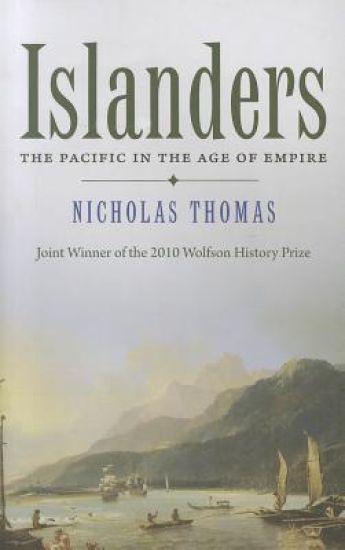
An incisive, evocative history of the experience of empire in the Oceanic world This compelling book explores the lived experience of empire in the Pacific, the last region to be contacted and colonized by Europeans following the great voyages of Captain Cook. Unlike conventional accounts that emphasize confrontation and the destruction of indigenous cultures, Islanders reveals there was gain as well as loss, survival as well as suffering, and invention as well as exploitation.Empowered by imaginative research in obscure archives and collections, Thomas rediscovers a rich and surprising history of encounters, not only between Islanders and Europeans, but among Islanders, brought together in new ways by explorers, missionaries, and colonists. He tells the story of the making of empire, not through an impersonal survey, but through vivid stories of the lives of men and women—some visionary, some vicious, and some just eccentric—and through sensuous evocation of seascapes and landscapes of the Pacific. A fascinating re-creation of an Oceanic world, Islanders offers a new paradigm, not only for histories of the Pacific, but for understandings of cultural contact everywhere.
George Forster's A Voyage Round the World presents a wealth of geographic, scientific, and ethnographic knowledge uncovered by Cook's second journey of exploration in the Pacific (1772-1775). Accompanying his father, the ship's naturalist Johann Reinhold Forster, on the voyage, George proved a knowledgeable and adept observer. The lively, elegant prose and critical detail of his account, based loosely on his father's journal, make it one of the finest works of eighteenth-century travel literature and an account of prime importance in the history of European contact with Pacific peoples. The Forsters' publications reveal the sophistication and enthusiasm they brought to their observation of Polynesian peoples as well as a sensitivity to the moral ambiguities of contact.The two volumes of George Forster's work include substantially richer descriptions of encounters with island inhabitants than either his father's classic work (Observations Made during a Voyage round the World, UH Press, 1996) or Cook's official narrative, and its confident, even visionary, style incorporates a good deal of polemic, particularly in its criticism of the treatment of islanders by Cook's crew. In addition to the range and depth of its anthropological considerations, it provides a thrilling account of life aboard one of Cook's vessels.In its author's German translation, this work becomes a classic of natural history writing, but its original English version has long been neglected by anglophone scholars. This new scholarly edition makes this important book readily available for the first time since its initial publication more than two centuries ago. But it also presents the work in fresh terms, making it more accessible and relevant to a contemporary audience. The valuable introduction and annotations draw on the wide range of anthropological and ethnohistorical scholarship published since the 1960s and contextualize the book in relation to both the cultures of Oceania documented by the Forsters and the history of European voyaging in the Pacific. Appendixes include a translation of the introduction to the German edition and the polemical pamphlets by George Forster and the ship's astronomer William Wales, in which some of the book's more controversial claims were debated.A Voyage Round the World brings the disciplines of history and anthropology to bear on Cook's voyages in an illuminating and readable fashion. This edition will help complete the corpus of basic documents on Cook's voyages--a crucial resource for researchers in cultural, Pacific, and maritime history; archaeologists, anthropologists, and art historians; and most recently for scholars engaged in revisionist interpretations of eighteenth-century exploration and colonization.
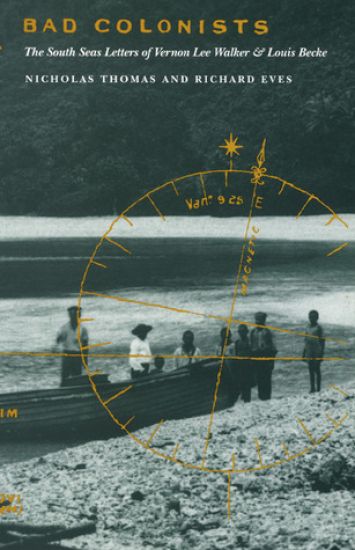
In Bad Colonists Nicholas Thomas and Richard Eves provide a window into the fantasies and realities of colonial life by presenting separate sets of letters by two late-nineteenth-century British colonists of the South Pacific: Vernon Lee Walker and Louis Becke. Thomas and Eves frame the letters-addressed mostly to the colonists’ mothers-with commentary that explores colonial degeneration in the South Pacific. Using critical anthropology and theories of history-making to view the letter as artifact and autobiography, they examine the process whereby men and women unraveled in the hot, violent, uncivil colonial milieu. An obscure colonial trader, Walker wrote to his mother in England from Australia, the New Hebrides (now Vanuatu), and New Caledonia-and also from ships in between those places-during the 1870s and 1880s. Becke was a trader, too, but he was also a successful author of popular fiction that drew on his experiences in the Pacific. Written from Micronesia in the early 1880s, Becke’s letters are like Walker’s in that they report one setback after another. Both collections vividly evoke the day-to-day experiences of ordinary late-nineteenth-century colonists and open up new questions concerning the making and writing of selves on the colonial periphery.Exposing insecurities in an epoch normally regarded as one of imperial triumph, Bad Colonists will appeal to students and scholars of anthropology, colonial history, cultural studies, and Pacific history and culture.
In Bad Colonists Nicholas Thomas and Richard Eves provide a window into the fantasies and realities of colonial life by presenting separate sets of letters by two late-nineteenth-century British colonists of the South Pacific: Vernon Lee Walker and Louis Becke. Thomas and Eves frame the letters-addressed mostly to the colonists’ mothers-with commentary that explores colonial degeneration in the South Pacific. Using critical anthropology and theories of history-making to view the letter as artifact and autobiography, they examine the process whereby men and women unraveled in the hot, violent, uncivil colonial milieu. An obscure colonial trader, Walker wrote to his mother in England from Australia, the New Hebrides (now Vanuatu), and New Caledonia-and also from ships in between those places-during the 1870s and 1880s. Becke was a trader, too, but he was also a successful author of popular fiction that drew on his experiences in the Pacific. Written from Micronesia in the early 1880s, Becke’s letters are like Walker’s in that they report one setback after another. Both collections vividly evoke the day-to-day experiences of ordinary late-nineteenth-century colonists and open up new questions concerning the making and writing of selves on the colonial periphery.Exposing insecurities in an epoch normally regarded as one of imperial triumph, Bad Colonists will appeal to students and scholars of anthropology, colonial history, cultural studies, and Pacific history and culture.
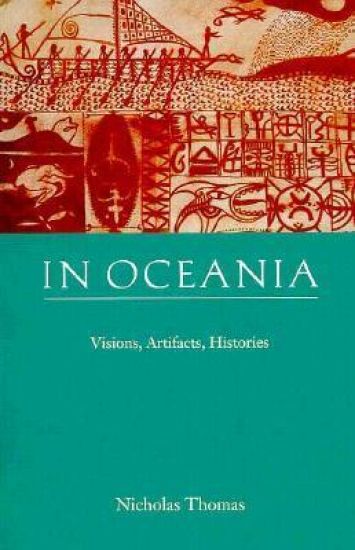
In this collection of essays, Nicholas Thomas, a leading theorist of historical anthropology, explores the historicization of cultural encounters in the region referred to as Oceania. Basing his claims on wide-ranging historical and ethnographic research and building on his celebrated studies of exchange and colonialism in the Pacific, Thomas describes how outsiders and islanders alike have constructed indigenous cultures over the last two hundred years. In Oceania documents and analyzes the "rhetorical artifacts" of explorers, missionaries, fiction and travel writers, and the people of the Pacific themselves to illustrate how Oceanic identities have been represented over time. Not content with conventional methods of anthropology or history, Thomas draws on postcolonial theory and literary analysis in extraordinarily wide-ranging analyses of texts, visual images, and historical processes. He demonstrates how cultures of the Pacific Islands have dealt with colonialist ventures, modernity, and the debate about the recuperation of histories and traditions. The picture Thomas paints of Oceania, however, is not one of a group of societies stripped of meaning, but one that shows how the interactions between indigenous cultures and European influences have created entirely new identities.
In this collection of essays, Nicholas Thomas, a leading theorist of historical anthropology, explores the historicization of cultural encounters in the region referred to as Oceania. Basing his claims on wide-ranging historical and ethnographic research and building on his celebrated studies of exchange and colonialism in the Pacific, Thomas describes how outsiders and islanders alike have constructed indigenous cultures over the last two hundred years. In Oceania documents and analyzes the "rhetorical artifacts" of explorers, missionaries, fiction and travel writers, and the people of the Pacific themselves to illustrate how Oceanic identities have been represented over time. Not content with conventional methods of anthropology or history, Thomas draws on postcolonial theory and literary analysis in extraordinarily wide-ranging analyses of texts, visual images, and historical processes. He demonstrates how cultures of the Pacific Islands have dealt with colonialist ventures, modernity, and the debate about the recuperation of histories and traditions. The picture Thomas paints of Oceania, however, is not one of a group of societies stripped of meaning, but one that shows how the interactions between indigenous cultures and European influences have created entirely new identities.
It is striking that in many Pacific nations, 'national' narratives are subordinate to other fundamental historical imaginings, such as those concerning local political dynasties and conversion to Christianity. While leaders in Pacific states have frequently sought to legitimate new nations through local 'tradition' and 'custom', these constructions of identity frequently mask divisions arising from gender, hierarchy, and other social relationships. These studies from Papua New Guinea, Vanuatu, Samoa and the Cook Islands add much to our knowledge of historical imaginings and contemporary culture in the Pacific, but raise wider questions concerning the current transformation of national identities.
It is striking that in many Pacific nations, 'national' narratives are subordinate to other fundamental historical imaginings, such as those concerning local political dynasties and conversion to Christianity. While leaders in Pacific states have frequently sought to legitimate new nations through local 'tradition' and 'custom', these constructions of identity frequently mask divisions arising from gender, hierarchy, and other social relationships. These studies from Papua New Guinea, Vanuatu, Samoa and the Cook Islands add much to our knowledge of historical imaginings and contemporary culture in the Pacific, but raise wider questions concerning the current transformation of national identities.
Despite the enormous amount of work that has attempted to combine historical and anthropological approaches in recent years, few books have outlined the underlying premises that make integration of the two fields difficult. In Out of Time, Nicholas Thomas argues that a "historical perspective" cannot simply be added to conventional anthropology, which systematically takes ethnography "out of time." Drawing examples from the Polynesian anthropological literature, he points to discredited social evolutionary ideas that have persisted even after apparently dramatic theoretical shifts and to the need to take seriously sources that anthropologists have previously dismissed. When it was first published in 1989, Out of Time generated much-needed discussion on the appropriate models for historical anthropology. Thomas considered that both the historical structuralism of Marshall Sahlins and neo-Marxist regional systems theory had failed to transcend crucial limitations of conventional anthropology. Yet they provided elements of a more stimulating and critical perspective, which would also take account of contemporary political developments in the Pacific region.For this second edition, Thomas has added an afterword that reflects on the book's initial reception and brings its critique up to date. He suggests a need to historicize the professionalization of anthropology as a discipline to understand shifts in practice and the need to acknowledge the historical specificity and limits of all forms of cultural knowledge, whether "Western" or indigenous.Out of Time will be a useful text for graduate courses in anthropology, history, and cultural studies."This book displays rare integrity: Thomas' intellectual stance toward the theoretical approaches of others is fully consistent with his own discursive practices." --Contemporary PacificNicholas Thomas is Senior Research Fellow, Department of Archaeology and Anthropology, Australian National University.
This book explores the perceptions of colonized populations that have developed over the course of European expansion and critically assesses different approaches to colonial representation.
Entangled Objects threatens to dislodge the cornerstone of Western anthropology by rendering permanently problematic the idea of reciprocity. All traffic, and commerce, whether economic or intellectual, between Western anthropologists and the rest of the world, is predicated upon the possibility of establishing reciprocal relations between the West and the indigenous peoples it has colonized for centuries.Drawing on his work on contemporary postcolonial Pacific societies, Nicholas Thomas takes up three issues central to modern anthropology: the cultural and political dynamics of colonial encounters, the nature of Western and non-Western transactions (such as the gift and the commodity), and the significance of material objects in social life. Along the way, he raises doubts about any simple “us/them” dichotomy between Westerners and Pacific Islanders, challenging the preoccupation of anthropology with cultural difference by stressing the shared history of colonial entanglement.Thomas integrates general issues into a historical discussion of the uses Pacific Islanders and Europeans have made of each other’s material artifacts. He explores how nineteenth- and twentieth-century islanders, and visitors from the time of the Cook voyages up to the present day, have fashioned identities for themselves and each other by appropriating and exchanging goods. Previous writers have explored museums and the tribal art market, but this is the first book to concentrate on the distinct interests of European collectors and the islanders. In its comparative scope, its combination of historical and ethnographic scholarship, and its subversive approach to anthropological theory and traditional understandings of colonial relationships, Entangled Objects is a unique and challenging book. It will be tremendously interesting to all those working in the fields of cultural studies, from history to literature.
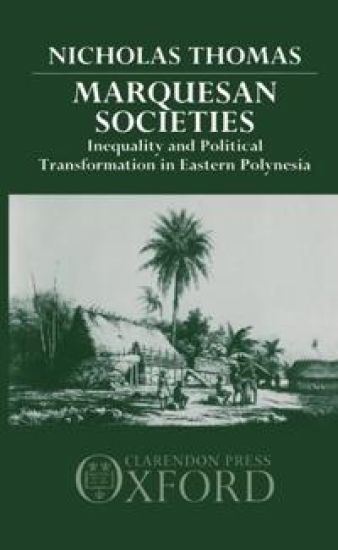
Marquesan society has long captured the interest of European observers, in part because of unfamiliar institutions such as polyandry. However, due to complex and destructive historical changes and the very scattered nature of early source-materials, the distinctive Marquesan developments of Polynesian society have been obscure and at odds with anthropologists' and historians' overall understanding of Pacific societies. Nicholas Thomas's book, based on a critical study of the fullest possible range of sources, is the first to provide a clear account of early Marquesan social relations and culture, and as such will become a key source for Pacific scholars. However, Dr Thomas's discussion is not restricted to ethnohistoric documentation. His analysis of dynamic and highly fluid society and its encounters with early European visitors and traders encompasses wider debates about the nature of gender relations in Polynesian societies, small-scale hierarchical structures, cultural transformation, and longer-term change. In linking specific features of early Marquesan society, its contact with foreigners, and the longer-term transformations of eastern Polynesian societies, Dr Thomas offers Pacific studies a distinctive new perspective.