Kirjojen hintavertailu. Mukana 12 478 676 kirjaa ja 12 kauppaa.

Kirjailija

Nicholas Till

Kirjat ja teokset yhdessä paikassa: 3 kirjaa, julkaisuja vuosilta 1996-2020, suosituimpien joukossa Mozart and the Enlightenment. Vertaile teosten hintoja ja tarkista saatavuus suomalaisista kirjakaupoista.

3 kirjaa

Kirjojen julkaisuhaarukka 1996-2020.

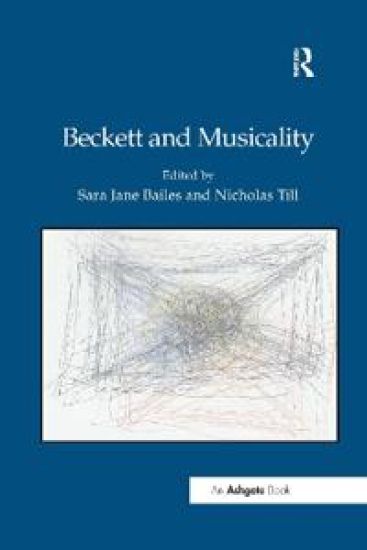
Beckett and Musicality

Beckett and Musicality

Sara Jane Bailes; Nicholas Till

Routledge
2020
nidottu
Discussion concerning the ’musicality’ of Samuel Beckett’s writing now constitutes a familiar critical trope in Beckett Studies, one that continues to be informed by the still-emerging evidence of Beckett’s engagement with music throughout his personal and literary life, and by the ongoing interest of musicians in Beckett’s work. In Beckett’s drama and prose writings, the relationship with music plays out in implicit and explicit ways. Several of his works incorporate canonical music by composers such as Schubert and Beethoven. Other works integrate music as a compositional element, in dialogue or tension with text and image, while others adopt rhythm, repetition and pause to the extent that the texts themselves appear to be ’scored’. But what, precisely, does it mean to say that a piece of prose or writing for theatre, radio or screen, is ’musical’? The essays included in this book explore a number of ways in which Beckett’s writings engage with and are engaged by musicality, discussing familiar and less familiar works by Beckett in detail. Ranging from the scholarly to the personal in their respective modes of response, and informed by approaches from performance and musicology, literary studies, philosophy, musical composition and creative practice, these essays provide a critical examination of the ways we might comprehend musicality as a definitive and often overlooked attribute throughout Beckett’s work.
Beckett and Musicality

Beckett and Musicality

Sara Jane Bailes; Nicholas Till

Routledge
2014
sidottu
Discussion concerning the ’musicality’ of Samuel Beckett’s writing now constitutes a familiar critical trope in Beckett Studies, one that continues to be informed by the still-emerging evidence of Beckett’s engagement with music throughout his personal and literary life, and by the ongoing interest of musicians in Beckett’s work. In Beckett’s drama and prose writings, the relationship with music plays out in implicit and explicit ways. Several of his works incorporate canonical music by composers such as Schubert and Beethoven. Other works integrate music as a compositional element, in dialogue or tension with text and image, while others adopt rhythm, repetition and pause to the extent that the texts themselves appear to be ’scored’. But what, precisely, does it mean to say that a piece of prose or writing for theatre, radio or screen, is ’musical’? The essays included in this book explore a number of ways in which Beckett’s writings engage with and are engaged by musicality, discussing familiar and less familiar works by Beckett in detail. Ranging from the scholarly to the personal in their respective modes of response, and informed by approaches from performance and musicology, literary studies, philosophy, musical composition and creative practice, these essays provide a critical examination of the ways we might comprehend musicality as a definitive and often overlooked attribute throughout Beckett’s work.
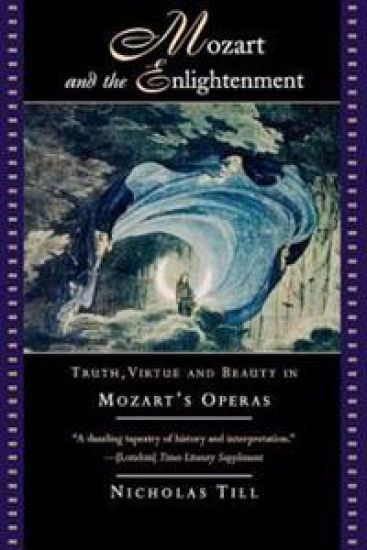
Mozart and the Enlightenment

Mozart and the Enlightenment

Nicholas Till

WW Norton Co
1996
pokkari
In this fascinating study of Mozart's operas, Nicholas Till shows that the composer was not a "divine idiot" but an artist whose work was informed by the ideas and discoveries of the Enlightenment. Examining the dramatic emergence of a modern society in eighteenth-century Austria, the author draws on such famous writers and thinkers of the time as Richardson, Voltaire, Rousseau, Kant, Goethe, Schiller, and Blake to reappraise the history and meaning of the Enlightenment and of Mozart's role within it. He evokes for us the Vienna of the 1780s, a world of intense intellectual argument, political debate, and religious inquiry, which deeply influenced the philosophical content of Mozart's operas. From the early La Finta Giardiniera, based on Richardson's Pamela, to Die Entfuhrung aus dem Serail, designed to support the political aims of Emperor Joseph II; from Le nozze di Figaro, a profound exploration of marriage as a human and social institution, to the post-Enlightenment Zauberflote, the operas bear witness to the era's changing views and to Mozart's own quest for personal and artistic identity.