Kirjojen hintavertailu. Mukana 12 382 828 kirjaa ja 12 kauppaa.

Kirjailija

Nicholas V. Passalacqua

Kirjat ja teokset yhdessä paikassa: 7 kirjaa, julkaisuja vuosilta 2018-2026, suosituimpien joukossa Lab Manual for Forensic Anthropology. Vertaile teosten hintoja ja tarkista saatavuus suomalaisista kirjakaupoista.

Mukana myös kirjoitusasut: Nicholas V Passalacqua

7 kirjaa

Kirjojen julkaisuhaarukka 2018-2026.

Ethics and Professionalism in Forensic Anthropology

Ethics and Professionalism in Forensic Anthropology

Nicholas V. Passalacqua; Marin A. Pilloud; Derek Congram

University Press of Florida
2026
sidottu
Discussion and case studies of ethical best practices for forensic anthropology Forensic anthropology involves the sensitive work of recovering and analyzing human remains. Its practitioners are often confronted with ethical challenges, but training in this area is limited and best practices are not fully developed across the discipline. The first edition of this book opened a dialogue for ethically conscious practice in forensic anthropology, and the second edition continues the conversation with updated and additional content. This book defines professionalism in the discipline and discusses situations in which forensic anthropologists may find themselves, including understanding and enforcing ethical codes, identifying misconduct and navigating its adjudication, and acting as expert witnesses in courtrooms. This new edition includes more robust discussions of the ethics of working with human remains within the medicolegal system, education and training in forensic anthropology, and the use of digital representations of human remains. Students and practitioners alike will appreciate chapters focusing on expertise; education, training, and careers; and reporting and testifying. Providing multiple case studies to provoke reflection and discussion, this book prompts readers to think critically about what it means to be a professional forensic anthropologist, how to recognize ethical challenges, and how to conduct themselves when confronted with them.
Forensic Anthropology

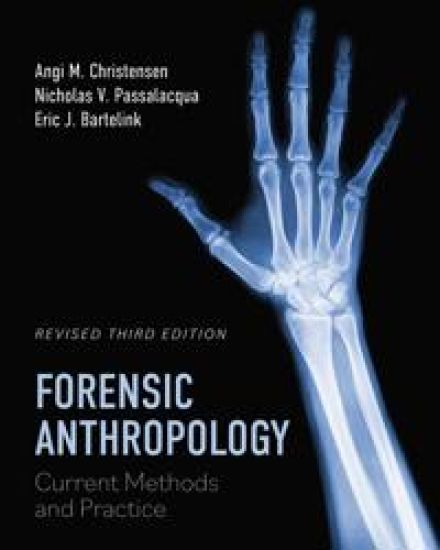
Forensic Anthropology

Angi M. Christensen; Nicholas V. Passalacqua; Eric J. Bartelink

Cognella, Inc
2024
pokkari
The third edition of Forensic Anthropology: Current Methods and Practice presents modern approaches and analytic techniques in the field of forensic anthropology. The book introduces readers to the principles and application of forensic anthropology with an emphasis on the integration of osteological, odontological, and archaeological methods for analyzing skeletal remains. The book begins with the fundamentals of human osteology and odontology, then delves into examination and documentation methodologies, issues of medicolegal significance, and the nuances of forensic taphonomy. The text offers detailed insight into forensic archaeology, including scene processing methods and techniques specific to skeletal processing, resolving commingling, and preserving remains. Analytical methods for the estimation of sex, population affinity, age, and stature; individual skeletal variation; and analysis of skeletal trauma are also introduced. The book also addresses personal identification processes in forensic contexts and the role of forensic anthropology in humanitarian and human rights investigations. The third edition features updates to approaches and practices throughout, as well as updated and expanded case studies in each chapter that reflect real-world practice. Forensic Anthropology is well suited for courses and programs in forensic anthropology, forensic science, and biological anthropology at both undergraduate and graduate levels.
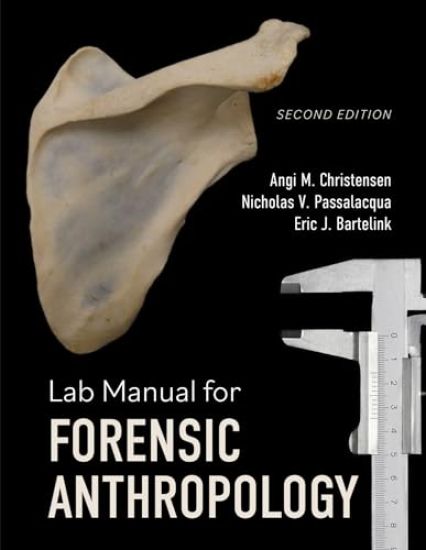
Lab Manual for Forensic Anthropology

Lab Manual for Forensic Anthropology

Angi M. Christensen; Nicholas V. Passalacqua; Eric J. Bartelink

Cognella, Inc
2024
pokkari
Designed to complement the third edition of Forensic Anthropology, this dynamic lab manual introduces students to forensic anthropology practice using current, validated, and accepted methods. Whereas the accompanying textbook provides in-depth topic coverage and literature review, Lab Manual for Forensic Anthropology emphasizes procedural information and concepts and offers students hands-on practice to facilitate deeper learning and understanding. The lab manual features 15 modules, which correspond to the 15 chapters in the related textbook. Each module begins with objectives and then provides students with a series of exercises meant to help them apply newly acquired knowledge from each topical area. All exercises are case-based and include a scenario to help students better understand the context of the case. Assessments allow students to reflect upon and test their knowledge, and a series of appendices equip readers with essential tools and information. The second edition of this lab manual better aligns with the content found within the textbook Forensic Anthropology. It is a comprehensive, practical, and relevant tool for students and aspiring practitioners in the discipline.
Forensic Anthropology

Forensic Anthropology

Angi M. Christensen; Nicholas V. Passalacqua; Eric J. Bartelink

Academic Press Inc
2019
sidottu
Forensic anthropology has seen a recent expansion in depth and scope as well as increased attention from the media and the legal system. This constantly evolving science requires a comprehensive introductory text that approaches forensic anthropology as a modern discipline, with attention to theory as well as recent advances in research, technology, and challenges in the field. Forensic Anthropology: Current Methods and Practice, 2nd edition approaches forensic anthropology using current practices and case studies drawn from the varied experiences, backgrounds, and practices of working forensic anthropologists. This text guides the reader through all aspects of human remains recovery and forensic anthropological analysis. It presents principles at a level that is appropriate for those new to the field, while at the same time incorporating evolutionary, biomechanical, and other theoretical foundations for the features and phenomena encountered in forensic anthropological casework. Attention is focused on the most recent and scientifically valid applications commonly employed by working forensic anthropologists. Readers will learn about innovative techniques in the discipline, and aspiring practitioners will be prepared by understanding the necessary background needed to work in the field today. Instructors and students will find Forensic Anthropology: Current Methods and Practice, 2nd edition comprehensive, practical, and relevant to the modern discipline of forensic anthropology.
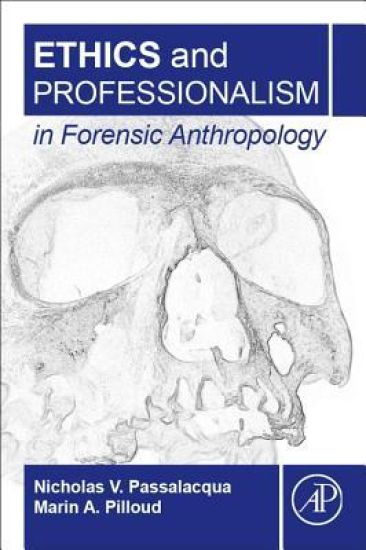
Ethics and Professionalism in Forensic Anthropology

Ethics and Professionalism in Forensic Anthropology

Nicholas V. Passalacqua; Marin A. Pilloud

Academic Press Inc
2018
nidottu
Forensic anthropologists are confronted with ethical issues as part of their education, research, teaching, professional development, and casework. Despite the many ethical challenges that may impact forensic anthropologists, discourse and training in ethics are limited. The goal for Ethics and Professionalism in Forensic Anthropology is to outline the current state of ethics within the field and to start a discussion about the ethics, professionalism, and legal concerns associated with the practice of forensic anthropology.
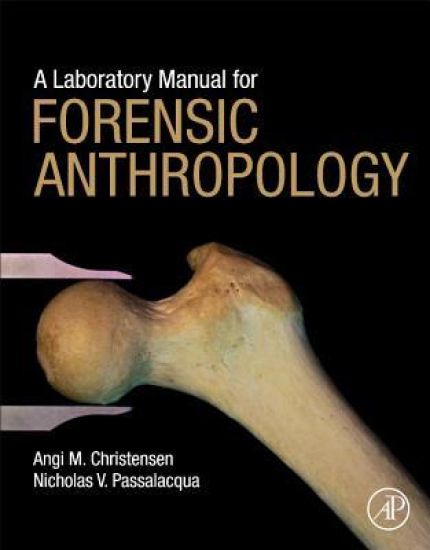
A Laboratory Manual for Forensic Anthropology

A Laboratory Manual for Forensic Anthropology

Angi M. Christensen; Nicholas V. Passalacqua

Academic Press Inc
2018
kierre
A Laboratory Manual for Forensic Anthropology approaches forensic anthropology as a modern and well-developed science, and includes consideration of forensic anthropology within the broader forensic science community, with extensive use of case studies and recent research, technology and challenges that are applied in field and lab contexts. This book covers all practical aspects of forensic anthropology, from field recoveries, to lab analyses, emphasizing hands-on activities. Topics include human osteology and odontology, examination methods, medicolegal significance, scene processing methods, forensic taphonomy, skeletal processing and sampling, sex estimation, ancestry estimation, age estimation, stature estimation, skeletal variation, trauma analysis, and personal identification. Although some aspects are specific to the United States, the vast majority of the material is internationally-relevant and therefore suitable for forensic anthropology courses in other countries.