Kirjojen hintavertailu. Mukana 12 595 353 kirjaa ja 12 kauppaa.

Kirjailija

Nicholas Wolterstorff

Kirjat ja teokset yhdessä paikassa: 39 kirjaa, julkaisuja vuosilta 1980-2024, suosituimpien joukossa Religion in the Public Square. Vertaile teosten hintoja ja tarkista saatavuus suomalaisista kirjakaupoista.

39 kirjaa

Kirjojen julkaisuhaarukka 1980-2024.

Love Is!

Love Is!

Frank M Hasel; Nicholas Wolterstorff

Cascade Books
2024
sidottu
Loss is something everyone experiences in different ways. Love Is is the moving story of one man's journey of grief, grace, and gratitude following the loss of the person he loved the most, his wife. Frank Hasel shares the unvarnished, painful complexities of dealing with the realities of bereavement and beyond as he grapples to come to terms with the new, unwanted realities of being a young widower and single parent to three boys. It tells of the transformative grace that helps him express gratitude in the most difficult of circumstances. Love doesn't die when the person you love dies. Love endures, but how do you express that love in meaningful and constructive ways? This is not a self-help manual, but rather an invitation to share one man's journey and insights. If you have ever wondered how to help someone struggling with the emotional turmoil created by a significant loss, this book will provide practical insights into what is ""helpful help."" This is a story for everyone who has ever lost a heart hero, someone they loved dearly . . . and lost themselves in the process You are not alone
Love Is!

Love Is!

Frank M Hasel; Nicholas Wolterstorff

Cascade Books
2024
pokkari
Loss is something everyone experiences in different ways. Love Is is the moving story of one man's journey of grief, grace, and gratitude following the loss of the person he loved the most, his wife. Frank Hasel shares the unvarnished, painful complexities of dealing with the realities of bereavement and beyond as he grapples to come to terms with the new, unwanted realities of being a young widower and single parent to three boys. It tells of the transformative grace that helps him express gratitude in the most difficult of circumstances. Love doesn't die when the person you love dies. Love endures, but how do you express that love in meaningful and constructive ways? This is not a self-help manual, but rather an invitation to share one man's journey and insights. If you have ever wondered how to help someone struggling with the emotional turmoil created by a significant loss, this book will provide practical insights into what is ""helpful help."" This is a story for everyone who has ever lost a heart hero, someone they loved dearly . . . and lost themselves in the process You are not alone
Scenes with My Son

Scenes with My Son

Robert Hubbard; Nicholas Wolterstorff

WILLIAM B EERDMANS PUBLISHING CO
2023
pokkari
A celebration and an elegy, Scenes with My Son sensitively renders the terrible privilege of grief in the wake of suicide.After years of battling clinical depression exacerbated by autism, Auggie Hubbard died by suicide at the age of 19. In this poignant tribute to his son, Robert Hubbard--a theatre scholar and actor--stages Auggie's life in a series of vivid and tender scenes: Auggie's insatiable hunger for Accelerated Reader points. His tireless lightsaber practice in the local park. His sonorous tuba practice in the ward of his inpatient program. Through these anecdotes of Auggie's life and the days following his death, readers journey with a family shaken by mental illness and share in their hard-won joys in defiance of depression.Refusing easy answers and clich s about "God's plan," Hubbard unflinchingly asks: Does faith matter amid such tragedy? What do you do when awareness isn't enough? When you've tried so hard to keep your child safe, but your efforts fail? His honesty and vulnerability--and his tender portrait of Auggie--are gifts to all who live with their own questions in the wake of a loved one's death.
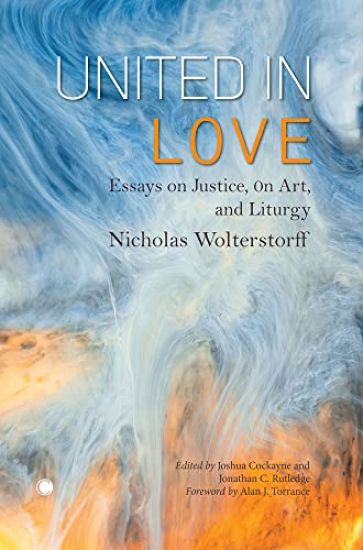
United in Love

United in Love

Nicholas Wolterstorff; Jonathan C. Rutledge; Joshua Cockayne

JAMES CLARKE CO LTD
2023
nidottu
Nicholas Wolterstorff's distinguished career in philosophical theology continues to bear fruit, and here he shares his insight on the concepts of justice, art and liturgy. Although often discussed in isolation, as Wolterstorff masterfully demonstrates, they are bound together by divine love, and follow a common logical framework. Whether oriented towards the dignity of the other, the desire for creative engagement, or the infinite goodness of the creator, in every case unitive love is at their core. Wolterstorff explores all of this with consummate elegance, ultimately showing how each of the three topics find their fulfilment in the worship of God and in the affirmation of the image of God in each of us.
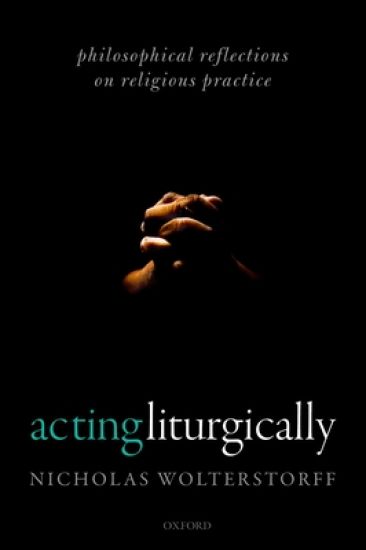
Acting Liturgically

Acting Liturgically

Nicholas Wolterstorff

Oxford University Press
2021
nidottu
Participation in religious liturgies and rituals is a pervasive and remarkably complex form of human activity. This book opens with a discussion of the nature of liturgical activity and then explores various dimensions of such activity. Over the past fifty years there has been a remarkable surge of interest, within the analytic tradition of philosophy, in philosophy of religion. Most of what has been written by participants in this movement deals with one or another aspect of religious belief. Yet for most adherents of most religions, participation in the liturgies and rituals of their religion is at least as important as what they believe. One of the aims of this book is to call the attention of philosophers of religion to the importance of religious practice and to demonstrate how rich a topic this is for philosophical reflection. Another aim is to show liturgical scholars who are not philosophers that a philosophical approach to liturgy casts an illuminating light on the topic that supplements their own approach. Insofar as philosophers have written about liturgy, they have focused most of their attention on its formative and expressive functions. This book focuses instead on understanding what liturgical agents actually do. It is what they do that functions formatively or expressively. What they do is basic.
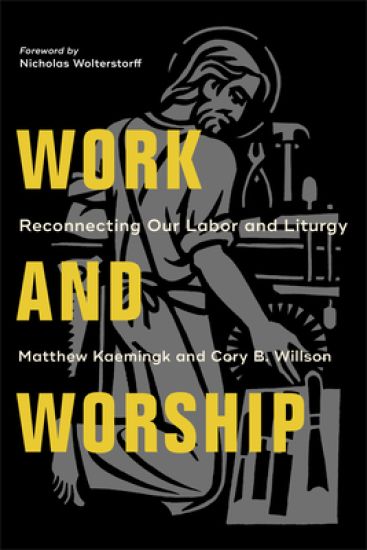
Work and Worship – Reconnecting Our Labor and Liturgy

Work and Worship – Reconnecting Our Labor and Liturgy

Matthew Kaemingk; Cory B. Willson; Nicholas Wolterstorff

Baker Academic, Div of Baker Publishing Group
2020
nidottu
The modern chasm between "secular" work and "sacred" worship has had a devastating impact on Western Christianity.Drawing on years of research, ministry, and leadership experience, Kaemingk and Willson explain why Sunday morning worship and Monday morning work desperately need to inform and impact one another. Together they engage in a rich biblical, theological, and historical exploration of the deep and life-giving connections between labor and liturgy. In so doing, Kaemingk and Willson offer new ways in which Christian communities can live seamless lives of work and worship.
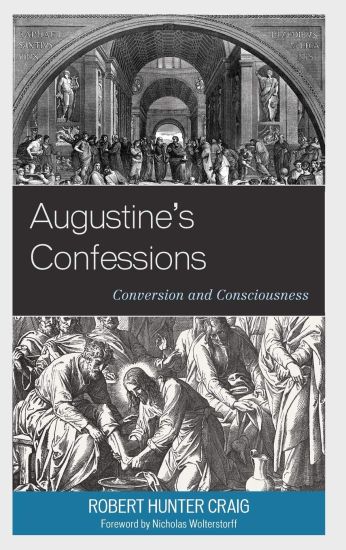
Augustine's Confessions

Augustine's Confessions

Robert Hunter Craig; Nicholas Wolterstorff

Rowman Littlefield
2020
sidottu
Augustine's Confessions: Conversion and Consciousness argues two original positions concerning the structure and meaning of the Confessions by Augustine. The structure is found to be a tool used by Augustine in his earlier pre-Confessions writings in which he uses the Allegory of the Cave in book VII of the Republic by Plato to both describe human consciousness and as a structural framework for his own life story. As with Plato's allegory, Augustine then uses Books X-XIII to do, what the author calls, "Scriptural Philosophical" analysis of the allegorical prayer previously given. The author shows that the Confessions is really an allegorical quasi-prayer that shows Augustine's state of mind or disposition through space/time - and at the same time uses different personas, schools of thought and metaphysical constructs to show the inadequacy of Plato's consciousness model of the cave to truly describe human ratiocination within consciousness in its totality - Synchronic-Synthetic-Triplex (SST) or body, mind, God-Will substance. Instead, Augustine demonstrates the superiority of the Christian conversion to that of the Platonic as described both by Platonic books and the books of the Platonists. The Christian conversion is based on the incarnate Wisdom of Christ Jesus within the Cave/World.
In This World of Wonders

In This World of Wonders

Nicholas Wolterstorff

William B. Eerdmans Publishing Company
2019
sidottu
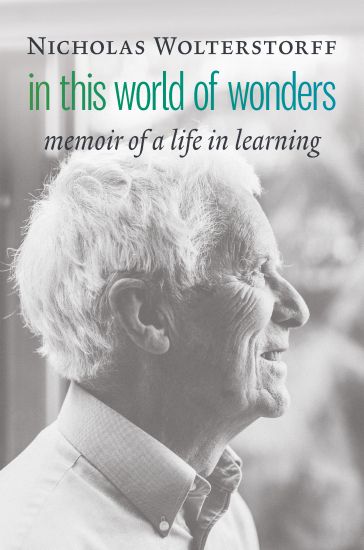
World-renowned Christian philosopher. Beloved professor. Author of the classic Lament for a Son. Nicholas Wolterstorff is all of these and more. His memoir, In This World of Wonders, opens a remarkable new window into the life and thought of this remarkable man.Written not as a complete life story but as a series of vignettes, Wolterstorff's memoir moves from his humble beginnings in a tiny Minnesota village to his education at Calvin College and Harvard University, to his career of teaching philosophy and writing books, to the experiences that prompted some of his writing--particularly his witnessing South African apartheid and Palestinian oppression firsthand.In This World of Wonders is the story of a thoughtful and grateful Christian whose life has been shaped by many loves--love of philosophy, love of family, love of art and architecture, love of nature and gardening, and more. It's a lovely, wonderful story.
Acting Liturgically

Acting Liturgically

Nicholas Wolterstorff

Oxford University Press
2018
sidottu
Participation in religious liturgies and rituals is a pervasive and remarkably complex form of human activity. This book opens with a discussion of the nature of liturgical activity and then explores various dimensions of such activity. Over the past fifty years there has been a remarkable surge of interest, within the analytic tradition of philosophy, in philosophy of religion. Most of what has been written by participants in this movement deals with one or another aspect of religious belief. Yet for most adherents of most religions, participation in the liturgies and rituals of their religion is at least as important as what they believe. One of the aims of this book is to call the attention of philosophers of religion to the importance of religious practice and to demonstrate how rich a topic this is for philosophical reflection. Another aim is to show liturgical scholars who are not philosophers that a philosophical approach to liturgy casts an illuminating light on the topic that supplements their own approach. Insofar as philosophers have written about liturgy, they have focused most of their attention on its formative and expressive functions. This book focuses instead on understanding what liturgical agents actually do. It is what they do that functions formatively or expressively. What they do is basic.
Walking Through Twilight – A Wife's Illness – A Philosopher's Lament

Walking Through Twilight – A Wife's Illness – A Philosopher's Lament

Douglas Groothuis; Nicholas Wolterstorff

IVP Books
2017
nidottu
How do you continue to find God as dementia pulls your loved one into the darkness? Nothing is simple for a person suffering from dementia, and for those they love. When ordinary tasks of communication, such as using a phone, become complex, then difficult, and then impossible, isolation becomes inevitable. Helping becomes excruciating. In these pages philosopher Douglas Groothuis offers a window into his experience of caring for his wife as a rare form of dementia ravages her once-brilliant mind and eliminates her once-stellar verbal acuity. Mixing personal narrative with spiritual insight, he captures moments of lament as well as philosophical and theological reflection. Brief interludes provide poignant pictures of life inside the Groothuis household, and we meet a parade of caregivers, including a very skilled companion dog. Losses for both Doug and Becky come daily, and his questions for God multiply as he navigates the descending darkness. Here is a frank exploration of how one continues to find God in the twilight.
Art Rethought

Art Rethought

Nicholas Wolterstorff

Oxford University Press
2017
nidottu
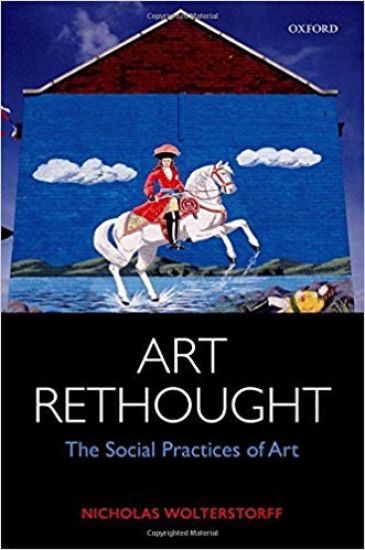
Human beings engage works of the arts in many different ways: they sing songs while working, they kiss icons, they create and dedicate memorials. Yet almost all philosophers of art of the modern period have ignored this variety and focused entirely on just one mode of engagement, namely, disinterested attention. In the first part of the book Nicholas Wolterstorff asks why philosophers have concentrated on just this one mode of engagement. The answer he proposes is that almost all philosophers have accepted what the author calls the grand narrative concerning art in the modern world. It is generally agreed that in the early modern period, members of the middle class in Western Europe increasingly engaged works of the arts as objects of disinterested attention. The grand narrative claims that this change represented the arts coming into their own, and that works of art, so engaged, are socially other and transcendent. Wolterstorff argues that the grand narrative has to be rejected as not fitting the facts. Wolterstorff then offers an alternative framework for thinking about the arts. Central to the alternative framework that he proposes are the idea of the arts as social practices and the idea of works of the arts as having different meaning in different practices. He goes on to use this framework to analyse in some detail five distinct social practices of art and the meaning that works have within those practices: the practice of memorial art, of art for veneration, of social protest art, of works songs, and of recent art-reflexive art.
Visual Arts in the Worshiping Church

Visual Arts in the Worshiping Church

Lisa DeBoer; Nicholas Wolterstorff

William B Eerdmans Publishing Co
2016
nidottu
Although numerous studies have examined biblical and theological rationales for using the visual arts in worship, this book by Lisa J. DeBoer fills in a piece of the picture missing so far - the social dimensions of both our churches and the various art worlds represented in our congregations. The first part of the book looks at Orthodoxy, Catholicism, and Protestantism in turn - including case studies of specific congregations - showing how each tradition's use of the visual arts reveals an underlying ecclesiology. DeBoer then focuses on six themes that emerge when Orthodox, Catholic, and Protestant uses of the visual arts are examined together - the arts as expressions of the church's local and universal character, the meanings attributed to particular styles of art for the church, the role of the arts in enculturating the gospel, and more.
Understanding Liberal Democracy

Understanding Liberal Democracy

Nicholas Wolterstorff

Oxford University Press
2016
nidottu
Understanding Liberal Democracy presents notable work by Nicholas Wolterstorff at the intersection between political philosophy and religion. Alongside his influential earlier essays, it includes nine new essays in which Wolterstorff develops original lines of argument and stakes out novel positions regarding the nature of liberal democracy, human rights, and political authority. Taken together, these positions are an attractive alternative to the so-called public reason liberalism defended by thinkers such as John Rawls. The volume will be of interest to philosophers, political theorists, and theologians, engaging a wide audience of those interested in how best to understand the nature of liberal democracy and its relation to religion.
Art Rethought

Art Rethought

Nicholas Wolterstorff

Oxford University Press
2015
sidottu
Human beings engage works of the arts in many different ways: they sing songs while working, they kiss icons, they create and dedicate memorials. Yet almost all philosophers of art of the modern period have ignored this variety and focused entirely on just one mode of engagement, namely, disinterested attention. In the first part of the book Nicholas Wolterstorff asks why philosophers have concentrated on just this one mode of engagement. The answer he proposes is that almost all philosophers have accepted what the author calls the grand narrative concerning art in the modern world. It is generally agreed that in the early modern period, members of the middle class in Western Europe increasingly engaged works of the arts as objects of disinterested attention. The grand narrative claims that this change represented the arts coming into their own, and that works of art, so engaged, are socially other and transcendent. Wolterstorff argues that the grand narrative has to be rejected as not fitting the facts. Wolterstorff then offers an alternative framework for thinking about the arts. Central to the alternative framework that he proposes are the idea of the arts as social practices and the idea of works of the arts as having different meaning in different practices. He goes on to use this framework to analyse in some detail five distinct social practices of art and the meaning that works have within those practices: the practice of memorial art, of art for veneration, of social protest art, of works songs, and of recent art-reflexive art.
Justice in Love

Justice in Love

Nicholas Wolterstorff

William B Eerdmans Publishing Co
2015
nidottu
Love and justice have long been prominent themes in the moral culture of the West, yet they are often considered to be almost hopelessly at odds with each other. In this book acclaimed Christian philosopher Nicholas Wolterstorff shows that justice and love are perfectly compatible at heart, and he argues that the commonly perceived tension between them reveals something faulty in our understanding of each.This paperback publication adds a new preface and Scripture index to the original hardcover edition. Building upon Wolterstorff's expansive discussion of justice in his earlier Justice: Rights and Wrongs and charitably engaging alternate views, this book focuses in profound ways on the complex yet ultimately harmonious relation between justice and love.
God We Worship

God We Worship

Nicholas Wolterstorff

William B Eerdmans Publishing Co
2015
nidottu
In The God We Worship, Nicholas Wolterstorff takes a ground-up approach to liturgical theology, examining the oft-hidden implications of traditional elements of liturgy. Given that "no liturgy has ever been composed from scratch," Wolterstorff argues that the assumptions taken into worship are key to perceiving the real depths of historical Christianity's understanding of God.Across the liturgies of the Orthodox, Catholic, Episcopal, Lutheran, and Reformed churches, Wolterstorff highlights theologically neglected elements of God, such as an implicit liturgical understanding of God as listener. A dissection of liturgy is not only interesting, Wolterstorff argues, but crucial for reconciling differences between the God studied by theologians and the God worshiped by churchgoers on Sunday.
Practices of Belief: Volume 2, Selected Essays

Practices of Belief: Volume 2, Selected Essays

Nicholas Wolterstorff

Cambridge University Press
2014
pokkari
Practices of Belief, the second volume of Nicholas Wolterstorff's collected papers, brings together his essays on epistemology from 1983 to 2008. It includes not only the essays which first presented 'Reformed epistemology' to the philosophical world, but also Wolterstorff's latest work on the topic of entitled (or responsible) belief and its intersection with religious belief. The volume presents five new essays and a retrospective essay that chronicles the changes in the course of philosophy over the last fifty years. Of interest to epistemologists, philosophers of religion, and theologians, Practices of Belief should engage a wide audience of those interested in the topic of whether religious belief can be responsibly formed and maintained in the contemporary world.
Inquiring about God: Volume 1, Selected Essays

Inquiring about God: Volume 1, Selected Essays

Nicholas Wolterstorff

Cambridge University Press
2014
pokkari
Inquiring about God is the first of two volumes of Nicholas Wolterstorff's collected papers. This volume collects Wolterstorff's essays on the philosophy of religion written over the last thirty-five years. The essays, which span a range of topics including Kant's philosophy of religion, the medieval (or classical) conception of God, and the problem of evil, are unified by the conviction that some of the central claims made by the classical theistic tradition, such as the claims that God is timeless, simple, and impassible, should be rejected. Still, Wolterstorff contends, rejecting the classical conception of God does not imply that theists should accept the Kantian view according to which God cannot be known. Of interest to both philosophers and theologians, Inquiring about God should give the reader a lively sense of the creative and powerful work done in contemporary philosophical theology by one of its foremost practitioners.
The Mighty and the Almighty

The Mighty and the Almighty

Nicholas Wolterstorff

Cambridge University Press
2014
pokkari
For a century or more political theology has been in decline. Recent years, however, have seen increasing interest not only in how church and state should be related, but in the relation between divine authority and political authority, and in what religion has to say about the limits of state authority and the grounds of political obedience. In this book, Nicholas Wolterstorff addresses this whole complex of issues. He takes account of traditional answers to these questions, but on every point stakes out new positions. Wolterstorff offers a fresh theological defense of liberal democracy, argues that the traditional doctrine of 'two rules' should be rejected and offers a fresh exegesis of Romans 13, the canonical biblical passage for the tradition of Christian political theology. This book provides useful discussion for scholars and students of political theology, law and religion, philosophy of religion and social ethics.
Dare We Speak of Hope?

Dare We Speak of Hope?

Allan Aubrey Boesak; Nicholas Wolterstorff

William B Eerdmans Publishing Co
2014
nidottu
Since the spectacular rise of South Africa's Nelson Mandela and the remarkable election of Barack Obama as president of the United States, the phrase "hopeful politics" has dominated our public discourse. But what happens when that hope disappoints? Can it be salvaged? What is the relationship between faith, hope, and politics? In this book Allan Boesak meditates on what it really means to hope in light of present political realities and growing human pain. He argues that hope comes to life only in situations of vulnerability - in struggles for justice, dignity, and the life of the Earth. Dare We Speak of Hope? is a critical, provocative, prophetic - and, above all, hopeful - book.