Kirjojen hintavertailu. Mukana 12 168 136 kirjaa ja 12 kauppaa.
Kirjailija
Nicholas Wright
Kirjat ja teokset yhdessä paikassa: 28 kirjaa, julkaisuja vuosilta 1998-2026, suosituimpien joukossa Vincent in Brixton. Vertaile teosten hintoja ja tarkista saatavuus suomalaisista kirjakaupoista.
A moving portrait of the young Vincent van Gogh - a hit in the West End and on Broadway. Winner of the 2003 Olivier Award for Best New Play. Brixton, 1873. A brash young Dutchman rents a room in the house of an English widow. Three years later he returns to Europe on the first step of a journey which will end in breakdown, death and immortality. Nicholas Wright's play Vincent in Brixton was first performed at the National Theatre, London, in the Cottesloe auditorium, in April 2002, directed by Richard Eyre. The production transferred to Wyndhams Theatre in the West End in August 2002.
'Lively, ingenious and original' Sir Lawrence FreedmanFrom Dr Nicholas Wright, leading neuroscientist and adviser to the Pentagon, discover the new science behind warfare.Why did France lose to the Nazis, despite its defenders having more tanks, troops, and guns? How did Ukraine repel Russia’s initial onslaught? How do you know if you can trust an ally? How can we make clearer decisions under pressure?In Warhead, Nicholas Wright takes us on a fascinating journey through the brain to show you why, if you want to understand warfare, you must first look inside your own head. Drawing on his work as a neuroscientist, and over a decade advising the Pentagon and the UK Government, he reveals how, whether we like it or not, the brain is wired for conflict – in the office or on the battlefield.With a unique framework that helps explain today’s rising tensions and how to defuse them, Warhead brings cutting-edge research to life through battle stories from across history. What was it like for a foot soldier at the Battle of Waterloo in 1815? How could Shaka Zulu or Winston Churchill see through the fog of conflict, make better decisions, and communicate with their troops? How will human conflict shape our future technologies?In an increasingly dangerous world that threatens our values and success, Warhead is an essential read to understand why we fight, lose and win wars.
‘Iago only suspected it. I know.’ Celebrated actor, singer and political campaigner Paul Robeson is touring the United States of America as Othello. His Desdemona is the brilliant young actress Uta Hagen. Her husband, the Broadway star José Ferrer, plays Iago. The actors are all friends, but they are not all equals. As the tour progresses, onstage passions and offstage lives begin to blur. Revenge takes many forms and in post-war America it isn't always purely personal – it can be disturbingly political too. Based on true events, Nicholas Wright's play 8 Hotels was first staged at the Minerva Theatre, Chichester, in 2019, in a production directed by Richard Eyre.
Nicholas Wright's play about the controversial psychoanalyst Melanie Klein is a haunting and poignant study of mother-daughter relationships. In 1934 the son of Melanie Klein, Britain's most admired psychoanalyst, was reported killed in a climbing accident. There were no witnesses. Nicholas Wright's play shows the effect of this shattering and unexpected death on Mrs Klein, on her daughter and on her new assistant Paula, a young refugee from Hitler's Berlin. Melanie Klein had herself come to Britain from Berlin with a controversial mission to extend psychoanalysis to infants. But her analysis of her own children has damaged her relationship with them almost beyond repair, and the news of her son's death provokes a bitter confrontation with her daughter. Nicholas Wright's Mrs Klein was first performed at the National Theatre, London, in 1988. This edition was published alongside the revival at the Almeida Theatre in 2009.
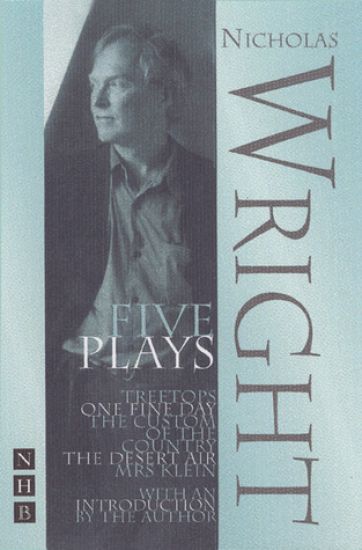
A rich selection of work by leading playwright Nicholas Wright, introduced by the playwright. The plays contained in this volume are: The Custom of the Country An early play, premiered by the Royal Shakespeare Company in 1983, transposing John Fletcher and Philip Massinger's bawdy Jacobean drama to 1890s Johannesburg. The Desert Air A wartime comedy set in Cairo in the 1940s, first staged by the Royal Shakespeare Company in 1985. Mrs Klein A play about the controversial psychoanalyst Melanie Klein, a haunting and poignant study of mother-daughter relationships, first performed at the National Theatre, London, in 1988. One Fine Day A comedy about the gulf that separates Britain and Africa, premiered at the Riverside Studios, London, in 1980. Treetops Set in Cape Town in 1952, Nicholas Wright's debut play is about the early resistance to policies of apartheid or racial segregation. It was first staged at Riverside Studios, Hammersmith, in 1978, winning the George Devine Award for playwriting.
'Lively, ingenious and original' – Sir Lawrence Freedman 'Eye-opening . . . a powerful argument' – Mail on Sunday Discover the new science behind warfare, from Dr Nicholas Wright, leading neuroscientist and adviser to the Pentagon. Why did France lose to the Nazis, despite its defenders having more tanks, troops and guns? How did Ukraine repel Russia’s initial onslaught? How do you know if you can trust an ally? How can we make clearer decisions under pressure? In Warhead, Nicholas Wright takes us on a fascinating journey through the brain to show us why, if we want to understand warfare, we must first look inside our own heads. Drawing on his work as a neuroscientist and over a decade spent advising the Pentagon and the UK government, he reveals how, whether we like it or not, the brain is wired for conflict – in the office or on the battlefield. With a unique framework that helps explain today’s rising tensions and how to defuse them, Warhead brings cutting-edge research to life through stories from across history. What was it like for a foot soldier at the Battle of Waterloo in 1815? How did Shaka Zulu or Winston Churchill see through the fog of conflict, make better decisions and communicate with their troops? How will human conflict shape our future technologies? In an increasingly dangerous world that threatens our values and success, Warhead is an essential read to understand why we fight, lose and win wars. 'A mind-expanding journey . . . invigorating, educational and entertaining' – Peter Pomerantsev, author of How to Win an Information War
From Dr Nicholas Wright, leading neuroscientist and adviser to the Pentagon, discover the new science behind warfare. Why did France lose to the Nazis, despite its defenders having more tanks, troops, and guns? How did we bring peace to Germany after World War Two? How do you know if you can trust an ally? How can we make clearer decisions under pressure? In Warhead, Nicholas Wright takes us on a fascinating journey through the brain to show us how it shapes our behaviour in conflict and war. Drawing on his work as a neuroscientist, and over a decade advising the Pentagon and the UK Government, Wright reveals that, whether we like it or not, the brain is wired for conflict - in the office or on the battlefield. With a unique framework that helps explain today's rising tensions and how to defuse them, Warhead brings cutting-edge research to life through battle stories from history. What was it like for a foot soldier at the Battle of Waterloo in 1815, or in China's Red Army as it fought to survive and triumph throughout the 1930s and 40s? How could leaders such as World War Two tank commanders, Shaka Zulu, or Winston Churchill see through the fog of conflict, make better decisions, and communicate with those who must carry those decisions out? How will human conflict shape our future technologies? In an increasingly dangerous world that threatens our values and success, Warhead is an essential read to understand why we fight, lose and win wars. Because self-knowledge is power.
Dieses Buch untersucht die Auswirkungen der langfristigen außenpolitischen Zusammenarbeit im Rahmen der Gemeinsamen Außen- und Sicherheitspolitik (GASP) der EU auf die Mitgliedstaaten. Es konzentriert sich auf Deutschland und das Vereinigte Königreich und liefert einen aktuellen Bericht darüber, wie sie die Anforderungen, die die Zusammenarbeit an alle Mitgliedstaaten stellt, bewältigt haben und wie sich ihre nationalen Außenpolitiken und politischen Entscheidungsprozesse infolgedessen verändert und angepasst haben. Das Buch untersucht nicht nur die außenpolitischen Traditionen und Institutionen beider Staaten, sondern bietet auch detaillierte Analysen darüber, wie sie zwei wichtige politische Fragen angegangen sind: die iranische Nuklearkrise und die Einrichtung und Entwicklung des Europäischen Auswärtigen Dienstes. Die Synthese von Länder- und Fallstudien in diesem Buch soll dazu beitragen, das Wesen der zwischenstaatlichen Zusammenarbeit im Bereich der Außen- und Sicherheitspolitik und ihre Bedeutung für die beteiligten Staaten besser zu verstehen.
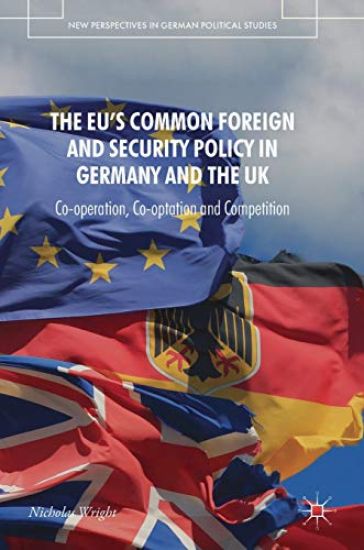
This book examines the impact on member states of long-term foreign policy co-operation through the EU’s Common Foreign and Security Policy (CFSP). Focusing on Germany and the UK, it provides an up-to-date account of how they have navigated and responded to the demands co-operation places on all member states and how their national foreign policies and policy-making processes have changed and adapted as a consequence. As well as exploring in depth the foreign policy traditions and institutions in both states, the book also offers detailed analyses of how they addressed two major policy questions: the Iranian nuclear crisis; and the establishment and development of the European External Action Service. The book’s synthesis of country and case studies seeks to add to our understanding of the nature of inter-state co-operation in the area of foreign and security policy and what it means for the states involved.
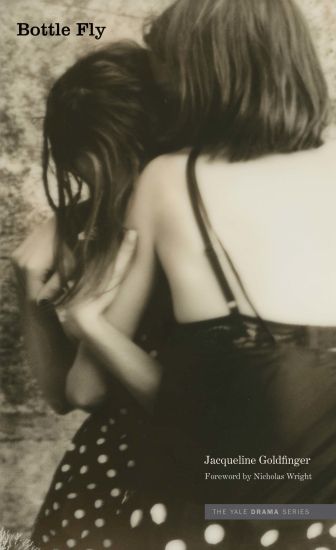
An earthy, cruel, and hilarious family drama of profound and reckless love Set in a bar in the Florida Everglades, this biting, brutally funny multigenerational family drama concerns a Gulf Coast couple, their disabled young ward, two lesbian tenants, and the bonds that bind them all together. The eleventh winner of the Yale Drama Series playwriting competition, it is a powerful story born out of the playwright’s own experiences with the rapidly changing social environment of rural Florida, where long-standing traditions and beliefs can collide, sometimes dangerously, with new ideas of personhood, identity, and self-realization. A rich and colorful mélange of American classes and cultures, Bottle Fly recounts a profoundly human struggle to reconcile the masks worn at home with the ones donned to go out into the world.
This book examines the impact on member states of long-term foreign policy co-operation through the EU’s Common Foreign and Security Policy (CFSP). Focusing on Germany and the UK, it provides an up-to-date account of how they have navigated and responded to the demands co-operation places on all member states and how their national foreign policies and policy-making processes have changed and adapted as a consequence. As well as exploring in depth the foreign policy traditions and institutions in both states, the book also offers detailed analyses of how they addressed two major policy questions: the Iranian nuclear crisis; and the establishment and development of the European External Action Service. The book’s synthesis of country and case studies seeks to add to our understanding of the nature of inter-state co-operation in the area of foreign and security policy and what it means for the states involved.
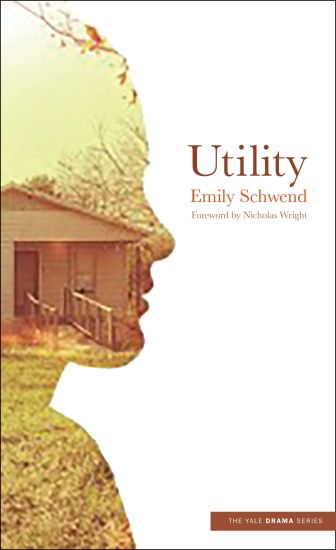
The tenth winner of the Yale Drama Series centers on a young mother dealing with life’s many trials Marking the tenth anniversary of the Yale Drama Series for emerging playwrights, Emily Schwend’s powerful work centers on Amber, a young woman struggling to raise a family in East Texas. Amber is juggling two nearly full-time jobs and three kids. Her on-again, off-again husband Chris is eternally optimistic and charming as hell, but rarely employed. The house is falling apart and Amber has an eight-year-old’s birthday party to plan. Selected from more than 1,600 entries, Schwend’s newest play—produced by the Amoralists Theatre Company at Rattlestick Playwrights Theatre in 2016—vividly captures the economic hardships and relationship difficulties faced by so many Americans today. “Utility is a remarkable play: beautifully written and effortlessly powerful,” said contest judge Nicholas Wright. “At every moment the happiness of human lives is put at risk: is there any greater dramatic theme?”
Eugene de Kock was a paid white political assassin nick-named "Prime Evil" for his crimes against anti-apartheid activists. While serving his two life sentences black psychologist Pumla Gobodo-Madikizela went to interview him hoping to seek humanity and forgiveness within the government-sanctioned monster. The thought-provoking interogation moves from clinical to intimate in a cell where fear and compassion coexist.
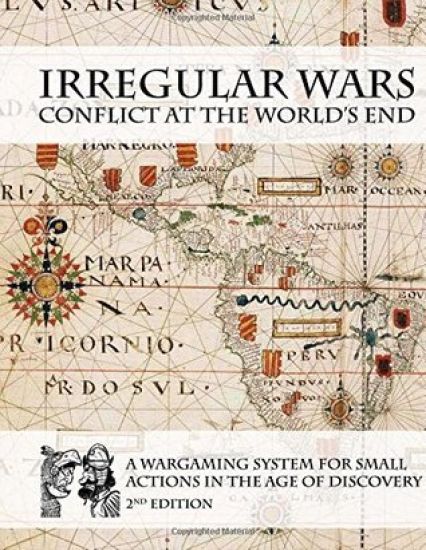
Irregular Wars: Conflict at the World's End provides a fun and easy, fast-play, set of rules for engagements on the fringe of the European world - Ireland, the Americas, the East Indies and the vast steppes of Central Asia. The lands discovered by European explorers seeking easy access to the trading wealth of the Indies exposed untold avenues for expansion. The sixteenth and seventeenth centuries saw successive waves of self-aggrandising traders, raiders, conquerors and colonists leave Europe for new lands beyond the sea. Some pursued the freedom to practice persecuted religions or the opportunity to convert the heathens, others sought raw resources in the form of gold, furs or exotic spices or plants, like nutmeg or tobacco. The game is designed for engagements between two forces of from 500 to 2,500 fighting men per side. Each player represents a leading conquistador, noble, governor, daimyo, chief, cacique or petty monarch. These leaders are given the umbrella title of 'lords'. The key to success in Irregular Wars is the lord's ability to harness the enthusiasm of volunteer or militia soldiers which, together with the effective use of terrain, counts for more than sheer numbers alone.The uncertain nature of army recruitment and variable level of centralised command and control make the rules ideal for small scale, localised and asymmetrical warfare. The game could quite easily be expanded to cover earlier or later conflicts anywhere in the world prior to the establishment of reliable and professional armies. This second edition of Irregular Wars continues the fun and fast approach of the original rules. More background information and explanations are provided and the phase sequence has been streamlined. Additional changes throughout the rules make the randomised aspects of the game more realistic... in a random sort of way.This edition includes army lists for 48 different sixteenth and seventeenth century armies belonging to the major European colonial powers and the indigenous populations of Ireland, the Americas, East Indies and Eurasian Steppe.
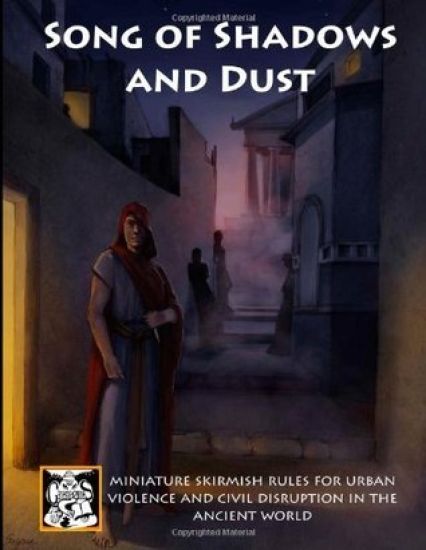
Song of Shadows and Dust is a standalone miniatures wargame based on the award winning Song of Blades and Heroes rules engine. The rules reflect the gritty reality of urban violence while preserving the keep-it-simple, play-as-you-want, no-book-keeping-required spirit of the Ganesha Games family. Easy to learn: The elegant core rules are easy to learn in just one game. Fast to play: Games are designed to be finished in under an hour allowing small campaigns to be completed in a single sitting. Flexible: Inspired by the break down in civil order which plagued the great cities of the Mediterranean in the first century BC, these rules are suitable for any pre-modern setting from Babylon to Bruges. Expansive: Includes 57 unique character profiles with whom to populate your faction or guild - from henchmen, assassins and punch-drunk boxers, to street urchins, elder statesmen and courtesans. Players are also free to create their own custom characters choosing from among 46 defining special rules. Variable: Eleven different faction objectives allow for 121 different tabletop scenarios. Expandable: Easily supplemented by special rules and scenarios drawn from the other rule books produced by Ganesha Games.
This is a Cookbook with interesting, hands-on recipes, giving detailed descriptions and lots of practical walkthroughs for boosting the performance of your Oracle SOA Suite.This book is for Oracle SOA Suite 11g administrators, developers, and architects who want to understand how they can maximise the performance of their SOA Suite infrastructure. The recipes contain easy to follow step-by-step instructions and include many helpful and practical tips. It is suitable for anyone with basic operating system and application server administration experience.
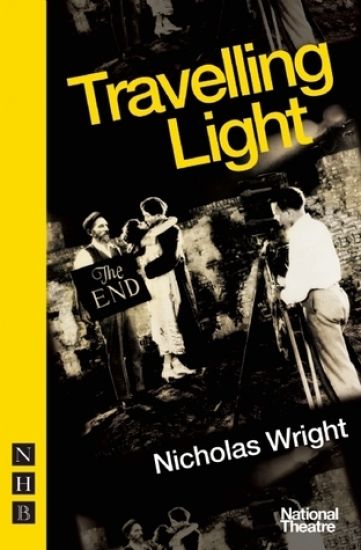
A funny and fascinating tribute to the Eastern European immigrants who became major players in Hollywood's golden age. In a remote village in Eastern Europe, around 1900, the young Motl Mendl is entranced by the flickering silent images on his father's cinematograph. Bankrolled by Jacob, the ebullient local timber merchant, and inspired by Anna, the girl sent to help him make moving pictures of their village, he stumbles on a revolutionary way of story-telling. Forty years on, Motl - now a famed American film director - looks back on his early life and confronts the cost of fulfilling his dreams. How had a twenty-two-year-old pretentious layabout made a discovery that would elude every other cinematic pioneer for years to come? Nicholas Wright's play Travelling Light was premiered at the National Theatre, London, in 2012.
A compelling study of the corruption of fame, the lure of money and the betrayal that lurks at the heart of portraying the people around us, or the people we love. Based on Caroline Blackwood's book of the same name. 1980. The Sunday Times plans a fabulous journalistic coup: a photograph by Lord Snowdon of the long-reclusive Duchess of Windsor. Lady Caroline Blackwood, novelist, wit and journalist, is dispatched to Paris to secure it. But no sooner has she entered the Windsor mansion than she finds herself locked in battle with the Duchess's octogenarian lawyer, Maître Suzanne Blum. As the conflict ignites between them, Caroline begins to find Blum decidedly more fascinating than the Duchess herself. Where did she come from? What's her obsession? How did she get power of attorney over the Windsor fortune? Cruellest of all, why has she deprived the Duchess of her vodka? One of the Duchess's last loyal friends, Diana Mosley, introduces a further mystery: why do the famous Windsor jewels keep appearing anonymously on the international market? And since no one has seen the Duchess, what proof is there that she is even still alive? Nicholas Wright's play The Last of the Duchess was first staged at Hampstead Theatre, London, in 2011.