Kirjojen hintavertailu. Mukana 12 390 323 kirjaa ja 12 kauppaa.

Kirjailija

Nick Estes

Kirjat ja teokset yhdessä paikassa: 11 kirjaa, julkaisuja vuosilta 2021-2024, suosituimpien joukossa Our History Is the Future. Vertaile teosten hintoja ja tarkista saatavuus suomalaisista kirjakaupoista.

11 kirjaa

Kirjojen julkaisuhaarukka 2021-2024.

Our History Is the Future

Our History Is the Future

Nick Estes

Haymarket Books
2024
sidottu
One Book South Dakota Common Read, South Dakota Humanities Council, 2022 PEN Oakland/Josephine Miles Literary Award, PEN America, 2020 One Book One Tribe Book Award, First Nations Development Institute, 2020 Finalist, Stubbendieck Great Plains Distinguished Book Prize, 2019 Shortlist, Brooklyn Public Library Literary Prize, 2019 Our History Is the Future is at once a work of history, a personal story, and a manifesto. Now available in paperback on the fifth anniversary of its original publication, Our History Is the Future features a new afterword by Nick Estes about the rising indigenous campaigns to protect our environment from extractive industries and to shape new ways of relating to one another and the world. In this award-winning book, Estes traces traditions of Indigenous resistance leading to the present campaigns against fossil fuel pipelines, such as the Dakota Access Pipeline Protests, from the days of the Missouri River trading forts through the Indian Wars, the Pick-Sloan dams, the American Indian Movement, and the campaign for Indigenous rights at the United Nations. In 2016, a small protest encampment at the Standing Rock reservation in North Dakota, initially established to block construction of the Dakota Access oil pipeline, grew to be the largest Indigenous protest movement in the twenty-first century, attracting tens of thousands of Indigenous and non-Native allies from around the world. Its slogan “Mni Wiconi”—Water Is Life—was about more than just a pipeline. Water Protectors knew this battle for Native sovereignty had already been fought many times before, and that, even with the encampment gone, their anti-colonial struggle would continue. While a historian by trade, Estes draws on observations from the encampments and from growing up as a citizen of the Oceti Sakowin (the Nation of the Seven Council Fires) and his own family’s rich history of struggle.
Our History Is the Future

Our History Is the Future

Nick Estes

Haymarket Books
2024
pokkari
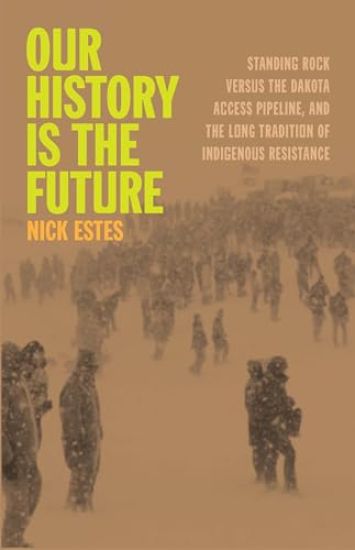
One Book South Dakota Common Read, South Dakota Humanities Council, 2022 PEN Oakland/Josephine Miles Literary Award, PEN America, 2020 One Book One Tribe Book Award, First Nations Development Institute, 2020 Finalist, Stubbendieck Great Plains Distinguished Book Prize, 2019 Shortlist, Brooklyn Public Library Literary Prize, 2019 Our History Is the Future is at once a work of history, a personal story, and a manifesto. Now available in paperback on the fifth anniversary of its original publication, Our History Is the Future features a new afterword by Nick Estes about the rising indigenous campaigns to protect our environment from extractive industries and to shape new ways of relating to one another and the world. In this award-winning book, Estes traces traditions of Indigenous resistance leading to the present campaigns against fossil fuel pipelines, such as the Dakota Access Pipeline Protests, from the days of the Missouri River trading forts through the Indian Wars, the Pick-Sloan dams, the American Indian Movement, and the campaign for Indigenous rights at the United Nations. In 2016, a small protest encampment at the Standing Rock reservation in North Dakota, initially established to block construction of the Dakota Access oil pipeline, grew to be the largest Indigenous protest movement in the twenty-first century, attracting tens of thousands of Indigenous and non-Native allies from around the world. Its slogan “Mni Wiconi”—Water Is Life—was about more than just a pipeline. Water Protectors knew this battle for Native sovereignty had already been fought many times before, and that, even with the encampment gone, their anti-colonial struggle would continue. While a historian by trade, Estes draws on observations from the encampments and from growing up as a citizen of the Oceti Sakowin (the Nation of the Seven Council Fires) and his own family’s rich history of struggle.

From the Skin

From the Skin

Nick Estes

University of Arizona Press
2023
nidottu
In this volume, contributors demonstrate the real-world application of Indigenous theory to the work they do in their own communities and how this work is driven by urgency, responsibility, and justice--work that is from the skin. In From the Skin, contributors describe how they apply the theories and concepts of Indigenous studies to their communities, programs, and organizations. These individuals reflect on and describe the ways the discipline has informed and influenced their community programs and actions. They show the ways these efforts advance disciplinary theories, methodologies, and praxes. Their chapters cover topics that include librarianship, health programs, community organizing, knowledge recovery, youth programming, and gendered violence. Through their examples, the contributors show how they negotiate their peoples’ knowledge systems with knowledge produced in Indigenous studies programs, demonstrating how they understand the relationship between their people, their nations, and academia. Editors J. Jeffery Clark and Elise Boxer propose and develop the term practitioner-theorist to describe how the contributors theorize and practice knowledge within and between their nations and academia. Because they live and exist in their community, these practitioner-theorists always consider how their thinking and actions benefit their people and nations. The practitioner-theorists of this volume envision and labor toward decolonial futures where Indigenous peoples and nations exist on their own terms.Contributors Elise Boxer Randi Lynn Boucher-Giago Shawn Brigman J. Jeffery Clark Nick Estes Eric Hardy Shalene Joseph Jennifer Marley Brittani R. Orona Alexander Soto
From the Skin

From the Skin

Nick Estes

University of Arizona Press
2023
sidottu
In this volume, contributors demonstrate the real-world application of Indigenous theory to the work they do in their own communities and how this work is driven by urgency, responsibility, and justice—work that is from the skin. In From the Skin, contributors describe how they apply the theories and concepts of Indigenous studies to their communities, programs, and organizations. These individuals reflect on and describe the ways the discipline has informed and influenced their community programs and actions. They show the ways these efforts advance disciplinary theories, methodologies, and praxes. Their chapters cover topics that include librarianship, health programs, community organizing, knowledge recovery, youth programming, and gendered violence. Through their examples, the contributors show how they negotiate their peoples’ knowledge systems with knowledge produced in Indigenous studies programs, demonstrating how they understand the relationship between their people, their nations, and academia. Editors J. Jeffery Clark and Elise Boxer propose and develop the term practitioner-theorist to describe how the contributors theorize and practice knowledge within and between their nations and academia. Because they live and exist in their community, these practitioner-theorists always consider how their thinking and actions benefit their people and nations. The practitioner-theorists of this volume envision and labor toward decolonial futures where Indigenous peoples and nations exist on their own terms.Contributors Elise Boxer Randi Lynn Boucher-Giago Shawn Brigman J. Jeffery Clark Nick Estes Eric Hardy Shalene Joseph Jennifer Marley Brittani R. Orona Alexander Soto
Our History Is the Future

Our History Is the Future

Nick Estes

Verso Books
2023
sidottu
In 2016, a small protest encampment at the Standing Rock reservation in North Dakota, initially established to block construction of the Dakota Access oil pipeline, grew to be the largest Indigenous protest movement in the twenty-first century, attracting tens of thousands of Indigenous and non-Native allies from around the world. Its slogan "Mni Wiconi"-Water is Life-was about more than just a pipeline. Water Protectors knew this battle for Native sovereignty had already been fought many times before, and that, even after the encampment was gone, their anti-colonial struggle would continue. In Our History is the Future, Nick Estes traces traditions of Indigenous resistance leading to the #NoDAPL movement from the days of the Missouri River trading forts through the Indian Wars, the Pick-Sloan dams, the American Indian Movement, and the campaign for Indigenous rights at the United Nations. While a historian by trade, Estes also draws on observations from the encampments and from growing up as a citizen of the Oceti Sakowin (the Nation of the Seven Council Fires), making Our History is the Future at once a work of history, a personal story, and a manifesto.
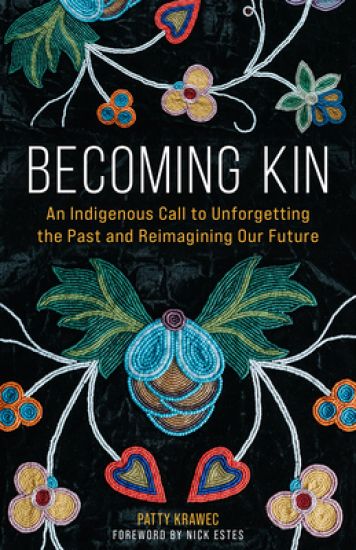
Becoming Kin

Becoming Kin

Patty Krawec; Nick Estes

AUGSBURG FORTRESS PUBLISHERS
2022
sidottu
We find our way forward by going back. The invented history of the Western world is crumbling fast, Anishinaabe writer Patty Krawec says, but we can still honor the bonds between us. Settlers dominated and divided, but Indigenous peoples won't just send them all home. Weaving her own story with the story of her ancestors and with the broader themes of creation, replacement, and disappearance, Krawec helps readers see settler colonialism through the eyes of an Indigenous writer. Settler colonialism tried to force us into one particular way of living, but the old ways of kinship can help us imagine a different future. Krawec asks, What would it look like to remember that we are all related? How might we become better relatives to the land, to one another, and to Indigenous movements for solidarity? Braiding together historical, scientific, and cultural analysis, Indigenous ways of knowing, and the vivid threads of communal memory, Krawec crafts a stunning, forceful call to unforget our history. This remarkable sojourn through Native and settler history, myth, identity, and spirituality helps us retrace our steps and pick up what was lost along the way: chances to honor rather than violate treaties, to see the land as a relative rather than a resource, and to unravel the history we have been taught.
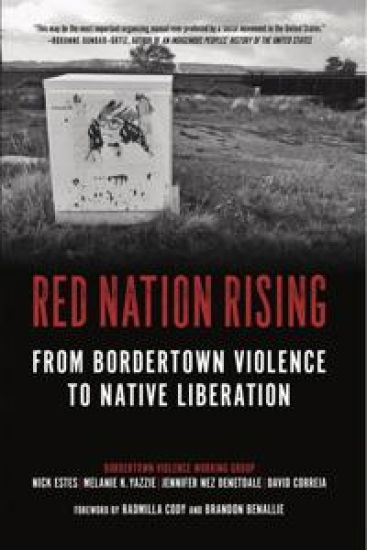
Red Nation Rising

Red Nation Rising

Nick Estes; Melanie Yazzie; Jennifer Nez Denetdale

PM Press
2021
sidottu
Red Nation Rising is the first book ever to investigate and explain the violent dynamics of bordertowns. Bordertowns are white-dominated towns and cities that operate according to the same political and spatial logics as all other American towns and cities. The difference is that these settlements get their name from their location at the borders of current-day reservation boundaries, which separates the territory of sovereign Native nations from lands claimed by the United States. Bordertowns came into existence when the first US military forts and trading posts were strategically placed along expanding imperial frontiers to extinguish indigenous resistance and incorporate captured indigenous territories into the burgeoning nation-state. To this day, the US settler state continues to wage violence on Native life and land in these spaces out of desperation to eliminate the threat of Native presence and complete its vision of national consolidation "from sea to shining sea." This explains why some of the most important Native-led rebellions in US history originated in bordertowns and why they are zones of ongoing confrontation between Native nations and their colonial occupier, the United States. Despite this rich and important history of political and material struggle, little has been written about bordertowns. Red Nation Rising marks the first effort to tell these entangled histories and inspire a new generation of Native freedom fighters to return to bordertowns as key front lines in the long struggle for Native liberation from US colonial control. This book is a manual for navigating the extreme violence that Native people experience in reservation bordertowns and a manifesto for indigenous liberation that builds on long traditions of Native resistance to bordertown violence.
Red Nation Rising

Red Nation Rising

Nick Estes; Melanie Yazzie; Jennifer Nez Denetdale

PM Press
2021
nidottu
Red Nation Rising is the first book ever to investigate and explain the violent dynamics of bordertowns. Bordertowns are white-dominated towns and cities that operate according to the same political and spatial logics as all other American towns and cities. The difference is that these settlements get their name from their location at the borders of current-day reservation boundaries, which separates the territory of sovereign Native nations from lands claimed by the United States. Bordertowns came into existence when the first US military forts and trading posts were strategically placed along expanding imperial frontiers to extinguish indigenous resistance and incorporate captured indigenous territories into the burgeoning nation-state. To this day, the US settler state continues to wage violence on Native life and land in these spaces out of desperation to eliminate the threat of Native presence and complete its vision of national consolidation "from sea to shining sea." This explains why some of the most important Native-led rebellions in US history originated in bordertowns and why they are zones of ongoing confrontation between Native nations and their colonial occupier, the
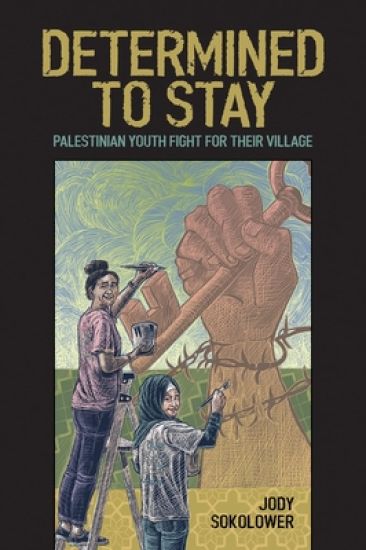
Determined To Stay

Determined To Stay

Jody Sokolower; Nick Estes

INTERLINK PUBLISHING GROUP, INC
2021
nidottu
Palestinian youth and the fight for their village Silwan is a Palestinian village located just outside the ancient walls of the Old City of Jerusalem. Determined to Stay: Palestinian Youth Fight for Their Village is a moving story of a village and its people. As Silwani youth and community members share their lives with us, their village becomes an easily accessible way to understand Palestinian history and current reality. Written with young people in mind, the richly illustrated text stresses connections between the lives of youth in the US and Palestine: criminalization of youth, forced relocation, the impact of colonialism on Indigenous communities, efforts to bury history, and inspiring examples of resistance and resilience.
Border and Rule

Border and Rule

Harsha Walia; Robin D.G. Kelley; Nick Estes

Haymarket Books
2021
sidottu
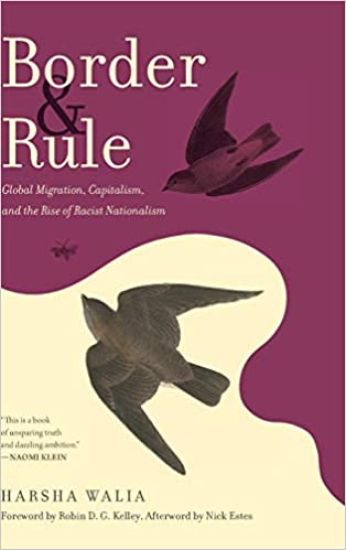
In Border and Rule, one of North America’s foremost thinkers and immigrant rights organizers delivers an unflinching examination of migration as a pillar of global governance and gendered racial class formation. Harsha Walia disrupts easy explanations for the migrant and refugee crises, instead showing them to be the inevitable outcomes of conquest, capitalist globalization, and climate change generating mass dispossession worldwide. Border and Rule explores a number of seemingly disparate global geographies with shared logics of border rule that displace, immobilize, criminalize, exploit, and expel migrants and refugees. With her keen ability to connect the dots, Walia demonstrates how borders divide the international working class and consolidate imperial, capitalist, ruling class, and racist nationalist rule. Ambitious in scope and internationalist in orientation, Border and Rule breaks through American exceptionalist and liberal responses to the migration crisis and cogently maps the lucrative connections between state violence, capitalism, and right-wing nationalism around the world. Illuminating the brutal mechanics of state formation, Walia exposes US border policy as a product of violent territorial expansion, settler-colonialism, enslavement, and gendered racial exclusion. Further, she compellingly details how Fortress Europe and White Australia are using immigration diplomacy and externalized borders to maintain a colonial present, how temporary labor migration in the Arab Gulf states and Canada is central to citizenship regulation and labor control, and far-right nationalism is escalating deadly violence in the US, Israel, India, the Philippines, Brazil, and across Europe, while producing a disaster of statelessness for millions elsewhere.A must-read in these difficult times of war, inequality, climate change, and global health crisis, Border and Rule is a clarion call for revolution. The book includes a foreword from renowned scholar Robin D. G. Kelley and an afterword from acclaimed activist-academic Nick Estes.
Border and Rule

Border and Rule

Harsha Walia; Robin D.G. Kelley; Nick Estes

Haymarket Books
2021
pokkari
In Border and Rule, one of North America’s foremost thinkers and immigrant rights organizers delivers an unflinching examination of migration as a pillar of global governance and gendered racial class formation. Harsha Walia disrupts easy explanations for the migrant and refugee crises, instead showing them to be the inevitable outcomes of conquest, capitalist globalization, and climate change generating mass dispossession worldwide. Border and Rule explores a number of seemingly disparate global geographies with shared logics of border rule that displace, immobilize, criminalize, exploit, and expel migrants and refugees. With her keen ability to connect the dots, Walia demonstrates how borders divide the international working class and consolidate imperial, capitalist, ruling class, and racist nationalist rule. Ambitious in scope and internationalist in orientation, Border and Rule breaks through American exceptionalist and liberal responses to the migration crisis and cogently maps the lucrative connections between state violence, capitalism, and right-wing nationalism around the world. Illuminating the brutal mechanics of state formation, Walia exposes US border policy as a product of violent territorial expansion, settler-colonialism, enslavement, and gendered racial exclusion. Further, she compellingly details how Fortress Europe and White Australia are using immigration diplomacy and externalized borders to maintain a colonial present, how temporary labor migration in the Arab Gulf states and Canada is central to citizenship regulation and labor control, and how far-right nationalism is escalating deadly violence in the US, Israel, India, the Philippines, Brazil, and across Europe, while producing a disaster of statelessness for millions elsewhere. A must-read in these difficult times of war, inequality, climate change, and global health crisis, Border and Rule is a clarion call for revolution. The book includes a foreword from renowned scholar Robin D. G. Kelley and an afterword from acclaimed activist-academic Nick Estes.