Kirjojen hintavertailu. Mukana 12 595 353 kirjaa ja 12 kauppaa.

Kirjailija

Nick Mansfield

Kirjat ja teokset yhdessä paikassa: 15 kirjaa, julkaisuja vuosilta 1997-2025, suosituimpien joukossa Subjectivity. Vertaile teosten hintoja ja tarkista saatavuus suomalaisista kirjakaupoista.

15 kirjaa

Kirjojen julkaisuhaarukka 1997-2025.

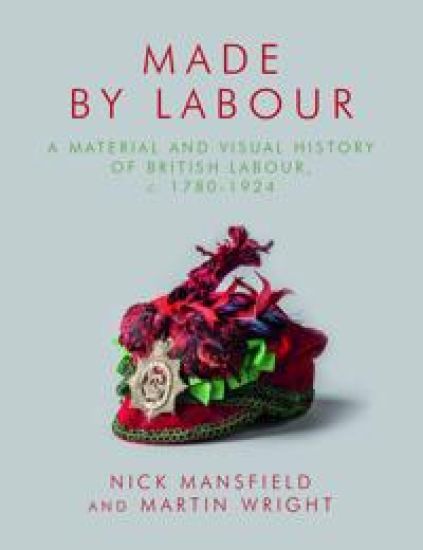
Made by Labour

Made by Labour

Nick Mansfield; Martin Wright

UNIVERSITY OF WALES PRESS
2025
nidottu
This is the first full-length study of the material and visual culture of the British labour movement in almost half a century. It draws together the fruits of recent research into a comprehensive material and visual analysis of the nineteenth-century labour movement's development. It analyses the meaning of 'labour things', the role they played in the lives of working people and the ways they have influenced the writing of labour history. Over ninety beautifully illustrated, expertly contextualised objects are used to narrate the history of British labour in its most crucial phase of development. Chapters on curation and preservation, a directory of museums where labour things may be seen, and a full bibliography complete the treatment of this important and rapidly developing field, making the book not just essential academic reading but a handbook for anyone who wishes to explore this vital part of our shared culture.
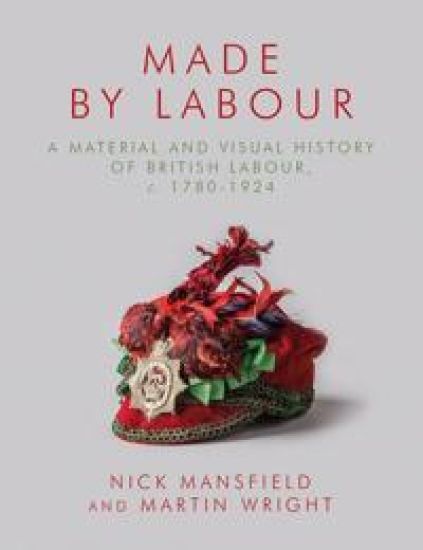
Made by Labour

Made by Labour

Nick Mansfield; Martin Wright

UNIVERSITY OF WALES PRESS
2023
sidottu
This is the first full-length study of the material and visual culture of the British labour movement in almost half a century. It draws together the fruits of recent research into a comprehensive material and visual analysis of the nineteenth-century labour movement’s development. It analyses the meaning of ‘labour things’, the role they played in the lives of working people and the ways they have influenced the writing of labour history. Over ninety beautifully illustrated, expertly contextualised objects are used to narrate the history of British labour in its most crucial phase of development. Chapters on curation and preservation, a directory of museums where labour things may be seen, and a full bibliography complete the treatment of this important and rapidly developing field, making the book not just essential academic reading but a handbook for anyone who wishes to explore this vital part of our shared culture.

Soldiers as Citizens

Soldiers as Citizens

Nick Mansfield

LIVERPOOL UNIVERSITY PRESS
2022
nidottu
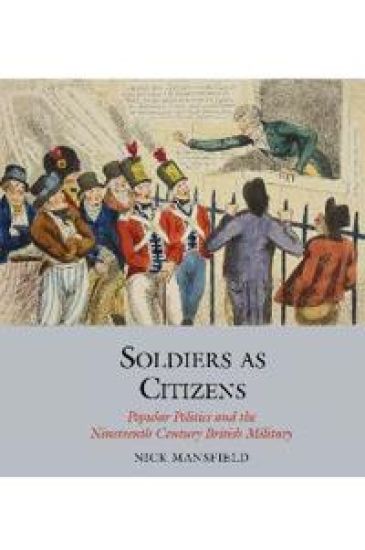
Rank and file soldiers were not ‘the scum of the earth’ but included a cross section of working-class men, who retained their former civilian culture. While they often exhibited pride in regiment and nation, soldiers could also demonstrate a growing class consciousness and support for political radicalism. The book will challenge assumptions that the British army was politically neutral, if privately conservative, by uncovering a rich vein of liberal and radical political thinking among some soldiers, officers and political commentators. This ranges from the Whig ‘militia’ tradition, through radical theories on tactics and army reform, to attempted ultra-radical subversion amongst troops, and the involvement of soldiers in riots and risings. Case studies are given of individual 'military radicals', soldiers or ex-soldiers who were reforming and later socialist activists. Popular anti-French feeling of the Napoleonic Wars is examined, alongside examples of rank and file bravery which fostered widespread loyalty and patriotism. This contributed to soldiers being used successfully in strike breaking, and deployed against rioters or Chartist revolts. By the late Victorian period, popular imperialism was an important part of working-class support for Conservatism. The book explores what impact this had on rank and file soldiers, whilst outlining minority support for socialism.
Bastard Politics

Bastard Politics

Nick Mansfield

State University of New York Press
2021
pokkari
Argues that we need to reinvent sovereignty as a motive for democratic political action while remaining alert to its dangers, specifically its relationship to violence.Sovereignty is usually seen as either the assertion of national rights in the face of external challenge or the cruel license of unaccountable power. In philosophy, sovereignty has been presented as the earthly manifestation of a potentially limitless, preexisting power, usually belonging to God. This divine sovereignty provides a model and the authority for worldly sovereignty. Yet, divine sovereignty also threatens the human by imagining power as transcendent, unquestionable, and potentially infinite. This infinity makes sovereignty endlessly disruptive and thus potentially infinitely violent. Engaging the complexities of sovereignty through the canon of political philosophy from Hobbes to Foucault and Agamben, Bastard Politics argues that there is no escaping this ambiguity. Nick Mansfield draws on Bataille and Derrida to argue that politics is sovereignty in action. In order to deal with the political challenges of the climate change era-including the enactment of global justice, the future of democracy, and unpredictable surges in population movement-we must embrace the possibilities of human sovereignty while remaining mindful of its dangers.
Soldiers as Workers

Soldiers as Workers

Nick Mansfield

Liverpool University Press
2021
nidottu
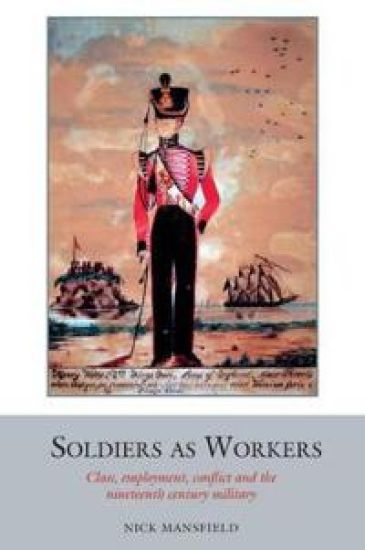
The book outlines how class is single most important factor in understanding the British army in the period of industrialisation. It challenges the 'ruffians officered by gentlemen' theory of most military histories and demonstrates how service in the ranks was not confined to ‘the scum of the earth’ but included a cross section of ‘respectable’ working class men.Common soldiers represent a huge unstudied occupational group. They worked as artisans, servants and dealers, displaying pre-enlistment working class attitudes and evidencing low level class conflict in numerous ways. Soldiers continued as members of the working class after discharge, with military service forming one phase of their careers and overall life experience. After training, most common soldiers had time on their hands and were allowed to work at a wide variety of jobs, analysed here for the first time. Many serving soldiers continued to work as regimental tradesmen, or skilled artificers. Others worked as officers’ servants or were allowed to run small businesses, providing goods and services to their comrades. Some, especially the Non Commissioned Officers who actually ran the army, forged extraordinary careers which surpassed any opportunities in civilian life. All the soldiers studied retained much of their working class way of life. This was evidenced in a contract culture similar to that of the civilian trade unions. Within disciplined boundaries, army life resulted in all sorts of low level class conflict. The book explores these by covering drinking, desertion, feigned illness, self harm, strikes and go-slows. It further describes mutinies, back chat, looting, fraternisation, foreign service, suicide and even the shooting of unpopular officers.
Bastard Politics

Bastard Politics

Nick Mansfield

State University of New York Press
2021
sidottu
Argues that we need to reinvent sovereignty as a motive for democratic political action while remaining alert to its dangers, specifically its relationship to violence.Sovereignty is usually seen as either the assertion of national rights in the face of external challenge or the cruel license of unaccountable power. In philosophy, sovereignty has been presented as the earthly manifestation of a potentially limitless, preexisting power, usually belonging to God. This divine sovereignty provides a model and the authority for worldly sovereignty. Yet, divine sovereignty also threatens the human by imagining power as transcendent, unquestionable, and potentially infinite. This infinity makes sovereignty endlessly disruptive and thus potentially infinitely violent. Engaging the complexities of sovereignty through the canon of political philosophy from Hobbes to Foucault and Agamben, Bastard Politics argues that there is no escaping this ambiguity. Nick Mansfield draws on Bataille and Derrida to argue that politics is sovereignty in action. In order to deal with the political challenges of the climate change era-including the enactment of global justice, the future of democracy, and unpredictable surges in population movement-we must embrace the possibilities of human sovereignty while remaining mindful of its dangers.
Soldiers as Citizens

Soldiers as Citizens

Nick Mansfield

Liverpool University Press
2019
sidottu
Rank and file soldiers were not ‘the scum of the earth’ but included a cross section of working-class men, who retained their former civilian culture. While they often exhibited pride in regiment and nation, soldiers could also demonstrate a growing class consciousness and support for political radicalism. The book will challenge assumptions that the British army was politically neutral, if privately conservative, by uncovering a rich vein of liberal and radical political thinking among some soldiers, officers and political commentators. This ranges from the Whig ‘militia’ tradition, through radical theories on tactics and army reform, to attempted ultra-radical subversion amongst troops, and the involvement of soldiers in riots and risings. Case studies are given of individual 'military radicals', soldiers or ex-soldiers who were reforming and later socialist activists. Popular anti-French feeling of the Napoleonic Wars is examined, alongside examples of rank and file bravery which fostered widespread loyalty and patriotism. This contributed to soldiers being used successfully in strike breaking, and deployed against rioters or Chartist revolts. By the late Victorian period, popular imperialism was an important part of working-class support for Conservatism. The book explores what impact this had on rank and file soldiers, whilst outlining minority support for socialism.
Soldiers as Workers

Soldiers as Workers

Nick Mansfield

Liverpool University Press
2016
sidottu
The book outlines how class is single most important factor in understanding the British army in the period of industrialisation. It challenges the 'ruffians officered by gentlemen' theory of most military histories and demonstrates how service in the ranks was not confined to ‘the scum of the earth’ but included a cross section of ‘respectable’ working class men.Common soldiers represent a huge unstudied occupational group. They worked as artisans, servants and dealers, displaying pre-enlistment working class attitudes and evidencing low level class conflict in numerous ways. Soldiers continued as members of the working class after discharge, with military service forming one phase of their careers and overall life experience. After training, most common soldiers had time on their hands and were allowed to work at a wide variety of jobs, analysed here for the first time. Many serving soldiers continued to work as regimental tradesmen, or skilled artificers. Others worked as officers’ servants or were allowed to run small businesses, providing goods and services to their comrades. Some, especially the Non Commissioned Officers who actually ran the army, forged extraordinary careers which surpassed any opportunities in civilian life. All the soldiers studied retained much of their working class way of life. This was evidenced in a contract culture similar to that of the civilian trade unions. Within disciplined boundaries, army life resulted in all sorts of low level class conflict. The book explores these by covering drinking, desertion, feigned illness, self harm, strikes and go-slows. It further describes mutinies, back chat, looting, fraternisation, foreign service, suicide and even the shooting of unpopular officers.
Buildings of the Labour Movement

Buildings of the Labour Movement

Nick Mansfield; Tony Benn

Historic England
2013
nidottu
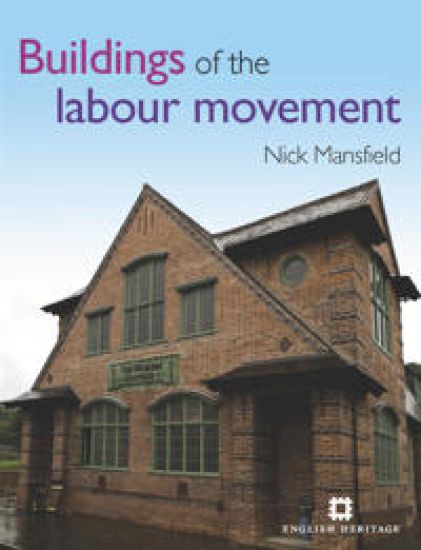
This fascinating survey ranges from the communal buildings of the early 19th-century political radicals, Owenites and Chartists, through Arts and Crafts influenced socialist structures of the late Victorian and Edwardian period to the grand union ‘castles’ of the mid twentieth century. There are also chapters on the ubiquitous co-operative architecture, long forgotten socialist holiday camps, and those memorials associated with the hidden story of radical ex-servicemen and their remembrance of war dead. The countryside is also not forgotten with rural labour buildings, as well as the clubhouses of idealistic socialist cyclists. The book though is not just about bricks and mortar but uncovers the social history of the men and women who worked so hard locally to achieve their goals. Though many buildings have been lost over the years, the book outlines the recent struggle for their preservation and details many which can still be visited.
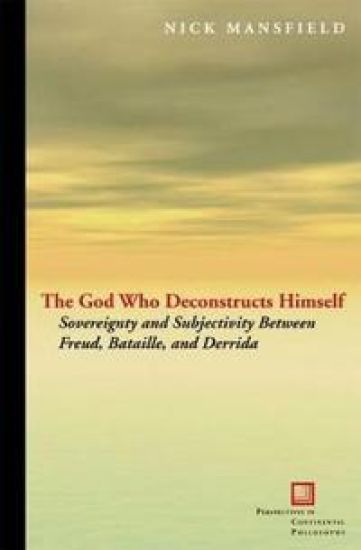
The God Who Deconstructs Himself

The God Who Deconstructs Himself

Nick Mansfield

Fordham University Press
2010
pokkari
No topic has caused more discussion in recent philosophy and political theory than sovereignty. From late Foucault to Agamben, and from Guantanamo Bay to the 'war on terror,' the issue of the extent and the nature of the sovereign has given theoretical debates their currency and urgency. New thinking on sovereignty has always imagined the styles of human selfhood that each regime involves. Each denomination of sovereignty requires a specific mode of subjectivity to explain its meaning and facilitate its operation. The aim of this book is to help outline Jacques Derrida's thinking on sovereignty - a theme which increasingly attracted Derrida towards the end of his career - in its relationship to subjectivity. It investigates the late work Rogues: Two Essays on Reason, as not only Derrida's fullest statement of his thinking on sovereignty, but also as the destination of his career-long interest in questions of politics and self-identity. The book argues that in Derrida's thinking of the relationship between sovereignty and subjectivity - and the related themes of unconditionality and ipseity - we can detect the outline of Bataille's adaptation of Freud. Freud completed his 'metapsychology,' by defining the 'economic' nature of subjectivity. In Bataille's hands, this economic theory became a key to the nature of inter-relationship in general, specifically the complex and shifting relationship between subjectivity and power. In playing with Bataille's legacy, Derrida connects not only with the irrepressibly outrageous thinking of philosophy's most self-consciously transgressive thinker, but with the early twentieth century scientific revolution through which 'energy' became ontology. As with so many of the forebears who influenced him, Derrida echoes and adapts Bataille's thinking while radically de-literalising it. The results are crucial for understanding Derrida's views on power, subjectivity and representation, as well as all of the other key themes in late Derrida: hospitality, justice, otherness and the gift.
The God Who Deconstructs Himself

The God Who Deconstructs Himself

Nick Mansfield

Fordham University Press
2010
sidottu
No topic has caused more discussion in recent philosophy and political theory than sovereignty. From late Foucault to Agamben, and from Guantanamo Bay to the 'war on terror,' the issue of the extent and the nature of the sovereign has given theoretical debates their currency and urgency. New thinking on sovereignty has always imagined the styles of human selfhood that each regime involves. Each denomination of sovereignty requires a specific mode of subjectivity to explain its meaning and facilitate its operation. The aim of this book is to help outline Jacques Derrida's thinking on sovereignty - a theme which increasingly attracted Derrida towards the end of his career - in its relationship to subjectivity. It investigates the late work Rogues: Two Essays on Reason, as not only Derrida's fullest statement of his thinking on sovereignty, but also as the destination of his career-long interest in questions of politics and self-identity. The book argues that in Derrida's thinking of the relationship between sovereignty and subjectivity - and the related themes of unconditionality and ipseity - we can detect the outline of Bataille's adaptation of Freud. Freud completed his 'metapsychology,' by defining the 'economic' nature of subjectivity. In Bataille's hands, this economic theory became a key to the nature of inter-relationship in general, specifically the complex and shifting relationship between subjectivity and power. In playing with Bataille's legacy, Derrida connects not only with the irrepressibly outrageous thinking of philosophy's most self-consciously transgressive thinker, but with the early twentieth century scientific revolution through which 'energy' became ontology. As with so many of the forebears who influenced him, Derrida echoes and adapts Bataille's thinking while radically de-literalising it. The results are crucial for understanding Derrida's views on power, subjectivity and representation, as well as all of the other key themes in late Derrida: hospitality, justice, otherness and the gift.
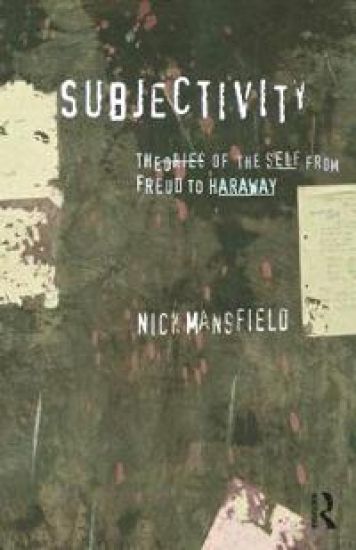
Subjectivity

Subjectivity

Nick Mansfield

New York University Press
2001
sidottu
What am I referring to when I say "I"? This little word is so easy to use in daily life, yet it has become the focus of intense theoretical debate. Where does my sense of self come from? Does it arise spontaneously or is it created by the media or society?This concern with the self, with our subjectivity, is now our main point of reference in Western societies. How has it come to be so important, and what are the different ways in which we can approach an understanding of the self? Nick Mansfield explores how our notions of subjectivity have developed over the past century. Analyzing the work of key modern and postmodern theorists such as Freud, Foucault, Nietzsche, Lacan, Kristeva, Deleuze and Guattari, and Haraway, he shows how subjectivity is central to debates in contemporary culture, including gender, sexuality, ethnicity, postmodernism, and technology.
Subjectivity

Subjectivity

Nick Mansfield

New York University Press
2000
pokkari
A portrait in subjectivity theories and its relevance to debates in contemporary culture What am I referring to when I say "I"? This little word is so easy to use in daily life, yet it has become the focus of intense theoretical debate. Where does my sense of self come from? Does it arise spontaneously or is it created by the media or society? This concern with the self, with our subjectivity, is now our main point of reference in Western societies. How has it come to be so important, and what are the different ways in which we can approach an understanding of the self? Nick Mansfield explores how our notions of subjectivity have developed over the past century. Analyzing the work of key modern and postmodern theorists such as Freud, Foucault, Nietzsche, Lacan, Kristeva, Deleuze and Guattari, and Haraway, he shows how subjectivity is central to debates in contemporary culture, including gender, sexuality, ethnicity, postmodernism, and technology.
Subjectivity

Subjectivity

Nick Mansfield

Allen Unwin
2000
nidottu
What am I referring to when I say 'I'? This little word is so easy to use in daily life, yet it has become the focus of intense theoretical debate. Where does my sense of self come from? Does it arise spontaneously or is it created by the media or society? Do I really know myself? This concern with the self, with our subjectivity, is now our main point of reference in Western societies. How has it come to be so important? What are the different ways in which we can approach subjectivity?Nick Mansfield explores how our understanding of our subjectivity has developed over the past century. He looks at the work of key modern and postmodern theorists, including Freud, Foucault, Nietzsche, Lacan, Kristeva, Deleuze and Guattari, and he shows how subjectivity is central to debates in contemporary culture, including gender, sexuality, ethnicity, postmodernism and technology.I am who? No topic is more crucial to contemporary cultural theory than subjectivity, and Nick Mansfield has written what has long been lacking-a lucid, smart introduction to work in the field.Professor Simon During, University of MelbourneEffortlessly and with humour, passion and panache, Mansfield offers the reader a telling, trenchantly articulate d account of the complex enigma of the self, without resorting to reductively simple critical cliches.This book, in its graceful movements between disciplines, ideas, and areas of interest, deserves to become a benchmark for all such student introductions for some time to come.Julian Wolfreys, University of FloridaNick Mansfield is Senior Lecturer in the Department of Critical and Cultural Studies at Macquarie University. He is co-author of Cultural Studies and the New Humanities (Oxford 1997) and author of Masochism: The art of power (Praeger 1997).
Masochism

Masochism

Nick Mansfield

Praeger Publishers Inc
1997
sidottu
How does the male masochist provide a metaphor for modern and postmodern power? Through a study of the representations of masochism in literature, psychopathology, philosophy, and cultural theory, Mansfield challenges our fundamental assumptions about masculine power in the postmodern era, arguing that masculine power has become masochistic. In the later twentieth century, the author argues, power presents itself as powerlessness but this deconstruction of traditional masculine authority does not result in a diminution of power. This provocative account traces masochism through the writings of Krafft-Ebing, Sacher-Masoch, Freud, Sartre, Proust, Genet, and Foucault.