Kirjojen hintavertailu. Mukana 12 595 353 kirjaa ja 12 kauppaa.

Kirjailija

Nicola Humble

Kirjat ja teokset yhdessä paikassa: 6 kirjaa, julkaisuja vuosilta 1994-2020, suosituimpien joukossa Victorian Heroines. Vertaile teosten hintoja ja tarkista saatavuus suomalaisista kirjakaupoista.

6 kirjaa

Kirjojen julkaisuhaarukka 1994-2020.

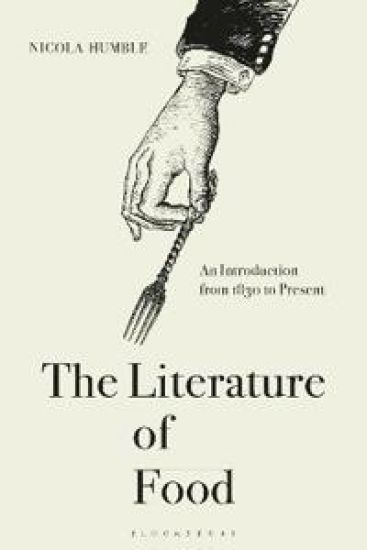
The Literature of Food

The Literature of Food

Nicola Humble

Bloomsbury Academic
2020
nidottu
Why are so many literary texts preoccupied with food? The Literature of Food explores this question by looking at the continually shifting relationship between two sorts of foods: the real and the imagined. Focusing particularly on Britain and North America from the early 19th century to the present, it covers a wide range of issues including the politics of food, food as performance, and its intersections with gender, class, fear and disgust. Combining the insights of food studies and literary analysis, Nicola Humble considers the multifarious ways in which food both works and plays within texts, and the variety of functions—ideological, mimetic, symbolic, structural, affective—which it serves. Carefully designed and structured for use on the growing number of literature of food courses, it examines the food of modernism, post-modernism, the realist novel and children's literature, and asks what happens when we treat cook books as literary texts. From food memoirs to the changing role of the servant, experimental cook books to the cannibalistic fears in infant picture books, The Literature of Food demonstrates that food is always richer and stranger than we think.
The Literature of Food

The Literature of Food

Nicola Humble

Bloomsbury Academic
2020
sidottu
Why are so many literary texts preoccupied with food? The Literature of Food explores this question by looking at the continually shifting relationship between two sorts of foods: the real and the imagined. Focusing particularly on Britain and North America from the early 19th century to the present, it covers a wide range of issues including the politics of food, food as performance, and its intersections with gender, class, fear and disgust. Combining the insights of food studies and literary analysis, Nicola Humble considers the multifarious ways in which food both works and plays within texts, and the variety of functions—ideological, mimetic, symbolic, structural, affective—which it serves. Carefully designed and structured for use on the growing number of literature of food courses, it examines the food of modernism, post-modernism, the realist novel and children's literature, and asks what happens when we treat cook books as literary texts. From food memoirs to the changing role of the servant, experimental cook books to the cannibalistic fears in infant picture books, The Literature of Food demonstrates that food is always richer and stranger than we think.
Cake

Cake

Nicola Humble

Reaktion Books
2010
sidottu
Let them eat cake! What birthday, wedding or children’s party would be complete without it? It is the ultimate food of celebration in many cultures throughout the world, but how did it come to be so? Cake: A Global History explores the origin of modern cake and its development from sweet bread to architectural flight of fancy, together with the meanings, legends and rituals attached to cake throughout the world.Nicola Humble reviews the many national differences in cake-making techniques and customs – the French, for example, have the gâteau Paris-Brest, named after the cycle race and designed to imitate the form of a bicycle wheel; in America there is New England’s Election Day cake or the Southern favourite, Lady Baltimore cake – and what they reveal about the nations that make them. From Proust’s madeleine to Miss Havisham's decaying wedding cake, the symbol of her betrayal in Dickens’s Great Expectations, Humble also relates the food’s place in literature, art and film, and what it can symbolize: indulgence, gender, motherhood and guilt.With a large selection of mouthwatering images, Cake will appeal to the many readers with an interest in food history, social, cultural, literary and art history – or, indeed, just in cake.
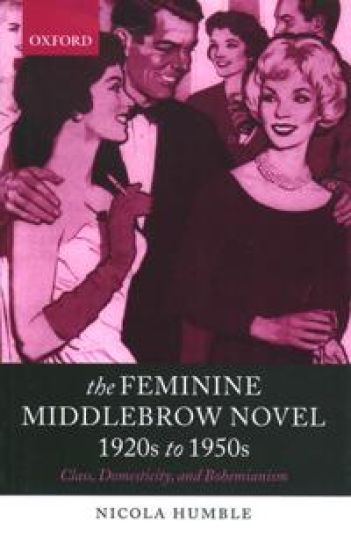
The Feminine Middlebrow Novel, 1920s to 1950s

The Feminine Middlebrow Novel, 1920s to 1950s

Nicola Humble

Oxford University Press
2004
nidottu
'Middlebrow' has always been a dirty word, used disparagingly since its coinage in the mid-1920s for the sort of literature thought to be too easy, insular and smug. Yet it was middlebrow fiction - largely written and read by women - that absolutely dominated the publishing market in the four decades from the 1920s to the 1950s. Neglected by subsequent critical fashion in favour of the work of literary elites, this literature has only recently begun to be reassessed. Aiming to rehabilitate the feminine middlebrow, Nicola Humble argues that the novels of writers such as Rosamund Lehmann, Elizabeth Taylor, Stella Gibbons, Nancy Mitford, and a host of others less well known, played a powerful role in establishing and consolidating, but also in resisting, new class and gender identities in this period of volatile change for both women and the middle classes. The work of over thirty novelists is covered, read alongside other discourses as diverse as cookery books, child-care manuals, and the reports of Mass Observation. Investigating the nature of the feminine middlebrow and its readers, the author considers its variously radical and conservative remakings of ideas of class, the home, the family and gender. Defining her period as running from the end of the first world war to the mid-1950s, she challenges the prevailing convention that sees the second world war as effecting a decisive ideological and cultural break, and offers a revision to the way we currently map the changing politics of femininity and the domestic in the twentieth century. The first work to insist on the centrality of the concept of the middlebrow in understanding the women's writing of this period, The Feminine Middlebrow uncovers a literature simultaneously snobbish and bohemian, daring and conventional, marked by an ideological flexibility that is the product of its paradoxical allegiance to both domesticity and a radical sophistication.
The Feminine Middlebrow Novel, 1920s to 1950s

The Feminine Middlebrow Novel, 1920s to 1950s

Nicola Humble

Oxford University Press
2001
sidottu
This text reasseses the disparaged, but prolific, "middlebrow" feminine fiction from the 1920s to the 1950s. During her rehabilitation of the genre, the author argues that such authors helped to create, consolidate, and resist new class and gender identities in this period of change.
Victorian Heroines

Victorian Heroines

Kimberley Reynolds; Nicola Humble

Prentice-Hall
1994
sidottu
Kimberley Reynolds and Nicola Humble here provide a radical revision of Victorian constructions of femininity. Using a wide range of textual examples (including children's literature, sensations fiction, diaries, and autobiography) as well as visual illustrations, Victorian Heroines offers a new look at the representation of women and sexuality in nineteenth-century literature and painting. Arguing against the conventional dyadic model that interprets Victorian fiction in terms of a rigid distinction between the good and bad, the sexual and asexual woman, the authors suggest a more complex paradigm, simultaneously concealing and revealing contradictory attitudes to Victorian womanhood. The book explores the highly erotic fantasy elements frequently found in widely disseminated orthodox female images, and effectively demonstrates how both male and female writers used similar techniques to subvert this orthodoxy. Drawing on contemporary critical and cultural theories, Victorian Heroines is a lucid and accessible analysis of the depiction of women during this period, challenging the prevalent views of recent decades.