Kirjojen hintavertailu. Mukana 12 390 323 kirjaa ja 12 kauppaa.

Kirjailija

Nicola Rippon

Kirjat ja teokset yhdessä paikassa: 6 kirjaa, julkaisuja vuosilta 2023-2026, suosituimpien joukossa Wartime Entertainment. Vertaile teosten hintoja ja tarkista saatavuus suomalaisista kirjakaupoista.

6 kirjaa

Kirjojen julkaisuhaarukka 2023-2026.

Wartime Entertainment

Wartime Entertainment

Anton Rippon; Nicola Rippon

PEN SWORD BOOKS LTD
2026
nidottu
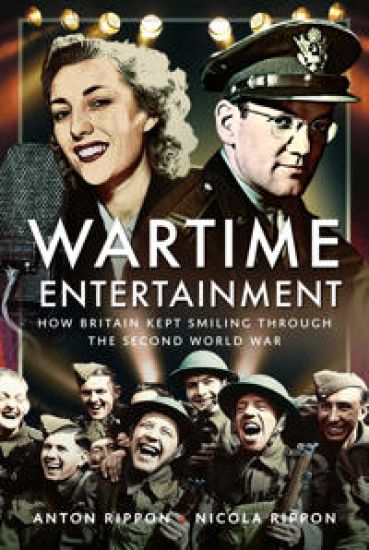
It might have ended 80 years ago, but we still have a warm, nostalgic relationship with the Second World War, due in no small part to the love we have for the entertainment from those turbulent times. Singers like Vera Lynn – the ‘Forces Sweetheart’ – Gracie Fields, Anne Shelton, and the Andrews Sisters, bandleader Glenn Miller whose fate is still a mystery, films like Gone With The Wind, Casablanca, Mrs Miniver, In Which We Serve, Goodbye Mr Chips, and morale-boosting radio programmes like ITMA, Music While You Work and Hi Gang! all helped Britain to stay calm and carry on as it sheltered from the bombs, worked long hours in munitions factories, and prayed that its menfolk fighting on land, sea and in the air to bring about victory would one day return home safely. Wartime Entertainment: How Britain Kept Smiling Through the Second World War relives the wartime years, looking at the songs and the singers, at the role that the BBC – ‘Auntie’ – played not only in entertaining the nation but also in keeping it informed, at how West End theatre survived the Blitz, and at the bands that played both the big dance venues and the village halls to raise spirits and, for a few hours at least, lighten the mood of those dark and dangerous days. The book considers the work of the Crown Film Unit that made short information and documentary films as well as longer drama-documentaries and even a few straight drama productions for the public in Britain and abroad, and at ENSA – the Entertainments National Service Association – that provided entertainment for British armed forces personnel both at home and abroad.
The Edwardians

The Edwardians

Nicola Rippon

PEN SWORD BOOKS LTD
2025
sidottu
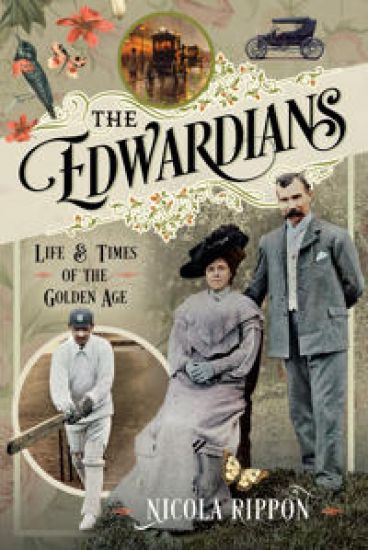
In January 1901, Edward VII, then the longest-waiting monarch to ascend to the British throne, succeeded his mother, Queen Victoria, who had reigned over a growing empire for 63 years. Edward’s reign would be much shorter – only nine years – but it was a period of British history that saw life change rapidly for those who now lived in the Edwardian Era. It began when Britain was at war in South Africa, and it lasted longer than the monarch whose name it took. It would be brought to its end by the advent of a much greater and more terrible conflict The Edwardians: Life and Times of the Golden Age takes us on a journey through those first few years of the 20th century, when it can be said that modern Britain began to take shape. New technology – new modes of transport, new labour-saving devices – affected everyday life. There were new attitudes to social welfare, and reforms were introduced in a bid to improve the lot of even the poorest in society – albeit the picture often painted of Edwardian tea parties on the lawn on lazy summer days was still reserved for relatively few people in a Britain, which many now regard as the last great hurrah of the aristocracy in their so-called Golden Age. The Edwardians: Life and Times of the Golden Age tells the story of life in Britain – at the beginning of Edward’s reign over the most powerful nation on Earth – through the events, great and small, of what has also been known as the ‘Age of Optimism’.
Wartime Entertainment

Wartime Entertainment

Anton Rippon; Nicola Rippon

PEN SWORD BOOKS LTD
2024
sidottu
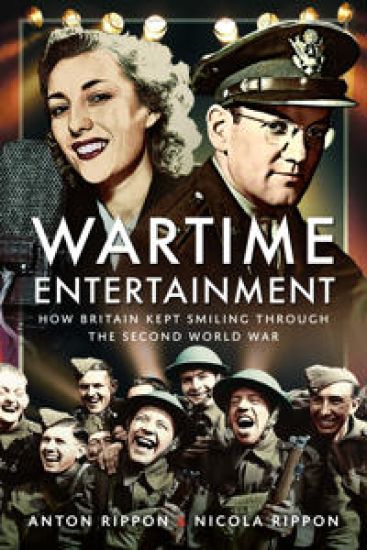
It might have ended 80 years ago, but we still have a warm, nostalgic relationship with the Second World War, due in no small part to the love we have for the entertainment from those turbulent times. Singers like Vera Lynn – the ‘Forces Sweetheart’ – Gracie Fields, Anne Shelton, and the Andrews Sisters, bandleader Glenn Miller whose fate is still a mystery, films like _Gone With The Wind_, _Casablanca_, _Mrs Miniver_, _In Which We Serve_, _Goodbye Mr Chips_, and morale-boosting radio programmes like _ITMA_, _Music While You Work_ and _Hi Gang!_ all helped Britain to stay calm and carry on as it sheltered from the bombs, worked long hours in munitions factories, and prayed that its menfolk fighting on land, sea and in the air to bring about victory would one day return home safely. _Wartime Entertainment: How Britain Kept Smiling Through the Second World War_ relives the wartime years, looking at the songs and the singers, at the role that the BBC – ‘Auntie’ – played not only in entertaining the nation but also in keeping it informed, at how West End theatre survived the Blitz, and at the bands that played both the big dance venues and the village halls to raise spirits and, for a few hours at least, lighten the mood of those dark and dangerous days. The book considers the work of the Crown Film Unit that made short information and documentary films as well as longer drama-documentaries and even a few straight drama productions for the public in Britain and abroad, and at ENSA – the Entertainments National Service Association – that provided entertainment for British armed forces personnel both at home and abroad.
D-Day to VE Day

D-Day to VE Day

Anton Rippon; Nicola Rippon

PEN SWORD BOOKS LTD
2024
sidottu
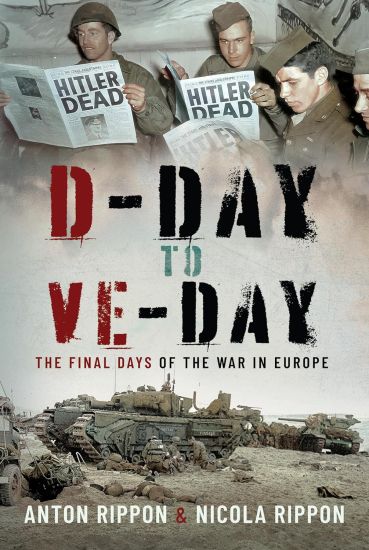
On the evening of Monday, 5th June 1944, the people of Britain went to bed with a sense of great events impending. They knew that any day now would come news of the battle that would forever alter the course of their lives, and the lives of their children and their grandchildren. The following day’s morning newspapers and early radio news bulletins were full of the fall of Rome to the Allies, which had been announced the day before. But then, at 9.33 am on that Tuesday, came the brief announcement: Allied naval forces, supported by strong air forces, had begun landing Allied armies on the coast of France.’ D-Day had finally dawned. _D-Day to VE Day_ tells the story of the last year of the Second World War in Europe, from the Normandy landings and on through the hard slog to that long-awaited day – 8th May 1945 – when Britain broke out the bunting, rolled out the barrel, and celebrated victory over Hitler. The air-raid sirens were silenced, the lights could be switched on again, and the boys would be coming home. In many homes, festivities were muted because the war in the Far East was still to be won, but for a few short hours at least, the nation could afford to let its hair down and dance in the streets. Using contemporary accounts – interviews, newspaper reports and official documents – of those final months, _D-Day to VE Day_ looks at life in Britain during those vital months, at the events that brought an end to war in Europe, and at the redrawing of national borders that would shape a new world order.
Life in Britain and Germany on the Road to War

Life in Britain and Germany on the Road to War

Anton Rippon; Nicola Rippon

PEN SWORD BOOKS LTD
2024
sidottu
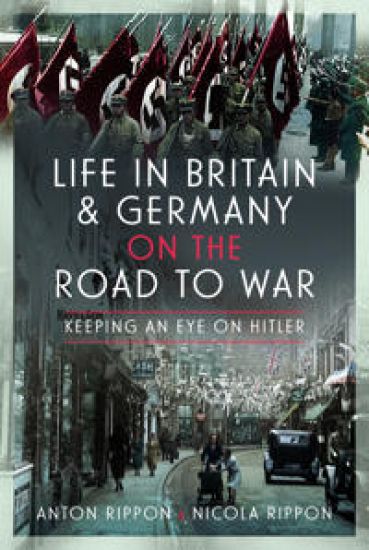
In December 1922, the distinguished foreign correspondent Leonard Spray warned Britain to ‘keep your eye on Hitler’. The carnage of the so-called ‘war to end all wars’ had left 900,000 British servicemen dead, and more than 2 million suffering physical and psychological wounds, but there was hope. The vanquished had been left with no military capacity to wage another war, and with a huge debt to pay to the victors. The Treaty of Versailles had surely made it impossible for the world to ever again be threatened by Germany? Safe in that knowledge, Britain now had her eye firmly set on new challenges. The cost of the war had already triggered her decline as the world’s greatest economic power. The Great Depression that followed the Wall Street Crash of 1929 now saw Britain riven by unemployment and poverty. Seven General Elections between 1918 and 1935 resulted in mostly minority and coalition governments, bringing further uncertainty. And all the time, an Austrian ex-corporal by the name of Adolf Hitler was on the rampage, first with his ‘swashbuckling gangs’ in Bavaria, and then on an inexorable march to power throughout the rest of Germany and beyond. Life in Britain and Germany on the Road to War tells the story of one of the most eventful, tumultuous and heart-breaking periods in history. The twenty-one years that separated the First and Second World Wars and that eventually saw everyone’s eyes firmly fixed on Hitler.
Life in Post-War Britain

Life in Post-War Britain

Anton Rippon; Nicola Rippon

PEN SWORD BOOKS LTD
2023
sidottu
On New Year's Day 1946, the people of Britain desperately wanted to look forward to a new and better life. The Second World War had ended four months earlier with the formal surrender of Imperial Japan. The war in Europe had been over for eight months. But, upon announcing to Parliament the German surrender, Winston Churchill had told the nation: "Let us not forget the toils and efforts that lie ahead." In 1946, Clement Attlee, leader of the newly elected Labour Government, underlined Churchill's words, warning the nation that victory over Nazi Germany and Japan had heralded not a future of plenty - but one of greater austerity. The huge debt left by the war had crippled the British economy. Those who fought in the Great War had been promised a land fit for heroes. That had not happened. After another world war, people now expected a better life than the poverty and hardship that had characterised much of the 1920s and 1930s, and Attlee pledged to end society's five "Giant Evils" - squalor, ignorance, want, idleness, and disease - and to provide for the people "from the cradle to the grave". It was going to be far from easy. Life in Post-War Britain: "Toils and Efforts Ahead" tells what it was like to live in Britain as the nation battled to recover while still facing many hardships, including food rationing that, ironically, was to become more severe than that in wartime. This was a unique time in British history and Life in Post-War Britain: "Toils and Efforts Ahead" captures the mood of the nation, examining all the great events of the post-war years and the effect that they had on the everyday life of the people who had won a war but who now faced an uncertain peace both at home and abroad.