Kirjojen hintavertailu. Mukana 12 390 323 kirjaa ja 12 kauppaa.

Kirjailija

Nicolaas A. Rupke

Kirjat ja teokset yhdessä paikassa: 4 kirjaa, julkaisuja vuosilta 1988-2009, suosituimpien joukossa Science, Politics and the Public Good. Vertaile teosten hintoja ja tarkista saatavuus suomalaisista kirjakaupoista.

4 kirjaa

Kirjojen julkaisuhaarukka 1988-2009.

Richard Owen

Richard Owen

Nicolaas A. Rupke

University of Chicago Press
2009
nidottu
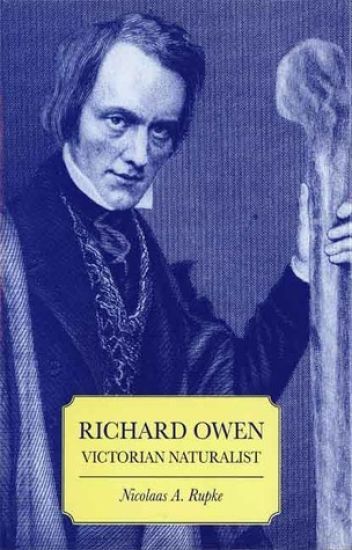
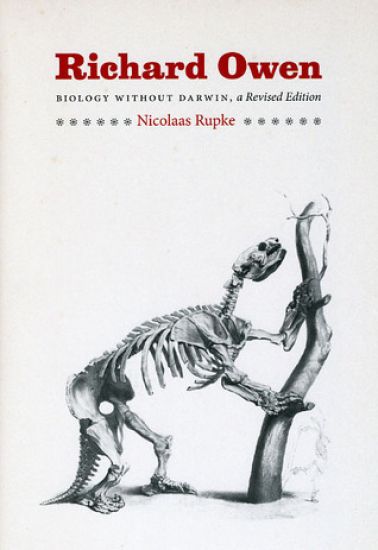
In the mid-1850s, no scientist in the British Empire was more visible than Richard Owen. Mentioned in the same breath as Newton and championed as Britain's answer to France's Cuvier and Germany's von Humboldt, Owen was, as the "Times" declared in 1856, the most 'distinguished man of science in the country'. But a century and a half later, Owen remains largely obscured by the shadow of the most famous Victorian naturalist of all, Darwin. Publicly marginalized by his contemporaries for his critique of natural selection, Owen suffered personal attacks that undermined his credibility long after his name faded from history. With this innovative biography, Nicolaas Rupke resuscitates Owen's reputation. Arguing that Owen should no longer be judged by the evolution dispute that figured in only a minor part of his work, Rupke stresses context, emphasizing the importance of places and practices in the production and reception of scientific knowledge. Dovetailing with the recent resurgence of interest in Owen's life and work, Rupke's book brings the forgotten naturalist back into the canon of the history of science and demonstrates how much biology existed with, and without, Darwin.
Alexander von Humboldt

Alexander von Humboldt

Nicolaas A. Rupke

University of Chicago Press
2008
nidottu
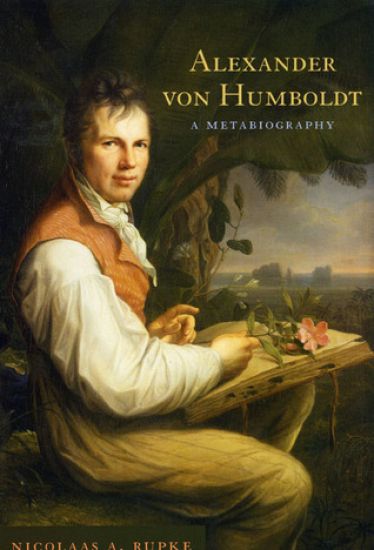
Alexander von Humboldt (1769-1859) is one of the most celebrated figures of late-modern science, famous for his work in physical geography, botanical geography, and climatology, and his role as one of the first great popularizers of the sciences. His momentous accomplishments have intrigued German biographers from the Prussian era to the fall of the Berlin wall, all of whom configured and reconfigured Humboldt's life according to the sensibilities of the day.This volume, the first metabiography of the great scientist, traces Humboldt's biographical identities through Germany's collective past to shed light on the historical instability of our scientific heroes.
Richard Owen

Richard Owen

Nicolaas A. Rupke

Yale University Press
1994
sidottu
Richard Owen (1804-92) was, after Darwin, the leading naturalist of nineteenth-century Britain. A distinguished anatomist and paleontologist, he was influential in Victorian scientific reform and in the debate over natural selection. Leader of the nineteenth-century museum movement, he founded London's monumental Natural History Museum, wrote and published copiously, and won every professional honor. This first full-fledged biography of Owen presents the complete range of his scientific and intellectual achievements.Nicolaas Rupke discusses Owen's epic power struggles with colleagues, the most notorious of which were with Darwin and Huxley. As a renowned opponent of natural selection, Owen became the bête noire of the Darwinian evolution debate. Rupke argues, however, that Owen should no longer be judged by the evolution dispute that was only a minor part of his work yet has come to dominate his memory. Instead, Rupke emphasizes and throws new light on a wide area of Owen's other activities. In particular, he explains the central division in Owen's scientific oeuvre between the functionalism of Oxbridge natural theology and the transcendentalism of German nature philosophy. Rupke shows that this was a fundamental extension of the intellectual and political maneuvering for control of Victorian cultural institutions and an inextricable part of the rise to public authority of the most articulate proponents of the scientific study of nature.
Science, Politics and the Public Good

Science, Politics and the Public Good

Nicolaas A. Rupke

Palgrave Macmillan
1988
nidottu
An exploration of the relationship between scientific ideas, technology, government and politics, demonstrated by examples from the last 150 years, including the birth of the NHS, the Channel Tunnel, radiation protection, the atomic bomb and power, and nuclear power in the US and USSR.