Kirjojen hintavertailu. Mukana 12 390 323 kirjaa ja 12 kauppaa.

Kirjailija

Nicolas Lewkowicz

Kirjat ja teokset yhdessä paikassa: 10 kirjaa, julkaisuja vuosilta 2018-2024, suosituimpien joukossa The German Question and the Origins of the Cold War. Vertaile teosten hintoja ja tarkista saatavuus suomalaisista kirjakaupoista.

10 kirjaa

Kirjojen julkaisuhaarukka 2018-2024.

The Cold War in the 1950s

The Cold War in the 1950s

Nicolas Lewkowicz

ANTHEM PRESS
2024
sidottu
The book claims that the United States and the Soviet Union attained the mastery of the international order by projecting universalist values that responded to the particularist markers of the domestic order that was generated in the 1950s. The geopolitical orientation adopted by the superpowers in the 1950s was shaped by the way in which their societies developed politically, socially and economically in the 1950s. The main argument of this book is that the quest for the mastery of the international order that informed superpower relations in the 1950s was guided by the need to respond to the local circumstances that emerged in the United States and the Soviet Union. The particularist markers that arose in the 1950s led to the establishment of a geopolitical project underpinned by certain universalist values that could be applied in order to build the superpowers’ sphere of influence.
The German Question and the Origins of the Cold War
This book analyzes the role of the German Question in the origins of the Cold War. The work evaluates the transformation which occurred in Germany and the post-war international order due to the inter-Allied work on denazification. The author analyses the Rationalist aspects of superpower interaction, with particular emphasis on the legal and diplomatic framework which sustained not only the treatment of the German Question but also the general context of inter-Allied relations. The author also tackles the conflictual aspects of the treatment of the German Question by examining superpower interaction in relation to the enforcement of their structural interests. The main argument of the book is that due to the interaction between the elements of intervention and coexistence, the German Question constituted the most significant issue in the configuration of the post-war international order.
The German Question and the Origins of the Cold War
This book analyses the role of the German Question in the origins of the Cold War. The work evaluates the transformation which occurred in Germany and the post-war international order due to the inter-Allied work on denazification. The author analyses the Rationalist aspects of superpower interaction, with particular emphasis on the legal and diplomatic framework which sustained not only the treatment of the German Question but also the general context of inter-Allied relations. The author also tackles the conflictual aspects of the treatment of the German Question by examining superpower interaction in relation to the enforcement of their structural interests. The main argument of the book is that due to the interaction between the elements of intervention and coexistence, the German Question constituted the most significant issue in the configuration of the post-war international order.
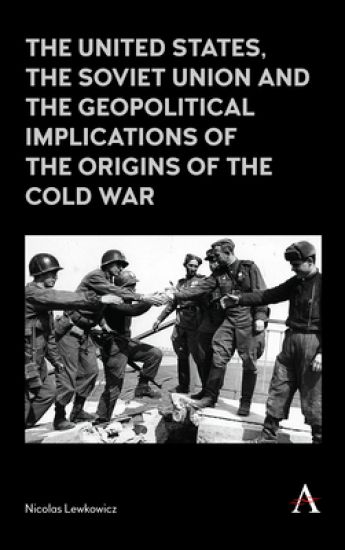
The United States, the Soviet Union and the Geopolitical Implications of the Origins of the Cold War
‘The United States, the Soviet Union and the Geopolitical Implications of the Origins of the Cold War, 1945–1949’ describes how the United States and the Soviet Union deployed their hard and soft power resources to create the basis for the institutionalization of the international order in the aftermath of World War Two. The book argues that the origins of the Cold War should not be seen from the perspective of a magnified spectrum of conflict but should be regarded as a process by which the superpowers attempted to forge a normative framework capable of sustaining their geopolitical needs and interests in the post-war scenario. ‘The United States, the Soviet Union and the Geopolitical Implications of the Origins of the Cold War, 1945–1949’ examines how the use of ideology and the instrument of political intervention in the spheres of influence managed by the superpowers were conducive to the establishment of a stable international order. It postulates that the element of conflict present in the early period of the Cold War served to demarcate the scope of manoeuvring available to each of the superpowers and studies the notion that the United States and the Soviet Union were primarily interested in establishing the conditions for the accomplishment of their vital geostrategic interests. This required the implementation of social norms imposed in the respective spheres of influence, a factor that provided certainty to the spectrum of interstate relations after the period of turmoil that culminated with the onset of World War Two.
The Role of Ideology in the Origins of the Cold War
This book argues that American Exceptionalism and Eurasianism engendered the ideological principles that propelled the geostrategic interests of the United States and the Soviet Union in the post-World War Two period. The correlation between ideology and the pursuit of certain geostrategic aims led to the creation of the interventionist mechanisms that established a sound management of the international order in the post-World War Two era.