Kirjojen hintavertailu. Mukana 12 390 323 kirjaa ja 12 kauppaa.

Kirjailija

Nicole Etcheson

Kirjat ja teokset yhdessä paikassa: 4 kirjaa, julkaisuja vuosilta 1996-2023, suosituimpien joukossa The Emerging Midwest. Vertaile teosten hintoja ja tarkista saatavuus suomalaisista kirjakaupoista.

4 kirjaa

Kirjojen julkaisuhaarukka 1996-2023.

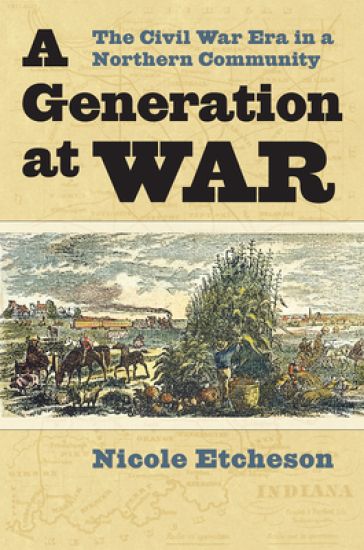
A Generation at War

A Generation at War

Nicole Etcheson

UNIVERSITY PRESS OF KANSAS
2023
nidottu
Winner: Avery O. Craven AwardWinner: Indiana Center for the Book AwardFor all that has been written about the Civil War’s impact on the urban northeast and southern home fronts, we have until now lacked a detailed picture of how it affected specific communities in the Union’s Midwestern heartland. Nicole Etcheson offers a deeply researched microhistory of one such community—Putnam County, Indiana, from the Compromise of 1850 to the end of Reconstruction—and shows how its citizens responded to and were affected by the war.Delving into the everyday life of a small town in one of the nineteenth century’s bellwether states, A Generation at War considers the Civil War within a much broader chronological context than other accounts. It ranges across three decades to show how the issues of the day—particularly race and sectionalism—temporarily displaced economic and temperance concerns, how the racial attitudes of northern whites changed, and how a generation of young men and women coped with the transformative experience of war.Etcheson interrelates an impressively wide range of topics. Through temperance and alcohol she illustrates nativism and class consciousness, while through an account of a murder she probes ethnicity, politics, and gender. She reveals how some women wanted to “maintain dependence” and how the war gave independence to others, as pensions allowed them to survive without a male provider. And she chronicles the major shift in race relations as the most revolutionary change: blacks had been excluded from Indiana in the 1850s but were invited into Putnam County by 1880.Etcheson personalizes all of these issues through human stories, bringing to life people previously ignored by history, whether veterans demanding recognition of their sacrifice, women speaking out against liquor, or Copperheads parading against Republicans. The introduction of race with the North Carolina Exodusters marks a particularly effective lens for seeing how the idealism unleashed by Lincoln’s war influenced the North. Etcheson also helps us understand how white Southerners tried to reunify the country on the basis of shared white racism.Drawing on personal papers, local newspapers, pension petitions, Exoduster pamphlets, and more, Etcheson demonstrates how microhistory helps give new meaning to larger events. A Generation at War opens a new window on the impact of the Civil War on the agrarian North.
A Generation at War

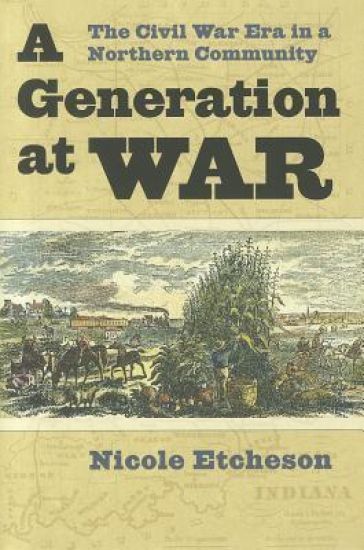
A Generation at War

Nicole Etcheson

University Press of Kansas
2011
sidottu
Presenting a detailed picture of how the Civil War affected specific communities in the Union’s Midwestern heartland, the author offers a deeply researched micro-history of one such community—Putnam County, Indiana, from the Compromise of 1850 to the end of Reconstruction—and shows how its citizens responded to and were affected by the war.
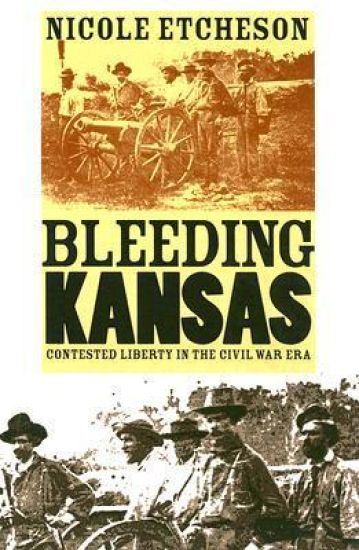
Bleeding Kansas

Bleeding Kansas

Nicole Etcheson

University Press of Kansas
2004
nidottu
Few people would have expected bloodshed in Kansas Territory. After all, it had few slaves and showed few signs that slavery would even flourish. But civil war tore this territory apart in the 1850s and 60s, and "Bleeding Kansas" became a forbidding symbol for the nationwide clash over slavery that followed.Many free-state Kansans seemed to care little about slaves, and many proslavery Kansans owned not a single slave. But the failed promise of the Kansas-Nebraska Act-when fraud in local elections subverted the settlers' right to choose whether Kansas would be a slave or free state-fanned the flames of war. While other writers have cited slavery or economics as the cause of unrest, Nicole Etcheson seeks to revise our understanding of this era by focusing on whites' concerns over their political liberties. The first comprehensive account of "Bleeding Kansas" in more than thirty years, her study re-examines the debate over slavery expansion to emphasize issues of popular sovereignty rather than slavery's moral or economic dimensions.The free-state movement was a coalition of settlers who favored black rights and others who wanted the territory only for whites, but all were united by the conviction that their political rights were violated by nonresident voting and by Democratic presidents' heavy-handed administration of the territories. Etcheson argues that participants on both sides of the Kansas conflict believed they fought to preserve the liberties secured by the American Revolution and that violence erupted because each side feared the loss of meaningful self-governance.Bleeding Kansas is a gripping account of events and people-rabble-rousing Jim Lane, zealot John Brown, Sheriff Sam Jones, and others-that examines the social milieu of the settlers along with the political ideas they developed. Covering the period from the 1854 Kansas-Nebraska Act to the 1879 Exoduster Migration, it traces the complex interactions among groups inside and outside the territory, creating a comprehensive political, social, and intellectual history of this tumultuous period in the state's history.As Etcheson demonstrates, the struggle over the political liberties of whites may have heightened the turmoil but led eventually to a broadening of the definition of freedom to include blacks. Her insightful re-examination sheds new light on this era and is essential reading for anyone interested in the ideological origins of the Civil War.
The Emerging Midwest

The Emerging Midwest

Nicole Etcheson

Indiana University Press
1996
sidottu
". . . agile, ambitious, and complex . . ." —The Journal of Southern History "Etcheson adds a fresh dimension to the history of the Old Northwest by examining the way in which Upland Southerners' regional heritage affected the evolution of political culture in Ohio, Indiana, and Illinois." —Choice " . . . not only a political account, but also a cultural survey. The book is clearly written, free of jargon, and makes excellent use of both primary and secondary sources. . . . an outstanding interpretation of the motives and acts of a significant portion of the population of a significant portion of the country." —Lucy Jayne Kamau, H-Net H-WEST Digest "Impressively researched, intelligently organized, and clearly written. . . . [this volume] is the first in-depth study of political culture in the Old Northwest in the early nineteenth century, and it underlines the significance of persistent regional identities in the U.S." —Andrew R. L. Cayton "Well researched and is written in a clear, engaging stylean excellent study of the origins and infulence of regional identity. It should gain a wide readership among students of antebellum America." —The North Carolina Historical Review ". . . an impressive and exhaustive job of research in primary materials, including letters, editorials, petitions, speeches, diaries, and memoirs. She pieces together these highly subjective accounts into an objective explanation of midwesterners' views." —Indiana Magazine of History "In this well-written and carefully researched volume, Nicole Etcheson develops the role of Upland Southerners in the Ohio valley as they helped forge the political culture and public stance of that part of the Old Northwest." —Michigan Historical Review ". . . an outstanding contribution to our understanding of the political and cultural development of the the Old Northwest. This volume should be consulted by all who are interested in the region's history." —Wisconsin Magazine of History ". . . a thought-provoking volume that should be read by all scholars who study the development of the Midwest." —Illinois Historical Journal The process of defining the Midwest began when Northern and Southern migrants began to identify themselves as Westerners. Nicole Etcheson examines the tensions between a developing Midwestern identity and residual regional loyalties, a process which mirrored the nation-building and national disintegration in the years between the Revolution and the Civil War.